
What are the advantages of carbon steel in precision machining?

Struggling to find a strong, machinable, and cost-effective material? Your project demands performance without breaking the budget. Carbon steel could be the perfect solution for your machining needs.
The main advantages of carbon steel in precision machining are its excellent hardness, great wear resistance, and good machinability. It is also widely available and more affordable than many other alloys, making it a very cost-effective choice for many applications.
These benefits make carbon steel a very popular choice in our industry. But to really know if it is right for your project, we need to look closer at its specific properties. This will help you understand what makes this material so useful and where it truly performs best.
What are the advantages of carbon steel?
Choosing the wrong material can lead to high costs and poor part performance. You need something that is reliable, strong, and affordable. Carbon steel offers a balanced mix of these essential properties.
The primary advantages of carbon steel are its high strength, excellent hardness, and superior wear resistance. It is also very cost-effective and widely available, making it a practical choice for a huge range of industrial and commercial parts.
When my clients ask me about a go-to material, I often bring up carbon steel for several key reasons. First is its strength and hardness. This material is tough. It can handle heavy loads and resist deformation, which is critical for structural components and machine parts. The second big advantage is wear resistance. For parts that rub against each other or face constant friction, carbon steel holds up exceptionally well. This means longer life for the parts we make and less downtime for our customers.
I remember a client who needed gears for an industrial conveyor system. Their old gears were wearing out too quickly. We switched them to a specific grade of carbon steel, and the new parts lasted significantly longer. A huge reason for its popularity is cost. Carbon steel is generally much cheaper to produce and buy than alloy steels or stainless steel. This helps our clients, especially those in competitive markets, keep their project costs down without sacrificing quality. Finally, it's easy to get. This availability means we can source it quickly and keep production on schedule, avoiding delays.
| Advantage | Description | Benefit for Your Project |
|---|---|---|
| High Hardness | Resists surface indentation and scratching. Can be heat-treated for more hardness. | Increased durability and life |
| Wear Resistance | Withstands friction and abrasion over long periods. | Reliable for moving parts |
| Cost-Effective | Cheaper to produce and purchase than most other steels. | Lower overall project cost |
| Availability | Widely produced and stocked around the world. | Faster lead times |
Is high carbon steel good for machining?
Machining very hard materials can be difficult and expensive. You might worry about tool wear and slow production times. But what about high carbon steel? Is it a good fit for machining?
Yes, high carbon steel is good for machining, but it is more challenging than low carbon steel. Its hardness allows for a very fine surface finish and sharp edges, but it requires the right tools, speeds, and expertise to machine effectively.
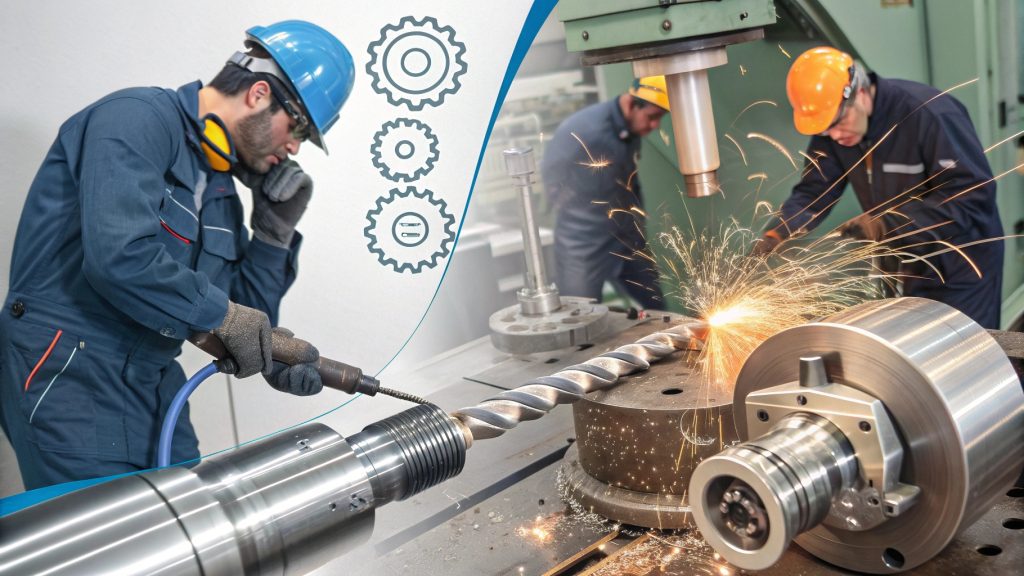
When we talk about machining carbon steel, it's important to know there are different types. The main difference is the amount of carbon. High carbon steel (with about 0.60% to 1.5% carbon) is very hard and strong. This hardness is a double-edged sword. On one hand, it makes machining more difficult. It puts more stress on our cutting tools, and we have to adjust our speeds and feeds carefully to prevent tool breakage. At Worthy Hardware, our engineers have a lot of experience with this. We use specific tooling and techniques to handle it.
On the other hand, this hardness is exactly why it's great for certain applications. Because it's so rigid, we can machine it to have incredibly sharp edges and a very smooth surface finish. This is perfect for things like cutting tools, punches, and dies. After we machine the part, it can be heat-treated to become even harder. So, while it takes more skill to machine high carbon steel, the final result is a part that is extremely strong, wear-resistant, and precise. It’s a trade-off between machinability and final performance.
| Steel Type | Carbon Content | Machinability | Key Property | Common Use |
|---|---|---|---|---|
| Low Carbon | < 0.30% | Excellent | Ductile, Weldable | Structural parts, bolts |
| Medium Carbon | 0.30% - 0.60% | Good | Balanced S&D | Axles, gears |
| High Carbon | > 0.60% | Fair | Very Hard, Strong | Springs, cutting tools |
What are the advantages of carbon steel over stainless steel?
Choosing between carbon steel and stainless steel is a common problem. You want the best performance for your part, but the price difference can be huge. Is stainless steel always the better option?
The main advantages of carbon steel over stainless steel are its lower cost, higher hardness (when heat-treated), and generally better machinability. While it lacks the built-in corrosion resistance of stainless, it is often stronger and more affordable for applications where rust is not the primary concern.
The biggest and most obvious advantage of carbon steel is the price. It is significantly cheaper than stainless steel. Stainless steel contains expensive elements like chromium and nickel that give it its rust-proof quality. Carbon steel doesn't have these, so its raw material cost is much lower. For high-volume projects, this cost saving is huge. Second, carbon steel is typically harder and stronger than stainless steel, especially common grades like 304 or 316. Through heat treatment, we can make carbon steel parts incredibly hard, something that is more difficult to achieve with many stainless steels.
This makes it better for applications that need high strength and wear resistance, like tools or heavy-duty machinery parts. From a manufacturing perspective, many grades of carbon steel are easier to machine. Stainless steel can be "gummy," meaning it can stick to the cutting tool and wear it out faster. Carbon steel is usually more straightforward to cut, which can lead to faster production times and lower machining costs. Of course, the major trade-off is rust. Carbon steel will rust if you don't protect it. But for many indoor or non-corrosive environments, or when a protective coating is applied, carbon steel is the smarter, more economical choice.
| Feature | Carbon Steel | Stainless Steel |
|---|---|---|
| Cost | Low | High |
| Corrosion Resistance | Poor (needs coating) | Excellent |
| Hardness | Good, can be made very hard | Moderate, harder to increase |
| Machinability | Generally good | Can be difficult or "gummy" |
What are the disadvantages of carbon steel?
No material is perfect for every job. You are considering carbon steel, but you are also worried about its weaknesses. What are the potential problems you need to watch out for before you commit?
The biggest disadvantage of carbon steel is its low corrosion resistance; it rusts very easily without a protective coating. It can also be more brittle than other steels, especially high carbon grades, and may not be suitable for applications that need high impact resistance.
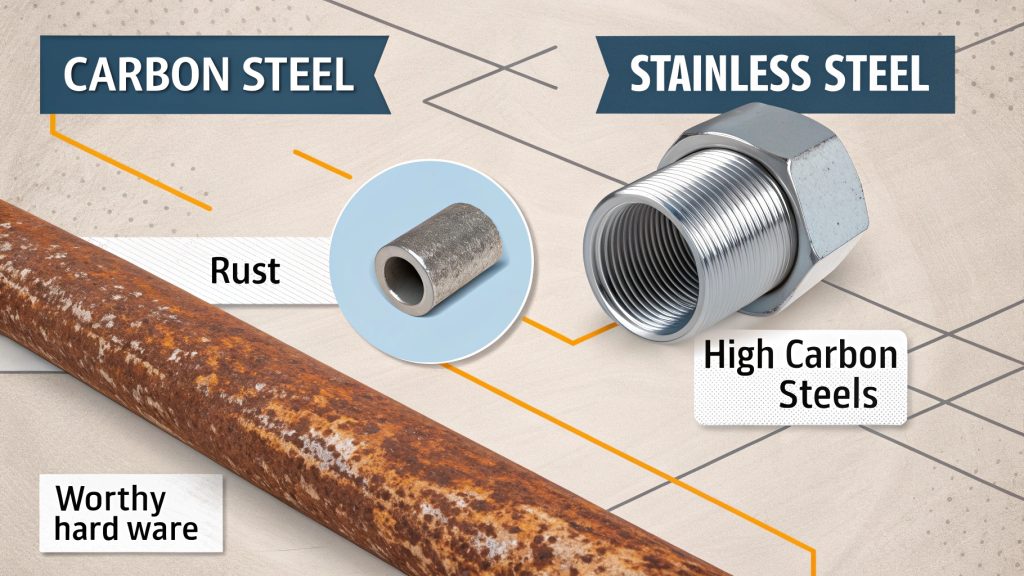
The number one weakness of carbon steel is rust. Unlike stainless steel, it has no natural protection against moisture and oxygen. If a carbon steel part is left exposed to the elements, it will corrode. This is a critical factor you must consider in your design. However, this is a problem with a clear solution. At Worthy Hardware, we handle this every day. We offer over 50 different types of surface finishes to protect the parts we make. We can apply zinc plating, powder coating, anodizing, or specialized paints. This creates a barrier that completely seals the steel from the environment, giving it a long, rust-free life.
Another point to consider is brittleness, particularly with high carbon steels. While they are very hard, they can be less ductile. This means under a sudden, sharp impact, they are more likely to crack or shatter rather than bend. For parts that need to absorb impact energy, a lower carbon steel or a different alloy might be a better choice. Our engineers can help customers select the right grade of steel to get the right balance of hardness and toughness for their specific application, so this is never a surprise. We make sure the material fits the job perfectly.
Conclusion
In summary, carbon steel is a strong, hard, and cost-effective material for precision machining. While it needs protection from rust, its overall performance makes it an excellent choice for many projects.