
What Are The 3 Major Carbon Fiber Weave Patterns And Their Applications?

Confused by carbon fiber weaves? This can impact your project's strength and look. This post clarifies the main patterns, helping you choose wisely for your needs.
The three major carbon fiber weave patterns are Plain Weave, Twill Weave, and Satin Weave. Each offers distinct appearances and mechanical properties, making them suitable for different applications where strength, flexibility, or aesthetics are key.
Understanding these patterns is just the beginning. As someone who works with custom CNC machined parts daily at Worthy Hardware, I know how material choice, including specific carbon fiber weaves, can make or break a project. Let's explore these weaves and their uses more, so you can make informed decisions. Keep reading to find out more.
What are the different types of carbon fiber patterns?
So many carbon fiber patterns out there! It can be overwhelming to pick one. Let's explore the key types to make your choice much easier.
Carbon fiber patterns include Plain Weave (simple criss-cross), Twill Weave (diagonal pattern), and Satin Weave (smooth, flat surface). Other variations exist, like unidirectional (UD) for specific strength directions, offering diverse structural and visual properties.
When we talk about carbon fiber patterns, we're discussing how the carbon fiber filaments, or tows, are interlaced. As I've learned in my years at Worthy Hardware, the same basic carbon fiber strands can create very different materials based on their weave. This is because the weave structure directly influences the fabric's stability, how well it drapes over complex shapes, and its mechanical performance.
Plain Weave
Plain weave is the most straightforward. Each tow passes over one tow and then under the next, creating a simple checkerboard look. It's quite stable and easy to handle. However, this tight weave can sometimes make it a bit stiff and harder to conform to very complex molds. It also has more crimp (the waviness of the fibers), which can slightly reduce its ultimate strength compared to other weaves.
Twill Weave
Twill weave is very common, especially the 2x2 twill (each tow passes over two tows and under two tows). This creates a distinct diagonal pattern, like you see in denim. Twill weaves are more pliable than plain weaves, so they drape better over curved surfaces. They also have a bit less crimp, offering a good balance of strength and formability. I've seen many clients, like Mark Chen, prefer this for parts needing a mix of aesthetics and performance.
Satin Weave
Satin weaves (e.g., 4-harness, 5-harness, 8-harness) have fewer interlacing points. A tow will float over several other tows before going under one. This results in a very smooth, flat surface with excellent drapability. It’s great for complex contours. The reduced crimp also means potentially higher strength in specific directions. However, satin weaves can be less stable and more prone to fraying during handling.
| Weave Type | Stability | Drapability | Appearance | Crimp |
|---|---|---|---|---|
| Plain | High | Moderate | Checkerboard | High |
| Twill | Moderate | Good | Diagonal lines | Medium |
| Satin | Low | Excellent | Smooth, lustrous | Low |
Understanding these differences helps us select the best pattern for a specific application, balancing handling, performance, and looks.
What is the weave pattern of carbon fiber?
Unsure what "weave pattern" means for carbon fiber? It's crucial for strength, flexibility, and even how your final part looks. We'll define it simply here.
A carbon fiber weave pattern refers to the specific way carbon fiber tows (bundles of filaments) are interlaced to form a fabric. This pattern dictates the material's mechanical properties, handling characteristics, and visual appearance, like a checkerboard or diagonal design.
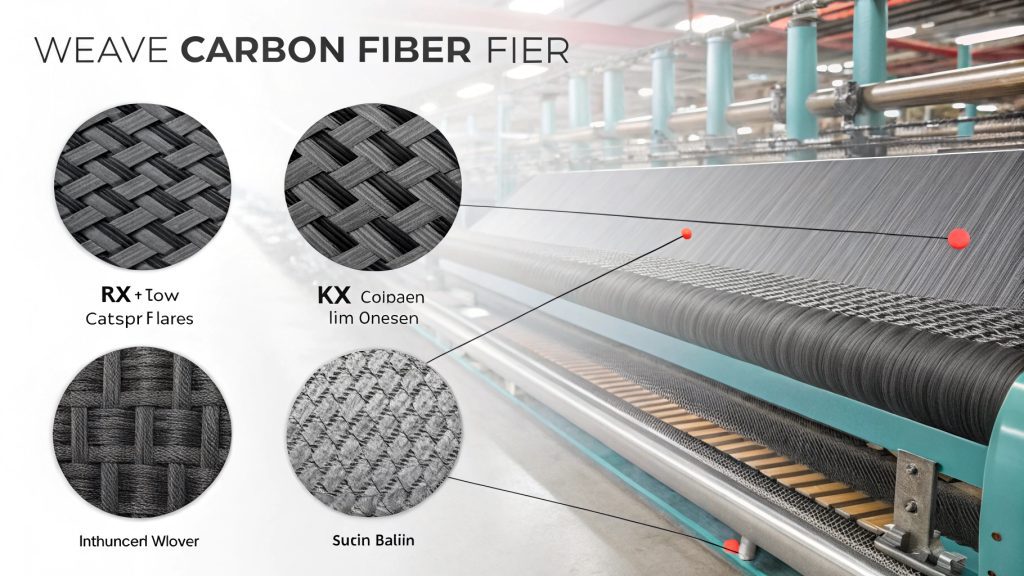
The weave pattern of carbon fiber is fundamental. It's how we turn individual carbon fiber strands into a usable fabric sheet. Think of it like weaving cloth from threads, but with super-strong carbon filaments. At Worthy Hardware, when we discuss carbon fiber parts, understanding the weave is as important as the carbon fiber grade itself.
Understanding Fiber Tows
First, let's talk about tows. Carbon fibers are bundled into "tows," which are like yarns. These tows are designated by the number of filaments they contain, like 1K (1,000 filaments), 3K (3,000 filaments), 6K, or 12K. The size of the tow influences the thickness of the fabric and the visual scale of the weave pattern.
For example, a 3K plain weave will have a smaller, tighter checkerboard than a 12K plain weave. My insight is that the same carbon fiber filaments, when woven differently using these tows, result in distinct patterns like 3K twill, plain, or satin.
Impact of Weave on Strength and Drape
The way these tows are interlaced—over one, under one (plain); over two, under two (twill); or with longer floats (satin)—is the "weave pattern." This interlacing directly impacts:
-
Stability: How well the fabric holds its shape and resists distortion during handling and layup. Plain weave is generally the most stable.
-
Drapability (Conformability): How easily the fabric can be molded over complex curves without wrinkling or bridging. Satin weaves excel here, followed by twills.
-
Mechanical Properties: The amount of "crimp" (the bends in the fibers as they pass over and under each other) affects strength. Less crimp generally means straighter fibers, which can translate to higher tensile strength in that direction. Unidirectional fabrics, with no weave, offer the highest strength in the fiber direction.
Aesthetic Considerations
Beyond performance, the weave pattern is also a major aesthetic feature. Many clients choose a particular weave, like a 2x2 twill, simply because they like its classic, sporty look. The reflectivity and depth of the pattern can be quite striking, especially under a clear coat. We often advise on how the pattern will appear on the final product, as this is a key concern for consumer-facing parts. For someone like Mark Chen, who sells parts to end-users, appearance can be just as important as performance.
What are the applications of carbon fiber?
Carbon fiber seems like a high-tech material. But where is it actually used in the real world? Discover its surprisingly diverse applications across many industries today.
Carbon fiber is used in aerospace (aircraft structures, satellites), automotive (race cars, supercars, performance parts), sporting goods (bikes, rackets, fishing rods), industrial (robotics, tooling), and medical fields (prosthetics, implants) due to its high strength-to-weight ratio.
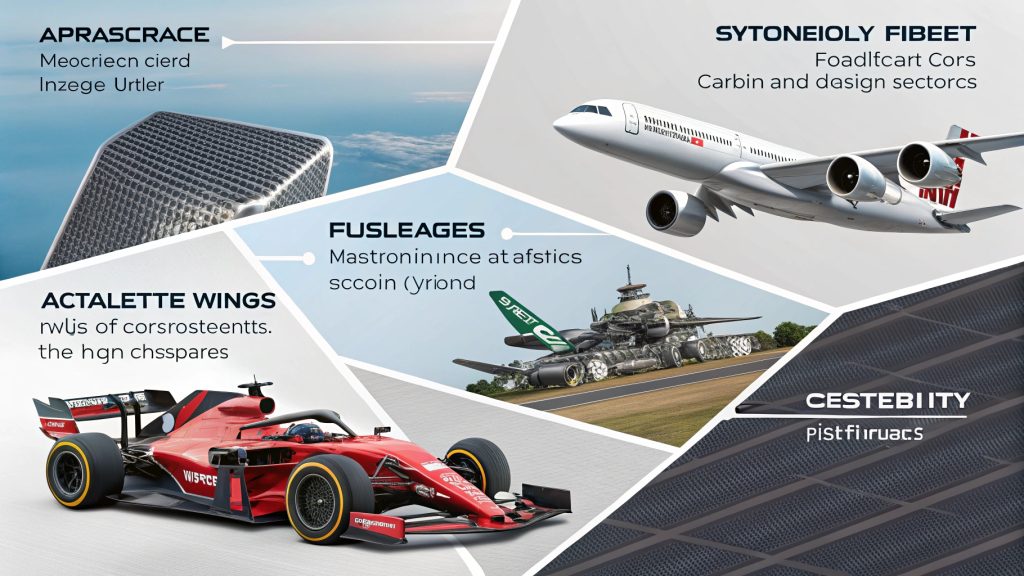
The applications of carbon fiber are incredibly varied, thanks to its amazing properties like high tensile strength, low weight, high stiffness, and excellent corrosion resistance. I've seen its use grow significantly over the years. At Worthy Hardware, while we machine many materials, the demand for carbon fiber components highlights its expanding role.
Aerospace and Defense
This was one of the earliest and still is one of the largest markets. Carbon fiber is used for aircraft wings, fuselages, empennages, and interior components. Its light weight saves fuel, and its strength ensures structural integrity.
Satellites and rocket components also rely heavily on carbon fiber for its thermal stability and low mass. We sometimes get requests for precision components that are part of larger aerospace assemblies, and the material choice is almost always carbon fiber or high-grade aluminum.
Automotive Sector
From Formula 1 race cars to high-performance supercars, carbon fiber is key for reducing weight and increasing speed and handling. You'll find it in chassis, body panels, spoilers, and interior trim.
Increasingly, it's also appearing in more mainstream vehicles to improve fuel efficiency and safety, especially in electric vehicles where battery weight is a concern. Our experience with custom CNC parts often includes prototypes for innovative automotive designs using carbon fiber.
Sporting Goods
This is where many consumers first encounter carbon fiber. Bicycle frames, tennis rackets, golf club shafts, fishing rods, hockey sticks, and even running shoe components use carbon fiber to make them lighter, stiffer, and more responsive, enhancing athlete performance.
Industrial and Medical Uses
In industrial settings, carbon fiber is used for robotic arms (lighter means faster, more precise movement), tooling, and various machine components. In the medical field, its biocompatibility (in certain forms) and radiolucency (X-rays pass through it) make it suitable for surgical instruments, implants, and prosthetic limbs. The precision we offer at Worthy is critical for these applications.
The list goes on, from musical instruments to architectural elements. Its versatility continues to open up new possibilities.
What are the different types of carbon fiber?
"Carbon fiber" sounds like one specific thing. But there are actually many variations of this advanced material. Let's learn about the main types available.
Carbon fiber types vary by precursor material (like PAN or Pitch), tow size (e.g., 1K, 3K, 12K filaments per tow), and mechanical properties (standard, intermediate, high, or ultra-high modulus/strength), each tailored for specific performance needs.
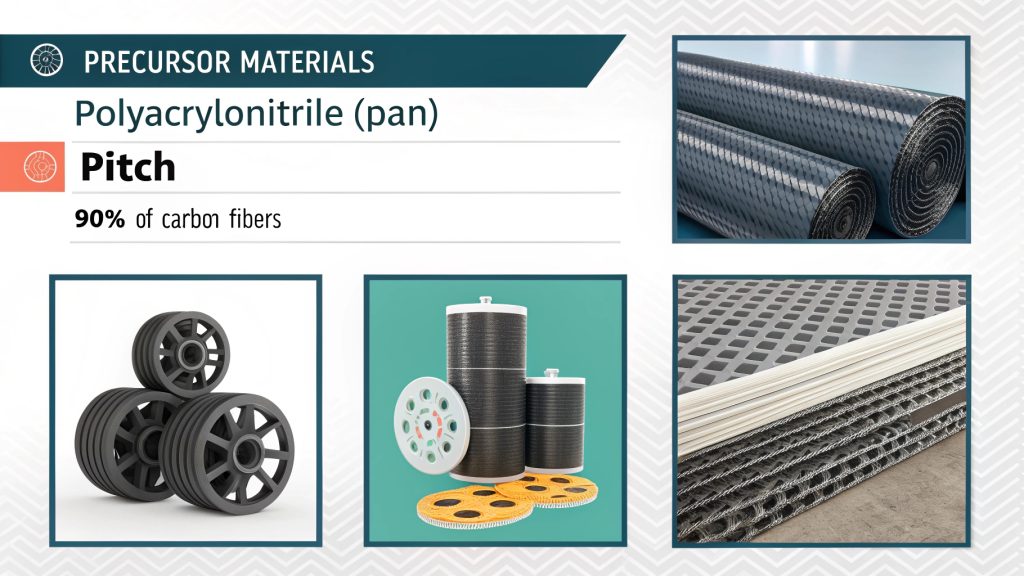
When we talk about "carbon fiber," it's not a single, uniform material. There are several distinct types, and choosing the right one is crucial for any application. In my work at Worthy Hardware, helping customers select materials is a big part of what we do, and understanding these distinctions is key.
Based on Precursor Material
Most carbon fibers (around 90%) are made from Polyacrylonitrile (PAN). PAN-based carbon fibers offer a good balance of strength and stiffness and are widely used.
Another type is made from Pitch, which can be isotropic or mesophase. Mesophase pitch-based carbon fibers can achieve extremely high stiffness (Young's modulus) and high thermal conductivity, making them suitable for specialized applications like satellite components.
Based on Mechanical Properties
Carbon fibers are often categorized by their tensile strength and tensile modulus (stiffness):
-
Standard Modulus (SM): The most common type, offering good strength and stiffness.
-
Intermediate Modulus (IM): Higher tensile strength than SM.
-
High Modulus (HM): Very high stiffness, often used where rigidity is paramount, sometimes at the expense of some tensile strength.
-
Ultra-High Modulus (UHM): Extremely high stiffness.
There are also high-tensile-strength (HT) and ultra-high-tensile-strength (UHT) fibers. The choice depends on whether the application demands more strength or more stiffness, or a balance of both.
Based on Tow Size
As mentioned earlier, carbon fibers are bundled into tows. The tow size (number of filaments, e.g., 1K, 3K, 6K, 12K, 24K, 50K) also defines a type of carbon fiber material.
-
Small Tows (1K, 3K, 6K): Often used for weaving intricate fabrics and for applications where a thinner laminate or finer appearance is desired. I find 3K is very popular for visible components due to its aesthetic appeal.
-
Large Tows (12K, 24K, 50K and above): Generally more cost-effective for manufacturing larger parts or thicker laminates quickly, as more material is laid down at once. These are common in unidirectional tapes and for large-scale industrial applications.
Selecting the right type of carbon fiber involves considering the performance requirements, manufacturing process, and cost. Each type offers a unique set of characteristics suitable for different end uses.
Conclusion
Understanding carbon fiber weaves and types helps you choose the best material for strength, looks, and performance. Plain, twill, and satin are key weaves with distinct uses.