
How Long Does 18/10 Stainless Steel Last in Different Environments?

Worried your stainless steel parts won't last? Fear premature rust and costly replacements? I'll explain how long 18/10 stainless steel, or SS316, truly endures.
18/10 stainless steel (SS316) can last for decades. Its lifespan is 20-50+ years in typical outdoor settings and over 30 years in seawater, especially if maintained and passivated.
Understanding how long materials last is really important when you're planning a project or ordering parts. You want to know you're making a good investment. That's why I want to share what I've learned about 18/10 stainless steel, which many of my clients, like Mark Chen from Canada, ask about. Let's look closer at what affects its lifespan in different places.
How long does it take for stainless steel to degrade?
Concerned about when stainless steel might start to fail? Wasting money on materials that degrade too quickly is a big worry. I will explain the degradation timeline for you.
Stainless steel degrades very slowly. For 18/10 (SS316), significant degradation like serious rust might take many decades or even centuries in mild environments, but much less in very harsh, untreated conditions.
When we talk about "degrade" for stainless steel, we mostly mean corrosion, like rust or pitting. It doesn't break down like plastic. How fast this happens depends a lot on a few things.
First, the type of stainless steel matters. We are talking about 18/10, which is a common name for SS316. This grade has molybdenum in it, which really helps fight off rust, especially from salt.
Second, the environment is a huge factor. Is it indoors, dry, and clean? Or is it outdoors, near the ocean, or in a factory with chemicals? These make a big difference.
Third, how it's treated is important. At Worthy, we often talk about passivation. This is a process we can do after machining your parts. Passivation cleans the surface and helps form a strong protective layer. This layer is what stops rust. If this layer gets damaged and doesn't repair itself, or if there's always dirt or harsh stuff on the surface, then corrosion can start.
For SS316, if it's just sitting in a normal room, it could look new for an incredibly long time, maybe hundreds of years. But if you put it in a very aggressive chemical without any care, it might show damage much sooner. So, it's not a simple one-answer-fits-all.
How long does stainless steel last outdoors?
Wondering if stainless steel will hold up outside? The thought of outdoor fixtures rusting and needing replacement is frustrating. Here, I'll give you the facts for outdoor use.
18/10 (SS316) stainless steel generally lasts 20 to 50 years or more outdoors. In less corrosive outdoor areas, it can last even longer with minimal maintenance.
!
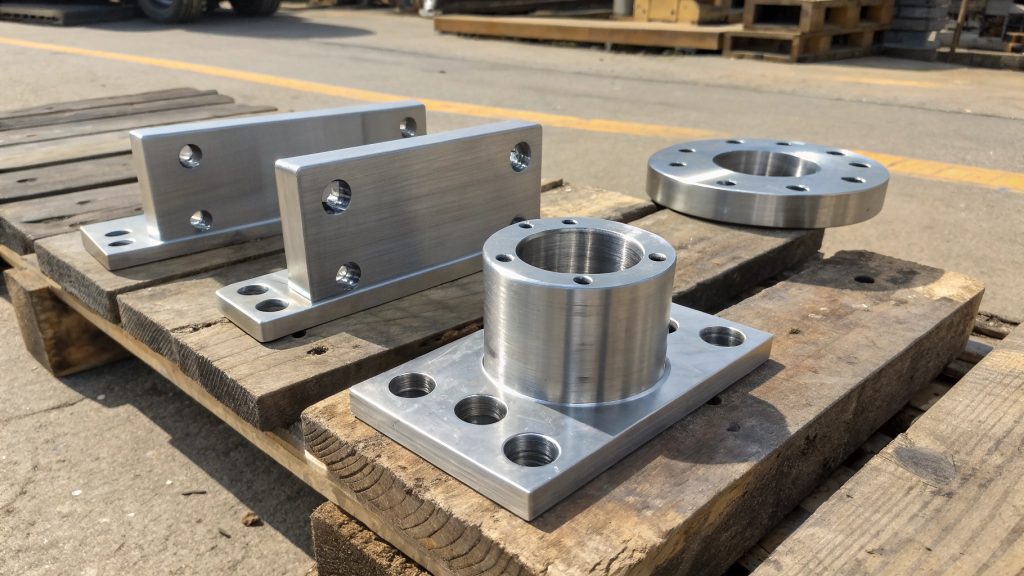
When I get orders for parts that will be used outside, like custom CNC machined brackets or fixtures, customers often ask about longevity. For 18/10 stainless steel, which we call SS316, it's a great choice for many outdoor spots.
The key thing is, "outdoors" can mean many different places.
-
Rural areas: Far from the sea and heavy industry, SS316 can last for many decades, often 50 years or more, with very little change. Rain will wash it, and there aren't many corrosive things in the air.
-
Urban areas: Here, there might be more pollution, which can make the surface a bit dirtier and slightly increase corrosion risk over a very long time. Still, SS316 performs very well, usually lasting 20-40 years easily.
-
Industrial areas: If there are chemical fumes or specific pollutants, the lifespan might be a bit less, or it might need more frequent cleaning. But SS316 is still a strong performer compared to many other metals.
-
Coastal areas (not direct sea spray): If it's near the coast but not getting splashed by waves, the salt in the air is a factor. SS316 is good here because of its molybdenum content. It should still last for many years, often 20+ years, but regular cleaning to wash off salt deposits helps a lot.
Passivation, which I mentioned earlier, is really helpful for outdoor parts. It gives the stainless steel the best possible start to resist any rust. Simple cleaning, just washing with water, can also make a big difference in making it last longer outdoors by removing any dirt or salts that could cause problems.
What is the life expectancy of stainless steel?
Trying to figure out the general lifespan of stainless steel? Planning for how long your investment will last needs clear information. I will provide a comprehensive answer here.
The life expectancy of stainless steel varies hugely, from a few years in extreme conditions to over a century in mild ones. For 18/10 (SS316), expect decades of service in most applications.
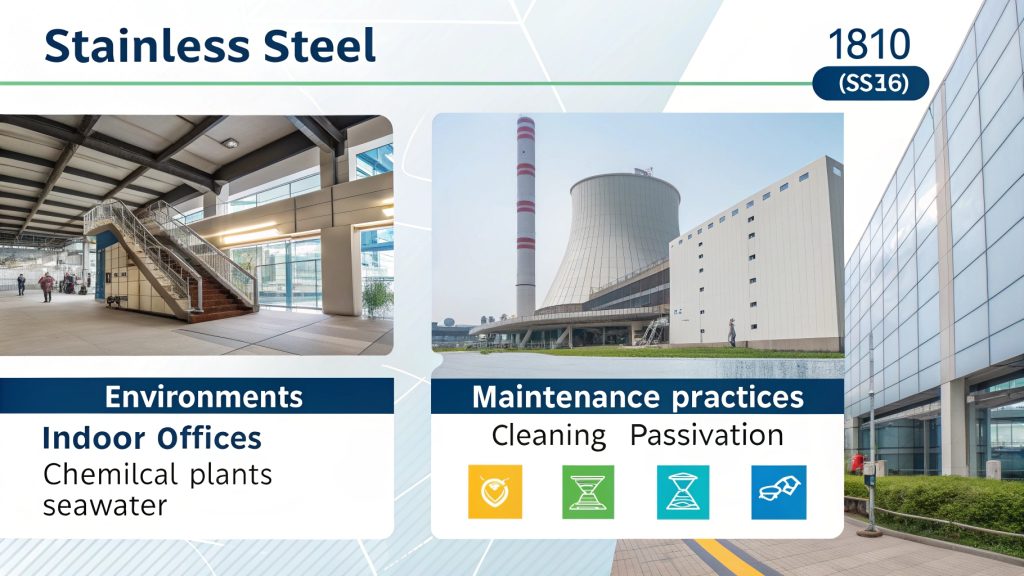
Many people ask me for a simple number for stainless steel life expectancy. It's a bit like asking how long a car will last – it depends on the car, how you use it, and how you maintain it.
For stainless steel, the main things are:
-
The specific grade: There are many types of stainless steel. 18/10 (or SS316) is what we're focusing on, and it's a very good, corrosion-resistant grade. Other grades, like SS304, are also common but SS304 doesn't have molybdenum, so it's not as good against salt or strong chlorides. It might last a very long time indoors but not as long as SS316 near the coast.
-
The environment it's in: This is super important. An indoor, climate-controlled office is very different from a chemical processing plant or being submerged in seawater.
-
Maintenance and surface condition: Keeping stainless steel clean and ensuring its passive layer is intact helps it last much longer. Passivation treatment at the start is a big plus.
Here's a very general idea for different grades and environments:
| Stainless Steel Grade | Mild Environment (e.g., indoors, rural outdoors) | Moderate Environment (e.g., urban outdoors, some industrial) | Harsh Environment (e.g., marine, heavy industrial, chemical) |
|---|---|---|---|
| SS304 (e.g., 18/8) | 50+ years | 10-30 years | 1-10 years (may need frequent replacement or is unsuitable) |
| SS316 (18/10) | 100+ years | 20-50+ years | 5-30+ years (depends on severity and maintenance) |
| Duplex Stainless | 100+ years | 50+ years | 25-50+ years (very good in harsh conditions) |
These are just rough estimates. At Worthy, when a customer like Mark sends a design, we sometimes discuss the application if we see a material choice might not be optimal. We want the custom CNC parts we make to perform well for a long time. So, for 18/10 (SS316), you're generally looking at a very long service life if you use it in the right place.
How long does stainless steel last in the ocean?
Worried about how stainless steel holds up in the harsh marine environment? Costly failures of parts used at sea are a serious concern. I will give you specific insights for ocean use.
18/10 (SS316) stainless steel can last 15 to 30 years or even more in the ocean, especially if properly selected for the specific marine application and maintained.
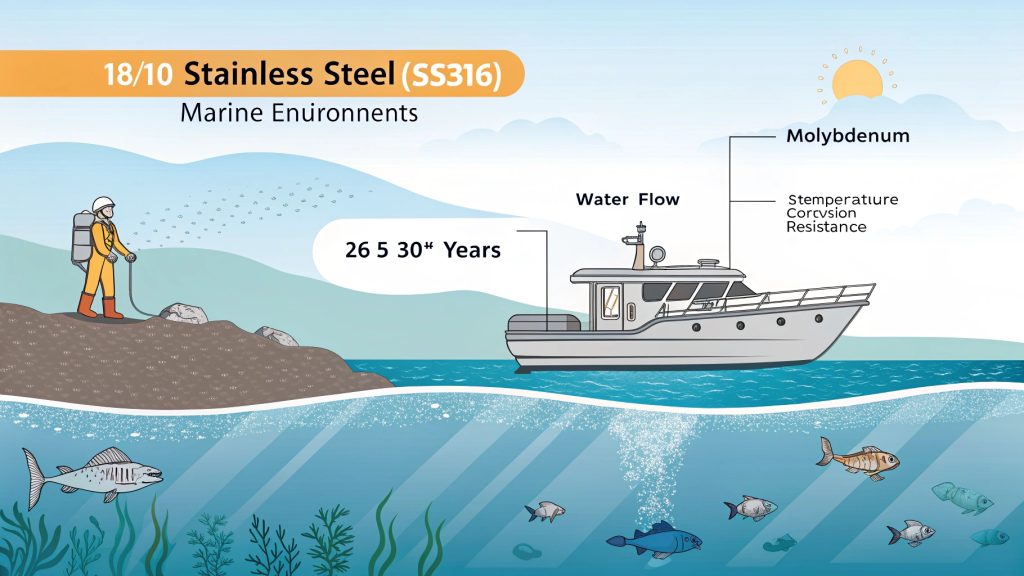
The ocean is one of the toughest places for metals. Saltwater, especially the chlorides in it, is very corrosive. When my clients need CNC machined parts for marine applications, like boat fittings or underwater equipment, material choice is critical.
18/10 stainless steel, which is SS316, is often called "marine grade" stainless steel for a good reason. The "10" in 18/10 usually refers to the nickel content, but for marine use, the key ingredient in SS316 is molybdenum (usually 2-3%). Molybdenum significantly boosts its resistance to pitting and crevice corrosion caused by chlorides.
So, how long does it last?
-
Above the waterline (splash zone): Parts that get splashed but aren't always wet can last a long time, maybe 20-30+ years if they are rinsed with fresh water sometimes. Salt can dry and concentrate, which is aggressive.
-
Submerged in seawater: Fully submerged SS316 can also last for many years, often 15-25 years or more. Factors like water flow, temperature, and pollution levels in the water matter. In clean, flowing seawater, it performs better.
-
Crevices: One thing to watch out for in marine environments is crevice corrosion. This happens in tight gaps where water can get trapped and become stagnant. Good design of parts can help reduce this.
Using passivated SS316 is very important for ocean use. It helps form that strong, protective chromium oxide layer. Regular cleaning to remove salt deposits and marine growth can also extend its life. For very critical applications or extremely harsh marine conditions, sometimes even higher grades of stainless steel (like duplex or super duplex) are chosen, but SS316 is a very good and common choice. We've machined many SS316 components for customers who use them in marine settings, and they rely on its durability.
Conclusion
In short, 18/10 (SS316) stainless steel is very durable. Its lifespan depends on the environment and care, but it often lasts for decades, even in tough conditions.