
What Are the Differences Between CNC Milling and CNC Drilling
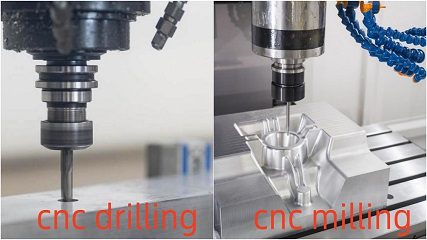
Struggling to choose the right CNC process for your parts? Selecting the wrong one can lead to design flaws and costly rework, delaying your entire project timeline.
CNC drilling creates round holes by moving a tool along a single, vertical axis. In contrast, CNC milling is more versatile. Its cutting tool can move along multiple axes to create not only holes but also slots, flat surfaces, and complex three-dimensional contours.
It might seem like a small detail, but the functional differences between these two operations are significant for any manufacturing project. I've seen many clients benefit from understanding these distinctions before starting production. Let's look closely at the core concepts of drilling and milling to see how they impact your final product.
What Are the Basic Concepts and Differences Between Drilling and Milling?
In my experience, the best way to understand the difference is to think about the tool's movement. CNC drilling is like using a hole punch; its purpose is very clear, which is to create a standard round hole vertically downwards. CNC milling is more flexible, as the tool can move in multiple directions. It can not only drill holes but also cut planes, grooves, and various complex shapes.
CNC Drilling: The Fundamentals
CNC drilling is a machining process that uses a rotating drill bit to produce a round hole in a stationary workpiece. The primary motion is the rotation of the drill bit and its axial movement into the material.
- Tool: A multi-point cutting tool called a drill bit.
- Movement: The tool moves along a single axis (the Z-axis) into the workpiece. The workpiece itself does not move during the cutting operation.
- Purpose: The sole function is to create holes. These can be through-holes (passing completely through the material) or blind-holes (stopping at a specific depth).
- Applications: It is ideal for creating simple, round holes for bolts, screws, pins, or for tapping threads.
CNC Milling: The Fundamentals
CNC milling is a much more versatile machining process. It uses a rotating multi-point cutting tool to remove material from a workpiece. The key difference is that the cutting tool can move along multiple axes, and in some cases, the workpiece can also move.
- Tool: A multi-point cutting tool called a milling cutter or end mill.
- Movement: Can occur along multiple axes (X, Y, and Z). This allows for cutting on the periphery and face of the tool.
- Purpose: Milling can perform a wide range of operations, including:
- Creating flat surfaces (face milling).
- Cutting slots, pockets, and grooves (peripheral milling).
- Drilling holes.
- Shaping complex 3D contours and profiles.
- Applications: It is used for manufacturing a huge variety of components, from simple brackets to complex aerospace parts and medical device housings.
How Does Milling Technology Work in CNC Manufacturing?
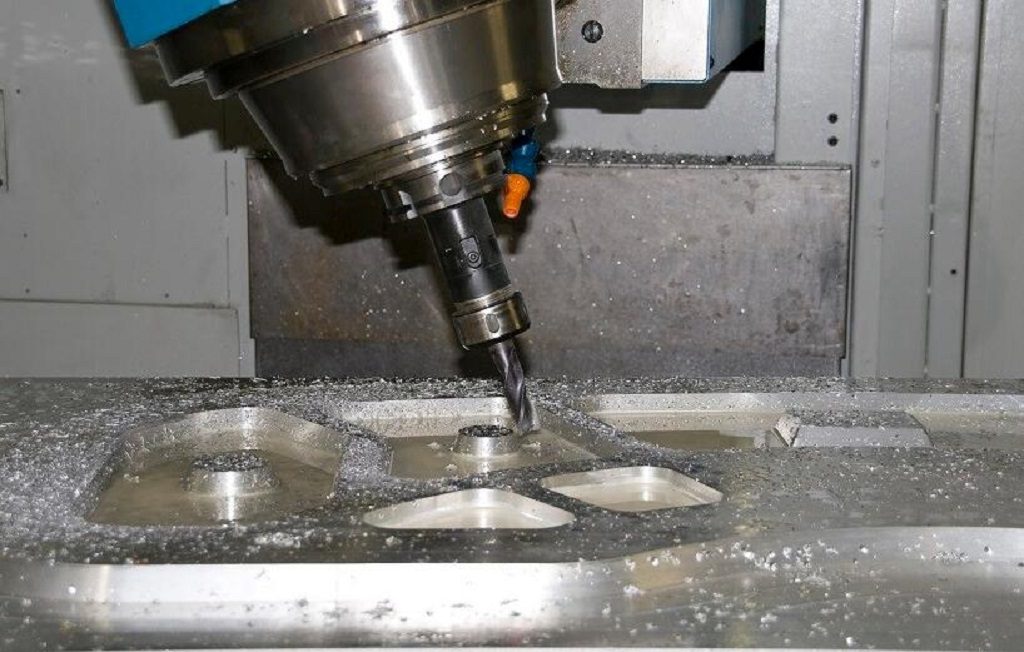
Milling technology is the foundation of modern CNC machining because of its flexibility. A milling machine, controlled by a computer program, can perform a sequence of operations without manual intervention, ensuring high precision and repeatability.
The process starts with a solid block of material, called the workpiece, which is secured to the machine's table. The CNC controller then directs the rotating cutting tool to move along the programmed path.
Key Milling Operations
There are several primary milling operations that we use at Worthy Hardware to create custom parts for our clients.
- Face Milling: This operation creates a flat, smooth surface on the top of the workpiece. The axis of the cutter is perpendicular to the surface being machined.
- Peripheral Milling: This involves cutting with the sides of the end mill. It is used to create features like slots, pockets, steps, and vertical walls.
- Contour Milling: For more complex parts, the machine follows a contoured path in two or three dimensions to create curved surfaces, chamfers, and intricate profiles.
- Hole Making: While drilling is the specialist, a milling machine can also create holes. It can use a standard drill bit, or it can use an end mill to create a hole through a process called interpolation, which allows for non-standard hole sizes and shapes.
Comparison Table: CNC Drilling vs. CNC Milling
| Feature | CNC Drilling | CNC Milling |
| Primary Function | Creating round holes of a specific diameter. | Creating a wide variety of features (surfaces, slots, holes). |
| Tool Movement | Single-axis (Z-axis). | Multi-axis (X, Y, and Z-axis). |
| Tool Type | Drill bit. | End mill or other milling cutters. |
| Workpiece | Stationary. | Can be stationary or move in coordination with the tool. |
| Complexity | Simple, single-purpose operation. | Can perform simple to highly complex geometric operations. |
| Chip Formation | Chips are evacuated up the flutes of the drill bit. | Chips are removed from the side or face of the cutting tool. |
| Typical Application | Bolt holes, pilot holes for tapping. | Engine blocks, molds, custom enclosures, complex brackets. |
What is Drilling Technology and How is it Applied?

The core of the technology is precision and repeatability. A G-code program tells the machine the exact coordinates (X and Y) for the hole's location and the depth (Z-axis) to drill.
- Tool: A multi-point cutting tool called a drill bit, designed specifically for creating cylindrical holes.
- Movement: The drill bit rotates at high speed and moves vertically down into the material. The workpiece does not move during the cutting.
- Chip Evacuation: As the drill bit cuts, spiral grooves on the tool, called flutes, carry chips up and out of the hole.
Common Applications of CNC Drilling
Drilling is fundamental in almost every manufacturing project. We use it at Worthy Hardware for a wide range of applications:
- Pilot Holes: Small holes drilled to guide a larger drill bit or a tap.
- Clearance Holes: Holes large enough for a screw or bolt to pass through without engaging threads.
- Tapped Holes: Holes that have internal threads cut into them for fastening. This is a secondary operation after drilling.
- Counterboring: Creates a flat-bottomed, enlarged hole at the opening, allowing a bolt head or nut to sit flush with or below the surface.
- Countersinking: Creates a cone-shaped opening for a countersunk screw to sit flush with the surface.
How Do Milling and Drilling Compare in CNC Machining?
| Feature | CNC Drilling | CNC Milling |
| Primary Function | Creating round holes. | Cutting complex geometries, surfaces, pockets, slots, and holes. |
| Tool Movement | Single-axis (Z-axis) into the part. | Multi-axis (X, Y, and Z axes) around and into the part. |
| Tool Type | Drill bit (designed for axial cutting). | End mill (designed for both axial and side cutting). |
| Workpiece Position | Stationary during the cut. | Can be stationary or move on a table for added axes of motion. |
| Versatility | Low. Limited to one type of feature. | High. Can produce a vast range of shapes and features. |
| Cost & Speed | Faster and more cost-effective for making holes. | Slower and more costly, but necessary for complex parts. |
What Are the Advantages and Disadvantages of Milling vs Drilling?
CNC Drilling: Focused and Efficient
Drilling is a highly optimized process for a single task. This specialization brings clear benefits and limitations.
Advantages:
- Speed: For creating standard holes, drilling is significantly faster than milling. The tool path is simple and direct.
- Cost-Effectiveness: Because it is faster and requires simpler programming, drilling is the most economical way to produce holes in high volumes.
- Simplicity: The process is straightforward, using a single-axis movement that is easy to program and execute.
Disadvantages:
- Limited Functionality: Drilling can only do one thing: create round holes. It cannot create surfaces, pockets, or other geometric features.
- Fixed Hole Shapes: You are limited to the circular shape and size of the drill bit.
- Chip Evacuation: In very deep holes, it can be difficult to remove chips effectively, which can affect hole quality and tool life.
CNC Milling: Versatile and Capable
Milling is the workhorse of the CNC machining world due to its incredible flexibility.
Advantages:
- Extreme Versatility: A milling machine can create flat surfaces, pockets, slots, contours, and complex 3D shapes. It can also drill holes.
- Complex Geometries: With 3, 4, or 5-axis capabilities, milling can produce highly intricate parts that are impossible with other processes.
- Hole Flexibility: Milling can create holes of non-standard sizes or shapes (like ovals) through a process called interpolation.
- Single Setup Machining: A complex part with holes, slots, and surfaces can often be completed in a single setup, which improves accuracy by ensuring all features are perfectly aligned.
Disadvantages:
- Slower Speed for Holes: Using a milling cutter to create a hole (interpolation) is slower than using a drill bit.
- Higher Cost: Milling operations involve more complex programming and longer machine run times, which increases the cost per part compared to a simple drilling operation.
- Increased Complexity: Setting up a milling job requires more skill and preparation than a simple drilling task.
How to Choose Between Milling and Drilling for Your Project?
Choose CNC Drilling When:
- Your part's only feature is standard round holes. If the design requires nothing but holes, drilling is the clear winner for speed and cost.
- You have a high volume of identical parts that need holes. The efficiency of drilling is magnified in mass production scenarios.
- Cost is the primary driver and the design is simple. For basic brackets or plates that only need mounting holes, dedicated drilling is ideal.
Choose CNC Milling When:
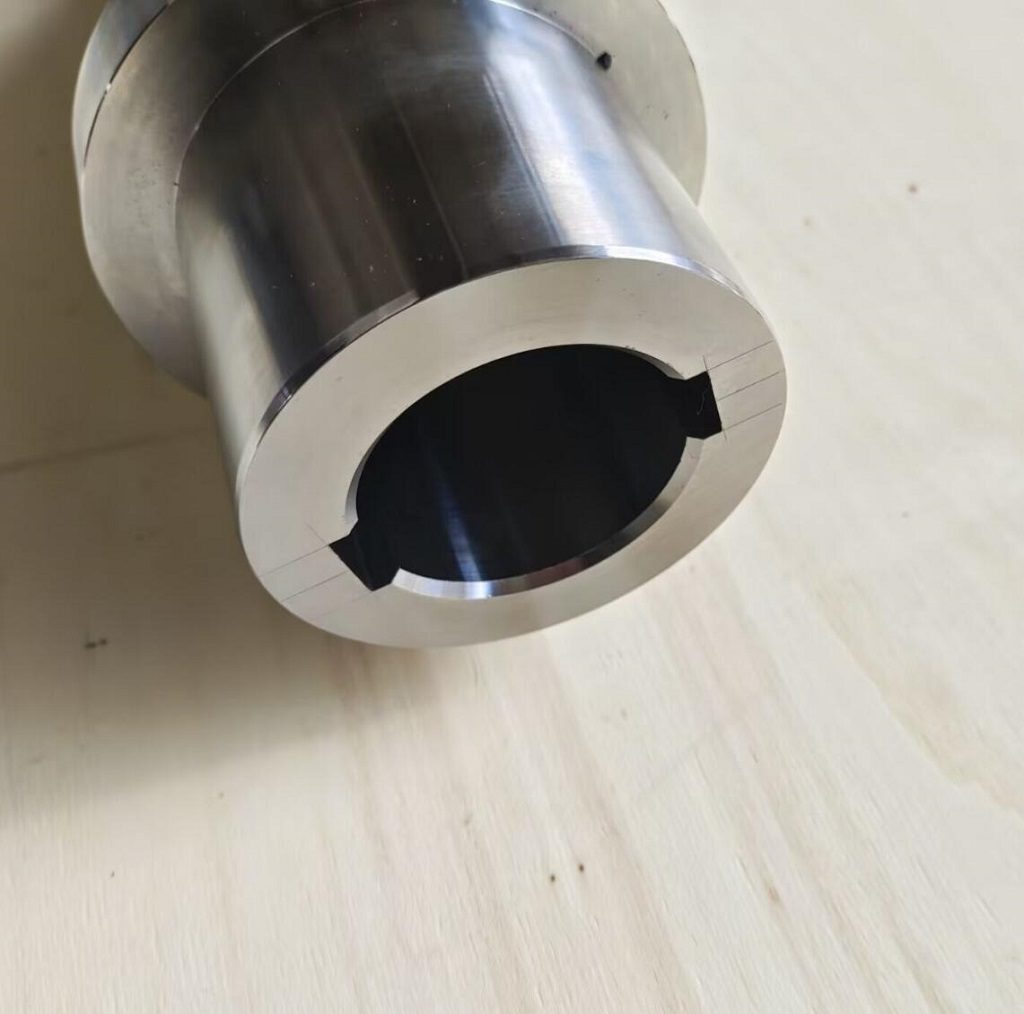
- Your part requires any feature besides a round hole. This includes flat surfaces, steps, pockets, slots, chamfers, or any 3D contours.
- You need non-standard hole shapes or sizes. Milling is the only way to create oval, square, or custom-shaped openings.
- High precision between different features is critical. If the location of a hole relative to a slot or edge is very important, machining the entire part in a single milling setup ensures the best possible accuracy.
- Your part is complex. For components in industries like aerospace, medical, or robotics, milling is almost always necessary to achieve the required geometry.
Conclusion
In short, your part's design dictates the best method. Choose CNC drilling for fast, low-cost round holes. For any other feature, including slots, surfaces, or complex shapes, CNC milling is the versatile and necessary choice to bring your design to life accurately.