
Everything You Need to Know About Annealing and Normalizing Process
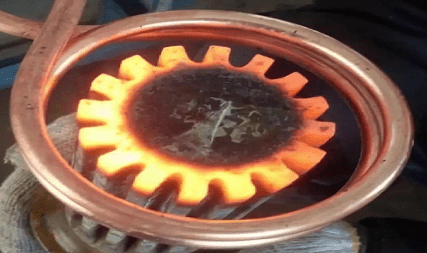
Confused about heat treatment? Choosing the wrong process can ruin expensive steel parts, leading to costly waste and production delays. Understanding annealing and normalizing is your first step to preventing these issues
Both annealing and normalizing are heat treatments used to improve the properties of steel. Annealing involves very slow cooling to produce a soft, ductile material. Normalizing uses faster air cooling to create a stronger, harder material with a refined grain structure. The simple definitions are a good start, but the real success of these treatments lies in the details of the process. In my years of experience, I've seen how overlooking a single step can lead to failure. Let's walk through the entire process, from preparation to final inspection, so you can get it right every time.
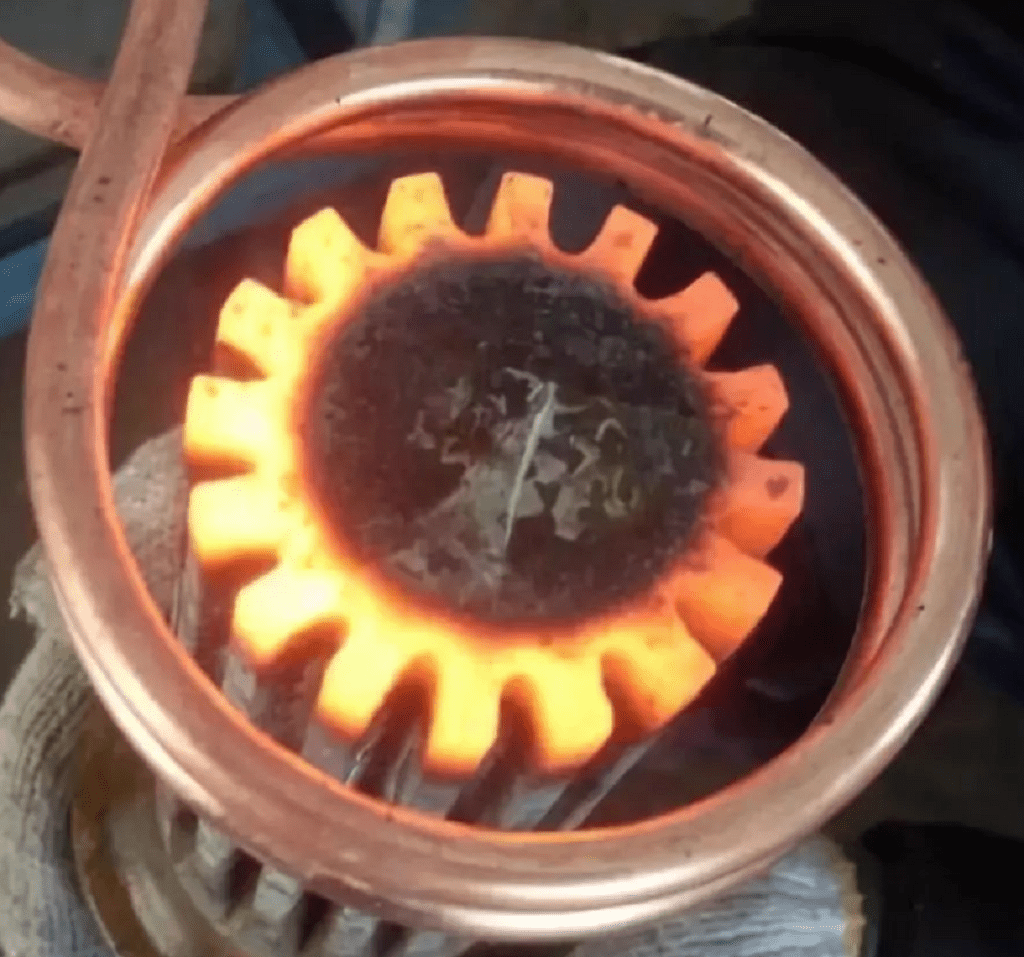
What Shoud We Do in the Preparation Stage?
(1) Check whether the equipment and instrument are normal, and clean the furnace in advance.
(2) Check whether the material is consistent with the drawing, and understand the technical requirements and process provisions of the parts.
(3) The machining allowance of the sampled parts should be greater than the allowable deformation.
(4) Select appropriate tools and fixtures, and consider the method of loading out of the furnace.
(5) For parts that are not allowed to undergo surface oxidation or decarburization, vacuum treatment, protective atmosphere treatment, or necessary protection should be adopted, such as load it into a box with charcoal or cast iron chips, etc.
(6) For the repaired parts of salt furnace quenching, the surface should be cleaned to prevent corrosion.
What Is The Process Specifications?
(1) Heating temperature
1) Annealing temperatures for common steels
Table 3-7-2 Annealing temperature of commonly used steels
| grade of steel | Full annealing temperature/℃ | Isothermal annealing temperature/℃ | Global Degradation Temperature/°C | hardness HBS | ||
| heat | isothermality | heat | isothermality | |||
| 08 | 960 ~ 1000 | ≤ 131 | ||||
| 65Mn | 800 ~ 830 | 179 ~ 229 | ||||
| 60Si2MnA | 760 ~ 780 | 179 ~ 229 | ||||
| 50cryA | 830 ~ 850 | 179 ~ 229 | ||||
| Gcr6 | 850 ~ 870 | 720 ~ 750 | 179 ~ 229 | |||
| Gcr15 | 850 ~ 870 | 720 ~ 750 | 179 ~ 229 | |||
| Gcr15SiMn | 850 ~ 870 | 720 ~ 750 | 179 ~ 229 | |||
| T8、T8A | 750 ~ 770 | 750 ~ 770 | 640 ~ 660 | 156 ~ 207 | ||
| T10、T10A | 750 ~ 780 | 850 ~ 870 | 670 ~ 690 | 750 ~ 770 | 640 ~ 670 | 159 ~ 207 |
| T2、T12A | 750 ~ 780 | 850 ~ 870 | 670 ~ 690 | 750 ~ 770 | 640 ~ 670 | 159 ~ 207 |
| 9Mn2V | 770 ~ 790 | 770 ~ 790 | 680 ~ 700 | 179 ~ 229 | ||
| 9Sicr | 780 ~ 810 | 690 ~ 710 | 197 ~ 241 | |||
| crMn | 770 ~ 800 | 700 ~ 720 | 197 ~ 241 | |||
| crWMn | 770 ~ 790 | 680 ~ 700 | 197 ~ 241 | |||
| cr12Mo | 860 ~ 880 | 730 ~ 750 | 207 ~ 255 | |||
| W18cr4V | 830 ~ 850 | 840 ~ 860 | 730 ~ 750 | 207 ~ 255 | ||
| W6M05cr4V2 | 835 ~ 850 | 840 ~ 860 | 730 ~ 750 | 207 ~ 255 | ||
| 2cr13 | 860 ~ 880 | 860 ~ 880 | 730 ~ 750 | ≤ 187 | ||
Table 3-7-3 Annealing temperature of common steels
| grade of steel | normalizing temperature /℃ | temperature /℃ | = hardnessHBS | grade of steel | normalizing temperature /℃ | temperature /℃ | hardness HBS | |
| 15 | 910 ~ 940 | ≤ 143 | 12crNi3 | 900 ~ 940 | 163 ~ 207 | |||
| 35 | 850 ~ 870 | ≤ 187 | 40cr | 860 ~ 880 | 179 ~ 229 | |||
| 45 | 840 ~ 860 | 170 ~ 217 | 40MnVB | 860 ~ 900 | 680 ~ 720 | 179 ~ 229 | ||
| 20cr | 900 ~ 940 | 143 ~ 179 | 35crMO | 840 ~ 860 | 207 ~ 241 | |||
| 20crMnTi | 930 ~ 950 | 163 ~ 207 | 30crMnSi | 880 ~ 900 | 179 ~ 229 | |||
| 20MnvB | 880 ~ 900 | 143 ~ 187 | 38crMOA1A | 920 ~ 940 | 700 ~ 720 | 179 ~ 229 |
Effective thickness
1) For cylindrical parts, the diameter is the effective thickness.
2) The effective thickness of a flat part is its cross-sectional thickness.
3) The effective thickness of a solid cone is the diameter at 1/3 of the distance from the large end.
4) For components with a height-to-wall-thickness ratio of 1.5:1 or less, the height shall be considered the effective thickness. When the ratio exceeds 1.5:1, the effective thickness shall be 1.5 times the wall thickness. If the outer diameter-to-inner diameter ratio is greater than 7 and the inner diameter is less than 50mm, the outer diameter shall be regarded as the effective thickness.
5) For parts with stepped shaft or sudden change in section size, the effective thickness is the larger diameter or thicker section, but the lower limit of heating coefficient is selected. If the section size differs too much, the average value of diameter or section can be taken as the effective thickness.
6) When the shape of the part is more complex, the main part of the part is taken as the effective thickness.
7) The effective thickness of the sphere is calculated as the diameter multiplied by 0.6.
Insulation time
1) The heat preservation time for electric furnace heating is calculated as: effective thickness of the component × heat preservation coefficient. The heat preservation coefficients for different steel grades are shown in Table 3-7-4.
Table 3-7-4 Insulation coefficient of different steel types
| steel grade | Insulation coefficient (min/mm) | |
| anneal | normalization | |
| structural carbon steel | 1 .5 ~ 1 . 8 | 1 .0 ~ 1 .5 |
| alloy constructional steel | 1 . 8 ~ 2 .0 | 1 .2 ~ 1 . 8 |
| alloy tool steel | 2 .0 ~ 3 .0 | |
Cooling speed
1) Carbon steel should be annealed at a cooling rate of no more than (100 ~ 200)℃/h until reaching 500 ~ 550℃, then air-cooled.
2) Alloy steel and high alloy steel should be annealed at a cooling rate of no more than 20 ~ 100℃ /h until 500 ~ 550% and then air cooled.
3) Isothermal annealing involves cooling the material to 500-550°C in the furnace and then air cooling. For small and simple components, direct air cooling after isothermal treatment is also feasible.
4) The positive fire should be cooled in the air, and it is not allowed to be stacked or placed on the wet ground to cool. Large parts or parts requiring high hardness can be cooled in flowing air or other media.
5) To eliminate the normalizing of network carbides, it is allowed to cool in oil to about 700℃ before transferring to air cooling.
Which Heating Equipment Will be Used?
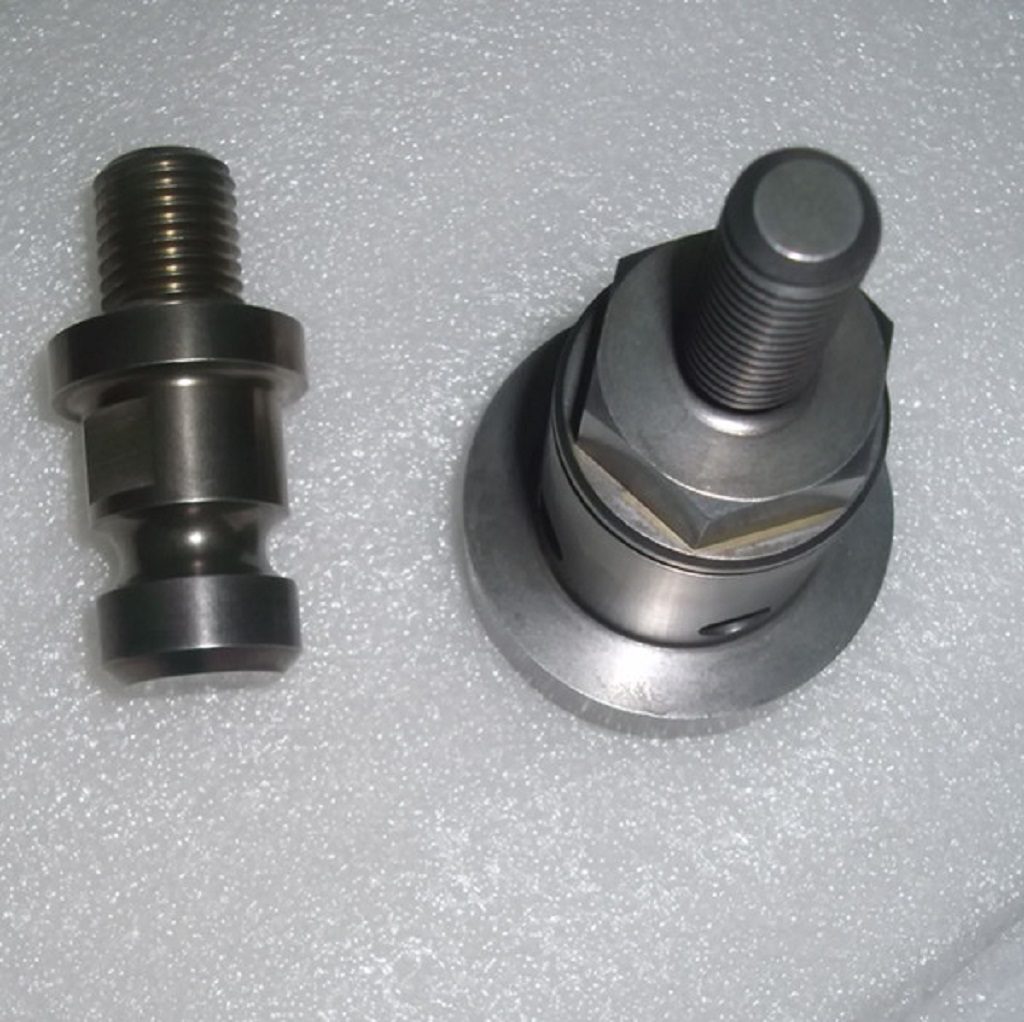
(1) Annealing and normalizing are primarily conducted using box or pit furnaces. For light blank parts, components with minimal machining allowance, and repair parts, gas carburizing furnaces or salt bath furnaces may also be employed.
(2) Under the condition that the heating equipment is loaded normally, the allowable temperature deviation in the effective heating zone is shown in Table 3-7-5.
Table 3-7-5 Temperature allowable deviation in effective heating zone
| technique | Allowable temperature deviation/℃ | technique | Allowable temperature deviation/℃ | |
| dead annealing | ± 20 | spheroidizing annealing | ± 15 | |
| partial annealing | ± 20 | relief annealing | ± 25 | |
| isothermal annealing | ± 20 | normalization | ± 25 |
(3)The flame of the fuel heating furnace should not be in direct contact with the parts.
To protect the atmosphere of the heating furnace, the composition of the atmosphere in the furnace should be adjusted and controlled according to the requirements of the heat treatment process.
(5) After heating, the parts should maintain uniform cooling rates during furnace cooling. During spheroidizing annealing, the maximum cooling rate should not exceed 20°C/h.
(6) All heating equipment shall be equipped with temperature measurement and temperature control devices. In principle, each heating zone in the heating equipment shall be equipped with a recording device to track the relationship between processing temperature and time
The total deviation of the reading of the thermoelectric temperature measuring instrument shall not exceed the range in Table 3-7-6.
Table 3-7-6 Total deviation of measuring instrument reading (℃)
| Given temperature t | Total temperature deviation |
| ≤400 | ± 4 |
| > 400 | ± t/100 |
Operation method and precautions
When loading parts into the furnace, they must be placed in the pre-determined effective heating zone. The loading quantity, method, and stacking arrangement should ensure uniform heating and cooling of parts while avoiding harmful defects. During box annealing, the distance between boxes should exceed 100mm.
(2) After loading the furnace, check whether the parts and electric heating elements are not in contact, and then send power to heat up. During the operation, do not open the furnace door at will.
(3) The heating rate of components is primarily determined by factors such as chemical composition and geometric shape. For high-carbon or high-alloy steel parts with large cross-sections or complex geometries, as well as those requiring annealing in boxes, a low-temperature loading furnace should be used. The components should first be heated to 500-550°C and held at this temperature for a period before being further heated to the specified temperature.
(4 )The insulation time is calculated from the time when the furnace temperature reaches the specified temperature, but when the furnace load is large, it should be appropriately extended. For box annealing, it should usually be increased by 2 ~ 3h.
(5) For long and thin plate parts, special care should be taken when loading out of the furnace to avoid deformation.
What are the Common Defects and Solutions
(1) Causes and solutions of common defects in structural steel heat treatment
Table 3-7-7 Causes and solutions of common defects in heat treatment of structural steel
| Defect characteristics | Cause | resolvent |
| The grain is fine, but the plasticity and toughness are low | Insufficient heating; the processing temperature is below Ac3 | Reprocess at normal temperature |
The surface shows decarburization, with larger grains and reduced plasticity and toughness. Sometimes, Widmanstatten structure appears. | High heating temperature; long time | Reprocess 1 to 2 times at normal temperature when the overheating degree is smallWhen the overheating is severe, the first treatment is performed at 100-150°C above Ac3, followed by a second treatment at normal temperature. |
| The material exhibits severe decarburization, large grain size, abundant Widmanstatten structures, and grain boundary fusion, accompanied by non-metallic inclusion accumulation, with a fracture surface resembling slate. | The heating temperature is too high and the time is too long | Mild cases can undergo prolonged homogenization at 1100 ~ 1200℃ before normal processing. More severe cases require remelting; the most serious cases can only be scrapped. |
| Thermally deformed steel is hard | Cooling too fast | rehandle |
| Cold deformed steel has high hardness and uneven grain size after intermediate annealing | The heating temperature exceeds Ac1 | Only scrap parts that have been formed |
| Secondary cementite occurs in low carbon steel under cold and hot deformation | The cooling is too slow and stays too long at 720 to 670% | Reheat at 900 to 920°C |
(2) Causes and solutions of common defects in heat treatment of tool steel (see Table 3-7-8)
Table 3-7-8 Causes and solutions for common defects in heat treatment of tool steel
| Feature defect | Cause | resolvent |
| High hardness. Incomplete spheroidization, with abundant fine lamellar carbides. | The heating temperature is low or the insulation time is short | reannealing |
Severe network carbide | The furnace temperature is too low; the holding time is too short; the cooling rate is insufficient or the annealing temperature exceeds Acm | After heating to temperatures above Acm, rapidly cool to below 670℃ for air cooling, then re-anneal |
| High speed steel has more stable carbides and increased sensitivity to overheating during quenching | The annealing time is too long | announce invalidated check in paper |
| Free graphite is precipitated in carbon steel and is black | The annealing process involves slow cooling from 1000°C for an excessively long duration. | Reforge is required. For formed parts, only |
| fracture | Or the stop time at 760 ~ 780℃ is too long | Can be scrapped |
Conclusion
Understanding the distinct purposes of annealing and normalizing is essential. Annealing creates soft, machinable steel, while normalizing produces a stronger, more uniform structure. Proper execution of each process is critical.