
What Are the Different Types of CNC Milling Machines and Their Applications?
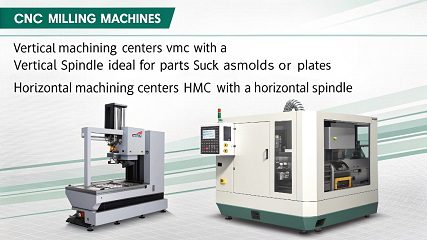
Are you confused by the different CNC milling machines? Choosing the wrong one can waste time and money. I'm here to help you understand the main types and their uses.
The main types of CNC milling machines are Vertical, Horizontal, Gantry, and 5-Axis. Vertical and horizontal mills handle small to medium parts. Gantry mills are for large parts, and 5-axis machines create highly complex and precise components for advanced industries.
Choosing the right machine for your project is so important. I remember a client, Mark from Canada, who wasn't sure which machine type was best for a new line of automotive parts he was developing. He needed quality and a competitive price, and the right machine choice was key to achieving that. Understanding the options helps you make the best decision for your own needs. Let's look at the details so you can feel confident in your choice.
What are the different types of CNC machines?
Is all the "CNC" terminology overwhelming you? It can feel like a totally different language. CNC is not just for milling; I'll explain the main categories to you.
CNC, or Computer Numerical Control, describes many machine types, including mills, lathes, routers, and plasma cutters. They all use computer commands for precision. Milling cuts with a rotating tool, while turning (lathes) rotates the part itself against a cutting tool.
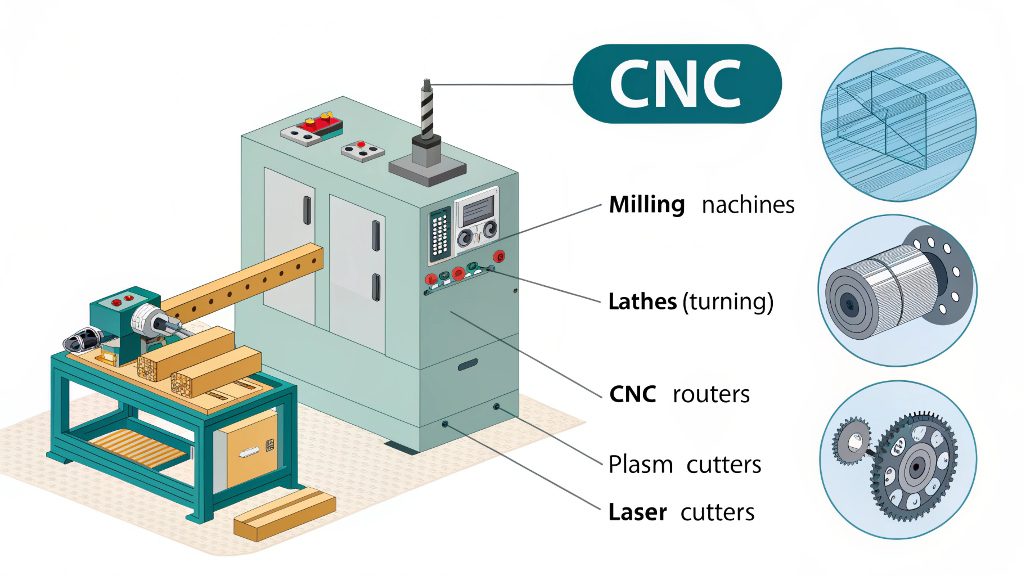
It's helpful to think of CNC as the brain that controls a machine's movements. The type of machine is like the body, designed for a specific job. While we specialize in CNC milling and turning here at Worthy, it is good to know about the other types too. Milling machines are workhorses for creating shapes, slots, and holes in stationary workpieces. Lathes, or turning centers, are perfect for creating cylindrical parts by spinning the material against a cutter. Then you have CNC routers, which are great for cutting softer materials like wood or plastic over large flat areas. And there are even more specialized machines like plasma cutters and laser cutters that use heat to slice through metal sheets. Each one is a tool for a different task, all guided by the same precise CNC technology.
Major CNC Machine Families
| Machine Type | Primary Action | Common Materials | Typical Products |
|---|---|---|---|
| CNC Mill | A rotating tool cuts a stationary workpiece. | Metals, Plastics, Composites | Engine blocks, enclosures, molds, complex parts |
| CNC Lathe | A stationary tool cuts a rotating workpiece. | Metals, Plastics | Shafts, screws, pins, custom fittings |
| CNC Router | A rotating tool cuts over a large, flat table. | Wood, Plastics, Soft Metals | Signage, furniture, cabinet doors |
| CNC Plasma | A jet of hot plasma cuts through metal sheets. | Conductive Metals (Steel, Aluminum) | Metal brackets, decorative panels |
What are the applications of CNC milling machine?
Are you not sure if CNC milling is the right fit for your project? You might be missing out on its amazing potential. Let's see all the industries where these machines are used.
CNC milling has applications in nearly every industry. It is used to make parts for aerospace, automotive, medical, and consumer electronics. From simple brackets to complex engine components and prototypes, its precision and repeatability are essential for modern manufacturing.
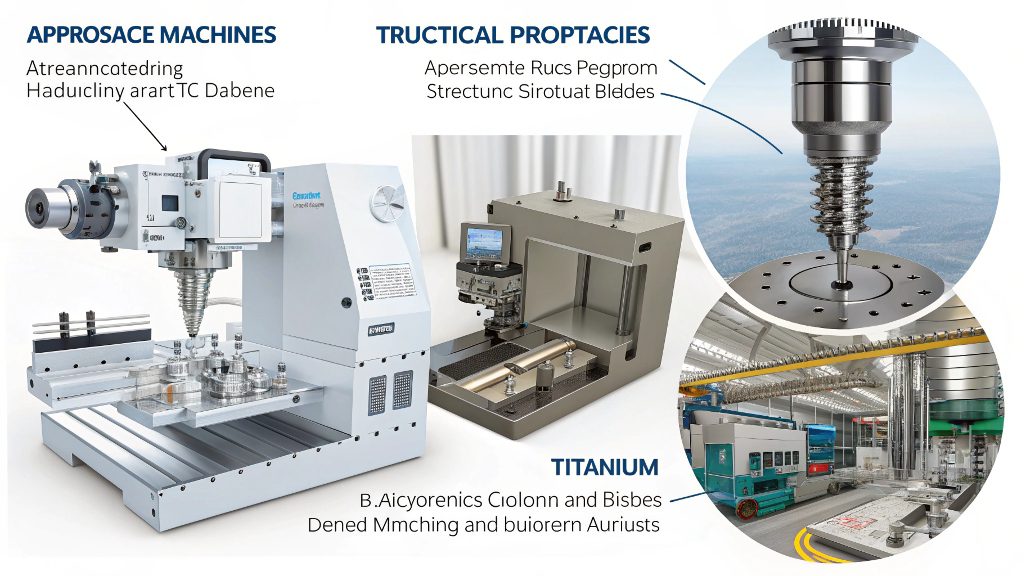
The versatility of CNC milling is why it's so popular. In my experience, we've helped customers from so many different fields. We've made parts for startups, for schools, and for big industrial companies. The machine doesn't care what the final product is; it just follows the computer code to cut the part perfectly every time.
Aerospace and Defense
This industry demands perfection. Parts must be strong, lightweight, and incredibly precise. We use CNC milling to make components from materials like titanium and high-grade aluminum. These parts could be anything from structural brackets inside an airplane wing to complex turbine blades for a jet engine. There is no room for error, which is why CNC milling is the only choice.
Medical and Dental
When you make a part that will go inside a human body, it has to be perfect. CNC milling is used to create custom surgical implants, artificial joints, and dental devices. The machines can work with biocompatible materials like PEEK and medical-grade stainless steel. The smooth surface finish and tight tolerances we can achieve are critical for patient safety.
Automotive Industry
From prototypes for new car designs to mass production of engine parts, the automotive world relies on CNC milling. We help companies create everything from custom pistons to transmission components. The ability to produce thousands of identical parts quickly and affordably is a huge advantage.
What are different types of milling machines?
Is it difficult to tell the difference between milling machines? All the options can be confusing. Let me help you understand the simple differences between them.
The most common types of milling machines are vertical mills and horizontal mills. The name tells you the direction of the spindle. Vertical mills are versatile and great for single-sided work, while horizontal mills are better for heavier cuts and multi-sided jobs.
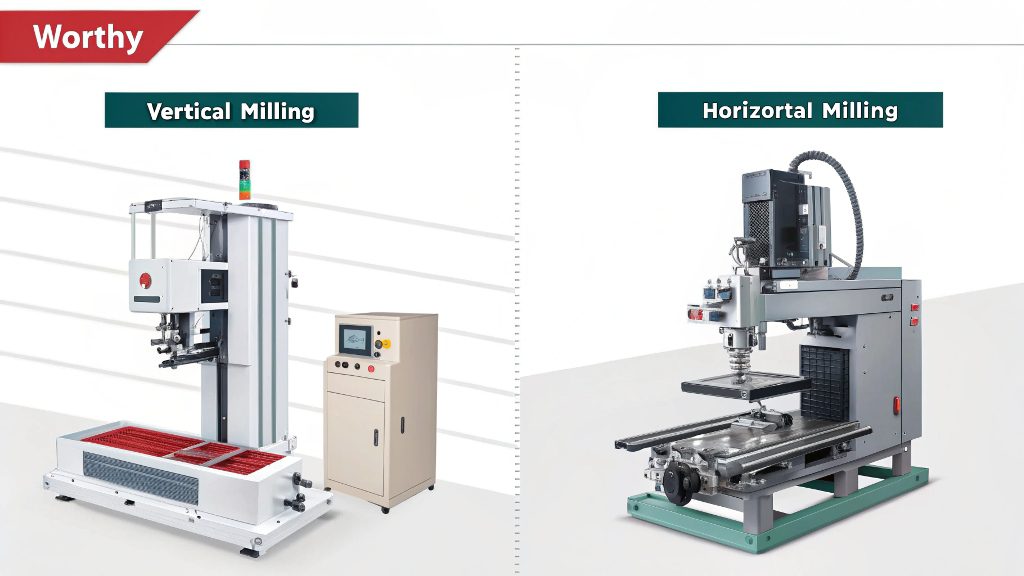
Most of the work we do at Worthy involves these core machine types. The choice between a vertical or horizontal mill often depends on the shape of the part and how many units you need to make. For a simple prototype, a vertical mill is often the fastest and most cost-effective solution. But for a large production run of complex parts, a horizontal mill with multiple pallets can work continuously, which saves time and money. I often advise clients like Mark on which approach is best for their budget and timeline. The key is matching the machine's strengths to the project's requirements to get the best result. It's a simple distinction, but it has a big impact on the manufacturing process.
Vertical vs. Horizontal Milling
| Feature | Vertical Milling Machine | Horizontal Milling Machine |
|---|---|---|
| Spindle Orientation | Vertical (up and down) | Horizontal (side to side) |
| Visibility | Excellent. The operator can easily see the cutting process. | Limited. The workpiece can block the view. |
| Best For | Flat surfaces, die sinking, single-sided projects. | Heavy or long parts, grooves, multi-sided machining. |
| Chip Evacuation | Can be poor. Chips can fall back into the cut. | Excellent. Gravity helps chips fall away from the tool. |
| Common Use | Tool rooms, prototypes, smaller production runs. | High-volume production, heavy-duty cutting. |
What are the classification of CNC milling machines?
Do you feel lost in the details of CNC milling? The names can sound complicated. Let's classify the main machines so you can see where each one fits.
CNC milling machines are classified by their axis of movement and structure. The main classifications are Vertical, Horizontal, Gantry, and 5-Axis milling machines. Each is designed for different part sizes, complexities, and production volumes, from small prototypes to large industrial components.
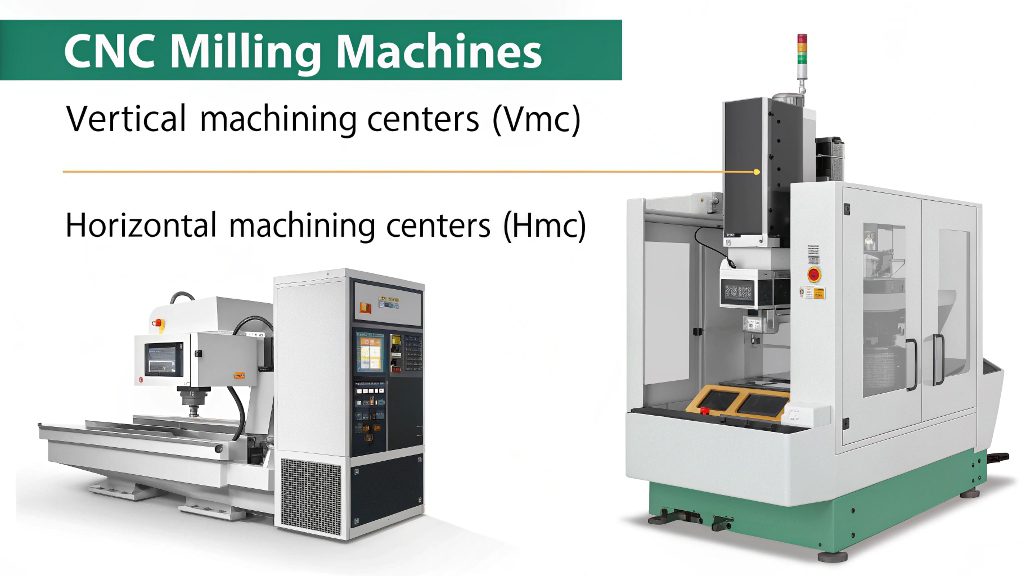
Think of these classifications as different tools for different jobs. You wouldn't use a small hammer to break up concrete. In the same way, we choose a specific CNC milling machine based on what the customer needs. My engineers and I always review customer drawings to decide the best strategy. If a part is very large, we know a gantry machine is needed. If it has complex curves on multiple faces, we immediately think of our 5-axis machines. This classification helps us communicate clearly and plan our production efficiently. Understanding these categories will help you better understand quotes and manufacturing plans.
Key CNC Milling Machine Types
Vertical Machining Centers (VMC)
These are the most common type. The spindle is vertical, and it's great for parts where most of the work is on one face, like making molds or plates. They are very versatile and easy to program.
Horizontal Machining Centers (HMC)
Here, the spindle is horizontal. These machines are often built with a fourth axis (a rotating tombstone) that holds multiple parts. This allows for machining on multiple sides of a part in one setup, making them very efficient for production runs.
Gantry Milling Machines
These are huge machines for very large parts. The entire machine moves over a stationary workpiece. We use these for big aerospace components or large industrial molds. Our capacity here at Worthy goes up to 80 inches.
5-Axis Milling Machines
These are the most advanced. They can move a part or the tool on five different axes at the same time. This allows us to create extremely complex shapes, like medical implants or turbine blades, without having to re-fixture the part.
Conclusion
In short, knowing the types of CNC milling machines—from vertical to 5-axis—helps you select the best one for your project's size and complexity, ensuring efficiency and quality.