
Why Is 316 Stainless Steel Preferred for Marine Applications?
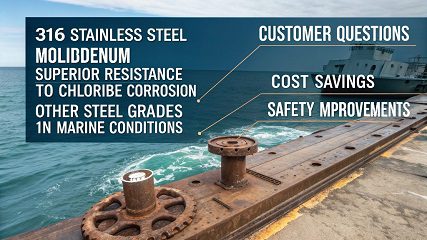
Struggling with metal parts that rust in marine settings? This constant corrosion leads to costly repairs and safety worries. Choosing the right stainless steel is key for lasting performance.
316 stainless steel is preferred for marine applications because it contains molybdenum. This element provides superior resistance to corrosion from chlorides, like the salt found in seawater. This makes it far more durable than other common steel grades in harsh marine environments.
I've seen many projects where the wrong material choice led to disaster, especially at sea. It's a common problem, but understanding the details can save you a lot of trouble and money. Let's break down why 316 is the go-to choice and look at some common questions I get from customers like you. This knowledge will help you make smarter decisions for your next marine project.
What is the best stainless steel for marine application?
Worried about your boat fittings rusting? When parts corrode and fail at sea, it's not just costly, it's dangerous. You need a "marine-grade" steel you can truly rely on.
For most marine applications, 316 stainless steel is the best choice. Its composition, especially the addition of molybdenum, gives it superior corrosion resistance in saltwater. This makes it the industry standard for marine hardware, fittings, and fasteners.
When people say "marine-grade," they are usually talking about 316 stainless steel. So what makes it so special for use in and around the ocean? It comes down to its chemical makeup. All stainless steels contain chromium, which creates a protective layer on the surface to prevent rust. However, this layer can be broken down by chlorides, which are very common in saltwater.
Key Elements for Saltwater Resistance
316 stainless steel has an extra ingredient that makes all the difference: molybdenum. This element reinforces the protective layer, making it much stronger against chloride attack. This is why 316 holds up so well against the corrosive effects of seawater, sea spray, and salt-heavy air. While other, more expensive alloys exist for extreme deep-sea applications, 316 provides the perfect balance of performance and cost for nearly all boating and coastal needs.
Is 316 stainless good for saltwater?
Thinking about using stainless steel in saltwater? You might be worried that even "stainless" steel will eventually fail. The wrong choice can lead to ugly rust stains and weakened parts.
Yes, 316 stainless steel is excellent for saltwater applications. The molybdenum in its alloy provides strong protection against pitting and crevice corrosion caused by high chloride levels in seawater, ensuring long-term durability and reliability for marine hardware.
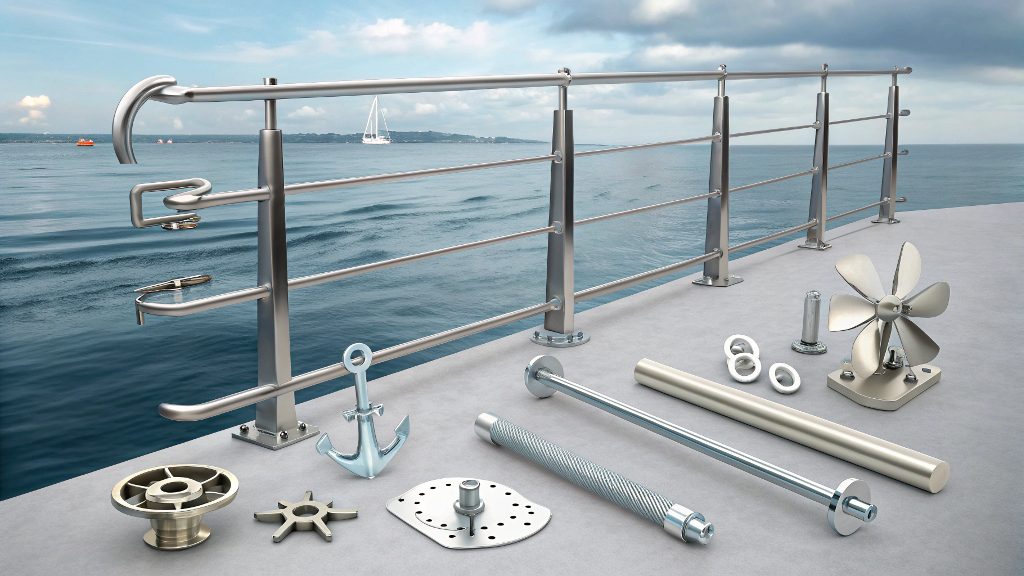
The answer is a definite yes. In my years of manufacturing CNC parts at Worthy, I've seen firsthand how 316 stainless steel performs for our customers in the marine industry. It is specifically engineered to thrive in saltwater. Saltwater is very aggressive and causes a specific type of damage called pitting corrosion. This is where small, deep holes form on the metal's surface, which can quickly lead to failure.
The molybdenum in 316 stainless steel is the key defender against this. It helps the material resist these localized attacks. Think of it as armor against the tiny, corrosive chloride ions in the water. This is why you see 316 used for everything from boat railings and propellers to underwater fasteners and anchors. For any part that will be constantly exposed to seawater, 316 is not just a good choice; it's the standard, reliable choice.
Which is better, 304 or 316 stainless steel marine grade?
Choosing between 304 and 316 stainless steel can be confusing. You want to save money, but you worry 304 might not be strong enough, leading to early failure.
316 stainless steel is significantly better for marine environments. While 304 is a good general-purpose stainless steel, it lacks molybdenum and will rust and pit quickly in saltwater. For any marine application, 316 is the clear winner.
This is a very common question I get from clients like Mark, who are always looking for the best balance of cost and quality. The answer is straightforward: for anything marine, choose 316. While 304 stainless steel is very popular and widely used for things like kitchen sinks and indoor appliances, it is not suitable for saltwater. It does not have molybdenum. Without molybdenum, 304 steel is vulnerable to chloride corrosion. If you use 304 on a boat, you will see rust spots and pitting in a surprisingly short amount of time.
Here's a simple comparison:
| Feature | 304 Stainless Steel | 316 Stainless Steel |
|---|---|---|
| Main Use | General Purpose, Indoor | Marine, Chemical, Medical |
| Molybdenum | No | Yes (2-3%) |
| Saltwater Resistance | Poor | Excellent |
| Cost | Lower | Higher |
Choosing 316 is an investment in durability and safety. The slightly higher initial cost saves you much more in the long run by avoiding replacements and potential part failures.
Why do they use 316 stainless steel for cryogenic applications and not 430 stainless steel?
Picking materials for extreme temperatures is critical. The wrong choice in very cold, or cryogenic, conditions can cause materials to become brittle and break, leading to catastrophic system failures.
316 stainless steel maintains its strength and toughness at extremely low, cryogenic temperatures. 430 stainless steel, however, becomes brittle and can easily fracture in such cold conditions, making 316 the safe and reliable choice for these applications.
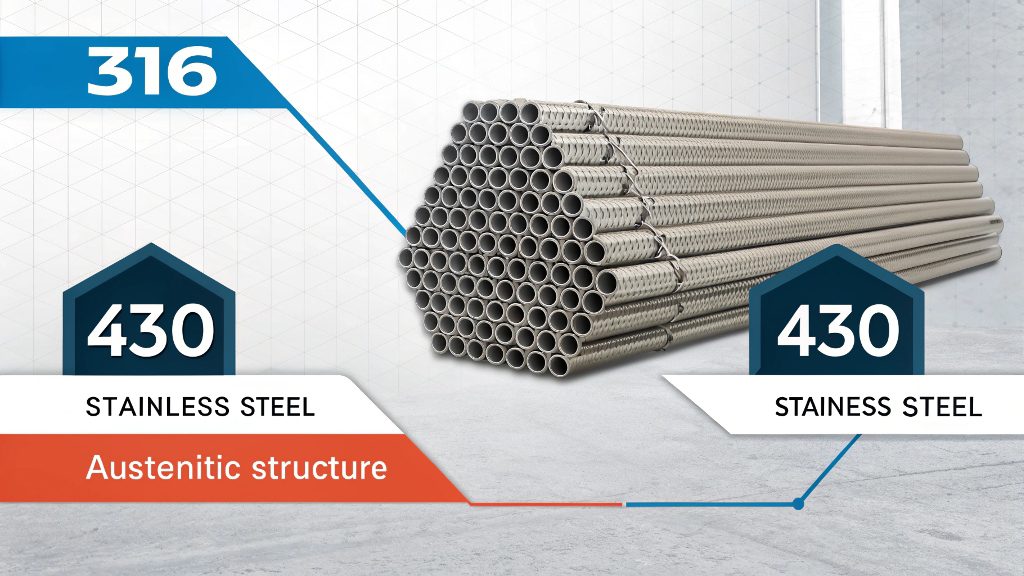
This question goes beyond marine uses but highlights another amazing property of 316 stainless steel. The key difference lies in their atomic structures. 316 is part of the "austenitic" family of stainless steels, while 430 is "ferritic." Austenitic stainless steels, like 316, have a structure that remains very tough and ductile even when cooled to temperatures as low as those of liquid nitrogen (-196°C or -321°F). They don't become brittle. This is crucial for safely handling and storing cryogenic liquids.
430 stainless steel has a different structure that undergoes a "ductile-to-brittle transition" at low temperatures. This means that as it gets very cold, it loses its ability to absorb shock and can shatter like glass if impacted. For this reason, using 430 stainless steel in any cryogenic application would be extremely dangerous. The nickel content in 316 is essential for maintaining this low-temperature toughness.
Conclusion
In short, 316 stainless steel's molybdenum content makes it the top choice for marine use. It provides unmatched corrosion resistance, ensuring parts are durable, safe, and reliable in saltwater.