
What is the Difference Between Mild Steel and Stainless Steel for CNC Machining?
Struggling to choose the right steel for your CNC project? The wrong choice can lead to high costs and poor performance. I'm here to help you decide wisely.
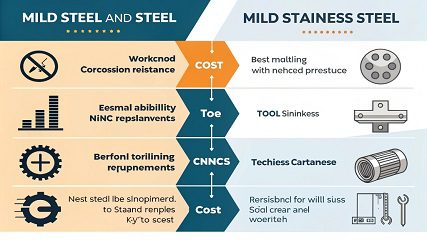
The key difference for CNC machining is workability and corrosion resistance. Mild steel is easier and cheaper to machine, but stainless steel offers superior resistance to rust and corrosion, though it's tougher on tools and requires specific machining strategies.
Choosing between these two common metals is a frequent question I get from clients. At first glance, it seems simple, but this choice impacts everything from your budget to your product's final lifespan. I've seen projects succeed or fail based on this one decision. Let's break down the details so you can make the best choice for your specific needs. It's important to understand the core differences first.
What is the difference between mild steel and stainless steel?
Confused by steel terminology? It's easy to mix them up, leading to costly mistakes in material orders. Let's clarify the fundamental differences once and for all.
The main difference is chromium content. Stainless steel contains at least 10.5% chromium, which creates a passive layer protecting it from rust. Mild steel has very little chromium, making it prone to corrosion but also more malleable and affordable.
The core distinction between these two metals lies in their chemical makeup, which directly influences their behavior. I handle these materials every day at my facility, and the way they respond to machining is night and day.
Composition and Properties
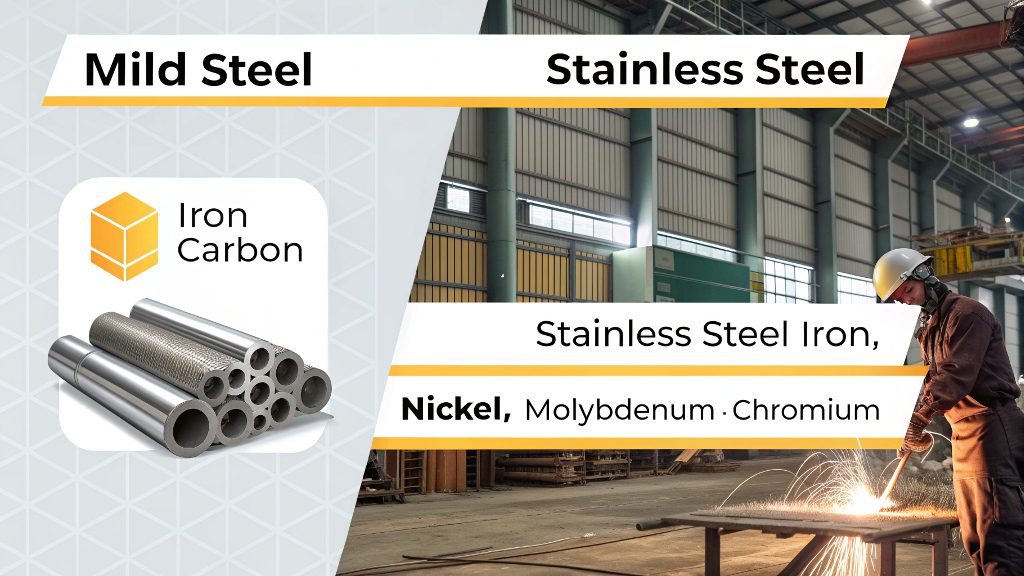
Mild steel is basically iron with a very small amount of carbon (usually less than 0.3%). This low carbon content makes it soft, ductile, and easy to weld. It’s a workhorse material for structural applications where corrosion isn't the primary concern.
Stainless steel, on the other hand, is an alloy of iron, often with nickel and molybdenum, and always with a minimum of 10.5% chromium. It's this chromium that's the hero. It reacts with oxygen to form a thin, invisible protective layer on the surface. This layer prevents rust and makes it "stainless."
Here is a simple table to show the key differences I see in my daily work:
| Feature | Mild Steel (e.g., 1018) | Stainless Steel (e.g., 304) |
|---|---|---|
| Corrosion Resistance | Poor, rusts easily | Excellent |
| Cost | Lower | Higher |
| Hardness | Lower | Higher |
| Machinability | Excellent | Fair to Good (work hardens) |
| Weldability | Excellent | Good (requires more skill) |
| Common Applications | Structural frames, panels, general fabrication | Medical devices, food equipment |
Can stainless steel be CNC machined?
People often worry that stainless steel is too tough to machine. This fear might stop you from using a superior material. Let me reassure you about its machinability.
Yes, stainless steel can absolutely be CNC machined. However, it is more challenging than mild steel. It requires slower cutting speeds, higher feed rates, specialized sharp tooling, and effective coolant because it tends to work-harden and generate more heat.
In my shop, we machine stainless steel every single day. While it’s true that it demands more from our machines and operators, it’s completely doable with the right expertise and equipment. You just can't approach it the same way you would with mild steel. A client once sent us a design that was prototyped in mild steel, and they asked for the same machining parameters for the production run in 316 stainless. We had to explain that this would destroy our tools and produce bad parts. We had to adjust our entire approach.
Machining Considerations for Stainless Steel
Here are the key things we need to manage when we CNC machine stainless steel:
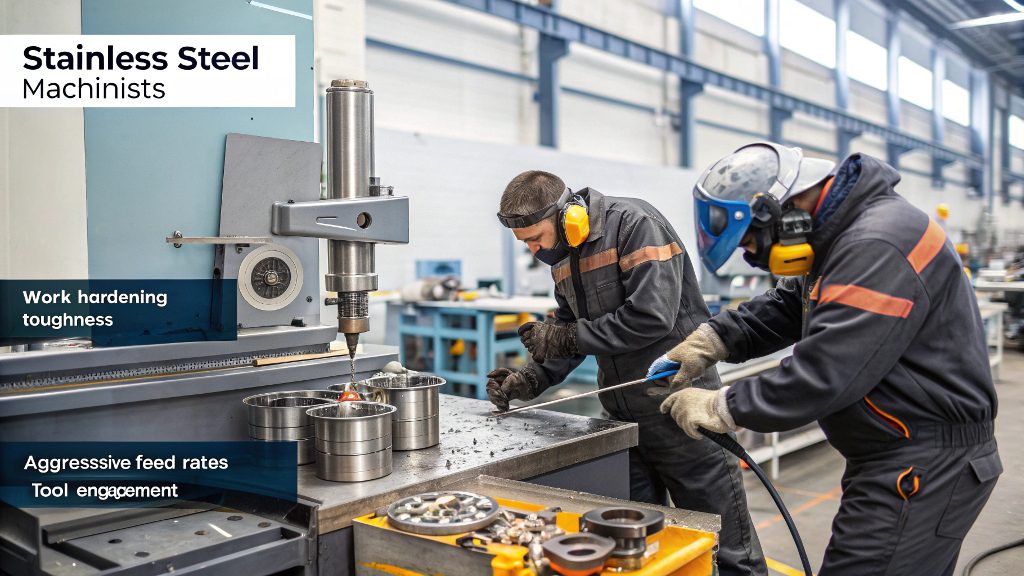
- Work Hardening: Stainless steel gets harder as you cut it. If a tool rubs against the surface without cutting deep enough, it creates a hardened layer that's very difficult for the next pass to get through. We prevent this by using aggressive, consistent feed rates and ensuring the tool is always engaged in the cut.
- Toughness and Tooling: It requires very strong and sharp cutting tools. We typically use carbide tools with special coatings like Titanium Aluminum Nitride (TiAlN). These coatings resist the high heat and abrasion. Using the wrong tool will lead to it breaking very quickly.
- Heat Generation: Stainless steel doesn't conduct heat well. This means all the heat from cutting gets concentrated on the cutting tool's edge instead of dissipating into the part. To manage this, we flood the cutting area with high-pressure coolant to pull heat away and save the tool.
- Chip Control: Unlike the nice, short chips from mild steel, stainless steel produces long, stringy, and tough chips. These can get tangled around the tool and the part, which can ruin the surface finish or even break the tool. We use tools with specific geometries called chip breakers to curl and break these chips into manageable pieces.
What is the main advantage of using stainless steel instead of mild steel?
You might wonder why anyone would deal with the challenges of machining stainless steel. If it's harder and more expensive, what's the big benefit? The answer is simple.
The main advantage of stainless steel is its exceptional corrosion resistance. This makes it essential for products exposed to moisture, chemicals, or harsh environments, ensuring longevity and hygiene where mild steel would quickly rust and fail.
Over the years, I’ve seen many clients switch from mild steel to stainless steel for this very reason. A customer who made parts for marine equipment initially used coated mild steel to save money. However, they faced constant warranty claims because the coating would scratch, and the parts would rust in the salty air. After we remade the parts for them in 316-grade stainless steel, their problems disappeared. The higher initial cost was easily offset by the savings on replacements and the improvement in their brand's reputation.
The Value of Longevity and Performance
While corrosion resistance is the number one benefit, there are other important advantages:
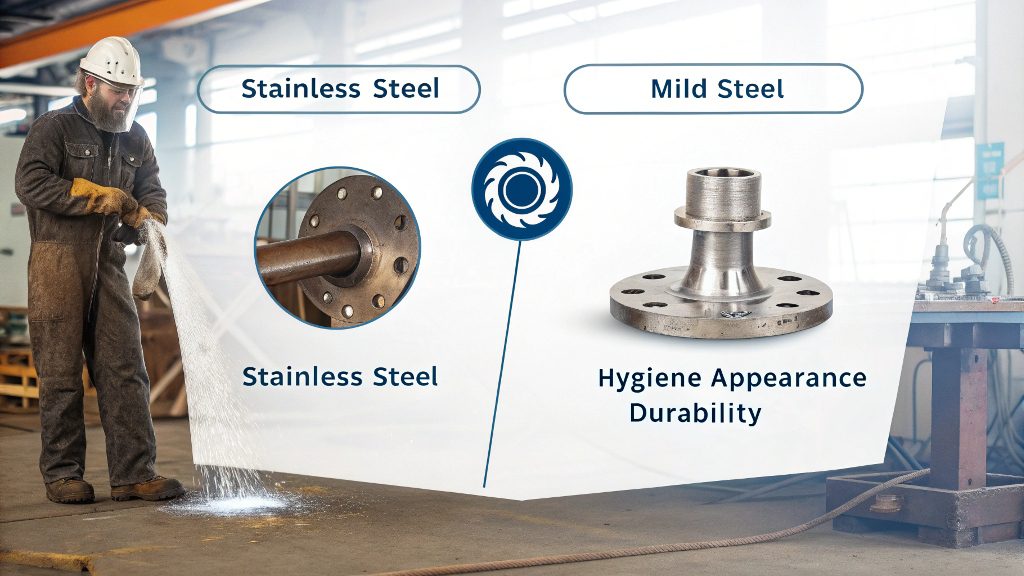
- Hygiene: The non-porous surface of stainless steel doesn't harbor bacteria, which is why it's the standard material for food processing, medical implants, and surgical tools. It can be cleaned and sterilized easily without degrading.
- Appearance: Stainless steel has a clean, modern, and attractive finish that doesn't require painting or plating. This look is highly valued in consumer products and architectural features.
- Strength at High Temperatures: Many grades of stainless steel maintain their strength and resist oxidation at elevated temperatures, something mild steel cannot do. This is critical for parts used in engines, exhausts, and industrial furnaces.
- Toughness: Stainless steel generally has better toughness and ductility compared to mild steel, especially at very low temperatures. This makes it reliable in a wide range of operating conditions.
Ultimately, the choice to use stainless steel is an investment in the product's entire life cycle.
Which one is better, MS or SS?
After comparing both, it's natural to ask which one is the winner. This is a question I help my customers answer every week, and the truth is there’s no single right answer.
Neither is "better" overall; the better choice depends entirely on your application. Mild steel (MS) is better for cost-sensitive, structural projects not exposed to moisture. Stainless steel (SS) is better for parts requiring corrosion resistance, hygiene, and a premium finish.
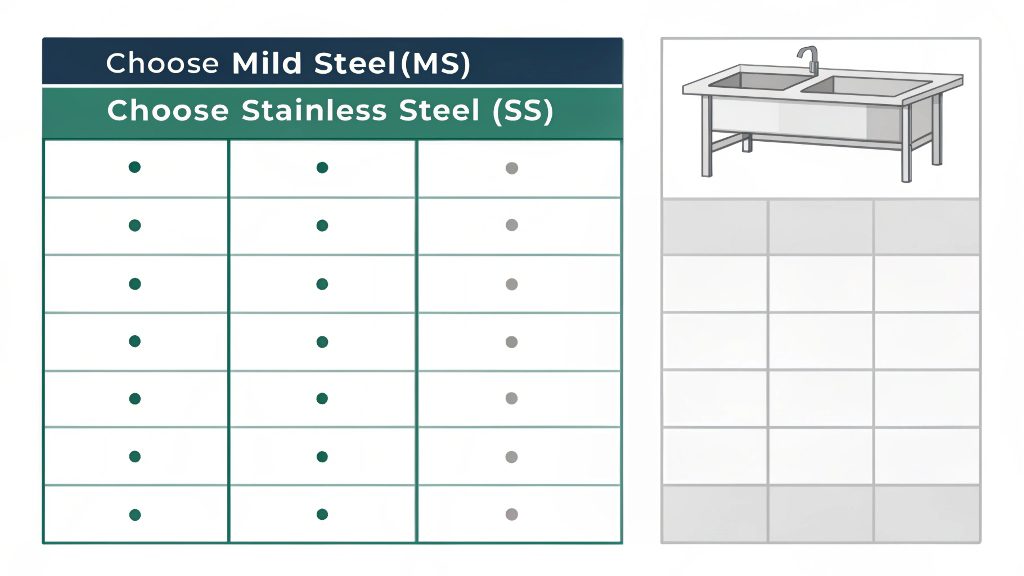
The best way to decide is to think about your product's job and its environment. As a manufacturer, my goal is to provide the material that delivers the best value for my client's specific situation. I always advise them to balance performance needs with budget constraints. For example, for internal machinery brackets that will be painted and stay dry, mild steel is the smart, cost-effective choice. There's no reason to spend extra on stainless steel. But for a component on a boat or a kitchen sink, using mild steel would be a huge mistake.
Making the Right Decision for Your Project
To help you choose, I’ve put together a simple decision-making table based on key project factors. Find your primary need in the left column to see which material is likely the better fit.
| If Your Top Priority Is... | Choose Mild Steel (MS) | Choose Stainless Steel (SS) |
|---|---|---|
| Lowest Possible Cost | Yes. It's significantly cheaper per kilogram. | No. Material cost is 3-5 times higher. |
| Corrosion Resistance | No. It will rust quickly without a protective coating. | Yes. This is its primary advantage. |
| Ease of Machining and Fabrication | Yes. It cuts faster, uses cheaper tools, and welds easily. | No. It requires slower speeds, special tools, and more skill. |
| Aesthetic Appearance or Hygiene | No. It needs to be painted or plated for a good look. | Yes. It offers a clean, premium finish and is easy to sterilize. |
| Strength and Structural Integrity | Yes. It has excellent strength for most applications. | Yes. It also has excellent strength, often with better toughness. |
| High-Temperature Performance | No. It loses strength and oxidizes at high temperatures. | Yes. Many grades are designed specifically for heat resistance. |
Ultimately, asking "Which is better?" is like asking if a hammer is better than a screwdriver. Both are great tools, but only when used for the right job.
Conclusion
In short, choose mild steel for low-cost, internal parts where corrosion is not a risk. For durability, hygiene, and a rust-free finish, stainless steel is the superior investment.