
What Quality Certifications Should Your CNC Machining Supplier Have?
Worried about the quality from a new CNC supplier? A bad choice can cause costly delays. Checking their certifications ensures you get the quality you paid for.
Your CNC machining supplier must have ISO 9001 for quality management. For specific industries, ask for IATF 16949 for automotive or AS9100 for aerospace. These certifications show a commitment to consistent quality, clear processes, and continuous improvement for your parts.
Now you know the key certifications to look for. But what do these standards really mean for your parts and your project? Understanding the details helps you ask the right questions and choose a supplier who truly meets your quality needs. Let's look closer at what each certification means for you.
What is the ISO standard for CNC machines?
Struggling to find a universal benchmark for quality? This uncertainty can make you doubt if a supplier can truly deliver. You need a standard you can trust anywhere.
The most fundamental standard is ISO 9001. This isn't just for CNC machines but for the entire quality management system. It ensures your supplier follows documented processes, from quoting to final inspection, guaranteeing consistency and reliability in every part they make for you.
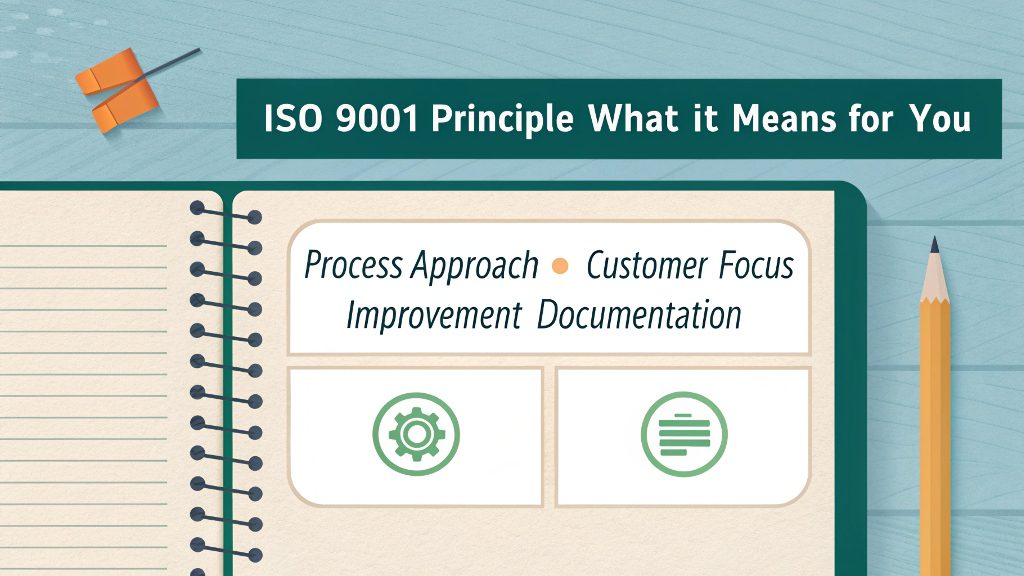
When I talk about ISO 9001, I'm talking about a promise of consistency. It’s the foundation of everything we do at Worthy. This standard ensures that a company has a solid Quality Management System (QMS) in place. It means we don't just "check" quality at the end; we build it into every step of the process. For you, the customer, this is your assurance that we are not taking shortcuts.
How ISO 9001 Affects Your Project
Here’s a simple breakdown of what ISO 9001 means for your order:
| ISO 9001 Principle | What It Means for You |
|---|---|
| Process Approach | Your parts are made using a consistent, repeatable method. |
| Customer Focus | Your requirements are the top priority. |
| Improvement | The supplier is always getting better and more efficient. |
| Documentation | Every step is recorded for traceability and accountability. |
Without this certification, you're relying on a supplier’s word alone. With it, you have proof that they are committed to a global standard of quality.
What is CNC machine certification?
You found a supplier, but how do you prove they are truly qualified? Without clear certification, you are taking a risk. You need a trusted way to verify their skills.
CNC machine certification refers to proof that a supplier or its operators meet specific industry standards. This includes company-level certifications like ISO 9001 and may also include individual machinist credentials. These certificates confirm a deep understanding of quality processes and technical skills.
Certifications are not just pieces of paper; they are proof of a commitment. At my company, Worthy, we see them as a promise to our customers. A CNC machine certification tells you that we have been audited by an independent third party. This auditor has confirmed that our processes, equipment, and team training meet rigorous international standards. It's how we show customers like Mark from Canada that even though we are thousands of miles away, our quality is reliable and predictable. It helps build trust, which is the most important thing in a B2B relationship, especially when you can't visit the factory in person. Think of it as a quality passport that allows our parts to be accepted globally, from North America to Japan. It helps eliminate the fear of receiving a batch of bad parts after weeks of waiting.
What are the standards for CNC machining?
Unclear standards can lead to parts that don't fit or function correctly. This ambiguity is frustrating and expensive. You need your parts made to precise, well-defined standards.
Key standards include ISO 9001 for the overall quality system. Specific industries add their own layers, like AS9100 for aerospace, requiring extreme precision and traceability, and IATF 16949 for automotive, focusing on defect prevention and consistency in high-volume production.
The standards we follow directly impact the quality of your finished parts. ISO 9001 is our base, but many projects require more. For a customer in the aerospace industry, we adhere to AS9100. This standard dictates strict rules for material traceability and process documentation. For our automotive clients, we follow the principles of IATF 16949. This ensures we can produce high volumes of parts with very low defect rates.
Beyond the Main Certifications
Other standards also play a role in defining the quality of a CNC machined part:
- Tolerances: We often work to ISO 2768 for general tolerances, but many of our customers need much tighter precision. We can hold tolerances below +/- 0.001" based on your drawings and GD&T callouts.
- Surface Finish: The standard "as-machined" finish is typically 125 Ra or better. We also offer over 50 secondary surface finishes, from anodizing to powder coating.
- Inspection: At Worthy, 100% inspection is our standard. This commitment ensures that what we ship is exactly what you ordered.
What is a level 3 CNC machinist?
How do you know if the operators making your parts are skilled? An inexperienced machinist can ruin a complex part. You need assurance of the team's expertise.
A Level 3 CNC machinist is a highly skilled professional, often certified, who can work independently on complex tasks. They can perform intricate setups, program multi-axis machines, troubleshoot problems, and perform in-process quality checks. Their expertise is critical for tight-tolerance, complex parts.
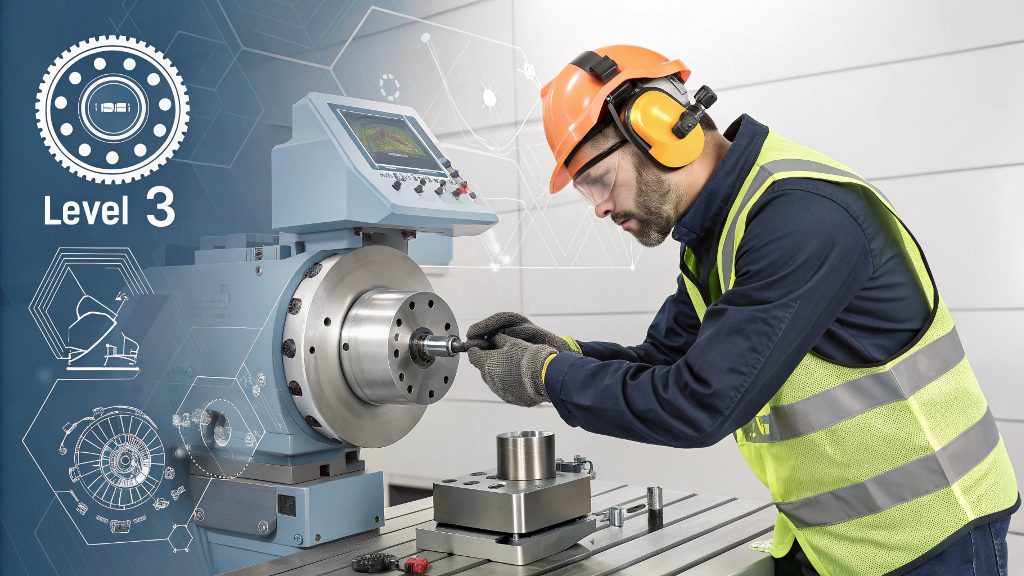
The certification of a company is one thing, but the skill of the person running the machine is just as important. A Level 3 machinist is an expert. They don't just press "start." They understand the G-code, know how different materials behave, and can identify and solve problems before they affect your parts. When you send us a complex 5-axis part design, it’s our experienced engineers and Level 3 machinists who make it possible. Their ability to translate a complex CAD file into a perfectly finished physical component is what sets a great supplier apart. This expertise is a key reason we can help our customers improve their designs for manufacturability, often saving them time and money while improving the final product's quality. This is the human element behind the certifications.
Conclusion
In summary, choosing a supplier with the right certifications, like ISO 9001 and industry-specific standards, is your best guarantee for receiving high-quality, reliable CNC machined parts every time.