
Which Alloy Steel Type Offers The Best Corrosion Resistance?
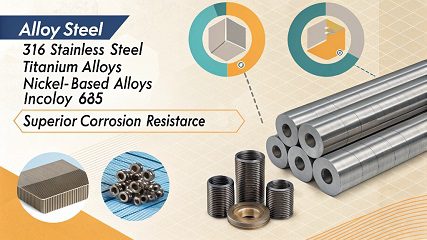
Struggling with parts that rust and fail? This corrosion costs you money and time. Choosing the right alloy steel from the start is the key to creating durable, long-lasting products.
For superior corrosion resistance, the best choices are often 316 stainless steel, titanium alloys, or nickel-based alloys like Incoloy 825. Your ideal material depends on the specific corrosive environment, temperature, and mechanical stress your parts will face. Each offers unique protection against different elements.
Choosing the "best" material isn't a simple task. It’s about finding the perfect match for your project's specific needs and budget. A material that works wonders in seawater might fail in a high-acid environment. We need to look closer at the top contenders to understand which one is right for you. Let's break down the details to help you make an informed decision.
What is the most corrosion resistant steel alloy?
Picking a "corrosion-resistant" steel can be confusing. If you choose the wrong one, your project could fail, leading to costly replacements and damage. Let's identify the top options.
In many common yet demanding situations, 316 stainless steel is the most popular corrosion-resistant steel alloy. Its added molybdenum gives it excellent protection against chlorides, like salt and de-icing chemicals, making it a reliable and cost-effective choice for many industries.
I often get questions about this from customers like Mark in Canada, who are looking for the best value. 316 stainless steel[^1] is a fantastic material, and its popularity is well-deserved. It belongs to the austenitic family of stainless steels, which means it has a specific crystal structure that contributes to its strength and formability.
Why is 316 Stainless Steel a Top Choice?
The secret to 316's success lies in its chemical makeup. It contains high levels of chromium and nickel, which form a passive, protective layer on the surface of the steel. This layer instantly reforms if it gets scratched, preventing oxygen from reaching the iron and causing rust. What really sets 316 apart from its common cousin, 304 stainless steel, is the addition of molybdenum. This element significantly boosts its resistance to corrosion from chlorides. This is why we always recommend it for parts used in or near the ocean or in chemical processing plants.
Here is a simple comparison:
| Feature | 304 Stainless Steel | 316 Stainless Steel |
|---|---|---|
| Corrosion Resistance | Good | Excellent |
| Chloride Resistance | Poor | Very Good |
| Key Alloying Element | Chromium, Nickel | Chromium, Nickel, Molybdenum |
| Common Use | Kitchen Sinks, Food Prep | Marine Hardware, Medical |
| Cost | Lower | Higher |
Which type of steel has the greater resistance to corrosion?
You know stainless steel is a great choice, but what if you need something even tougher? Overlooking other alloys could mean missing out on superior performance for your most critical applications.
When you need resistance beyond what even the best stainless steels can offer, titanium alloys are a superior choice. They are practically immune to corrosion from seawater, chlorine, and many harsh industrial chemicals, providing unmatched durability in extreme environments.
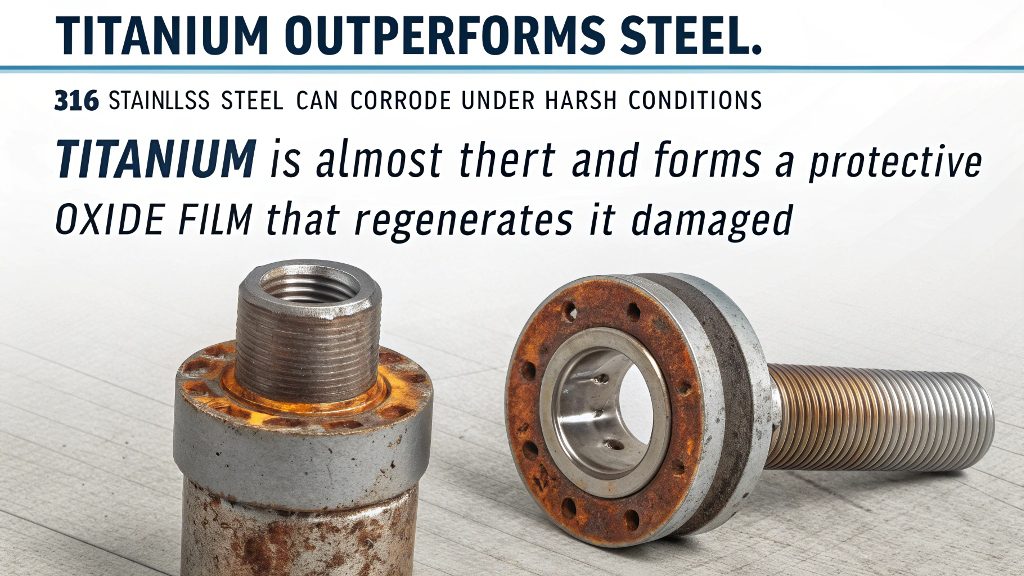
Titanium operates on a whole different level. While we call 316 "stainless," it can still corrode under very specific, harsh conditions. Titanium, on the other hand, is almost completely inert in many environments that would destroy steel. We recently worked on a project for a medical device company. The part had to be 100% biocompatible and corrosion-proof inside the human body. For a job like that, steel is not an option. We used a titanium alloy, and it delivered the absolute reliability the customer needed.
When Does Titanium Outperform Steel?
Titanium's incredible resistance comes from a stable, protective, and strongly adherent oxide film that forms on its surface. If this film is damaged, it instantly re-forms in the presence of even a trace amount of oxygen or water. This makes it exceptionally durable in oxidizing and mildly reducing environments. Beyond its corrosion resistance, titanium has a fantastic strength-to-weight ratio, which is why it is so popular in the aerospace industry. It is much lighter than steel but can be just as strong. This combination of properties makes it the perfect material for high-performance applications where failure is not an option, such as jet engine components, deep-sea submersibles, and surgical implants.
What is the best steel for corrosion?
You want the absolute best, but "best" changes with the situation. Choosing a material that is overkill can be a waste of money, but choosing one that is not enough can be a disaster.
For extreme chemical and high-temperature environments, nickel-based alloys like Incoloy 825 are often the best choice. They are engineered to withstand highly corrosive acids and alkaline solutions where even 316 stainless steel and titanium would fail.
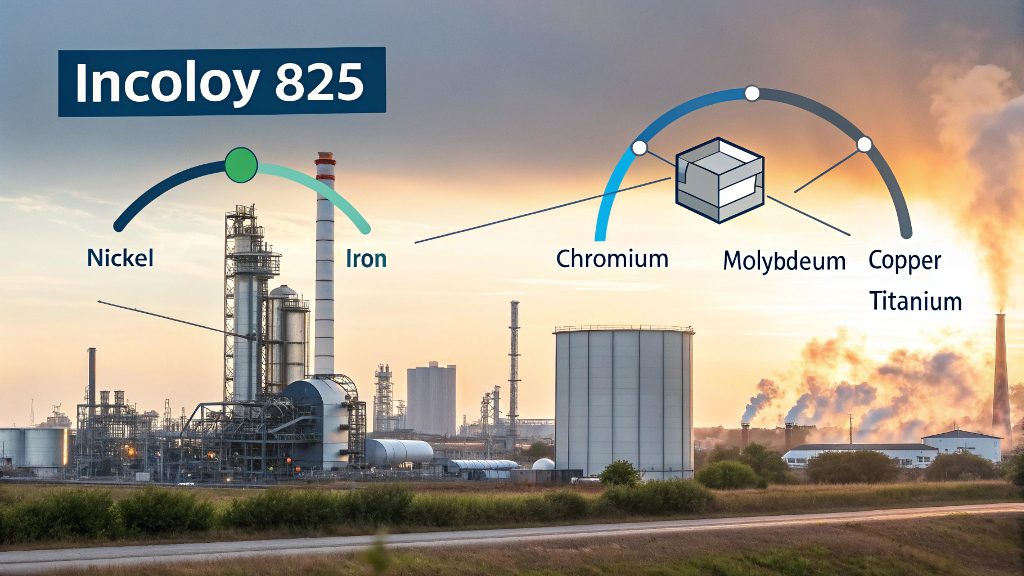
Sometimes, a project is so demanding that standard materials just won't work. I recall a client who needed parts for equipment that handled hot sulfuric and phosphoric acids. Stainless steel would have been eaten away in days. This is where superalloys like Incoloy 825 come in. These are not just steels with a few extra elements; they are complex materials designed from the ground up to survive the worst conditions imaginable.
How Do Superalloys Like Incoloy 825 Work?
Incoloy 825 is a nickel-iron-chromium alloy with additions of molybdenum, copper, and titanium. Each element plays a specific role in its defense system.
- Nickel: Provides excellent resistance to cracking from stress corrosion in chloride environments.
- Chromium: Resists oxidizing substances like nitric acid.
- Molybdenum: Fights against pitting and crevice corrosion.
- Copper: Boosts resistance to sulfuric acid.
This powerful combination makes Incoloy 825 a champion in the chemical processing, oil and gas, and pollution control industries. It maintains its integrity in environments that are both oxidizing and reducing. While its cost is significantly higher than stainless steel, it is the only viable option for applications where component failure could have catastrophic consequences. The investment in a superalloy upfront prevents much larger costs from maintenance, downtime, and safety failures down the line.
Which alloy has the highest resistance?
So you're looking for the ultimate champion of corrosion resistance? It is easy to get lost in specifications, but the answer depends entirely on "resistance to what?" A ranking is needed.
There is no single alloy with the "highest" resistance to everything. Performance is relative to the environment. However, for general to severe conditions, the ranking often goes from 316 Stainless Steel (good) to Titanium Alloys (better) to Nickel Superalloys (best).

Thinking about which alloy is "highest" is like asking which vehicle is "fastest." A race car is fastest on a track, but a boat is fastest on water. The same is true for materials. At Worthy Hardware, we always start by asking about the application. Where will this part be used? What chemicals will it touch? What are the temperatures? The answers guide us to the correct material. A customer might ask for a "super corrosion-resistant" part for a food-grade machine. Incoloy 825 would be overkill; 316 stainless steel is perfect. Another customer needs a part for a deep-sea ROV. Here, titanium is the clear winner for its saltwater immunity and strength-to-weight ratio.
Matching the Alloy to the Challenge
The key to successful material selection is understanding the trade-offs between performance and cost. You must choose an alloy that meets the technical requirements of your project without over-engineering and inflating the budget. Let's create a simple guide to help you choose.
Quick Selection Guide:
| Your Environment Is... | Start With... | Why? |
|---|---|---|
| Outdoors, Rain, Freshwater, Food | 304 Stainless Steel | Good, cost-effective general-purpose resistance. |
| Marine, Coastal, Saltwater, De-icing Salts | 316 Stainless Steel | The added molybdenum resists chloride pitting. |
| Sub-sea, Chlorine, Medical Implant, Aerospace | Titanium Alloys | Near-total immunity to seawater and high strength-to-weight ratio. |
| Hot Acids, Harsh Chemicals, Oil & Gas | Nickel Superalloys | Engineered specifically for extreme chemical and temperature survival. |
This table is a starting point. By analyzing your specific needs, you can select an alloy that provides the necessary durability and the best long-term value for your investment.
Conclusion
In summary, 316 stainless steel, titanium, and nickel alloys like Incoloy 825 are top performers in corrosion resistance. The best choice depends entirely on your specific application and environment.