
What Are The Advantages Of EDM Over Traditional Machining Methods?
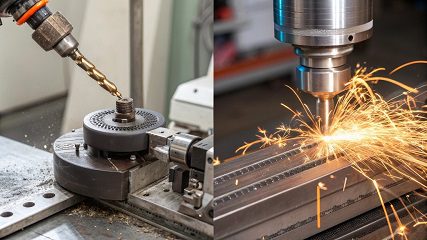
Struggling to machine hard materials or create complex shapes? Traditional methods can be costly and inaccurate. Electrical Discharge Machining (EDM) offers a precise, powerful solution for these tough jobs.
EDM's main advantage is its ability to machine any conductive material, regardless of hardness, without physical contact. This allows it to create complex shapes, sharp internal corners, and achieve extremely tight tolerances (down to 0.001mm) that are impossible with traditional milling or turning.
I've worked with many clients like Mark, a business owner in Canada who needs perfect parts every time. He often deals with tough materials and intricate designs for his customers. For years, he faced limitations with standard CNC machining. When I introduced him to our EDM capabilities, it opened up a new world of possibilities for his products. You might be facing similar challenges, so let's dig into how EDM can specifically solve them. Let's look at why this technology might be the perfect fit for your next project.
What advantages does EDM have over conventional machining?
Are your conventional cutting tools breaking or wearing down on tough materials? This costs you time and money. EDM machines materials without any physical contact, solving this problem completely.
EDM excels where conventional methods fail. It can cut extremely hard conductive materials and create intricate shapes without mechanical stress, preventing part distortion and tool wear. This is a massive advantage.
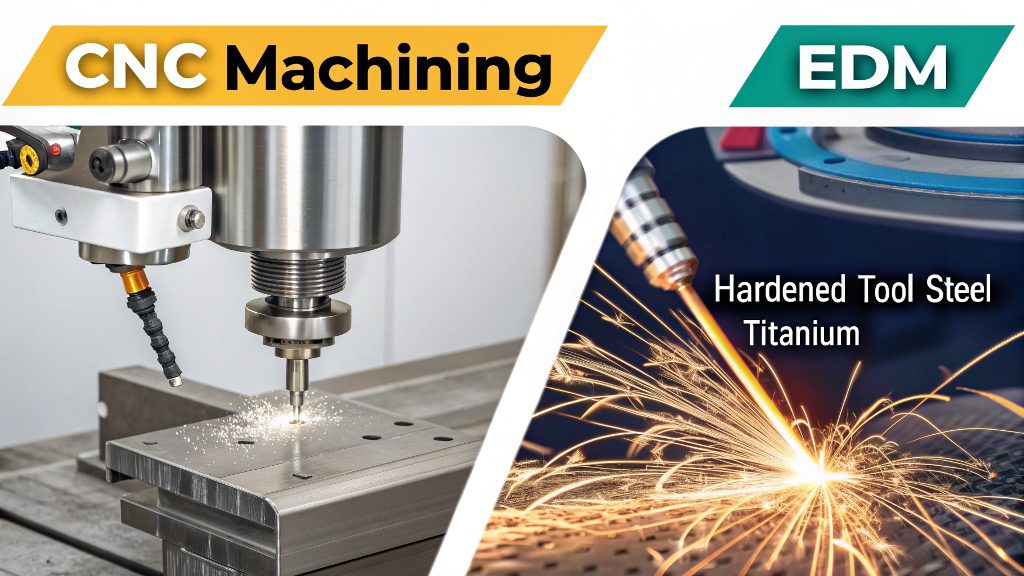
The biggest difference is the lack of physical force. In traditional CNC machining, a cutting tool physically grinds against the workpiece to remove material. This creates stress, heat, and tool wear, especially with hard materials. EDM is a non-contact process. It uses electrical sparks to erode the material. This is a game-changer.
No Tool Wear or Mechanical Stress
Because the electrode in EDM never touches the workpiece, there is no tool wear in the traditional sense. This also means no cutting forces are applied to the part. This is crucial for delicate or thin-walled components that could easily bend or break under the pressure of a conventional milling tool. You get a perfect part without any distortion.
Machining Super-Hard Materials
Traditional methods struggle with materials like hardened tool steel, titanium, or exotic alloys. It's often slow and destroys expensive cutting tools. EDM doesn't care how hard the material is, as long as it's electrically conductive. This makes it ideal for industries like aerospace and medical, where tough, high-performance materials are standard.
| Feature | Conventional Machining (CNC) | EDM (Electrical Discharge Machining) |
|---|---|---|
| Contact | Direct Physical Contact | No Contact (Spark Erosion) |
| Material Hardness | Limited by tool material | Not a limiting factor |
| Part Stress | High mechanical stress | No mechanical stress |
| Tool Wear | Significant | Minimal electrode wear |
What are the advantages of EDM machining?
Need to create sharp internal corners or deep, narrow slots? Traditional cutters have a radius and can't do it. EDM allows you to create these complex geometries with ease.
The main advantages of EDM are its ability to create complex geometries, achieve superior surface finishes, and machine very hard materials. It's perfect for detailed molds, dies, and critical aerospace components.
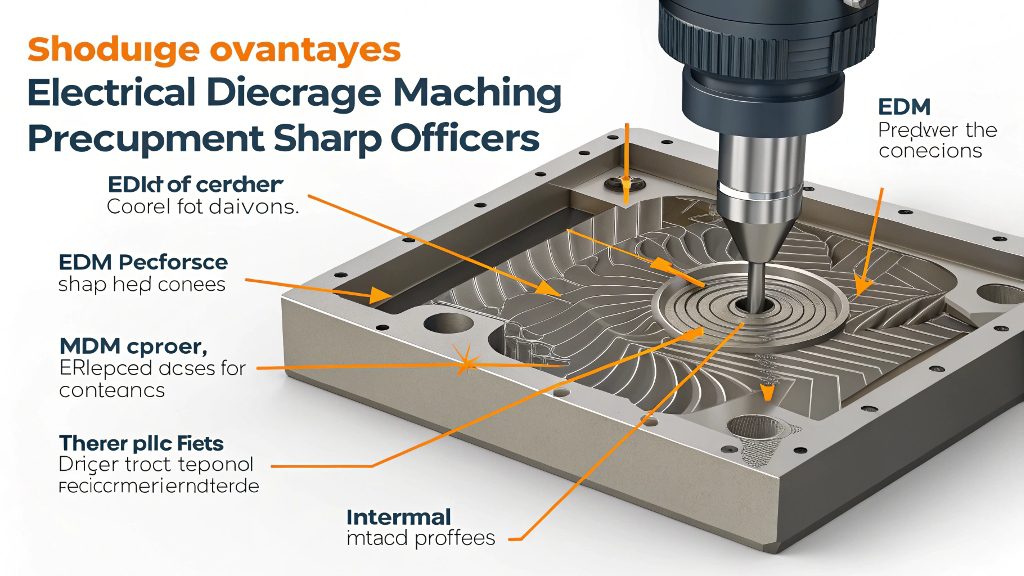
When I talk to procurement officers, they are always focused on quality and capability. They need to know if we can make their design a reality. This is where I explain the unique advantages of EDM that go beyond just cutting hard materials. It’s about the level of detail and precision we can achieve.
Intricate Shapes and Sharp Corners
Because we use a custom-shaped electrode or a thin wire, we can produce shapes that are impossible for a rotating cutting tool. This includes sharp internal corners, deep and narrow ribs, and complex internal cavities. For tool and die making, this is essential. A traditional endmill will always leave a radius in a corner, but an EDM electrode can create a perfectly sharp 90-degree corner. This capability is critical for molds that need to produce parts with no imperfections.
Unmatched Precision and Surface Finish
At Worthy, we can hold EDM tolerances down to an incredible +/- 0.001mm. This level of precision is very difficult to achieve with conventional methods. Furthermore, the spark erosion process can produce a very fine, uniform surface finish without the tool marks often left by milling or turning. For high-performance parts where surface integrity is key, EDM provides a superior result without needing secondary polishing operations.
What is the difference between EDM and traditional machining?
Frustrated by the limitations of cutting tools on your part's design? The fundamental difference is how material is removed. Traditional machining cuts, while EDM vaporizes metal with sparks.
The core difference is the material removal method. Traditional machining uses physical force with a cutting tool. EDM uses thermal energy from controlled electrical sparks to erode conductive materials without any contact.
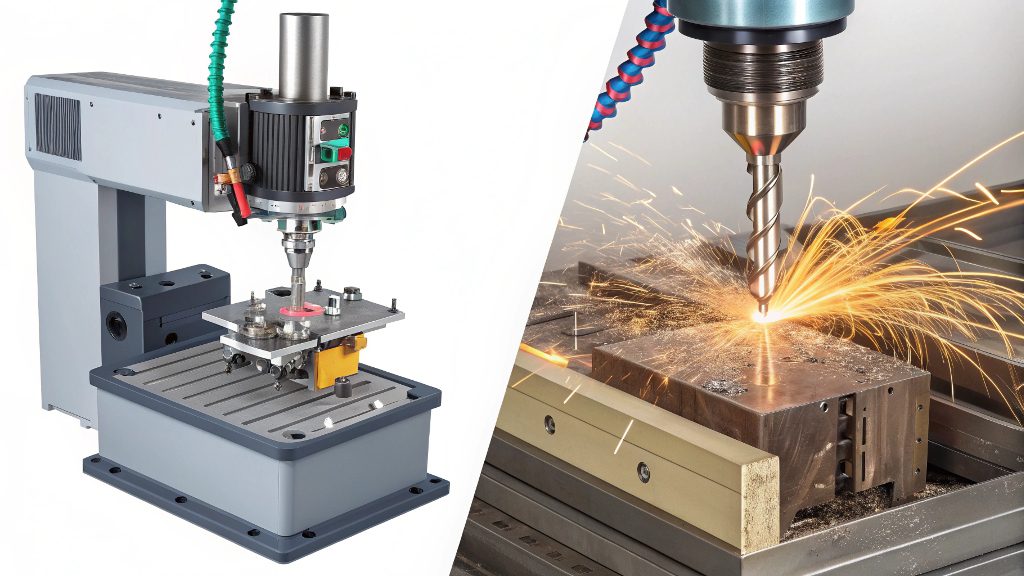
Thinking about the process itself helps clarify when to choose one over the other. I always tell my customers to think about it like sculpture. Traditional machining is like carving wood with a chisel—you are physically forcing material away. EDM is more like using a precision laser to vaporize material dot by dot.
The Process: Force vs. Energy
- Traditional Machining (e.g., CNC Milling): A hardened, spinning tool is pushed into a workpiece. Chips of material are sheared off. The process relies on the tool being harder than the material it is cutting. It generates significant heat, force, and vibration. It's fast and efficient for softer materials and simpler geometries.
- EDM: The part and an electrode are submerged in a dielectric fluid. A high-frequency electrical voltage is applied, creating a series of intense sparks between them. Each spark melts and vaporizes a microscopic particle of material, which is then washed away by the fluid. It's a controlled erosion process that relies on thermal energy, not mechanical force.
This fundamental difference in process is what leads to all the unique advantages of EDM. You're not limited by tool strength or geometry in the same way. It allows us to approach complex manufacturing challenges from a completely different angle.
How is EDM better than conventional methods?
Are you getting parts that are slightly warped or have rough finishes? This is often due to the stress of conventional cutting. EDM eliminates this stress, resulting in a better part.
EDM is better for producing burr-free parts, machining thin or fragile components without distortion, and creating complex features in hard materials that conventional methods simply cannot handle effectively or economically.
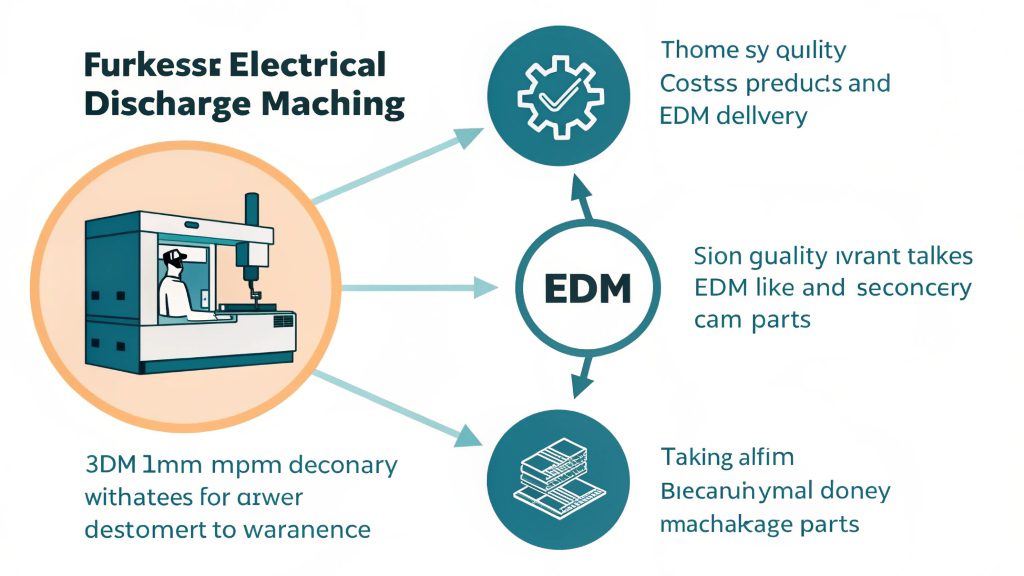
Ultimately, for a business owner like Mark, the choice comes down to results: quality, cost, and delivery time. While EDM can be a slower process, for the right application, it is far superior and more cost-effective in the long run.
Superior Part Quality
The non-contact nature of EDM means we can machine very thin walls and delicate features without any risk of bending or breaking the part. I remember a project with a medical device component that had walls just 0.5mm thick. Attempting to mill it conventionally was impossible; the part would simply deform. With wire EDM, we produced thousands of them perfectly. Additionally, the EDM process is burr-free. This saves a lot of time and money on secondary deburring operations, which are almost always required after traditional machining.
Unlocking Design Freedom
The biggest way EDM is better is that it frees engineers from the constraints of traditional manufacturing. You don't have to worry about whether a standard tool can access a feature or if a material is too hard to cut. If you can design it and it's made of a conductive material, there's a very high chance we can make it with EDM. This capability allows for more innovative, efficient, and complex product designs, especially in high-tech fields.
Conclusion
In summary, EDM is a superior choice for machining hard materials, complex shapes, and delicate parts, offering unmatched precision and a burr-free finish that traditional methods cannot achieve.