
What are the cost-saving strategies for high-volume CNC milling projects?
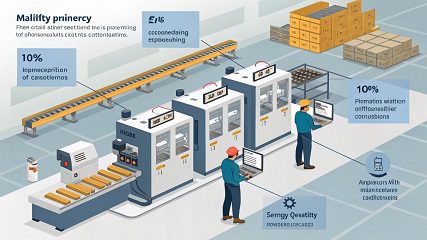
Managing costs for large-scale CNC milling projects is a constant struggle. Unseen expenses can quickly eat into your profits, but we have found effective ways to control them.
To save costs on high-volume CNC milling projects, you should focus on several key areas. Optimizing the machining process, increasing production efficiency, lowering material costs, controlling energy use, and enforcing strict quality control are the most effective strategies for significant long-term savings.
Figuring out how to reduce costs without compromising the quality of your parts is a major challenge for any business. It feels like you're constantly balancing on a tightrope, where one wrong move could lead to either budget overruns or a batch of unusable parts. As a CNC machining parts provider in China, we've helped many clients like you navigate this challenge. After years in the business, we've identified the key strategies that make a real difference, allowing for significant cost savings on large orders. These methods are not just theories; they are practical steps we implement every day.
How to reduce CNC machining cost?
Are you trying to lower your CNC machining costs but worried about receiving poor-quality parts? It's a common fear, but smart cost reduction is possible with the right approach.
The best ways to reduce CNC machining costs involve optimizing your part design for manufacturability (DFM), selecting cost-effective materials that still meet project requirements, and consolidating orders to take advantage of volume discounts. These three steps have the most direct impact on the final price.
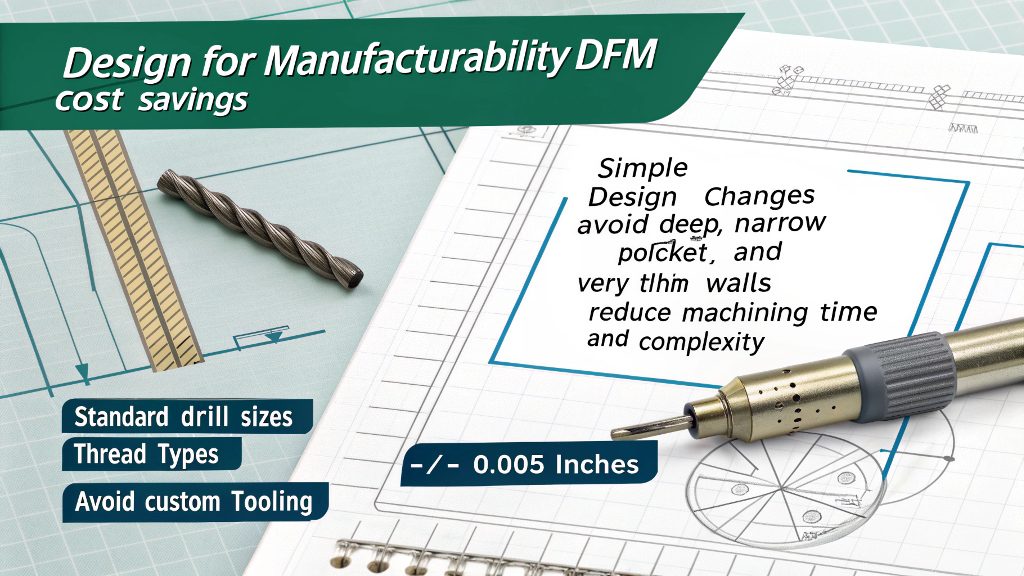
We've learned over the years that the most significant cost savings happen before the machine even starts running. It all begins with the design. This is where Design for Manufacturability (DFM) becomes so important. A simple change in design can drastically cut down on machining time and complexity. For example, avoiding deep, narrow pockets or very thin walls makes the milling process faster and reduces the risk of tool breakage. Also, using standard drill sizes and thread types means we don't need custom tooling, which saves both time and money. I always advise my clients to specify tolerances only as tight as they need to be. Our standard tolerance of +/- 0.005 inches is precise for most applications, and avoiding unnecessarily tight tolerances of +/- 0.001 inches unless critical can lead to big savings. Material choice is another huge factor. Sometimes, a more affordable aluminum alloy will perform just as well as a more expensive one for a specific application. Finally, planning your orders to maximize volume helps a lot. The setup cost is the same whether we make 10 parts or 1,000, so the cost per part drops significantly on larger runs.
| Cost Reduction Tactic | Description | Potential Savings |
|---|---|---|
| Simplify Geometry | Remove non-essential features, use generous radii. | High |
| Loosen Tolerances | Specify tolerances only where they are critical. | High |
| Choose Cheaper Materials | Opt for a lower-cost material that meets specs. | Medium |
| Standardize Features | Use common hole sizes, threads, and radii. | Medium |
| Increase Order Volume | Consolidate orders to get a lower per-unit price. | High |
How do CNC machines reduce labor costs?
Are your production costs being driven up by high labor expenses? Manual machining requires skilled operators for every step, which is slow and costly. CNC machines offer a powerful solution.
CNC machines reduce labor costs through automation. A single operator can oversee multiple machines at once, and the machines can run continuously with minimal supervision. This dramatically increases worker productivity and allows for 24/7 "lights-out" manufacturing, slashing the labor cost per part.
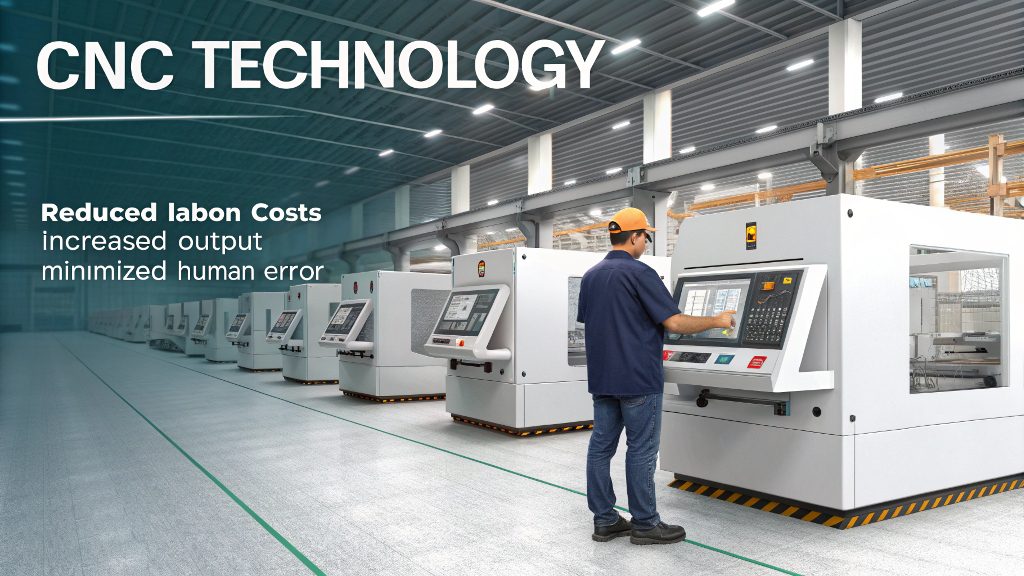
The biggest advantage of CNC technology is automation. Once we program a machine with the design, it can produce part after part with perfect consistency. This is a huge shift from manual machining, where every single part requires the constant attention of a skilled machinist. With our CNC mills, a single trained operator can set up and monitor several machines at the same time. This immediately multiplies the output of one employee. For a recent project for a client in Canada, we had one technician managing four machines that were producing a complex aluminum part. This setup slashed the labor component of the final cost. Moreover, for high-volume projects, we use "lights-out" manufacturing. This means the machines can run overnight or through the weekend with just a skeleton crew for monitoring. This maximizes our investment in the equipment and delivers parts to our clients faster and cheaper. Automation also eliminates human error. The machine doesn't get tired or distracted, so the rate of scrap and rework is incredibly low. This saves material and the labor that would have been wasted on rejected parts.
How much does it cost to run a CNC mill per hour?
Have you ever wondered about the true hourly cost of running a CNC mill? It's much more than just the machine's price tag. Many different expenses contribute to the final rate.
The hourly rate for a CNC mill can range from $40 to over $150. This cost includes the machine's depreciation, tooling, electricity, maintenance, software licenses, and the operator's wage. The machine's complexity, like a 3-axis versus a 5-axis mill, is a major factor.
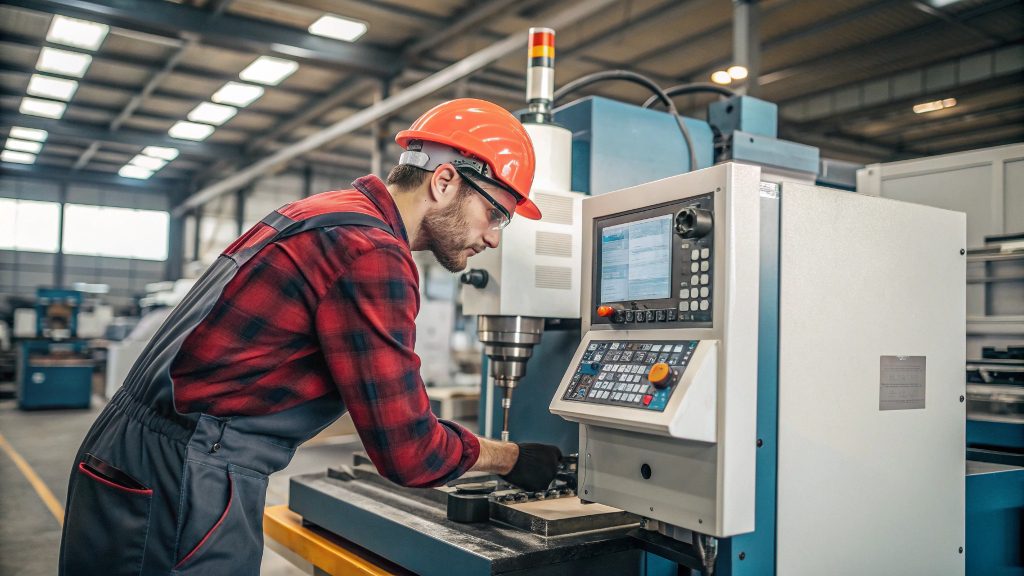
Calculating the hourly rate of a CNC machine, or the "shop rate," is something we have to do very carefully to give accurate quotes. First, there's the cost of the machine itself. A machine that costs $200,000 has a much higher depreciation cost per hour than a $50,000 machine. We spread this cost out over the expected life of the machine. Then you have the consumables. Cutting tools like end mills and drills wear out and need to be replaced regularly. This is a significant ongoing expense, especially when machining hard materials. Power is another big one; these machines consume a lot of electricity. We also budget for regular maintenance to keep everything running perfectly and avoid costly breakdowns. Software is another hidden cost. We pay for licenses for our CAD/CAM software to program the mills. Finally, and most importantly, is the skilled labor. Our operators and programmers are highly trained professionals, and their wages are a key part of the hourly rate. A more advanced machine, like one of our 5-axis mills, requires a more skilled operator and costs more per hour to run than a simpler 3-axis machine. All these factors combine to create the final rate we use for quoting projects.
| Cost Component | Description | Impact on Hourly Rate |
|---|---|---|
| Machine Depreciation | The cost of the machine spread over its lifespan. | High |
| Operator Labor | The wage and benefits of the skilled technician running the machine. | High |
| Tooling & Consumables | Cost of cutters, drills, and fluids used during machining. | Medium |
| Electricity | Power consumption of the machine, spindle, and coolant pumps. | Medium |
| Maintenance & Repairs | Planned service and unexpected repairs to keep the machine running. | Low to Medium |
| Software & Overheads | CAM software licenses, building rent, and other business costs. | Low |
How to improve CNC efficiency?
Are you looking for ways to get more parts made in less time? Inefficient processes can cause delays and increase costs, but there are proven methods to boost your CNC output.
To improve CNC efficiency, focus on optimizing toolpaths to reduce cycle times, using high-quality tooling to cut faster, implementing automation like pallet changers, and maintaining machines proactively. This combination ensures maximum uptime and faster production, lowering the cost per part.
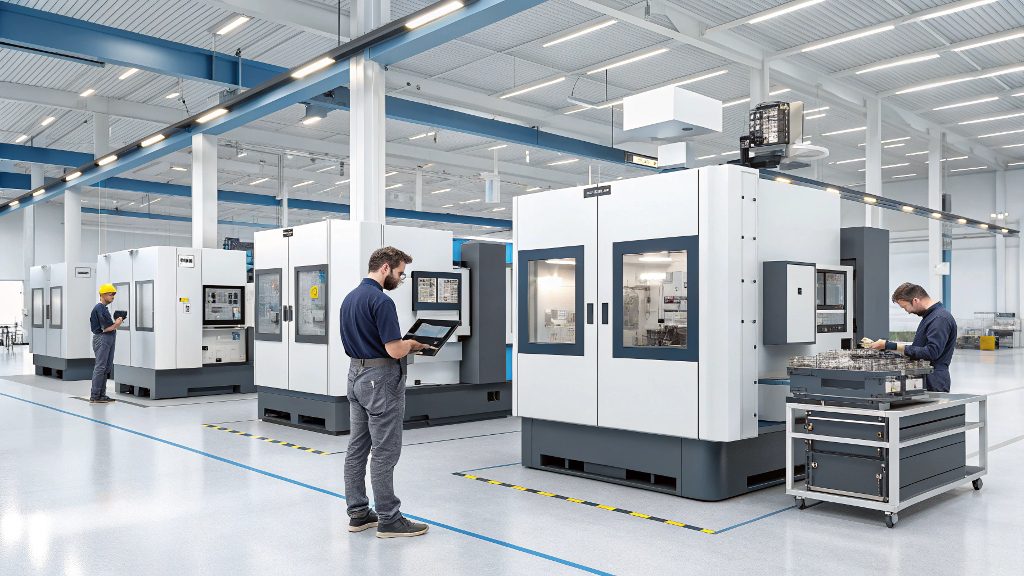
For us, efficiency is everything. The faster we can produce high-quality parts, the more competitive our pricing can be. One of the first things we look at is the CAM programming. Our engineers are experts at creating highly optimized toolpaths. They use techniques like high-speed machining (HSM)[^1] which allows for faster cutting speeds and deeper cuts without putting stress on the tool or part. This single step can reduce cycle times by 50% or more. The quality of our cutting tools also matters a lot. Using premium carbide end mills with modern coatings allows us to run the machines at higher speeds and feeds, and they last longer, which means less time spent changing tools. Automation is another key to our efficiency. Many of our machines are equipped with automatic pallet changers. While one part is being machined, the operator can be setting up the next part on a separate pallet. When the first part is finished, the machine automatically swaps the pallets, and the next cycle begins almost instantly. This reduces machine downtime from minutes to seconds. Finally, we follow a strict preventive maintenance schedule. Keeping our machines in top condition prevents unexpected breakdowns, which are the biggest enemy of efficiency and on-time delivery.
Conclusion
In summary, saving costs on high-volume CNC milling requires a strategic approach. By focusing on smart design, automation, efficiency, and material choices, you can achieve significant savings without sacrificing quality.