
What Special Considerations Are Needed When Machining Monel Parts?
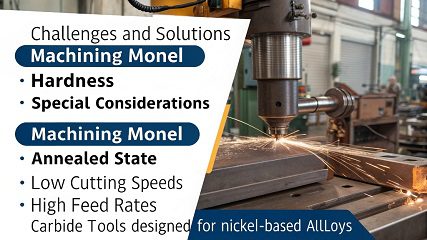
Struggling with tough materials like Monel? Its hardness can destroy your tools and your timeline. This leads to costly delays, machine stress, and parts that don't meet spec.
When machining Monel, you need special considerations. Machine it in an annealed state. Use low cutting speeds but high feed rates to prevent work hardening. Also, use carbide tools designed for nickel-based alloys. This protects your tools and ensures part quality.
Monel is a fantastic material for harsh environments, but it’s not easy to work with. I remember when we first got a big order for Monel parts for a marine application. We treated it like tough stainless steel and broke several expensive tools on the first day. That expensive lesson taught us that Monel has its own set of rules. You have to respect the material to get good results. Let's break down exactly what you need to know to machine it successfully.
What are the special properties of Monel?
Wondering what makes Monel so tough yet so useful? Its unique blend of nickel and copper gives it amazing strength. But this same strength makes it a challenge on the workshop floor.
Monel is a nickel-copper alloy known for its high strength and excellent corrosion resistance. It stands up to seawater, acids, and alkalis. It also maintains its strength at very high and very low temperatures, which makes it perfect for extreme environments.
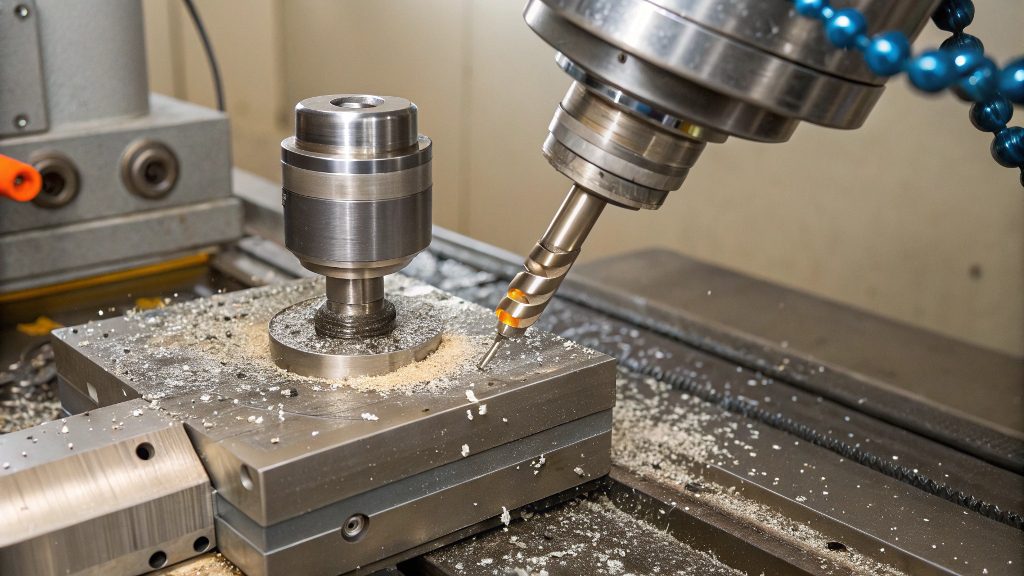
Monel isn't just one material; it's a family of alloys. Each one has a slightly different mix, but they all share core properties that come from their high nickel and copper content. At Worthy, we mostly see Monel 400 and K-500. Understanding these properties is the first step to machining them correctly.
Key Properties Explained
- Corrosion Resistance: This is Monel's superstar quality. The high nickel content makes it incredibly resistant to all sorts of corrosive agents. We make parts for marine hardware and chemical processing plants from Monel because it simply doesn't rust or degrade like steel would.
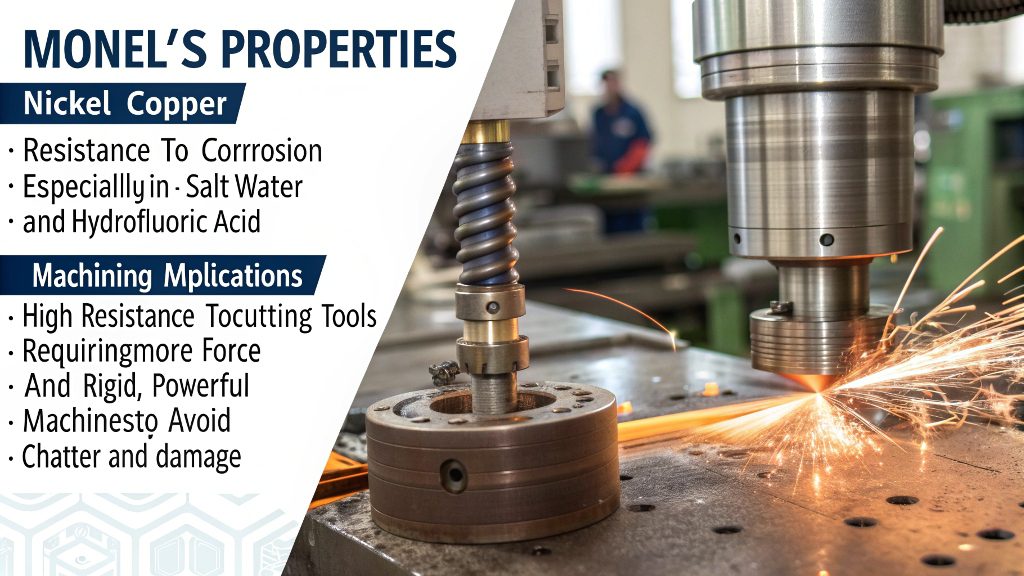
- High Strength: Monel is stronger than plain steel. This strength-to-weight ratio is great for the final product but creates high cutting forces during machining. You need a rigid machine and strong tool holders to handle it.
- Temperature Stability: It performs well in both freezing cold and high heat. This makes it valuable for aerospace and energy sector applications where temperatures can swing wildly.
- Work Hardening: This is a crucial property for machining. Monel gets harder as you cut it. Any rubbing or light cuts will create a hardened surface layer that is very difficult to machine further.
Here is a quick comparison of popular Monel grades:
| Property | Monel 400 | Monel K-500 |
|---|---|---|
| Composition | ~67% Nickel, ~30% Copper | ~65% Nickel, ~30% Copper, + Aluminum & Titanium |
| Strength | High | Very High (Age-hardenable) |
| Corrosion Resistance | Excellent | Excellent |
| Best For | Marine, Chemical Processing | Pumps, Valves, Oil & Gas tools |
Because of these properties, you can't just throw a block of Monel into a CNC machine and hope for the best. You have to plan every step, from the tools you choose to the speeds you run.
Is Monel easy to machine?
Are you finding Monel parts costly and slow to produce? The material's gummy texture and tendency to harden instantly can make machining feel like an uphill battle, causing frustration and delays.
No, Monel is not easy to machine. It is considered a difficult-to-machine material. Its high strength, rapid work-hardening rate, and low thermal conductivity create significant challenges. Machining it requires special tools, rigid setups, and carefully controlled parameters to avoid poor results.
A customer once sent us a design for a complex valve body made from Monel K-500. His previous supplier in Europe had told him it was nearly impossible to make. They had struggled with tool life and couldn't hold the tight tolerances. The main reason for this difficulty is a property called work hardening. It’s what makes the material so tough in its final application, but it’s a machinist's biggest enemy.
Why It's So Difficult
- Rapid Work Hardening: When a cutting tool engages with Monel, the pressure and heat of the cut instantly make the surface harder. If your tool hesitates or you take too light of a cut, you're left with a hardened layer. The next pass has to cut through this much harder material, which leads to extreme tool wear or even tool breakage. You have to get under that layer with a deep, confident cut.
- High Heat Generation: Monel doesn't transfer heat well. All the heat from the friction of cutting stays right at the tool tip. This heat can quickly ruin even the toughest carbide tools. That's why using a lot of high-pressure coolant is not just helpful—it's essential.
- Gummy Texture: The high nickel content gives Monel a "gummy" or "sticky" feel during machining. The chips don't break off cleanly like they do with steel or aluminum. Instead, they can get long and stringy, or even weld themselves to the cutting tool, which hurts the surface finish and can break the tool.
- High Cutting Forces: Because it's so strong, Monel puts a lot of stress on the machine, the tool holder, and the cutting tool itself. Everything in the setup needs to be as rigid as possible to prevent vibration, which would lead to a poor finish and more tool wear.
Machining Monel is more about strategy than speed. You have to go in with a plan that accounts for these difficult properties.
What is the machinability of Monel material?
Finding it hard to estimate cycle times for Monel? Its low machinability rating makes it tough to predict how long a job will take, affecting your quotes and your production schedule.
Monel has a poor machinability rating, typically around 40-50% compared to free-machining steel. This low rating reflects its high strength and work-hardening properties. It requires much slower cutting speeds and heavier feeds than most common metals to machine it effectively.
When we calculate a quote for a Monel part, we can't use the same formulas we use for aluminum or stainless steel. The machine time will be much longer. I tell my engineers to think of it this way: for every minute you'd spend machining steel, you might spend three or four minutes machining Monel. This is a direct result of its poor machinability. We need to slow everything down and be more deliberate.
Breaking Down Machinability
The machinability rating is a simple way to compare how easy it is to cut different materials. A higher number means it's easier to machine.
| Material | Machinability Rating (Approx.) | Notes |
|---|---|---|
| Brass 360 | 100% | The standard baseline, very easy to machine. |
| Aluminum 6061 | 90% | Easy to machine, allows high speeds. |
| Steel 1018 | 70% | Common steel, good machinability. |
| Stainless Steel 304 | 45% | More difficult, work hardens. |
| Monel 400 | 40-50% | Difficult, similar to tough stainless steels. |
To manage this poor machinability, you need to adjust your entire process.
The Right Approach
- Cutting Speed: This is the most important factor. You must use slow surface speeds to control heat generation. If you go too fast, you'll burn up your cutting tool almost instantly. My advice is to always start on the low end of the recommended speed for your tool and listen to the machine.
- Feed Rate: While the speed needs to be slow, the feed rate (how fast the tool moves into the material) should be high. This ensures the tool is constantly cutting fresh material and gets under the hardened layer created by the previous pass. A light, hesitant feed will cause the tool to rub, creating more hardening.
- Annealed Condition: We always tell our clients that it's best to machine Monel in its annealed, or softened, state. Machining age-hardened Monel K-500 is extremely difficult and should be avoided unless absolutely necessary for the final steps.
By respecting Monel's low machinability and adapting your strategy, you turn a difficult job into a manageable one.
What are the specs of Monel?
Trying to select the right Monel for your project? With different grades available, it can be hard to know which one has the specific strength and resistance your application needs.
The specs for Monel vary by grade, but generally, it is a nickel-based alloy containing 52-67% nickel and a high percentage of copper. Different grades like Monel 400 or K-500 include additional elements like aluminum and titanium to enhance specific properties like strength.
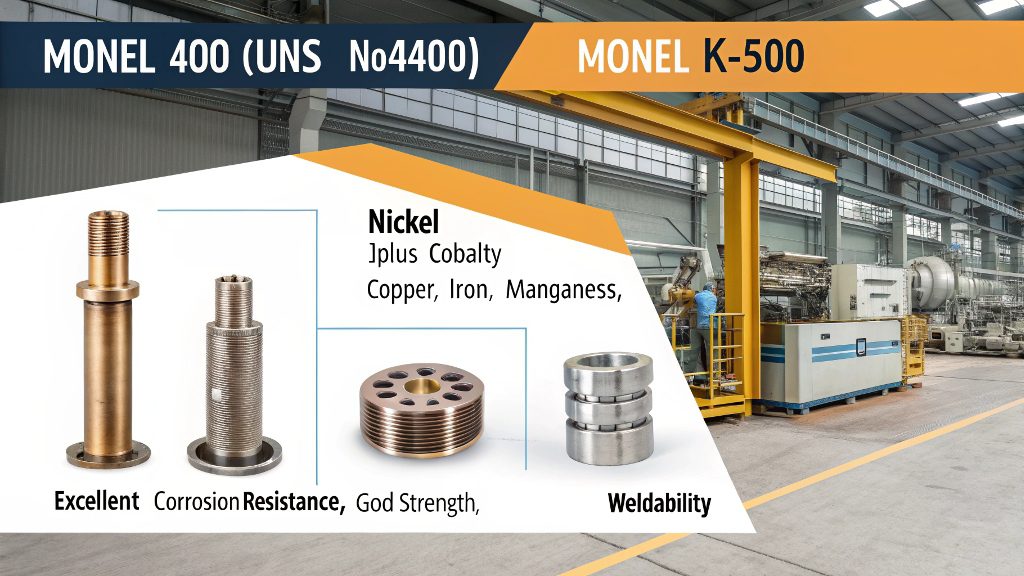
Choosing the right grade of Monel is just as important as knowing how to machine it. We had a customer who needed a part for a high-pressure pump. They specified Monel but didn't say which grade. We contacted them to clarify. They needed high strength, so we recommended Monel K-500 because it can be age-hardened to be much stronger than Monel 400. Using the wrong grade would have led to part failure. The technical specifications are everything.
Common Monel Specifications
Here are the details for the two most common grades we work with. These specs are defined by international standards like ASTM and UNS.
Monel 400 (UNS N04400)
This is the workhorse grade and the most widely used.
- Composition:
- Nickel (plus Cobalt): 63.0% min.
- Copper: 28.0 - 34.0%
- Iron: 2.5% max.
- Manganese: 2.0% max.
- Key Features: It has great corrosion resistance, good strength, and is weldable. It's often used in marine engineering, chemical processing equipment, and valves.
- Mechanical Properties (Annealed):
- Tensile Strength: 75-90 ksi (517-620 MPa)
- Yield Strength: 25-50 ksi (172-345 MPa)
Monel K-500 (UNS N05500)
This is the "high-strength" version of Monel.
- Composition:
- Nickel (plus Cobalt): 63.0% min.
- Copper: 27.0 - 33.0%
- Aluminum: 2.30 - 3.15%
- Titanium: 0.35 - 0.85%
- Key Features: It has the same excellent corrosion resistance as Monel 400 but is much stronger and harder. The extra aluminum and titanium allow it to be age-hardened. It's used for pump shafts, oil well tools, and fasteners.
- Mechanical Properties (Age-Hardened):
- Tensile Strength: 140-190 ksi (965-1310 MPa)
- Yield Strength: 100-150 ksi (690-1034 MPa)
When you send us a drawing, specifying the exact UNS number is critical. It tells us everything we need to know about the material's properties and how to approach the machining process to deliver a perfect part.
Conclusion
In short, machining Monel requires slow speeds, heavy feeds, sharp tools, and lots of coolant. Respect its properties, and you will get excellent results for your most demanding applications.