
What are the most cost-effective materials for laser cutting?
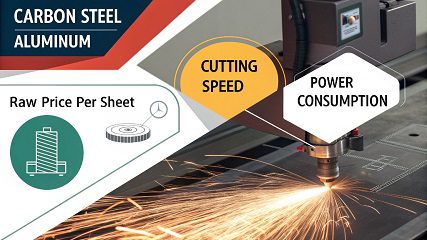
Struggling to find affordable materials for your project? The wrong one can inflate costs and cause delays. I can guide you to the most economical choices for laser cutting.
For industrial applications, the most cost-effective materials are often metals like carbon steel and aluminum. They balance low material cost with fast, precise cutting speeds, providing excellent value for manufacturing and sheet metal fabrication projects.
Choosing the right material is the first step in any successful project. Many people think about the raw price per sheet, but that is only part of the story. You also have to think about how fast the laser can cut it, how much power is needed, and the quality of the final edge. We have worked with over 100 materials at Worthy, and I have seen how these factors impact the final price. Let's break down the details to help you make a smart decision that saves you money.
What is the cheapest material for laser cutting?
Is your budget the main thing you think about? Every dollar counts, and the raw material cost can seem a big hurdle. Let's find out what's cheapest upfront.
While thin acrylic or craft plywood can be very cheap for hobbyists, for industrial metal parts, mild carbon steel is usually the most budget-friendly. Its low purchase price and fast cutting speed make it a fantastic choice for cost-sensitive projects.
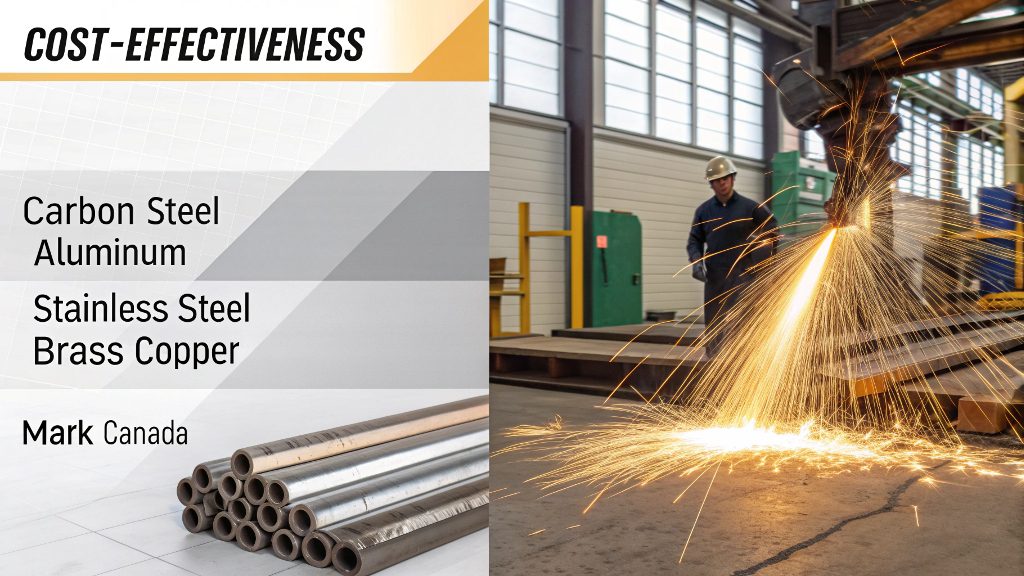
When we talk about "cheapest," it is important to look at the total project cost, not just the material cost. I remember a client, Mark from Canada, who needed a large batch of simple brackets. He first asked about stainless steel, but when we discussed his budget, I suggested mild carbon steel. The material itself was about 30% cheaper. More importantly, our fiber lasers cut through it incredibly fast. This reduced the machine time, which is a big part of the cost. He got his parts faster and well under budget. For most structural or general-purpose parts where rust isn't the primary concern, carbon steel is the winner for low cost.
Here is a simple breakdown of common metals we work with:
| Material | Raw Material Cost | Cutting Speed | Overall Cost-Effectiveness |
|---|---|---|---|
| Carbon Steel | Low | Very Fast | Excellent |
| Aluminum | Medium | Fast | Very Good |
| Stainless Steel | High | Medium | Good |
| Brass / Copper | Very High | Slow | Fair (for specific needs) |
So, while the price tag on a sheet of carbon steel is low, the real savings come from the fast and efficient cutting process.
Is plywood or MDF better for laser cutting?
Are you choosing between wood options for your designs? The wrong choice can lead to bad results or even safety issues. Let's see which one is better.
Plywood is generally better than MDF for laser cutting. It produces a cleaner cut with less burning and releases fewer harmful fumes. MDF contains glues that can be toxic when burned and can also leave a sticky residue on your parts.
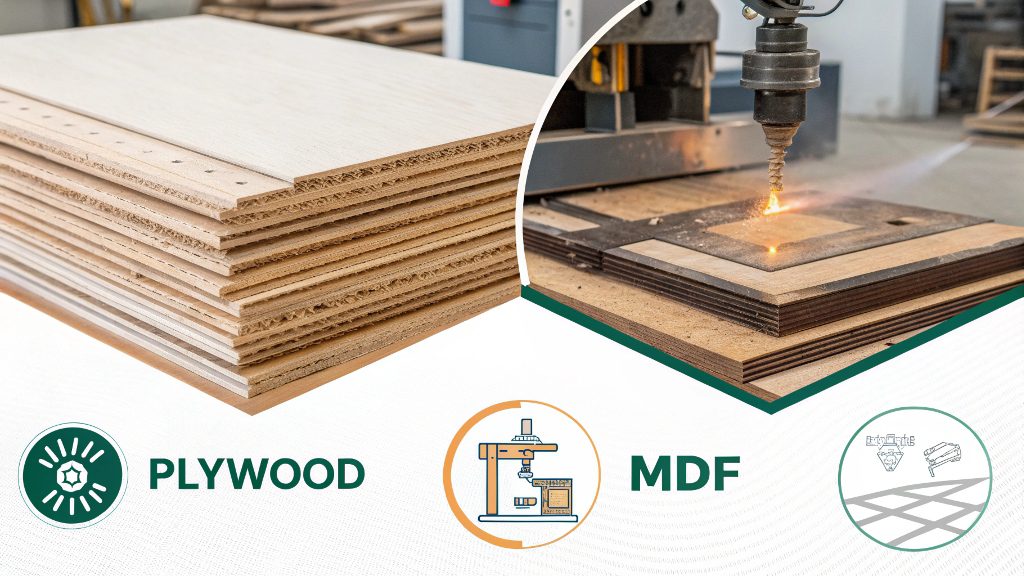
Although my company, Worthy, specializes in sheet metal fabrication, we sometimes get questions about other materials. A design agency once approached me asking if we could laser cut some display stands from MDF. They liked it because it was cheap and had a smooth surface for painting. I had to explain the challenges. The resins in MDF create a lot of smoke and a charred, hard-to-clean edge. For their safety and the quality of the product, I advised against it. Instead, we discussed using thin, powder-coated aluminum. It gave them a much more durable and professional-looking product. While plywood is the better wood choice, if your project needs strength and a clean finish, a thin metal is often a superior alternative.
Here's why plywood is the safer bet for non-metal projects:
- Composition: Plywood is made of thin wood veneers glued together. MDF is made of wood dust and resin, which doesn't cut as cleanly.
- Cutting Edge: Plywood gives you a cleaner, wood-grain edge. MDF leaves a dark, sooty, and often sticky edge.
- Safety: The fumes from cutting MDF's binding resins are more toxic than those from cutting the natural wood and glue in plywood.
What material can laser not penetrate?
Worried that a material might be too tough for a laser? Some materials reflect the laser light or are too thick to cut. It is important to know these limits.
Lasers struggle to cut highly reflective metals like polished copper or brass, as the beam can bounce back and damage the machine. Very thick materials and certain composites or transparent plastics can also be impossible for a laser to penetrate effectively.
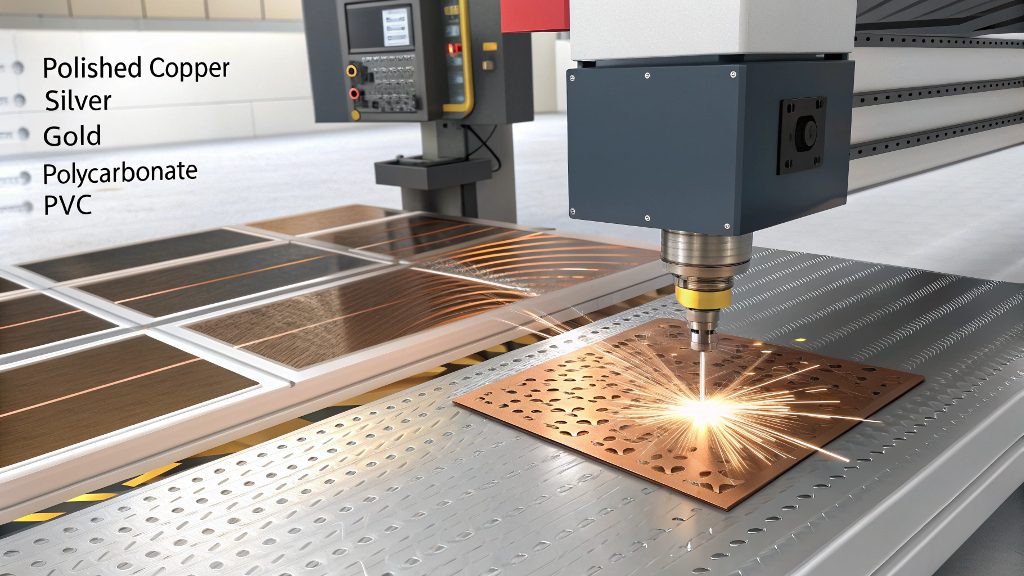
We have powerful lasers, but they have limits. The biggest challenge is with reflective metals. The laser beam is just light, and a shiny surface acts like a mirror. A few years ago, we had an R&D project that required cutting pure, polished copper. It was difficult. Our standard fiber lasers had trouble starting the cut. We had to use a special process and work very carefully to avoid reflecting the laser back into the optics, which could cause thousands of dollars in damage. For these types of materials, waterjet cutting is often a much safer and more reliable option. Also, extremely thick steel, say over 1 inch (25mm), is typically cut with a plasma or waterjet cutter, not a laser. A laser can do it, but it becomes very slow and expensive.
Here’s a quick list of materials that are difficult or impossible for standard lasers:
- Highly Reflective Metals: Polished copper, silver, and gold.
- Certain Plastics: Polycarbonate (it melts and discolors) and PVC (releases toxic chlorine gas).
- Composite Materials: Carbon fiber can be cut but requires very specific settings and ventilation.
- Glass and Crystal: They are transparent to the laser's wavelength and can crack from thermal stress.
Which is better, CO2 or fiber laser engraver?
Trying to decide between a CO2 and a fiber laser? They are built for different jobs, and choosing the wrong one is a costly mistake. Let me explain the key difference.
A fiber laser is much better for cutting and engraving metals. A CO2 laser is superior for organic materials like wood, acrylic, leather, and glass. For a sheet metal fabrication business like ours, fiber lasers are the only choice.
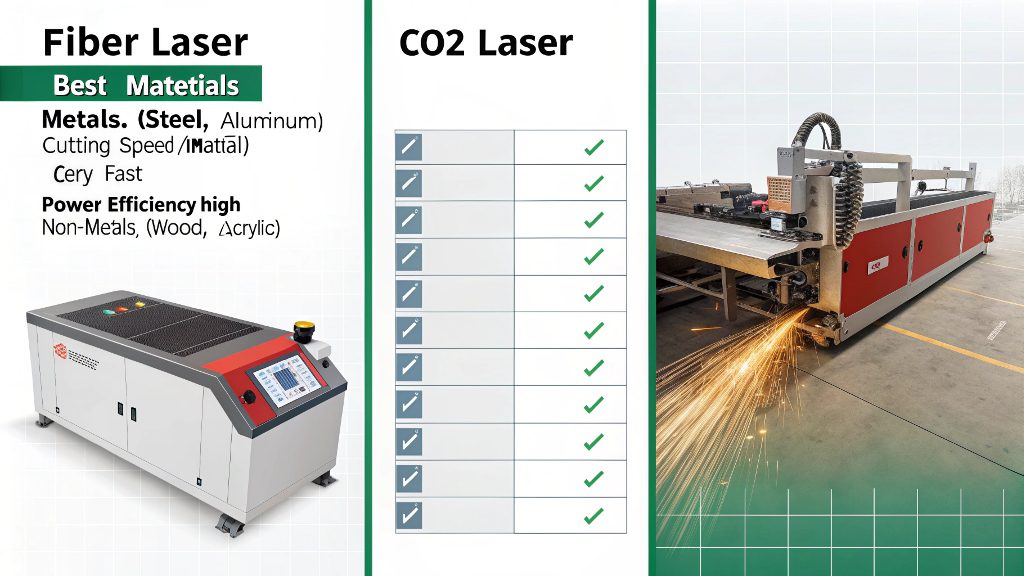
The choice between CO2 and fiber lasers comes down to the material you are working with. The key is the wavelength of the light they produce. Fiber lasers have a shorter wavelength that is easily absorbed by metals, making them fast and efficient for cutting steel, aluminum, and brass. CO2 lasers have a longer wavelength that works perfectly on non-metals. At my company, all our machines are fiber lasers. We invested in them because they are up to three times faster on thin sheet metal than CO2 lasers, use less power, and require almost no maintenance. This efficiency is how we provide competitive pricing and fast lead times, like our standard 3-day turnaround. If a customer needs metal parts, a supplier using fiber laser technology will always provide better speed and value.
| Feature | Fiber Laser | CO2 Laser |
|---|---|---|
| Best Materials | Metals (Steel, Aluminum) | Non-Metals (Wood, Acrylic) |
| Cutting Speed (Metal) | Very Fast | Slow |
| Power Efficiency | High | Low |
| Maintenance | Low | High |
| Primary Use | Metal Cutting & Engraving | Engraving & Cutting Organics |
Conclusion
Choosing cost-effective laser materials means looking at the total cost. For industrial parts, carbon steel and aluminum cut with a fiber laser offer the best value and performance.