
What Are The Advantages Of 5052 vs 6061 Aluminum For Manufacturing?
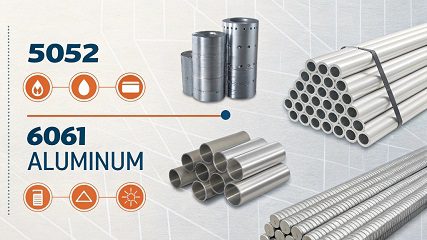
Choosing the right aluminum can be confusing. The wrong choice costs you time and money. Understanding their key differences helps you decide which is best for your manufacturing needs.
5052 aluminum offers superior formability, corrosion resistance, and fatigue strength, making it ideal for bent sheet metal parts and marine applications. 6061 aluminum provides higher strength, hardness, and better machinability, making it the preferred choice for structural components and precision CNC machined parts.
The choice isn't always simple, as both are fantastic materials. However, their unique properties mean one is usually a much better fit for a specific job than the other. Let's break down exactly what sets these two popular alloys apart, so you can choose with confidence for your next project.
What is the difference between aluminum 5052 and 6061?
You see 5052 and 6061 aluminum listed everywhere. But their spec sheets can look similar, making it hard to spot the real differences that matter for your part.
The main difference lies in their alloying elements. 5052 is alloyed with magnesium, giving it excellent formability and work-hardening properties. 6061 is alloyed with magnesium and silicon, which allows it to be heat-treated for significantly higher strength, hardness, and better machinability.
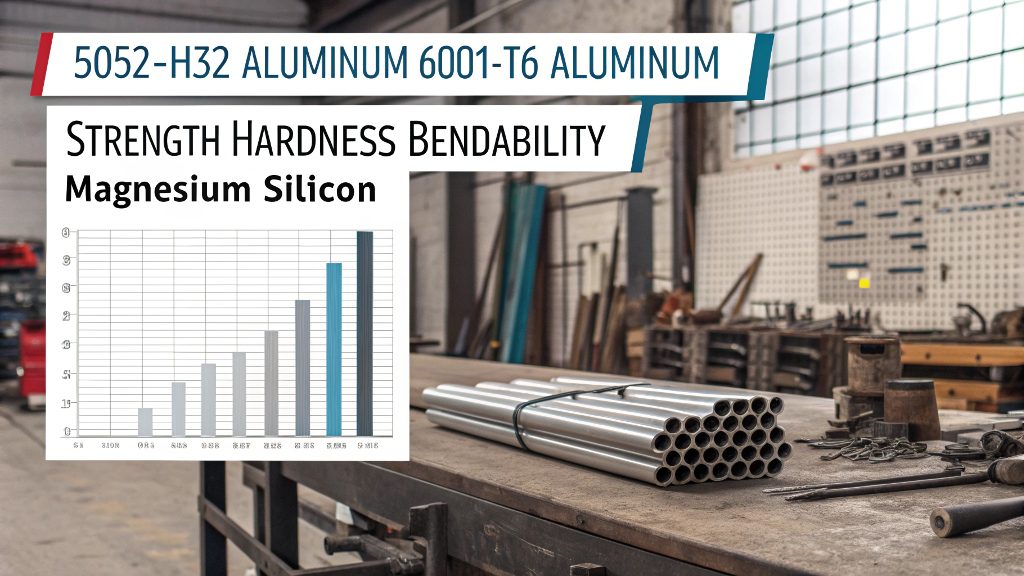
To really understand the difference, we need to look at how their composition affects their performance. I've worked with both materials for years, and the choice almost always comes down to whether the part needs to be bent or needs to be strong and rigid.
Alloying Elements and Their Impact
The primary alloying element in 5052 aluminum is magnesium. This makes it a non-heat-treatable alloy that gains its strength through strain hardening, or "work hardening." This is why it's so good for bending.
6061 aluminum, on the other hand, contains both magnesium and silicon. This combination allows it to be heat-treated. The most common temper you will find is 6061-T6, which has been solution heat-treated and then artificially aged. This process dramatically increases its strength.
Mechanical Properties Compared
The T6 heat treatment makes 6061 much stronger and harder than 5052. Here is a simple table to show the difference.
| Property | 5052-H32 Aluminum | 6061-T6 Aluminum |
|---|---|---|
| Tensile Strength | ~33,000 psi | ~45,000 psi |
| Yield Strength | ~28,000 psi | ~40,000 psi |
| Formability | Excellent | Poor |
| Machinability | Fair | Good |
| Weldability | Excellent | Good |
As you can see, 6061-T6 has a clear advantage in strength, while 5052 wins on formability.
What is the best aluminum for fabrication?
You need to fabricate a part. Picking an alloy that resists being bent or creates welding problems can ruin your schedule and increase costs. Let's see which one is better.
For fabrication involving extensive bending and forming, 5052 aluminum is the best choice due to its superior ductility. For projects requiring high structural strength after welding or machining, 6061 aluminum is often better, especially if you can re-heat-treat it after welding.
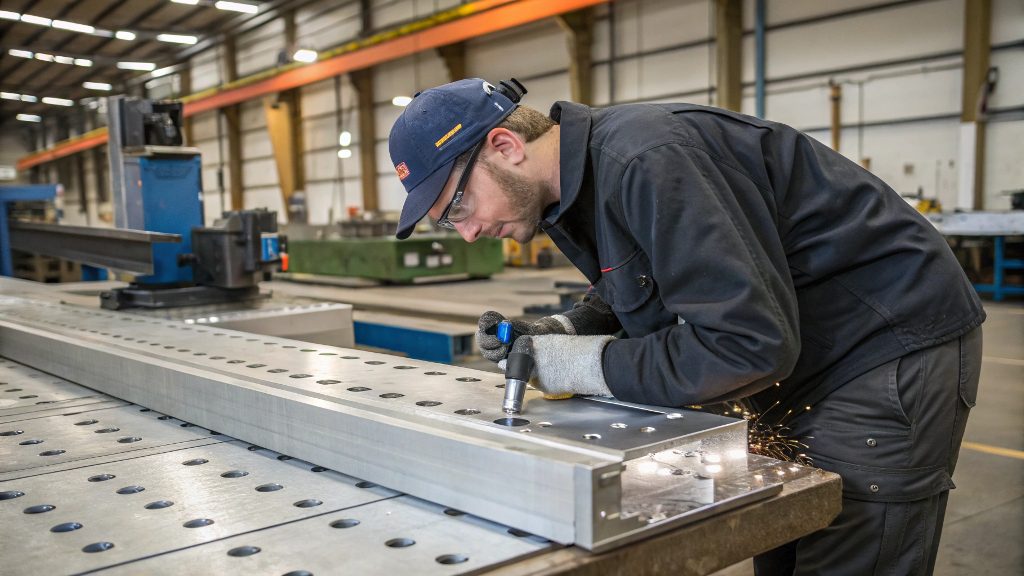
When clients come to me with a fabrication project, my first question is always, "Does this part need to be bent?" The answer to that question often points directly to the right material. If it's a simple machined block, 6061 is the standard. If it's a complex enclosure with many bends, 5052 is the hero.
Bending and Forming
This is where 5052 aluminum truly excels. Because it's softer and more ductile, it can be bent to tight radii without cracking. This makes it the go-to material for sheet metal fabrication, like creating electronic enclosures, chassis, or tanks. I remember a customer who tried to make an intricate folded panel from 6061-T6. We had to remake the parts in 5052 because the 6061 kept cracking on the sharp bends. That was a costly lesson for them about material selection.
Welding Considerations
Both alloys are considered weldable. However, there are important differences. 5052 has excellent weldability and retains more of its strength in the area around the weld. This makes it perfect for marine applications like boat hulls and fuel tanks, where its great corrosion resistance is also a huge plus.
6061 is also weldable, but there's a catch. The heat from welding will destroy the T6 temper in the heat-affected zone, reducing the material's strength by up to 40% in that area. To regain full strength, the entire part must be heat-treated again after welding, which adds a complex and expensive step to the fabrication process.
What are the disadvantages of 6061 aluminium?
6061 aluminum is a fantastic general-purpose material. But choosing it without understanding its limits can lead to failed parts and project delays. Let's look at its weak points.
The main disadvantages of 6061 aluminum are its poor formability, especially in the T6 temper, which makes it prone to cracking when bent. Additionally, its strength is significantly reduced in areas affected by welding, and it has lower corrosion resistance compared to 5052.


I've seen many designs that are perfect for machining but impossible for fabrication because they were specified as 6061-T6. It's a classic case of a great material being used for the wrong application. The designer wanted the high strength of 6061, but the part also required a 90-degree bend that the material simply could not handle.
Limited Formability
The same heat treatment that gives 6061-T6 its impressive strength also makes it brittle. It does not like to be bent. If your design requires forming or tight bends, 6061-T6 is almost always the wrong choice. You will experience cracking at the bend radius, which compromises the part's structural integrity. For any sheet metal application, I strongly recommend clients use 5052 instead. This is probably the most common mistake I see new engineers make.
Strength Loss from Welding
As I mentioned before, welding 6061-T6 creates a major problem by weakening the material around the weld. This is a critical safety consideration for structural parts. If a welded 6061 assembly is not properly re-heat-treated, it will not have the strength you designed it for. This makes it unsuitable for many high-stress welded applications unless you have the budget and capability for post-weld heat treatment. For many of my customers, the added cost and complexity are not worth it.
Is 6061 aluminum good for machining?
You need a strong, reliable, and affordable material for your CNC parts. But you worry about long cycle times or poor surface finishes driving up your costs.
Yes, 6061 aluminum is an excellent material for machining. Its hardness and good chip-forming characteristics result in shorter machining times, better surface finishes, and longer tool life compared to softer alloys like 5052. This makes it one of the most popular and cost-effective CNC machining materials.
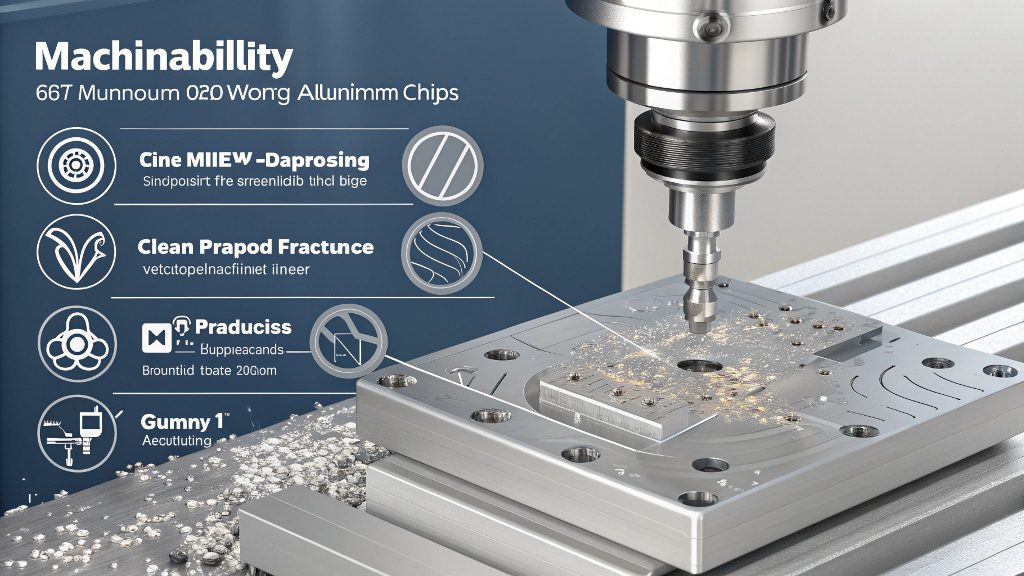
At our facility, Worthy Hardware, 6061-T6 is probably the most common material we run on our CNC machines. It is a pleasure to work with. The chips break cleanly, which prevents build-up on the cutting tool and helps us hold very tight tolerances, even down to +/- 0.001 inches.
The Machinability Advantage
When we machine 6061-T6, the cutting process is very stable. We can run our machines at high speeds and feeds, which reduces the time it takes to make each part. This directly translates to lower costs for my customers. The material's composition allows for the formation of small, manageable chips that are easily cleared away, which is crucial for achieving a smooth surface finish. A standard as-machined finish on 6061 is typically 125 Ra or better. Softer alloys like 5052 can produce gummy, stringy chips that clog tools and result in a poorer finish.
Versatility in Finishing
Another big advantage of 6061 is its excellent response to various finishing processes. It is the ideal grade for anodizing, which adds a hard, protective, and often colorful layer to the surface. We can achieve great results with all types of anodizing, from standard clear or black to bright cosmetic colors. It also takes other finishes well, like powder coating or chromate conversion coating. This versatility makes it perfect for everything from aerospace components to consumer electronic housings.
Conclusion
Choose 5052 for parts that need bending and excellent corrosion resistance. For strong, rigid parts that require precise CNC machining and a great surface finish, 6061 is your best choice.