
How To Choose Between 2024 vs 6061 Aluminum For Precision Parts?
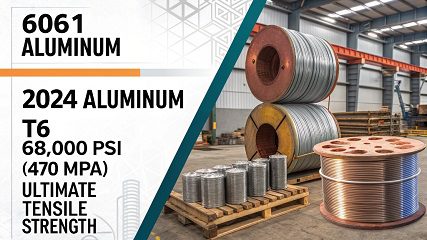
Choosing the right aluminum alloy can be confusing. The wrong choice costs money and hurts performance. Let's compare 2024 and 6061 to make your decision simple and effective.
For high-strength, fatigue-resistant applications like aerospace parts, choose 2024 aluminum. For general-purpose projects needing good corrosion resistance and weldability at a lower cost, 6061 aluminum is the superior choice. Your specific application dictates the best material for the job.
You now know the basic difference between these two popular alloys. But there is more to consider than just strength versus cost. Factors like machinability, corrosion resistance, and specific uses all play a huge role in your final decision. Let's break down the details so you can pick the perfect aluminum alloy for your next project with complete confidence.
Is 6061 aluminum stronger than 2024?
You need strong parts but are unsure which aluminum delivers best. Picking the weaker option could lead to part failure and costly redesigns. Let's look at the clear strength differences.
No, 6061 aluminum is not stronger than 2024 aluminum. The 2024 alloy has a much higher tensile and yield strength because of its copper content. This makes it the go-to choice for high-stress applications where strength-to-weight ratio is critical.
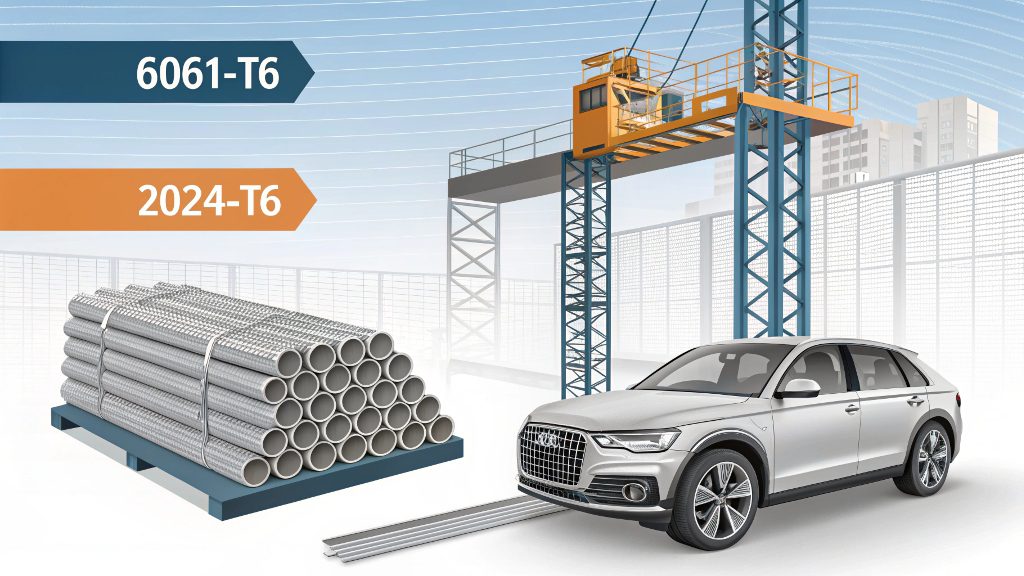
When we talk about strength in metals, we look at specific numbers. The 2024 alloy clearly outperforms 6061 in this area. This is because its main alloying element is copper, which significantly boosts its hardness and strength, especially after heat treatment. I've worked on many aerospace projects where 2024 was the only option because of the high stress the parts would face. In contrast, 6061 uses magnesium and silicon. While it's not as strong, these elements give it great versatility, making it perfect for structural components, bike frames, and other applications where extreme strength isn't the primary need. Think of 2024 as a specialist for strength and 6061 as a reliable all-rounder.
Material Strength Breakdown
Here is a simple table to show the difference in typical strength values for the common T6 temper.
| Property | 6061-T6 Aluminum | 2024-T6 Aluminum |
|---|---|---|
| Ultimate Tensile Strength | ~45,000 psi (310 MPa) | ~68,000 psi (470 MPa) |
| Yield Strength | ~40,000 psi (276 MPa) | ~50,000 psi (345 MPa) |
This data shows that 2024 is substantially stronger in both measures.
What are the disadvantages of 6061 aluminium?
You heard 6061 is versatile, but what are its limits? Overlooking its weaknesses can cause problems in your project later. Let's cover the main disadvantages you should know about.
The primary disadvantages of 6061 aluminum are its lower strength compared to alloys like 2024 and its moderate machinability. While it's a great general-purpose material, it is not suitable for high-stress or high-wear applications where maximum strength is essential.
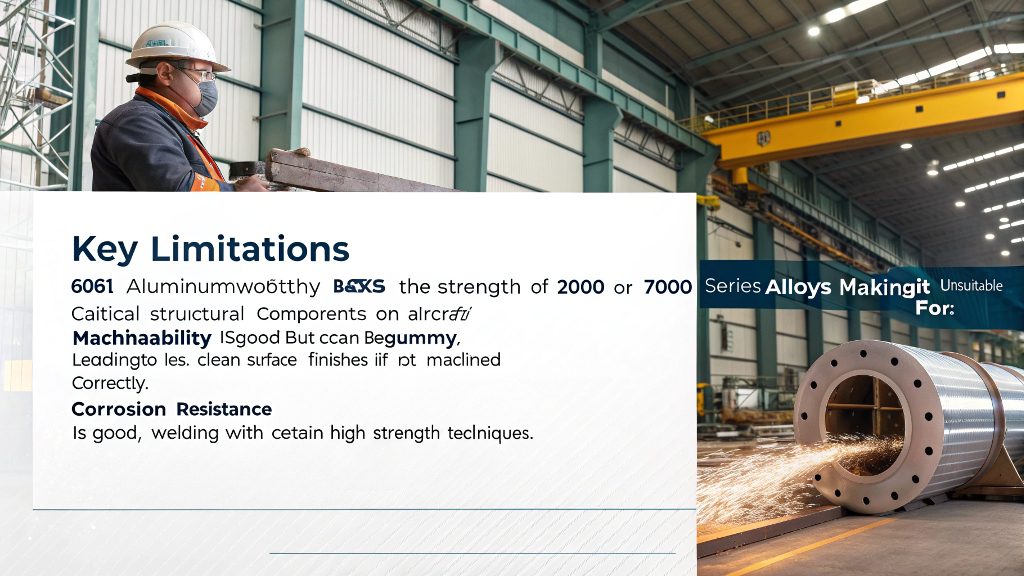
While 6061 aluminum is one of our most requested materials at Worthy, it's important to understand where it falls short. Its biggest drawback is simply strength; it cannot compete with the 2000 or 7000 series alloys. If your part is a critical structural component on an aircraft, 6061 is not the right choice. Another point is its machinability. It’s good, but it can be "gummy" compared to other alloys, which can sometimes lead to less clean surface finishes if not machined correctly. We always adjust our speeds and feeds to account for this. Finally, while its corrosion resistance is good, it can be susceptible to cracking when welded with certain high-strength techniques. For most jobs, these are minor issues, but for demanding, high-performance applications, they become critical factors in the decision-making process.
Key Limitations of 6061 Aluminum
To help you decide, here are the main points to consider:
- Lower Strength: Not ideal for applications requiring the highest strength-to-weight ratio.
- Moderate Machinability: Can sometimes produce gummy chips during machining, affecting finish.
- Welding Concerns: Can be prone to cracking with certain welding techniques, especially in T6 temper.
These factors make 6061 aluminum an excellent choice for many projects, but not all of them.
What aluminum alloy should be used when the highest strength is necessary?
Your project demands the absolute strongest material available. Choosing an alloy that is "strong enough" isn't an option. Let's pinpoint the top performer for maximum strength applications.
When the highest strength is necessary, you should use a 7000 series aluminum alloy, specifically 7075. It offers a tensile strength comparable to many types of steel, making it the premier choice for high-stress applications in aerospace and defense industries.
While 2024 aluminum is very strong, it isn't the king. That title belongs to the 7000 series, with 7075 being the most common high-strength champion. The primary alloying element in 7075 is zinc, which gives it incredible strength properties. I remember a client from the defense sector who needed a part that was both lightweight and incredibly durable; 7075 was the only aluminum that could meet their strict specifications. However, this superior strength comes with trade-offs. 7075 has lower corrosion resistance compared to 6061 and can be more difficult to weld. It is also more expensive. This is why material selection is so important. You must balance the need for strength with other factors like cost, environment, and manufacturing complexity. For pure strength, 7075 is the answer.
Top Aluminum Alloys by Strength
Here’s a quick ranking to put it in perspective:
- 7075 Aluminum: The strongest choice, used in aerospace frames and high-performance gear.
- 2024 Aluminum: Excellent high-strength option, especially for fatigue resistance.
- 6061 Aluminum: A great mid-range strength alloy with good all-around properties.
Is 2024 aluminum strong?
You need a strong, reliable material for your parts. You have heard about 2024 aluminum but want to be sure it's up to the task. Let's confirm its place in the strength hierarchy.
Yes, 2024 aluminum is very strong. It is one of the highest-strength 2000 series aluminum alloys. Its excellent strength-to-weight ratio and fatigue resistance make it a standard material for aircraft structures, including fuselage and wing components under high tension.
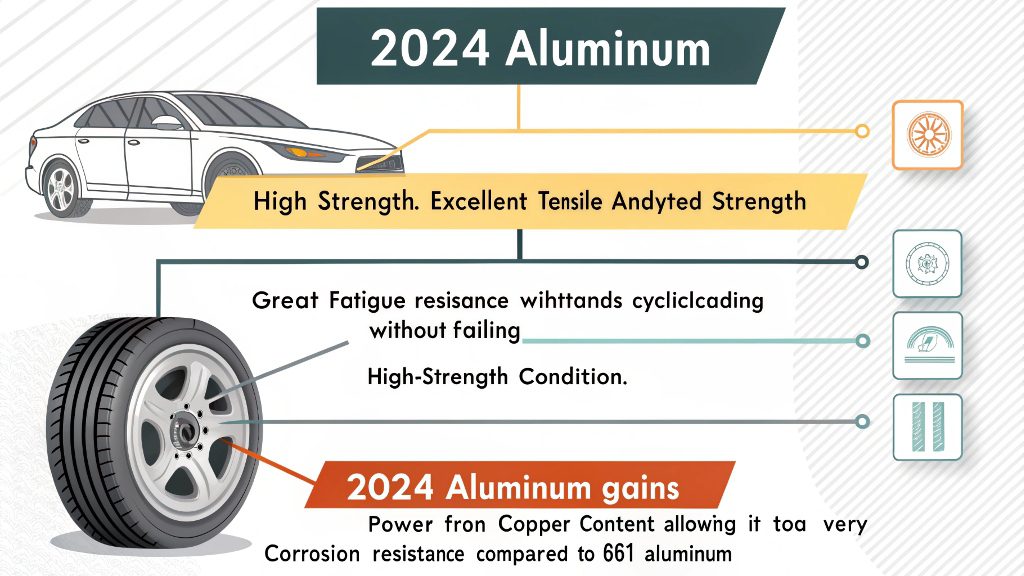
There is no doubt about the strength of 2024 aluminum. It gets its power from copper, which allows it to be heat-treated to a very high-strength condition. At our facility, we often machine 2024 aluminum for clients in the aerospace and automotive racing industries. The key feature they value, besides its raw strength, is its fatigue resistance. This means it can withstand repeated cycles of stress and strain without failing, which is critical for parts that are constantly moving or under load. Think about aircraft wings flexing during a flight—that’s where 2024 shines. However, this strength comes at a price. The high copper content makes it less resistant to corrosion than 6061, so it often needs to be clad with a high-purity aluminum layer or receive a protective coating for use in harsh environments.
2024 Aluminum: Key Strengths and Weaknesses
- High Strength: Excellent tensile and yield strength for demanding loads.
- Great Fatigue Resistance: Withstands cyclic loading, making it durable for moving parts.
- Good Machinability: Produces a good surface finish during CNC machining.
- Poor Corrosion Resistance: Requires a protective coating in most applications.
- Not Weldable: Generally considered unweldable by common fusion techniques.
Conclusion
In summary, choose 2024 for high-strength, fatigue-critical parts and 6061 for versatile, cost-effective applications with good corrosion resistance. Your project's specific needs will determine the best choice.