
What is the difference between 1045 carbon steel and 1018 carbon steel?
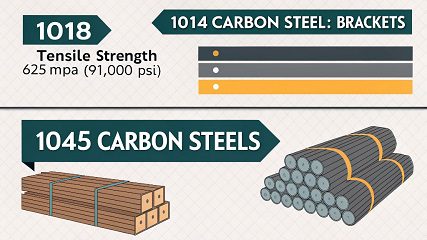
Choosing the right steel for your project can be tricky. A wrong choice can lead to failed parts and lost money. Let’s make this simple by comparing 1045 and 1018 steel.
The key difference lies in their carbon content. 1045 is a medium-carbon steel with higher strength, making it great for parts like shafts and gears. 1018 is a low-carbon steel that is softer and much easier to machine, ideal for general-purpose components.
Now that you have the basic idea, you probably want to know more about the specifics. Understanding these details is crucial for getting the best performance and price for your CNC machined parts. Let me break it down for you so you can make an informed decision for your next project.
What is the difference between 1018 and 1045?
You've seen the steel codes 1018 and 1045. They seem similar, but using the wrong one can compromise your design. Let's look at the core differences to avoid any issues.
1045 steel has around 0.45% carbon, making it a medium-carbon steel with higher strength and hardness. In contrast, 1018 steel has about 0.18% carbon. This makes it a softer, more ductile low-carbon steel that is easier to machine and weld.
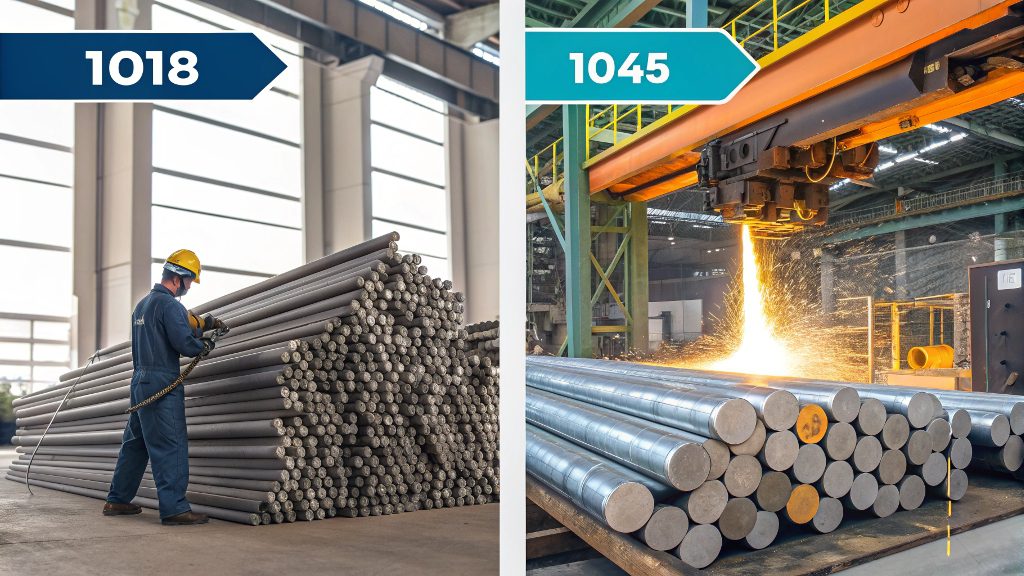
The numbers in their names give us a big clue. The "18" in 1018 and the "45" in 1045 represent the approximate carbon content, 0.18% and 0.45% respectively. This single difference in carbon changes everything about how the material behaves. In my experience helping clients, this is the first thing we discuss when choosing a material.
Carbon Content and Mechanical Properties
A higher carbon content makes steel harder and stronger but also less flexible. This is why 1045 is tougher but more brittle than 1018. The lower carbon in 1018 makes it much easier to bend and shape without cracking. We can see this clearly when we compare their mechanical properties.
| Property | 1018 Carbon Steel | 1045 Carbon Steel |
|---|---|---|
| Tensile Strength | ~440 MPa (64,000 psi) | ~625 MPa (91,000 psi) |
| Yield Strength | ~370 MPa (54,000 psi) | ~530 MPa (77,000 psi) |
| Hardness (Brinell) | ~126 HB | ~170 HB |
| Application | Brackets, pins, rods | Axles, gears, shafts |
As you see, 1045 steel can handle much higher stress before it deforms or breaks. This makes it a great choice for parts that need to be strong, like a drive shaft.
Is 1045 good for machining?
You need a strong material, but you also worry about high machining costs. If the material is too hard, machining takes longer. So, is 1045 a good choice for CNC machining?
1045 steel is considered to have fair machinability. It is harder and stronger than low-carbon steels like 1018, which means machining requires slower speeds and feeds. This can increase machining time and tool wear, making it more expensive to process.
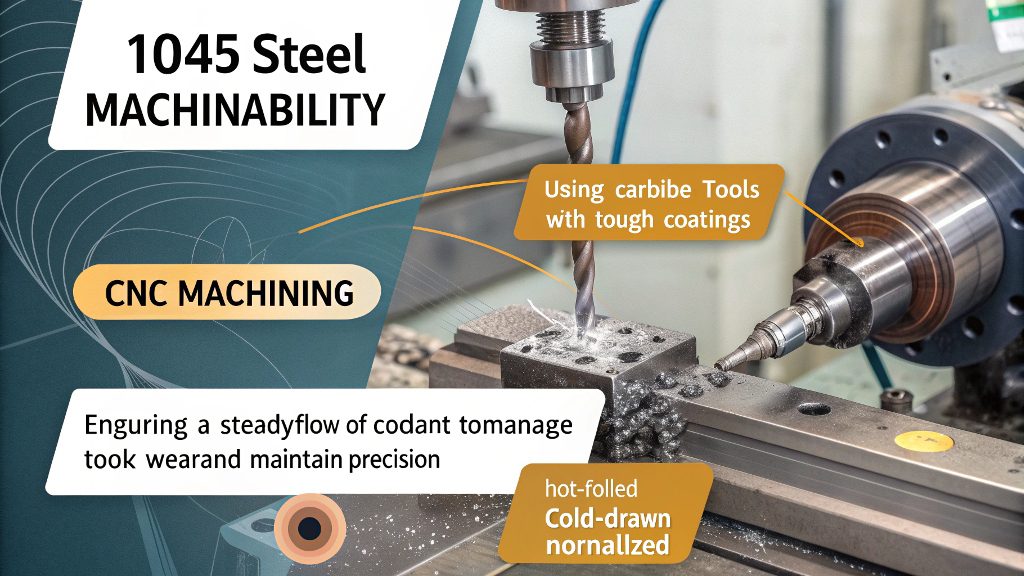
When my clients in North America need a part with high strength, we often look at 1045 steel. However, I always make sure they understand the trade-offs. The higher carbon content creates hard carbides in the steel, which causes more wear on our cutting tools. I remember a project for a client in Canada making custom gears. We used 1045 for its strength, but we had to program our CNC machines carefully to manage tool life and maintain tight tolerances.
Factors Affecting Machinability
The condition of the steel also matters. 1045 is often supplied in a hot-rolled condition, which is okay for machining. But for better results, a cold-drawn or normalized condition provides a more consistent hardness and a smoother surface finish.
Tips for Machining 1045 Steel
Here are a few things my engineers consider when machining 1045:
- Use the Right Tools: We use carbide tools with tough coatings to resist the abrasive nature of 1045 steel.
- Coolant is Key: A steady flow of coolant is essential. It helps to reduce heat, clear away chips, and extend the life of the cutting tool.
- Optimize Speeds and Feeds: We can't machine 1045 as fast as we machine aluminum or 1018 steel. We carefully calculate the right speeds to avoid breaking tools and ensure a good finish.
So, while 1045 isn't the easiest steel to machine, it's definitely possible with the right expertise and equipment.
Is 1018 steel good for machining?
You want a material that is easy to work with and cost-effective. You've heard that low-carbon steels are good for this. Does 1018 steel fit that description for your CNC parts?
Yes, 1018 steel is excellent for machining. Its low carbon content makes it soft and ductile, allowing for higher cutting speeds, longer tool life, and a smooth surface finish. This makes it one of the most cost-effective steels for custom CNC parts.
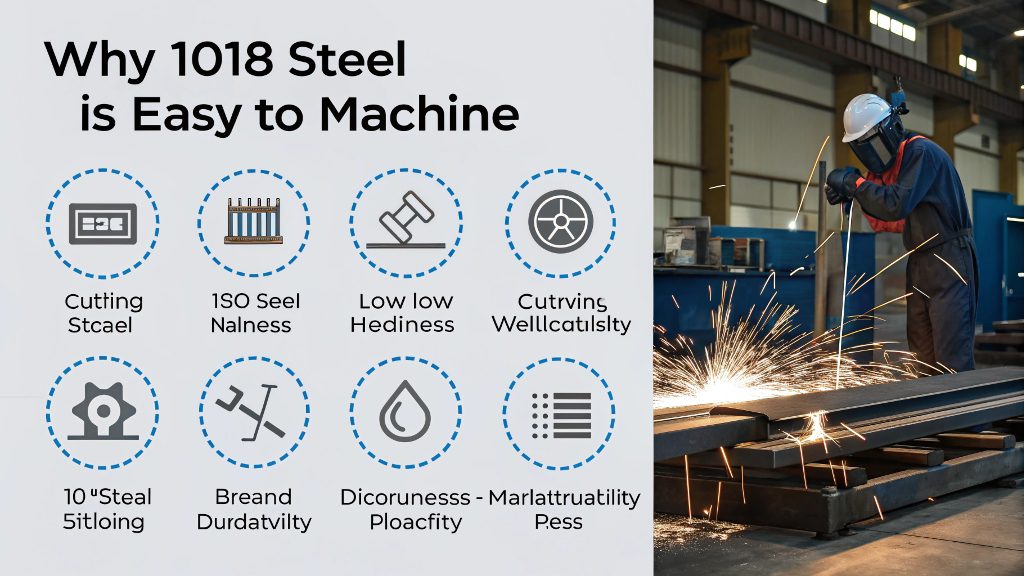
1018 is one of the most common materials we machine here at Worthy. It's often called a "free-machining" steel because it's so easy to cut. When a customer from the US needs a prototype for a bracket or a simple mounting plate, 1018 is usually my first recommendation. The soft nature of the material means our tools last longer, and we can run our machines faster. This translates directly into lower costs and quicker delivery times for my customers.
Why is 1018 Easy to Machine?
The reason it's so good for machining comes down to its properties.
- Low Hardness: The low carbon content means it is not very hard, so cutting tools can easily slice through it.
- Ductility: It produces continuous and uniform chips that break away cleanly from the part, which helps prevent chip buildup and ensures a better surface finish.
- Weldability: Beyond machining, 1018 is also very easy to weld, which is a huge advantage if your final assembly requires it.
Because of these characteristics, 1018 is a perfect material for high-volume production of non-critical parts where strength is not the primary concern.
What is equivalent to 1045 carbon steel?
You've decided 1045 is right, but your supplier is out of stock. You need an alternative fast to avoid project delays. What other materials can you use that have similar properties?
In Europe, the most common equivalent to 1045 steel is C45 (1.0503). In the UK, it is often specified as 080M46. In Japan, the equivalent grade is S45C. These steels have very similar carbon content and mechanical properties.
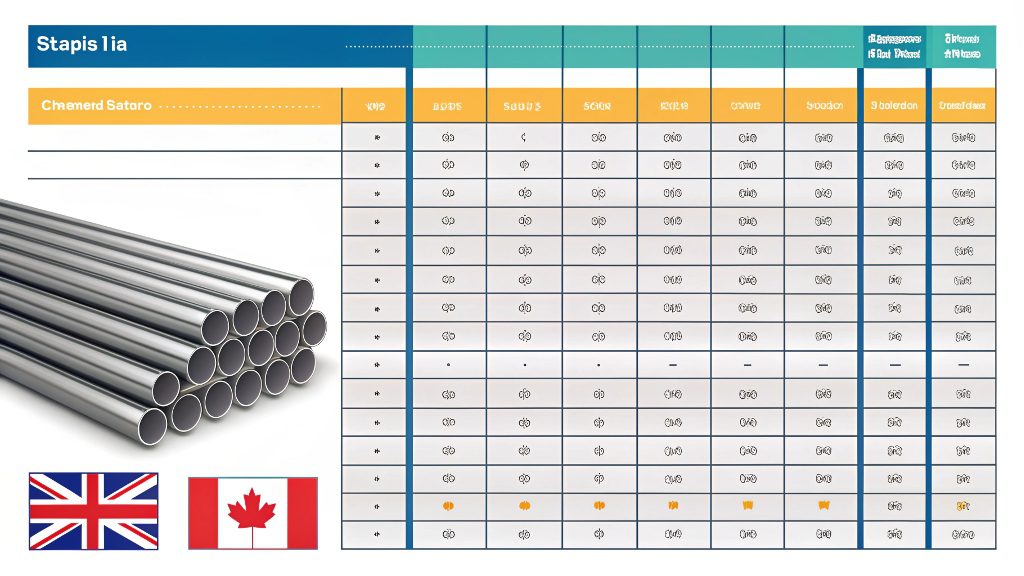
Finding a direct replacement is crucial for keeping production on schedule. I often work with clients from Europe and Australia who use different naming systems, so my team is very familiar with these international standards. For example, a customer from Germany might send a drawing specifying C45 steel. We know immediately that we can use our stock of 1045 to produce the exact same part without any change in performance.
International Steel Equivalents
It's helpful to have a list of these equivalents handy. Here is a quick reference table for medium-carbon steels similar to 1045.
| Standard | Designation |
|---|---|
| USA (AISI/SAE) | 1045 |
| Europe (EN) | C45 / 1.0503 |
| UK (BS) | 080M46 |
| Japan (JIS) | S45C |
| China (GB) | 45# |
Important Considerations
While these materials are very similar, there might be slight differences in trace elements depending on the specific standard. For most applications, these grades are completely interchangeable. However, for highly sensitive aerospace or medical projects, it is always best to double-check the material certification to ensure it meets every requirement on your drawing. If you ever have a doubt, you can send your drawing to my team at [email protected], and we can help you find the perfect material.
Conclusion
The choice between 1018 and 1045 steel depends entirely on your needs. For strength, use 1045. For easy machining and lower cost, choose 1018.