
How to select the right carbon steel grade for precision machined parts?
Struggling with steel selection? Choosing the wrong grade can cause part failure, wasting time and money. Understanding carbon content is the key to getting it right for your project.
Selecting the right carbon steel grade depends on your part's needs for hardness, strength, and machinability. Match the carbon content to your desired properties: low-carbon for general use, medium-carbon for structures, and high-carbon for high-strength, wear-resistant tools and parts.
Choosing the right material is a big step in any project. It impacts your part's performance, its lifespan, and your budget. This decision can feel complex, but it doesn't have to be. I remember working with a new client who was about to spend a lot on a high-grade steel he didn't need. We talked it through and found a better fit, saving him a lot of money. Let's break down how you can make the right choice every time.
How to choose the right steel grade?
Are you struggling to match a steel grade to your design? This choice feels overwhelming with so many options. We can simplify it by looking at key properties and common uses.
To choose the right steel grade, first list your part's requirements. Think about hardness, flexibility, and cost. Then, match these needs to a carbon steel category—low, medium, or high. This ensures your part performs perfectly and stays within budget.
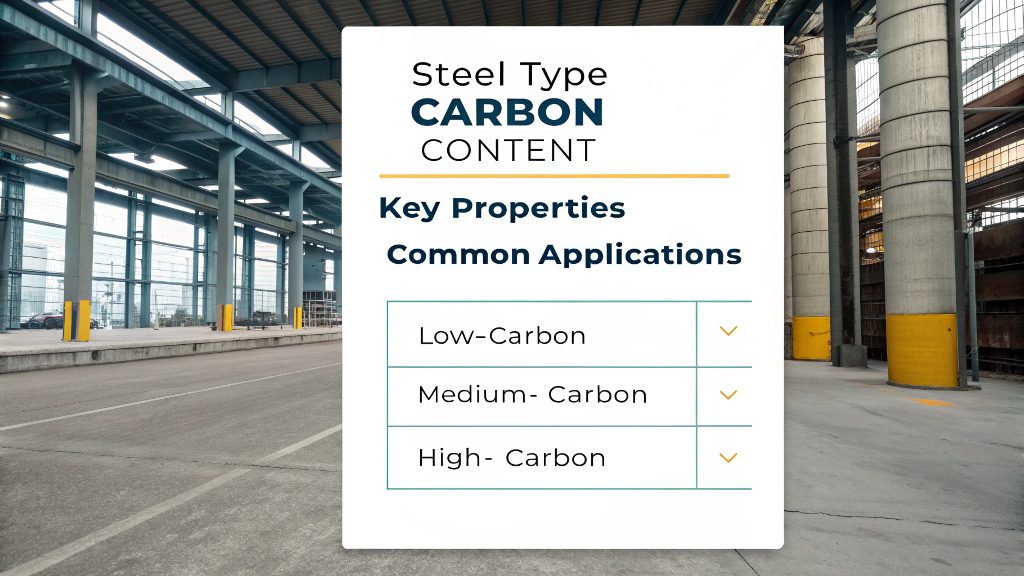
To dive deeper, the most important factor is the carbon content. The amount of carbon directly changes the steel's properties. More carbon means the steel is harder and stronger. Less carbon means it is softer and easier to form. I always ask my clients to think about the final use of their part. Will it need to bend, or does it need to resist wear?
The Three Main Categories
We can group carbon steel into three main types. This makes the choice much simpler. I put together a simple table to show the differences. We use this table with clients all the time at Worthy Hardware. It helps them see the options clearly. For example, a client from Canada, Mark, needed parts for an automotive application. He thought he needed a very hard steel, but we found a medium-carbon steel that gave him the right balance of strength and cost.
| Steel Type | Carbon Content | Key Properties | Common Applications |
|---|---|---|---|
| Low-Carbon | ≤ 0.25% | Soft, ductile, easy to weld, lower cost | Bolts, screws, pipes, car body panels |
| Medium-Carbon | 0.25% – 0.60% | Good balance of strength, hardness, ductility | Gears, axles, building structures, bridges |
| High-Carbon | > 0.60% | Very hard, strong, excellent wear resistance | Cutting tools, springs, high-strength wire |
Which grade carbon steel is best?
Everyone wants the "best" material for their project. But "best" can mean different things. The best grade for one part could be the worst choice for another.
There is no single "best" carbon steel grade. The best choice is the one that meets your specific application's requirements for strength, wear resistance, and cost. For general machining and versatility, low-carbon steel like 1018 is a very popular and effective choice.
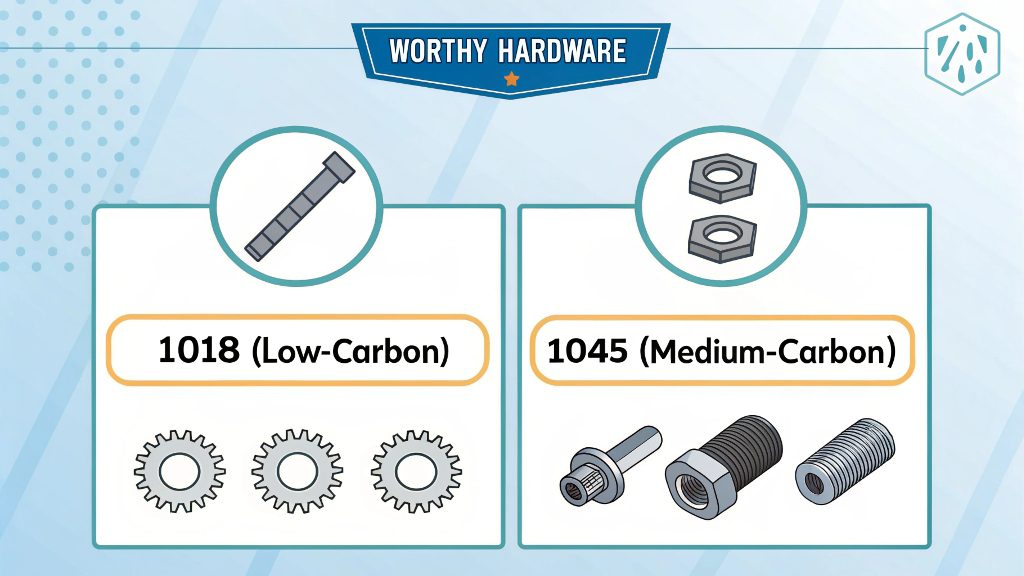
The idea of a single "best" steel is a common misunderstanding. At my company, Worthy Hardware, we machine parts from many different grades. The "best" choice always comes down to the part's job. If you need a simple bracket, a low-carbon steel is perfect. It is affordable and easy to machine. If you need a gear that will be under constant stress, you need a medium-carbon steel for better strength.
Comparing Popular Grades
Let's look at some common examples. We see these grades a lot in the orders we get from North America and Europe.
- 1018 (Low-Carbon): This is probably the most common steel we machine. It's great for general-purpose parts because it's easy to work with and weld. It has good toughness but isn't very strong. It's a fantastic, low-cost option for prototypes and standard components.
- 1045 (Medium-Carbon): This grade is a step up in strength and hardness. It's often used for shafts, axles, and bolts that need more durability than 1018 can offer. It can also be heat-treated to make it even harder.
- 1095 (High-Carbon): This is a very hard steel. It holds a sharp edge very well. We don't use it for structural parts. Instead, we machine it into knives, cutting tools, and springs.
The "best" steel is the one that fits your budget and does its job without failing.
Which is harder steel containing 0.1% or 0.5% carbon?
You may wonder how a tiny amount of carbon can change a material so much. It's a critical detail that affects everything. A wrong assumption can lead to part failure.
Steel with 0.5% carbon is significantly harder and stronger than steel with 0.1% carbon. The higher carbon content creates a crystal structure that is more resistant to deforming. This directly increases the material's hardness.


The relationship between carbon and hardness is direct and simple. I always explain it to my team and clients this way: carbon atoms get in the way inside the iron's structure. Think of a smooth, empty hallway. It's easy to walk down. Now, imagine that hallway is full of boxes. It's much harder to move through. The carbon atoms are like those boxes for the iron atoms.
How Carbon Creates Hardness
Here’s a more detailed breakdown:
- Low-Carbon Steel (like 0.1% C): The iron atoms can slide past each other easily. This makes the metal soft and ductile. You can bend it or press it into shapes without it breaking. This is why it's great for car body panels.
- Medium-Carbon Steel (like 0.5% C): With more carbon atoms present, the iron atoms have less room to move. This makes the material much stronger and harder. It resists dents and scratches better. This is why we use it for machine parts like gears that need to withstand forces.
So, when a customer needs a part that must resist wear and tear, we immediately look at steels with higher carbon content. The 0.5% carbon steel will hold its shape under pressure far better than the 0.1% carbon steel.
Can high carbon steel be machined?
You know that high-carbon steel is hard. This often makes people think it's impossible to machine. They worry it will break tools and be too expensive to produce.
Yes, high-carbon steel can be machined, but it is more difficult and requires special considerations. The process is slower, and it requires harder cutting tools, rigid machines, and often an annealing heat treatment to soften the material before machining.
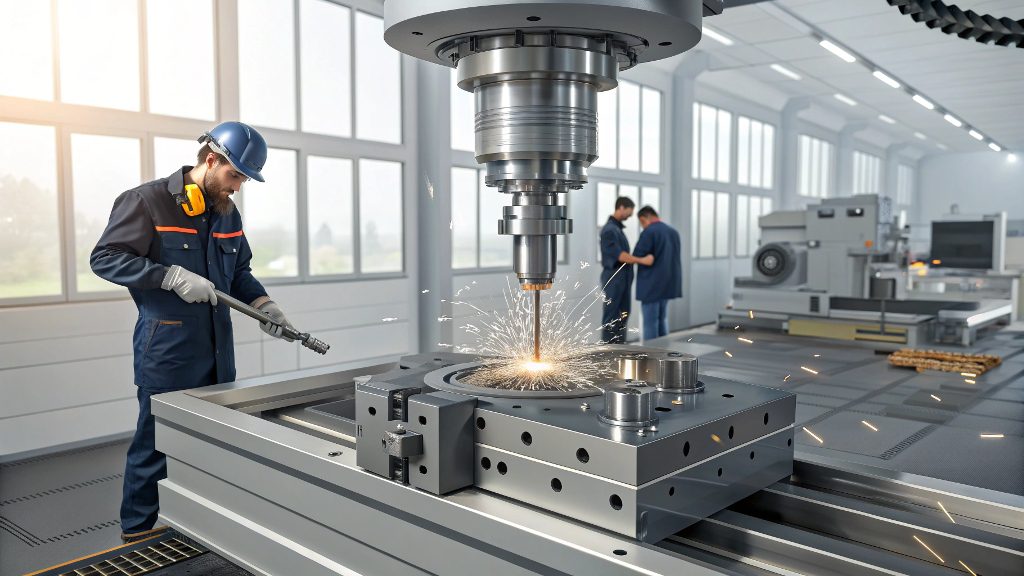
At Worthy Hardware, we have the experience and equipment to machine high-carbon steel parts with precision. It is definitely a challenge, but it is one we are prepared for. We have machined parts from 1095 and other tool steels for clients in the industrial and robotics sectors. It just takes a different approach than machining a softer material like aluminum or low-carbon steel.
Techniques for Machining Hard Steel
To successfully machine high-carbon steel, we follow a few key steps.
- Annealing: First, we often perform a heat treatment called annealing. This process heats the steel and then cools it very slowly. This softens the material, making it much easier to cut. After machining, the part can be heat-treated again to restore its original hardness.
- Proper Tooling: We use cutting tools made from very hard materials, like carbide or ceramic. Standard steel tools would wear out almost instantly.
- Slower Speeds: We have to run our CNC machines at lower speeds and feeds. Pushing the machine too fast will break the tool or damage the part.
- Rigid Setups: The machine and the part must be held very securely. Any vibration can ruin the cut and break the tool. Our 5-axis CNC machines are very rigid, which is essential for this kind of work.
It costs more and takes longer, but for parts that need extreme hardness, machining high-carbon steel is the right solution.
Conclusion
Choosing the right carbon steel is about matching the material's properties to your part's function. Consider the carbon content to find the best balance of strength, machinability, and cost.