
What Industries Benefit Most from Custom Aluminum Stamped Components?
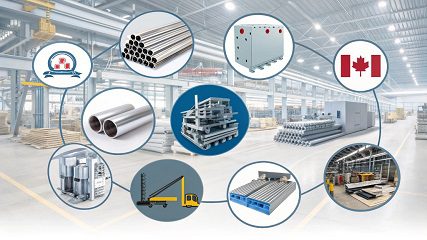
Struggling to find lightweight yet strong parts for your products? Aluminum stamping offers a perfect solution, but understanding which sectors capitalize on it most can give you a competitive edge.
Custom aluminum stamped components are crucial for the automotive, aerospace, electronics, and construction industries. These sectors benefit from aluminum's light weight, high strength-to-weight ratio, corrosion resistance, and excellent thermal conductivity, making it ideal for everything from car frames to electronic enclosures.
As a manufacturer in China, I've seen firsthand how different industries use custom parts. A Canadian client, let's call him Mark, often sources stamped components from us. He works across several sectors and always focuses on quality and cost. He knows that the choice of material is the first step. For many of his projects, aluminum is the clear winner. This has shown me just how versatile aluminum is. Let's explore which industries gain the most from this amazing metal.
Which industry uses the most aluminum?
Wondering where all the aluminum goes? You might be surprised by the biggest consumer. It’s a sector that values lightness and efficiency above all else, impacting our daily lives directly.
The automotive and transportation industry is the largest consumer of aluminum. Its push for fuel efficiency and reduced emissions drives the demand for lightweight materials like aluminum for vehicle bodies, engine components, and structural parts, significantly lowering overall vehicle weight without compromising safety or performance.
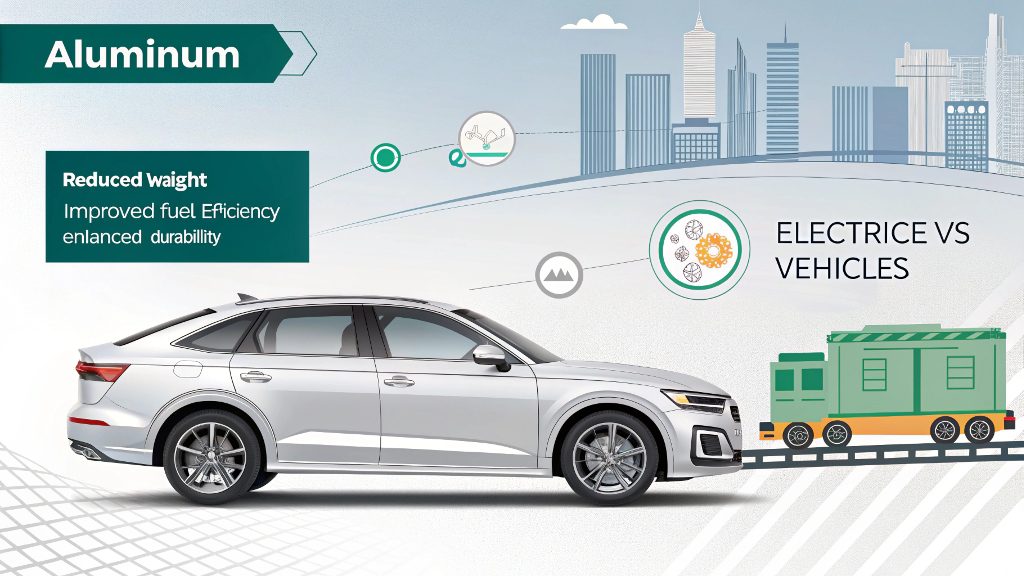
The push for lighter vehicles is the main reason. A lighter car uses less fuel. For electric vehicles (EVs), being lighter means a longer range per charge, which is a huge selling point. I remember working on a project for a client who was developing EV battery enclosures. The original design used steel, but it was too heavy. We worked with his team to redesign the part for aluminum stamping. Our engineers helped optimize the design to maintain strength while cutting weight by nearly 40%. This change was critical for the vehicle's overall performance. Aluminum isn't just for the body; it's used for engine blocks, suspension parts, and heat shields because it also handles heat well.
Here’s a simple breakdown of how aluminum is used in transportation:
| Transportation Sector | Primary Use of Aluminum | Key Benefit |
|---|---|---|
| Automotive | Body panels, engine blocks, chassis, battery enclosures | Fuel efficiency, performance |
| Aerospace | Fuselage, wings, structural components | Weight reduction, strength |
| Rail | Train car bodies, interior fittings | Energy savings, durability |
What industry is metal stamping in?
You see stamped metal parts in almost every product you use. But have you ever thought about what industry creates them? It's a core process that supports countless other sectors.
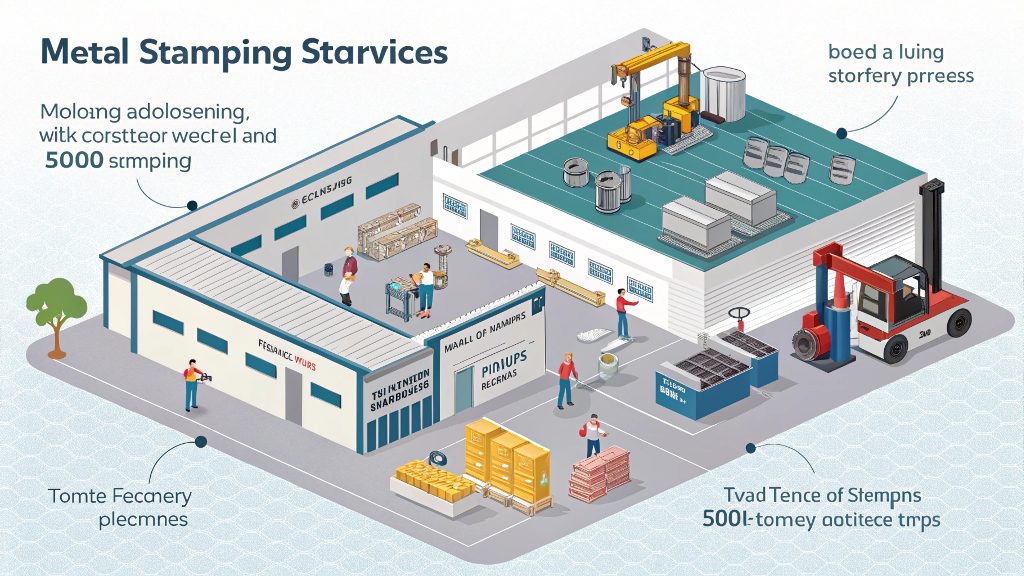
Metal stamping is a foundational manufacturing process, not a standalone industry. It serves nearly every sector, including automotive, electronics, aerospace, medical, and consumer goods. It provides essential components like brackets, terminals, clips, and enclosures for these industries.
![]()![]()
Think of metal stamping as a service that other industries rely on. We don't make a final product called "metal stamping." Instead, we make the custom parts that our clients, like Mark from Canada, need to build their products. One day we might be producing tiny terminals for an electronics company in Singapore, and the next day we could be stamping large brackets for an automotive firm in North America. Our factory at Worthy is equipped to handle this variety. With presses from 5 to 500 tons, we can make parts for almost any application. This flexibility is what makes metal stamping so essential to modern manufacturing. It’s the hidden engine driving product development everywhere.
Here are some examples of stamped parts we make for different industries:
| Industry | Examples of Stamped Components | Purpose of Components |
|---|---|---|
| Electronics | Shields, terminals, connectors, heat sinks | EMI shielding, electrical connection, heat dissipation |
| Medical | Surgical instrument parts, device enclosures, implants | Precision, hygiene, biocompatibility |
| Consumer Goods | Appliance panels, brackets for furniture, cookware parts | Aesthetics, structural support, durability |
What is the primary use of aluminum in the manufacturing industry?
Aluminum is incredibly versatile, but what's its main job in manufacturing? Its core strength lies in a combination of properties that few other metals can match for a wide range of applications.
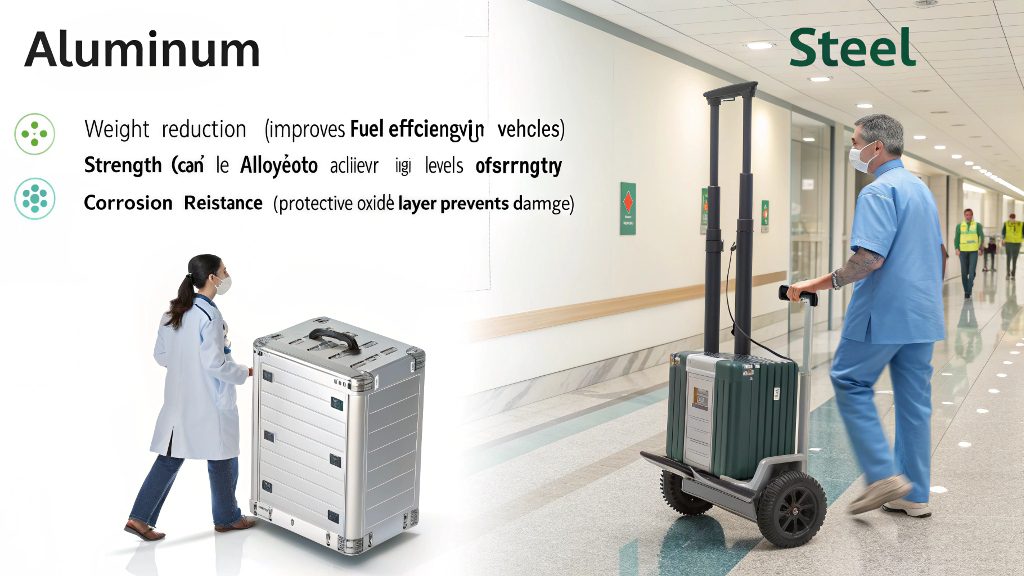
The primary use of aluminum in manufacturing is to create lightweight, strong, and corrosion-resistant components. Its excellent strength-to-weight ratio allows for significant weight reduction in products like vehicles and airplanes, while its natural oxide layer protects it from rust.
The biggest advantage is getting strength without the weight. Steel is strong, but it's heavy. Aluminum is about one-third the weight of steel but can be engineered to be very strong. This is a game-changer for any application where weight matters. For example, a customer from Australia needed to design a portable medical device. It had to be durable enough for daily use but light enough for medical staff to carry easily. We chose a specific aluminum alloy and used our precision stamping process to create a tough yet lightweight enclosure. Another key feature is corrosion resistance. Unlike steel, aluminum doesn't rust. It forms a protective oxide layer, which is why it's great for products exposed to moisture or outdoor conditions. This saves our customers money on expensive anti-corrosion coatings.
Here’s why aluminum is so valued in manufacturing:
- Weight Reduction: Improves fuel efficiency in cars and planes.
- Strength: Can be alloyed to achieve high strength levels.
- Corrosion Resistance: Ideal for outdoor and humid environments.
- Thermal Conductivity: Excellent for heat sinks and heat exchangers.
- Recyclability: It can be recycled repeatedly without losing quality.
What is the best metal for metal stamping?
Clients often ask me this question, hoping for a simple answer. The truth is, the "best" metal depends entirely on what you need the part to do and what your budget is.
There is no single "best" metal for stamping; the ideal choice depends on the application's specific needs like strength, weight, conductivity, and cost. Steel is best for strength and low cost, while aluminum is superior for being lightweight and corrosion-resistant.
The best metal is the one that fits your project's requirements. A procurment officer like Mark knows this well. When he sends us a design, the first discussion we have with our engineers is about the material. If the part needs to be incredibly strong and cost is the main driver, we often recommend steel. If it needs to be lightweight for an aerospace or automotive application, aluminum is usually the better choice. For electrical components that need high conductivity, copper or brass are top contenders. At Worthy, we work with over 100 different materials because every project is unique. Our job is to help customers choose the material that provides the best performance at the right price. My advice is to focus on the function of the part first.
Here is a simple table to help you choose:
| Metal | Best For | Key Advantages | Considerations |
|---|---|---|---|
| Aluminum | Lightweight applications, corrosion resistance | Excellent strength-to-weight ratio, thermally conductive | Higher material cost than steel |
| Steel | High-strength, low-cost parts | Very strong, durable, widely available, affordable | Heavy, prone to rust without coating |
| Stainless Steel | Food/medical applications, corrosion resistance | Extremely durable, hygienic, rust-proof | More expensive and harder to form |
| Copper/Brass | Electrical components, decorative parts | Excellent electrical conductivity, aesthetic appeal | Softer, higher material cost |
Conclusion
Aluminum is essential for automotive, aerospace, and electronics. The best metal depends on your project's needs for weight, strength, and cost, but aluminum is a top choice for modern manufacturing.