
Which Surface Finishes Work Best for Different Metal Stamping Applications?
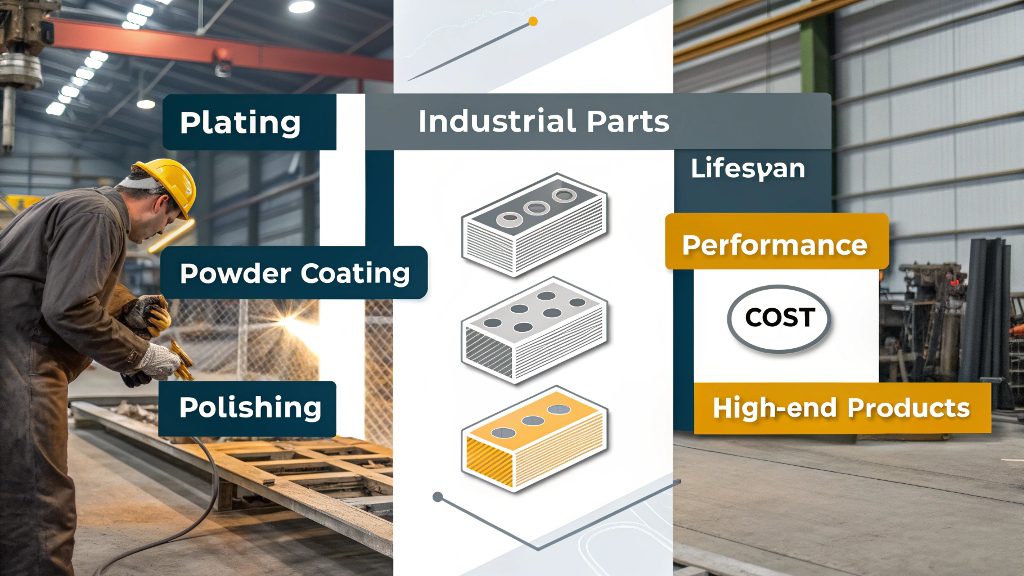
Choosing the wrong finish can lead to rust, wear, and costly failures. Your product's reputation is on the line, but selecting the right protection doesn't have to be complicated.
The best finish depends on the metal, environment, and desired look. For industrial parts, plating offers excellent corrosion resistance. For consumer products, powder coating provides a tough, colorful layer. Polishing is great for a high-end, decorative appearance. Each choice serves a specific function and budget.
Choosing the right surface finish for your metal stamped parts is a critical decision. It directly impacts the product's lifespan, performance, and even its final cost. With so many options available, it's easy to get lost. In my 20 years of experience, I’ve helped hundreds of clients navigate these choices. Let’s break down the most common finishes so you can select the perfect one for your project.
What is the best finish for metal?
You're trying to pick a finish, but the options seem endless. Choosing one that isn't the best fit can compromise your product's performance and lead to customer complaints down the road.
There is no single "best" finish for all situations. For robust corrosion resistance on steel parts, zinc plating is a cost-effective workhorse. For a durable and colorful finish on consumer-facing products, powder coating is a top choice. For a brilliant, reflective look, polishing is ideal.

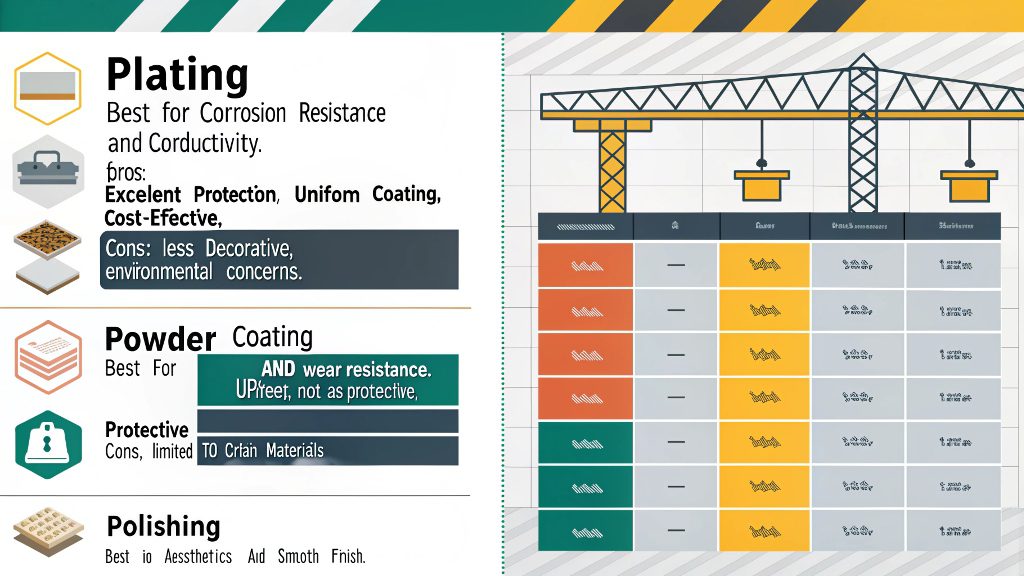
When a client like Mark from Canada asks me this, I tell them the "best" choice always balances four key factors: durability, appearance, application, and cost. You have to decide what matters most for your specific part. For example, an internal bracket needs protection from rust more than it needs to look pretty, so a simple plating or passivation is perfect. But a metal clip on a consumer electronic device needs to look good and resist fingerprints. Based on what I've seen over the years, the most popular choices our customers make are polishing, powder coating, and plating. Each has unique strengths. We need to match those strengths to your project's specific needs to find your "best" finish.
Comparing Top Metal Finishes
| Finish Type | Best For | Pros | Cons |
|---|---|---|---|
| Plating | Corrosion resistance, conductivity | Excellent protection, uniform coating, cost-effective | Can be less decorative, environmental concerns |
| Powder Coating | Durability, color options | Very tough, vibrant colors, chip-resistant | Thicker coating, may hide fine details |
| Polishing | Aesthetic appeal, smoothness | High-end look, smooth surface, cleans easily | Offers no corrosion protection on its own |
| Painting | Versatility, cost-effectiveness | Wide color choice, easy to apply and repair | Less durable than powder coating |
What is the best material for metal stamping?
You need a material that stamps easily without breaking or wearing out your tools. Choosing the wrong metal leads to production delays, higher costs, and parts that fail in the field.
For general-purpose metal stamping, low-carbon steel (like 1008/1010) is often the best choice due to its excellent formability, weldability, and low cost. For corrosion resistance, stainless steel (like 304) is superior. For lightweight and conductive parts, aluminum (like 5052) is ideal.

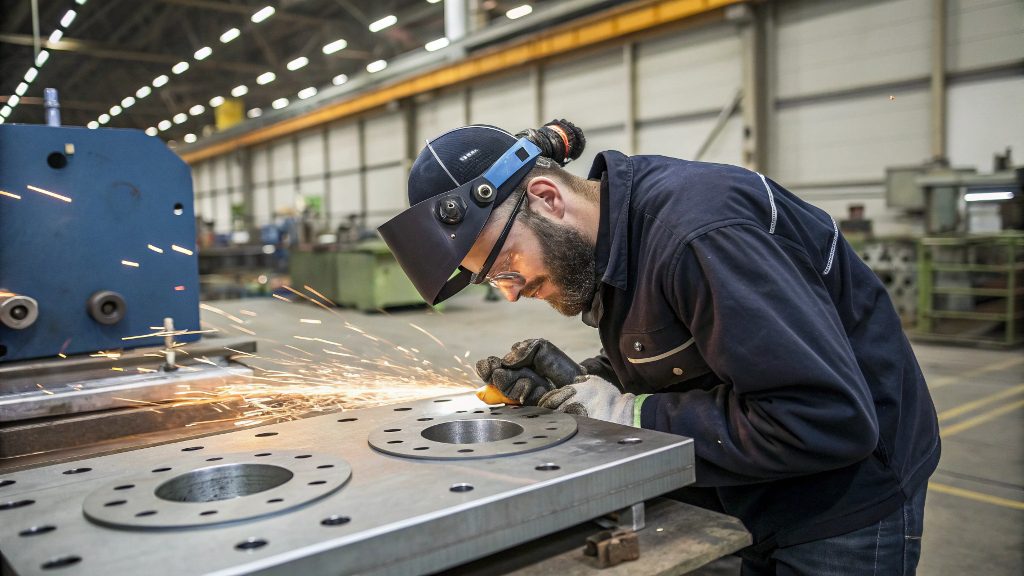
Just like with finishes, the best material depends entirely on the part's final use. I always tell my customers to start with the application and work backward. Is your part a simple bracket or a complex electronic shield? Will it be exposed to moisture or high stress? Your answers will point to the right material. For example, steel is strong and cheap, making it a go-to for many industrial parts. But if you need to prevent rust without a secondary finish, stainless steel is a better, though more expensive, option. Aluminum is fantastic when weight is a concern, like in aerospace or automotive applications. We work with over 100 different metals, so we can always find the perfect balance of performance and cost for you.
Material Selection Guide
| Material | Key Properties | Common Applications | Considerations |
|---|---|---|---|
| Carbon Steel | Strong, low cost, formable | Brackets, automotive frames, general parts | Prone to rust; requires a protective finish |
| Stainless Steel | Corrosion-resistant, hygienic | Medical devices, food equipment, clips | More expensive, can be harder to form |
| Aluminum | Lightweight, conductive, rust-proof | Electronics, aerospace components, shields | Softer than steel, can be more costly |
| Copper/Brass | Highly conductive, decorative | Terminals, connectors, decorative hardware | Higher cost, tarnishes without a coating |
What are the types of surface finishes that can be used to protect ferrous metals and prevent them from rusting?
Ferrous metals like steel are strong and affordable, but they rust easily. This corrosion can ruin your product's function and appearance, leading to failures and unhappy customers. Let's fix that.
The most common anti-rust finishes are plating, powder coating, and painting. Zinc plating is a very popular, low-cost option for industrial use. Powder coating provides a thick, durable barrier that is excellent for parts exposed to the elements. Painting offers good protection with unlimited color options.

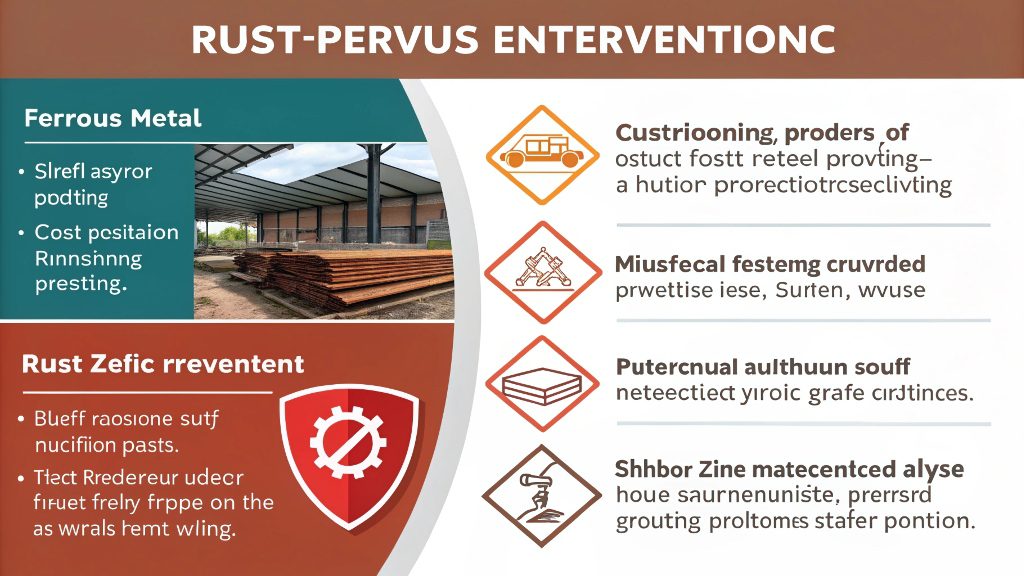
Protecting ferrous metals, mostly steel, is a core part of what we do. Rust is the enemy. From my experience helping clients in North America and Europe, the choice often comes down to the environment the part will live in. For a steel bracket used indoors, a thin layer of zinc plating is more than enough protection and is very budget-friendly. However, for a part that will be used outdoors or in a humid environment, you need a stronger defense. In these cases, I often recommend powder coating. It creates a seamless, plastic-like shell around the metal that moisture can't penetrate. Another option is galvanizing[^1] (a type of hot-dip zinc coating), which is extremely tough and used for outdoor hardware. The goal is always to create a barrier between the steel and the oxygen and moisture in the air.
What are the different types of metal finishing?
You know you need a finish, but the terminology is confusing. With so many different processes, like plating, coating, and treating, it's hard to know which path to take.
Metal finishing is broadly categorized into four main types: plating (adding a metal layer), coating (like powder coating or painting), chemical treatments (like anodizing or passivation), and mechanical finishes (like polishing or blasting). Each category serves a different purpose, from protection to appearance.

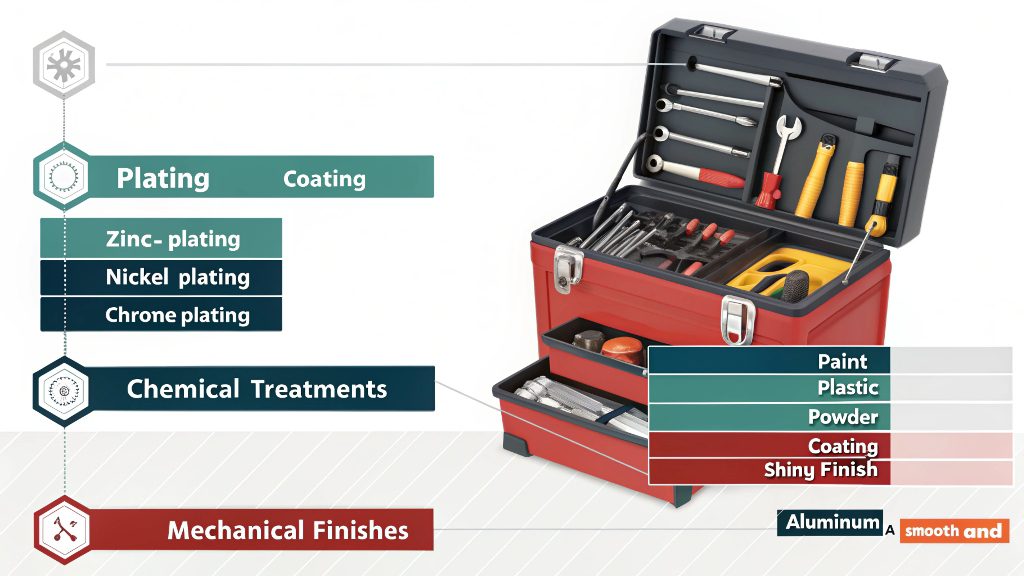
Think of metal finishing as a toolbox with different tools for different jobs. At Worthy, we assist customers in picking the right tool every day. Plating, for example, is like putting a metallic jacket on your part; we use one metal to protect another. Coating is like painting a fence; we apply a non-metallic layer like paint or plastic powder to shield the metal underneath. Chemical treatments change the surface of the metal itself, like how anodizing creates a hard, protective layer on aluminum. Finally, mechanical finishes physically change the surface texture, like polishing a part to make it smooth and shiny. Understanding these basic categories makes it much easier to discuss your needs and find the perfect solution for your stamped part.
Main Categories of Metal Finishing
| Category | Description | Common Examples |
|---|---|---|
| Plating | Depositing a thin layer of another metal onto the surface. | Zinc Plating, Nickel Plating, Chrome Plating |
| Coating | Applying a protective, non-metallic layer. | Powder Coating, Painting, E-Coating |
| Chemical Treatment | Altering the metal's surface chemistry for protection. | Anodizing (for aluminum), Passivation (for stainless steel) |
| Mechanical Finish | Physically altering the surface texture. | Polishing, Brushing, Sandblasting, Deburring |
Conclusion
In short, choosing the right finish means matching your part's needs with the right process. Plating, powder coating, and polishing are great starting points for almost any metal stamping project.