
How To Choose The Best Metal For Precision Stamping Projects?

Picking the wrong metal for your stamping project causes major headaches and cost overruns. Don't let a bad choice ruin your production run. I'll guide you to the perfect material.
The best metal depends on your project's specific needs. To choose, you must balance the part's function, budget, required strength, and corrosion resistance. Common choices include versatile steel, lightweight aluminum, conductive copper, and durable stainless steel, each offering unique benefits for different manufacturing applications.
Choosing the right metal is more than just picking from a list. It's about understanding the deep connection between a material's properties and your final product's performance. You need to know what makes each metal unique. In this guide, I will break down the key factors for you. Let’s dive deeper into the materials and processes to make sure you have all the information you need for a successful project.
What is the best metal for metal stamping?
Declaring one metal "the best" is impossible, creating confusion for your project. Choosing poorly means wasting money or getting weak parts. Let's find the best fit for your needs.
There is no single "best" metal for stamping. The ideal choice balances cost, function, and manufacturability. Steel is great for strength and low cost. Aluminum is perfect for lightweight applications. Copper is chosen for its conductivity, and stainless steel offers superior corrosion resistance.
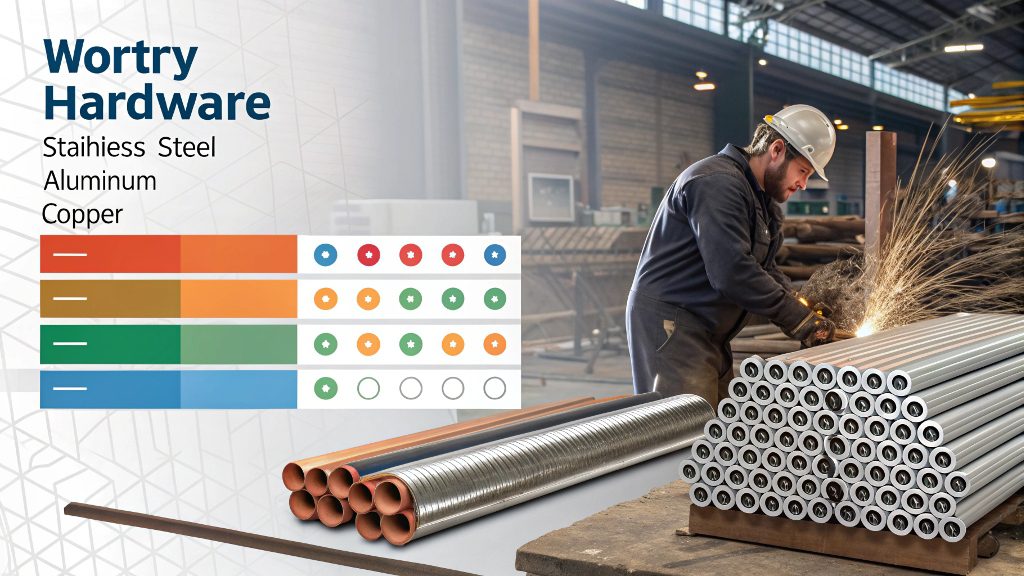
The choice of metal is a strategic decision that impacts the final part's cost, durability, and function. At my company, Worthy Hardware, we guide clients through this choice every day. The "best" material is always the one that meets all your project requirements without over-engineering and adding unnecessary cost. Four materials cover most of the projects we see: cold-rolled steel, stainless steel, aluminum, and copper. Each has a clear place. For example, a client once came to us for an internal mounting bracket. We helped them switch from stainless steel to a coated cold-rolled steel. This small change saved them nearly 30% on material costs without sacrificing the performance needed for the part's environment. Understanding these trade-offs is key.
Here is a simple breakdown:
| Metal | Key Property | Best For... | Relative Cost |
|---|---|---|---|
| Cold-Rolled Steel | Strength & Low Cost | Structural parts, brackets, casings | Low |
| Stainless Steel | Corrosion Resistance | Medical devices, outdoor hardware | High |
| Aluminum | Lightweight & Malleable | Aerospace, automotive, electronics | Medium |
| Copper & Alloys | High Conductivity | Electrical terminals, connectors | High |
What are the four types of metal stamping?
The world of metal stamping has many different processes, which can be confusing. Using the wrong one costs you time and money and may not even work. I’ll clarify them for you.
The main types are progressive die, fourslide, deep draw, and fine blanking. Progressive die stamping is efficient for complex parts in high volumes. Fourslide is great for intricate clips and wire forms. Deep draw creates cup-shaped parts, and fine blanking produces extremely precise, flat components.
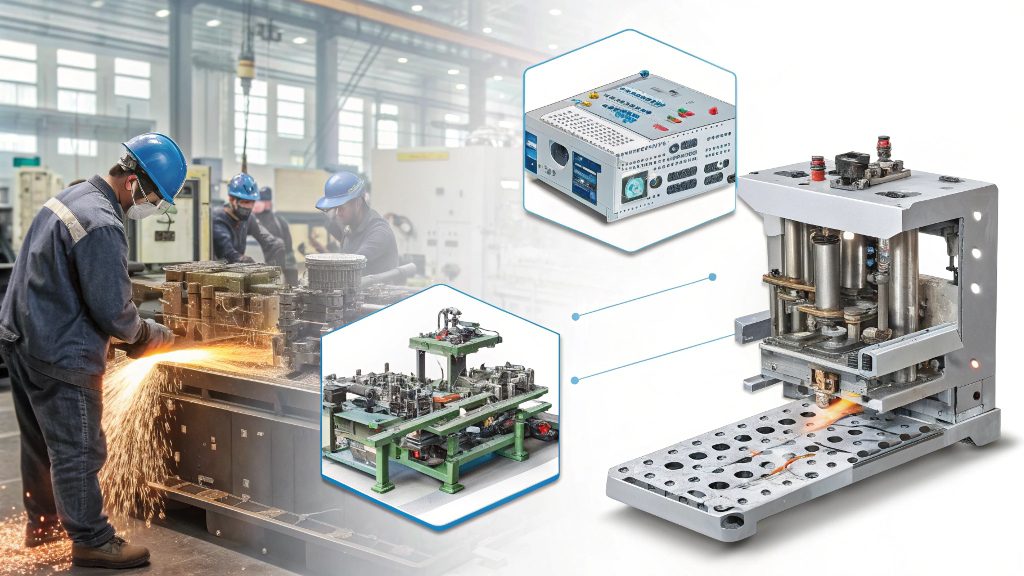
The manufacturing process you choose is just as important as the material. Matching your part's design to the right stamping method is essential for quality and cost-effectiveness. At Worthy, our engineers specialize in this. We mainly focus on progressive and fourslide stamping, as they offer great flexibility and efficiency for our clients.
Progressive Die Stamping
This is the workhorse for high-volume production. A coil of metal is fed through a series of stations in a single tool. Each station performs a different cut, bend, or punch. By the end, a finished part emerges. This method is perfect for complex components like electrical terminals, shields, and connectors. It has high initial tool costs but a very low price per part.
Fourslide Stamping
This process is incredibly versatile. Instead of a single vertical ram, it uses four moving slides to shape the part from different directions. This makes it ideal for creating intricate clips, clamps, and wire-like forms with bends greater than 90 degrees. It’s a specialty of ours and allows us to make complex parts very efficiently.
Deep Draw Stamping
Think of a can of soda. That's made with deep drawing. A flat metal blank is pushed into a die cavity to create a cup-like shape. It’s used for parts that are deeper than they are wide, like enclosures, cups, and housings.
What material is used for stamping?
Beyond just "steel" or "aluminum," the form of the metal matters. Ordering the wrong type of sheet or coil can stop production cold. Let's cover the exact materials we use.
Metal stamping typically uses sheet metal in coil or strip form. A wide range of materials can be stamped, including ferrous metals like carbon and stainless steel, and non-ferrous metals like aluminum, brass, copper, and bronze. The specific alloy is chosen based on project requirements.
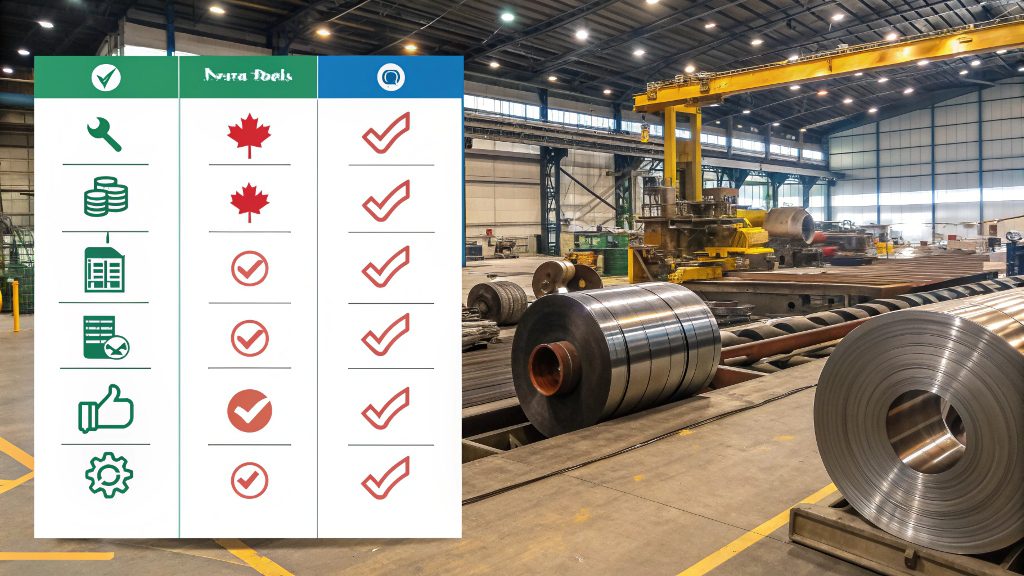
Practically any metal that can be formed into a sheet or coil can be stamped. This gives engineers huge flexibility. At Worthy Hardware, we have experience with over 100 different materials, so we can always find the right match for our customers' needs. These materials fall into two main groups. I remember a project for an electronics client like Mark in Canada. They needed a specific shield. We tested three different copper alloys to find the perfect balance of formability and shielding effectiveness, something a less experienced supplier might miss.
Here’s how we break them down:
| Category | Description & Examples | Primary Use |
|---|---|---|
| Ferrous Metals | These metals contain iron and are usually magnetic. Examples include Cold Rolled Steel, Stainless Steel (e.g., 301, 304, 316), and Spring Steel. | Chosen for their strength, durability, and structural integrity. They are the foundation of many industrial and consumer products. |
| Non-Ferrous Metals | These metals do not contain iron. Common examples are Aluminum (e.g., 5052, 6061), Copper (e.g., C110), Brass, and Bronze. | Valued for properties like being lightweight (aluminum), high electrical conductivity (copper), and excellent corrosion resistance. |
What is the best gauge for metal stamping?
Choosing a metal's thickness, or gauge, feels like a minor detail. But getting it wrong means your part could fail or be too heavy and costly. Let’s clarify this critical point.
The best gauge depends entirely on the part's application. Thicker gauges provide more strength and rigidity but are more expensive and harder to form. Thinner gauges are lighter and cheaper but may not withstand high stress. It's a critical trade-off between performance, weight, and cost.
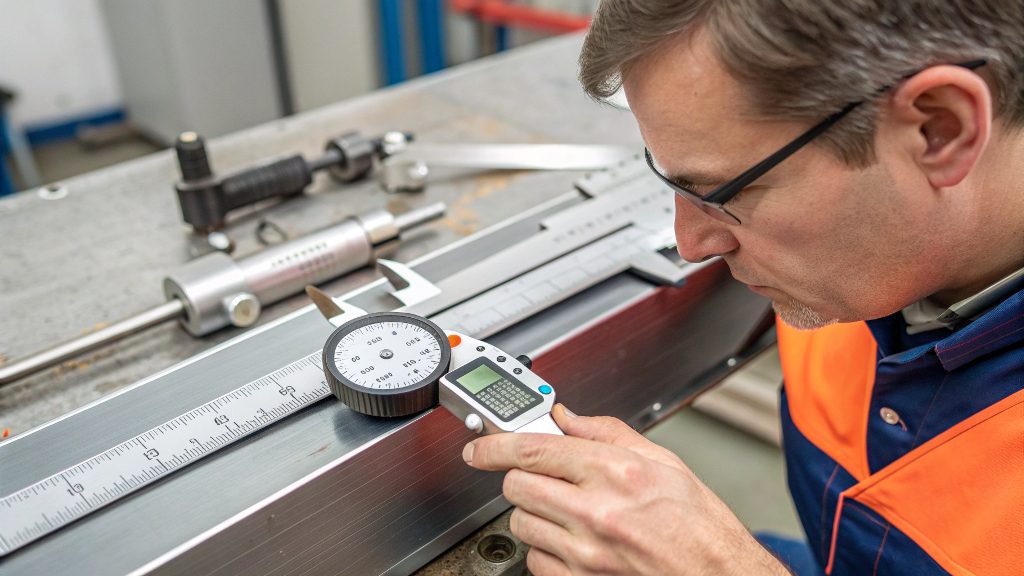
Choosing the right material thickness is one of the most important decisions in product design. While "gauge" is a common term, we always prefer working with exact thickness in millimeters or inches for precision. This is critical because our capabilities allow us to hold tolerances as tight as 0.025mm (.001"). This decision is a balancing act. One of the biggest value-adds our engineers provide is design optimization. For example, a customer might specify a thick and expensive material for strength. Our team can often redesign the part by adding strengthening features like ribs or bends. This allows us to use a thinner, lighter, and less expensive material while still meeting or exceeding the strength requirements. This is the kind of smart engineering that saves our clients money and improves their products.
This table shows the basic trade-offs:
| Factor | Thin Gauge (e.g., 0.5mm) | Thick Gauge (e.g., 3.0mm) |
|---|---|---|
| Cost | Lower | Higher |
| Weight | Lighter | Heavier |
| Strength | Lower | Higher |
| Formability | Easier to form complex shapes | More difficult; requires more tonnage |
Conclusion
Choosing the best metal, process, and gauge is a balancing act. By considering cost, function, and material properties, you can ensure your stamping project succeeds. Contact us for expert advice.