
How to prevent distortion in heat-treated CNC machined parts?
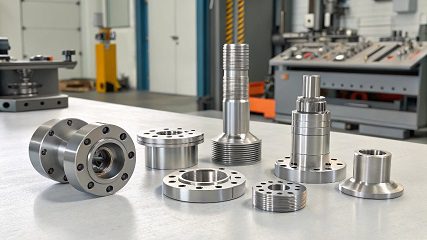
Heat treatment is essential, but it often warps your precision parts. This distortion ruins tolerances and costs you time and money. I will show you how to get it right.
The best way to prevent distortion is through careful planning. This includes smart part design, increasing structural rigidity, choosing the right material, and selecting the correct heat treatment and quenching methods. All heat treatment causes some change, but these steps keep it within acceptable limits.
Every CNC part that requires specific hardness or strength goes through heat treatment. But this process of heating and cooling creates internal stresses. These stresses can pull and push the material, causing it to bend, twist, or change dimensions in ways you didn't plan for. For anyone needing tight tolerance parts, like my client Mark from Canada, this is a huge problem. It can lead to parts that don't fit, assemblies that fail, and project delays. The key isn't to avoid heat treatment, but to understand and control its effects from the very beginning. Let's look at how we manage this at Worthy Hardware to deliver perfect parts every time.
How to reduce distortion in the heat treatment process?
Your parts come out of heat treatment warped and out of spec. This means you have to either scrap them or spend more money on rework, delaying your project.
To reduce distortion, focus on four key areas. Use a symmetrical design, choose the right material for the process, use a gentler quenching method like oil instead of water, and perform stress-relieving steps before the final hardening. These proactive measures are critical for success.
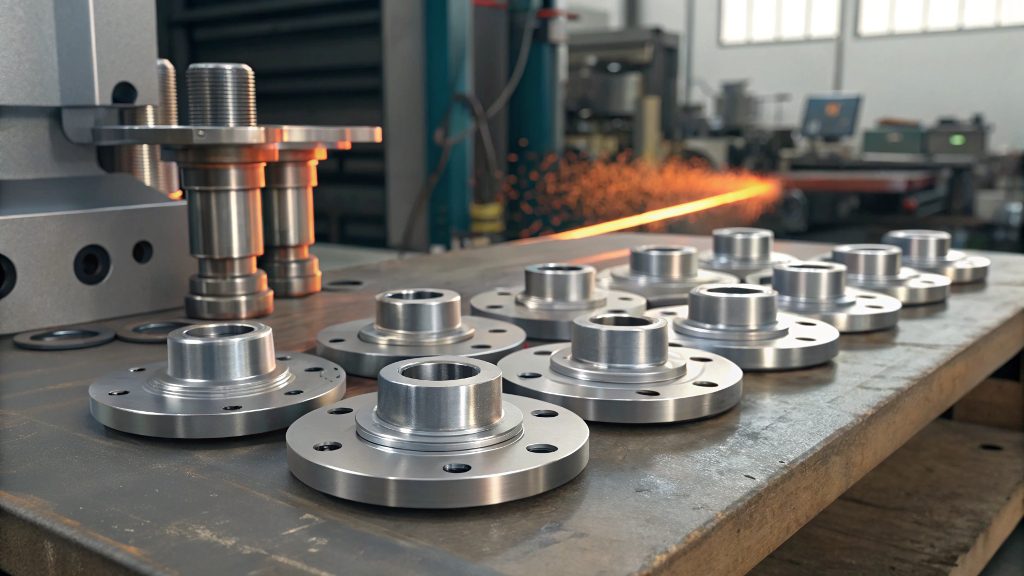
At my company, Worthy Hardware, we know that preventing distortion starts long before the part enters the furnace. All heat treatment will cause some level of distortion; the goal is to manage it. We base our strategy on a few core principles that you can apply too.
Key Strategies for Distortion Control
-
Part Design and Rigidity
The geometry of a part is the biggest factor. Parts with thin walls, sharp corners, or big changes in thickness are more likely to warp. We always advise clients to design parts with uniform wall thickness and use generous radii in corners. For long, thin parts like shafts, sometimes adding temporary bracing that gets machined off later can help maintain straightness. -
Material and Quenching Method
The material you choose matters a lot. Some steels are more prone to distortion than others. For parts that are long and thin, like plates or shafts, we avoid aggressive water quenching. Water cools the part very quickly and unevenly, creating huge internal stresses. An oil quench is much slower and gentler, leading to far less distortion. -
Machining and Heat Treat Sequence
The order you do things in is also important. For high-precision parts, we often use a multi-step process.- Rough Machining: We first machine the part close to its final shape but leave extra material (e.g., 0.5-1.0mm).
- Stress Relieving/Annealing: We then heat-treat the rough part to relieve stresses from the raw material and the rough machining.
- Semi-Finish/Finish Machining: After the part is stable, we perform the final machining passes to bring it to the exact dimensions.
| Strategy | Description | Best For |
|---|---|---|
| Symmetrical Design | Keep wall thickness consistent and avoid sharp internal corners. | All parts, especially complex geometries. |
| Increase Rigidity | Add temporary supports or ribs to long, thin sections. | Shafts, long plates, and thin-walled parts. |
| Oil Quenching | Use a slower cooling medium instead of water. | Distortion-prone materials and long, slender parts. |
| Leave Machining Stock | Rough machine, heat treat, then finish machine the part. | High-precision components with tight tolerances. |
What are the defects of heat treatment?
You think your parts are ready, but hidden defects from heat treatment are there. These problems can cause unexpected failures down the line, damaging your product's reputation.
Common heat treatment defects include warping and distortion, surface or internal cracking, oxidation and decarburization on the surface, and incorrect hardness. These issues compromise the part's dimensions, strength, and performance if not properly controlled during the process.
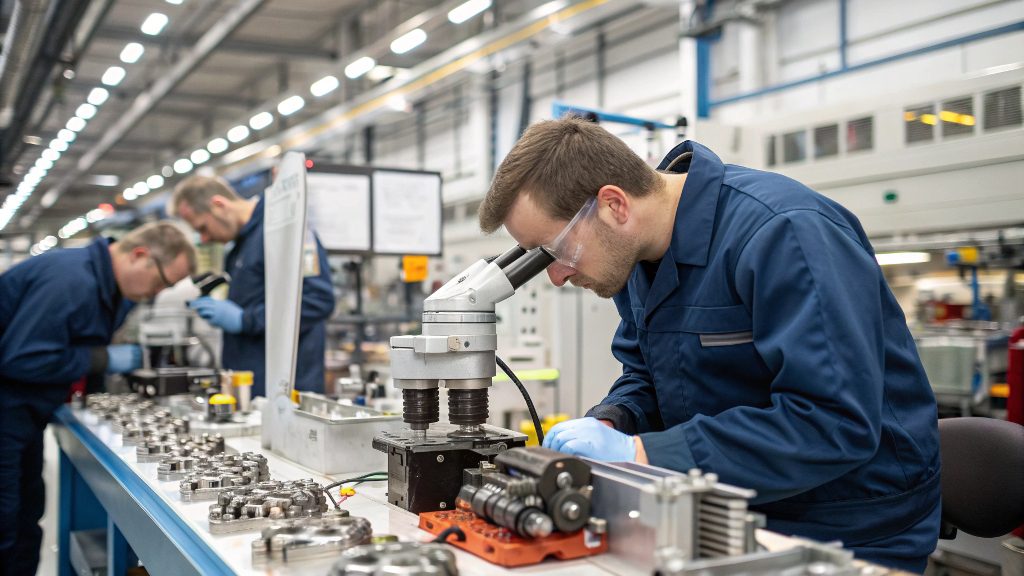
When we do a 100% inspection on every part at Worthy Hardware, we're not just checking dimensions. We are also looking for the common defects that heat treatment can introduce. Identifying these problems is the first step to preventing them. If you know what can go wrong, you can take steps to make sure it goes right. These defects can turn a perfectly machined part into scrap metal.
Here is a breakdown of the most common issues we see and how to think about them.
Common Heat Treatment Flaws
-
Distortion and Warping: This is the most obvious defect. It's any change in the shape or size of the part that was not intended. It happens because of uneven heating, soaking, or, most commonly, cooling. The internal stresses literally pull the part out of shape.
-
Cracking: This is the most dangerous defect. Cracks can form when the internal stress from heat treatment is greater than the material's strength. They often start at sharp corners, holes, or other stress concentration points. Quench cracking, which happens during rapid cooling, is a common example.
-
Surface Defects:
- Oxidation: This is a layer of scale that forms on the surface when the hot metal reacts with oxygen. It looks bad and can affect dimensions.
- Decarburization: This is the loss of carbon from the surface of steel. Since carbon is what gives steel its hardness, a decarburized surface is soft and wears out quickly.
Which heat treatment process improves machinability?
You're trying to machine a tough alloy, but it's slow work. You are burning through expensive cutting tools and your production time is way too long, driving up costs.
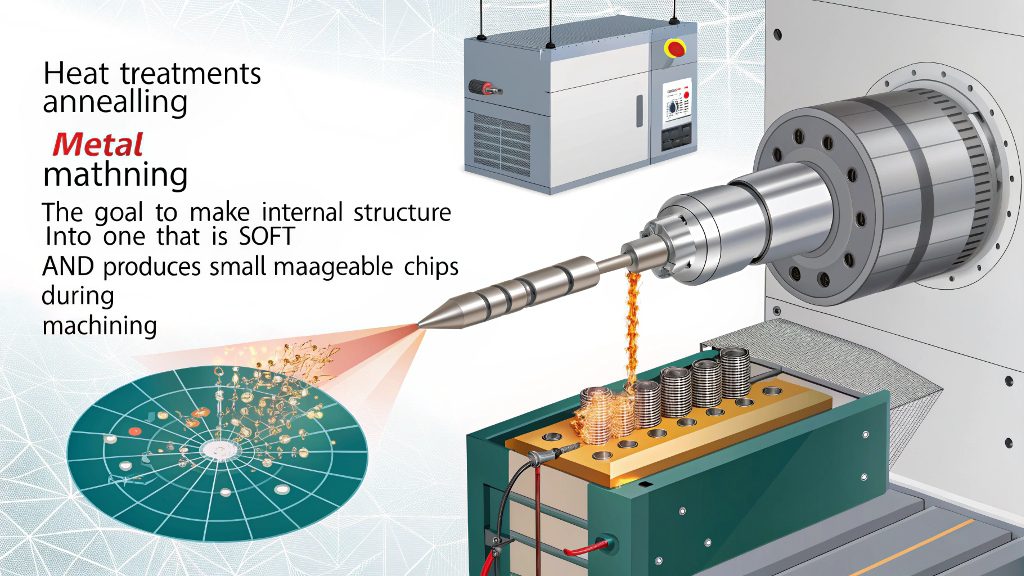
Annealing is the best heat treatment process for improving machinability. It works by heating the metal and then cooling it very slowly. This softens the material, relieves internal stresses, and refines the grain structure, making it much easier and faster to cut.
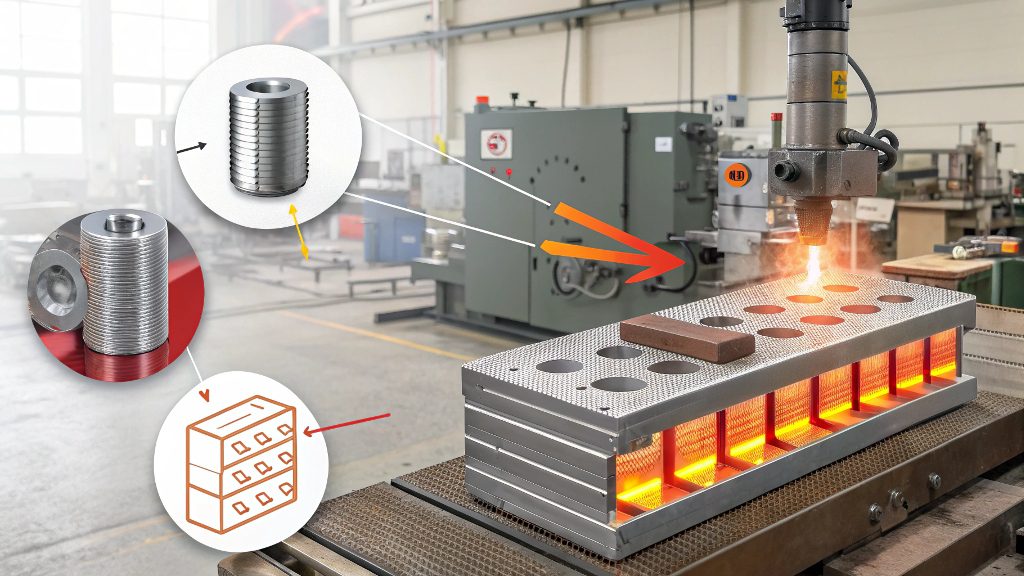
Sometimes, the goal of heat treatment isn't to make a part harder, but to make it softer. This seems strange, but it's a critical step for improving efficiency and reducing cost, especially when working with tough materials like high-carbon steels or certain alloys. Before we perform the main machining operations, we often use a specific heat treatment to make the material easier to work with. This saves us time, reduces wear on our CNC machines and tools, and ultimately saves our customers money.
Let's look at the processes designed specifically to make metal easier to cut.
Heat Treatments for Better Machining
The main goal is to change the metal's internal structure, or microstructure, into one that is soft and produces small, manageable chips when machined.
-
Annealing: This is the most common process. We heat the material above its critical temperature, let it sit there for a while to ensure the whole part is evenly heated, and then cool it down very slowly, often by just turning the furnace off and letting it cool overnight. This results in a soft, ductile material that is very easy to machine.
-
Normalizing: This process is similar to annealing, but the cooling is done in open air, which is faster than furnace cooling. The resulting material is a bit harder and stronger than an annealed part, but it's still much more machinable than in its untreated state. It also creates a more uniform internal structure.
-
Spheroidizing: This is a special type of annealing used for high-carbon steels. It involves long heating times just below the critical temperature. This process causes the hard iron carbide in the steel to form into small, round particles (spheroids). This structure offers the least resistance to cutting and is excellent for machinability.
How to improve CNC machine accuracy?
You've approved a design, but the finished parts aren't meeting the tolerances. This leads to failed assemblies, costly rejections, and a loss of trust in your supplier.
To improve CNC machine accuracy, you must go beyond the machine itself. Use regular calibration, high-quality tooling, secure workholding, and optimized cutting speeds and feeds. Also, controlling the workshop's temperature to limit thermal expansion is absolutely essential for tight tolerance work.
Achieving high accuracy in CNC machining[^1] is about controlling every variable. As a company that can hold tolerances down to +/- 0.001 inch (0.025mm), we know it's a combination of the right machine, the right process, and the right people. I once had a project for a medical device company where a part's accuracy was critical for its function. The part kept failing inspection until we looked at every single step, from the temperature in the shop to the sharpness of the cutting tool. This experience taught me that precision is a total system.
The Pillars of CNC Accuracy
-
The Machine and Environment: It starts with a solid foundation. A high-quality, rigid CNC machine is a must. But even the best machine will produce inaccurate parts if it's not level or if its environment isn't stable. We run our machines in a temperature-controlled space because even a few degrees of change can cause a metal part to expand or contract enough to go out of tolerance. Regular calibration and maintenance are also non-negotiable.
-
Workholding and Tooling: The part must be held absolutely still during machining. Any tiny movement will ruin accuracy. We use high-quality, rigid fixtures and vises. The cutting tools are just as important. A worn tool, a tool with runout (wobble), or one that's not right for the material will not cut accurately. We use premium tools and check them constantly.
-
Programming and Operation: This is where our experienced engineers make a huge difference. They program the toolpaths to minimize stress on the part and the tool. For example, they will program a roughing pass to remove most of the material quickly, followed by a very light finishing pass to bring the part to its final, accurate dimension. This approach ensures a better surface finish and tighter tolerances. Our skilled operators then ensure the setup is perfect before pressing "start."
Conclusion
Controlling heat treat distortion is about planning ahead. From design and material choice to the final machining pass, every step matters for achieving reliable, accurate, and high-quality CNC parts.