
What Are the Best Practices for CNC Machining ABS Plastic?
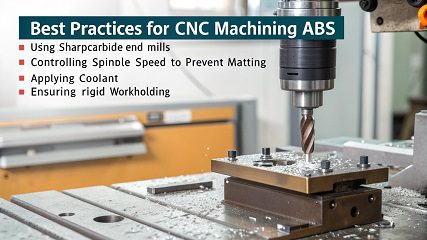
Machining ABS can be difficult. You worry about it melting or warping, ruining your part. This waste of time and material costs money and delays your projects, but you can get perfect results.
The best practices for CNC machining ABS are using sharp carbide end mills, controlling spindle speed to avoid melting, applying coolant, and ensuring rigid workholding. This prevents deformation, stops the material from gumming up, and gives you a clean, precise part every time.
Getting these details right is the difference between a perfect part and a pile of scrap plastic. I've learned this from years of experience machining parts for clients like Mark from Canada, who needs high-quality parts without delays. Let's break down the most important questions you might have about working with ABS.
Can ABS be CNC machined?
Are you thinking about using ABS for your project but not sure if it works for CNC machining? You might think plastics are too soft or melt too easily, making you hesitate. The good news is that ABS is a great material for CNC machining.
Yes, ABS can be CNC machined very well. It has good mechanical properties, is stable, and is easy to finish. This makes it a popular choice for prototypes and final parts. With the right tools and techniques, you can get very precise results.

We machine ABS plastic all the time at Worthy. Its full name is Acrylonitrile Butadiene Styrene, and it’s a go-to material for a reason. It is tough and resistant to impact, which is great for parts that need to be durable. The key challenge, which I mentioned earlier, is its low melting point. This means you have to be careful with heat buildup during machining. If the tool gets too hot, the ABS can melt instead of cutting cleanly. But when you control the heat, ABS is fantastic to work with. It doesn't put much wear on our cutting tools, and we can achieve excellent surface finishes. Many of our clients use it for electronic enclosures, automotive trim pieces, and consumer product prototypes because it's both strong and affordable.
What is the best method for cutting ABS plastic?
Are you ready to cut your ABS part but worried the wrong method will melt it? A gummy mess or a cracked part is a very frustrating outcome after all your preparation. Using the right cutting method is the secret to success.
The best way to cut ABS is with CNC milling. You should use sharp, uncoated carbide end mills that have a high helix angle. Use a moderate spindle speed and a high feed rate. This helps clear chips fast and stops heat from building up and melting the plastic.
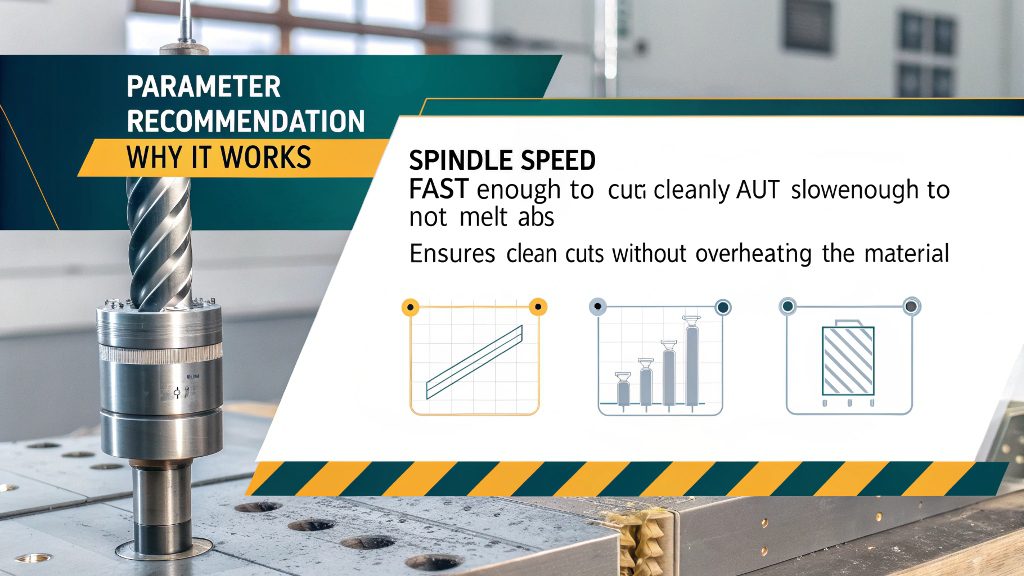
Let's get into the specifics because this is where many people have trouble. At my shop, we almost always choose a solid carbide end mill, usually with two or three flutes. Fewer flutes provide more room for chips to escape, which is critical for plastics. We avoid coated tools because some coatings can increase friction and generate more heat. My engineers always stress the importance of feeds and speeds. You want the spindle speed (RPM) to be fast enough to cut cleanly but slow enough to not melt the ABS. Then, you use a high feed rate to move the tool through the material quickly. This creates a thicker chip that carries heat away from the part. And you must use coolant. Sometimes, a strong blast of compressed air is enough to cool the tool and clear chips. For deeper cuts, we use a flood coolant.
| Parameter | Recommendation | Why it Works |
|---|---|---|
| Tool Type | Uncoated 2 or 3-Flute Carbide End Mill | Stays sharp, allows for excellent chip evacuation. |
| Spindle Speed | Moderate (e.g., 5,000-10,000 RPM) | Prevents melting from excessive friction. |
| Feed Rate | High (e.g., 50-100 IPM) | Creates thick chips that carry heat away. |
| Coolant | Compressed Air or Flood Coolant | Cools the tool and part, flushes chips away. |
How machinable is ABS?
You know ABS can be machined, but how easy is it really? You do not want to choose a material that constantly causes problems, leading to extra work and stress. The truth is, ABS is one of the easier plastics to machine.
ABS is very machinable because it is stable and soft, which means cutting forces are low. But its low melting point requires you to carefully manage heat to stop it from gumming up. Overall, it is generally easier to machine than plastics like Polycarbonate or PEEK.
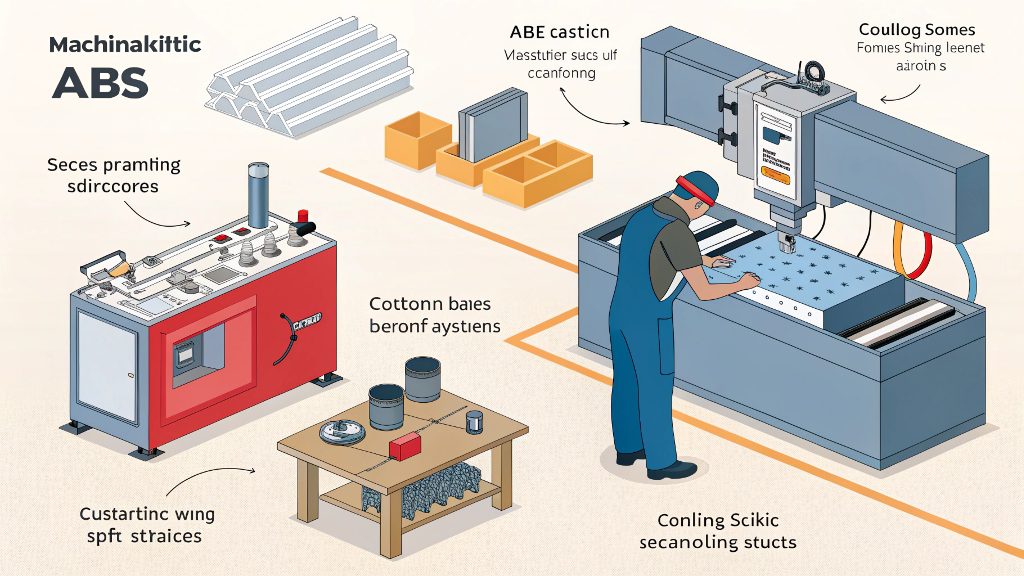
Machinability is about more than just cutting. It's about the whole process. ABS scores high in my book. Because it’s relatively soft, our tools last longer. The main challenge is heat. If you don't get your speeds and feeds right, the plastic shavings will get sticky and can even weld back onto your part or gum up the cutter. Another point is workholding. You need to hold the ABS sheet or block securely, but you can't clamp it too tightly. Overtightening can bend the material or leave marks on the surface. We often use custom fixtures or soft jaws for delicate ABS parts. The best part about ABS machinability is what you can do after cutting. It’s very easy to sand, glue, and paint. We can also do vapor polishing, which uses a solvent vapor to slightly melt the surface, creating a very smooth, glossy finish.
What plastic is best for CNC machining?
Are you looking for the very best plastic for your CNC project? There are so many options, and choosing the wrong one can lead to bad results and wasted money. While "best" depends on what you need, some plastics are clear winners for machining.
For general machining, Delrin (Acetal) is often seen as the best plastic. It has great dimensional stability, low friction, and cuts very cleanly. But ABS, Nylon, and Polycarbonate are also top choices, depending on if you need impact resistance, durability, or a lower cost.
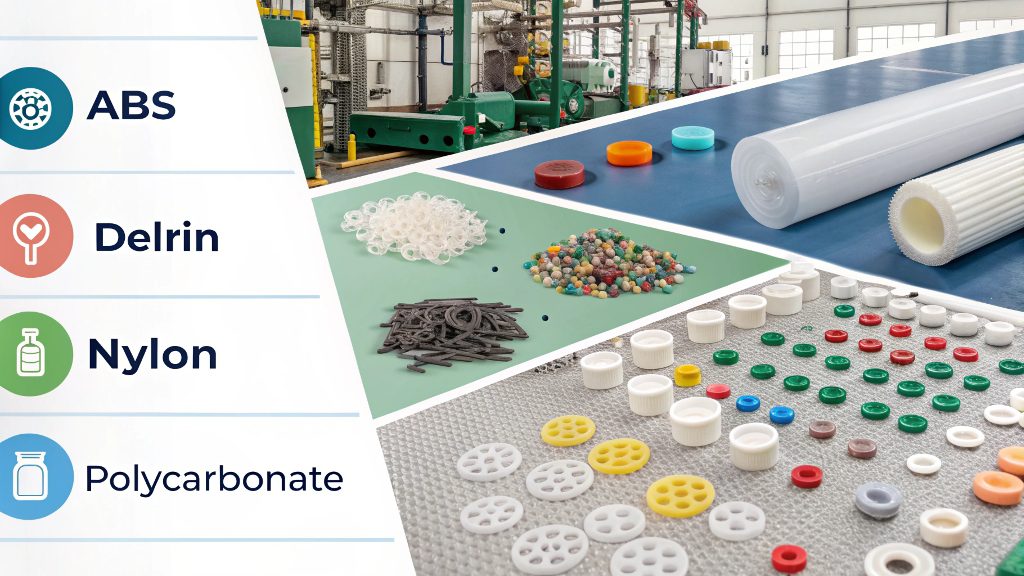
There is no single "best" plastic for everything. The right choice always depends on your application and budget. A customer in the medical device industry might need PEEK for its high-temperature resistance, while a hardware startup might prefer ABS for its low cost. At Worthy, we work with over 100 materials, so we help customers make this choice every day. Delrin is fantastic for precise parts like gears because it doesn't change shape and machines beautifully. Nylon is very tough but can absorb water, which might affect tolerances. Polycarbonate is almost unbreakable but can be tricky to machine without causing stress cracks. ABS sits in a great middle ground. It's easy to machine, strong enough for many uses, and very cost-effective.
Here’s a quick guide to help you choose:
| Plastic | Machinability | Key Feature | Best For... |
|---|---|---|---|
| ABS | Easy | Cost-effective, Impact Resistant | Prototypes, Enclosures, Consumer Goods |
| Delrin (Acetal) | Excellent | High Stability, Low Friction | Precision Gears, Bearings, Bushings |
| Nylon | Moderate | Toughness, Wear Resistance | Wear Pads, Rollers, Structural Parts |
| Polycarbonate | Moderate | Extreme Impact Strength | Guards, Lenses, Transparent Parts |
Conclusion
To machine ABS successfully, use sharp carbide tools, manage heat with the right speeds and coolant, and secure your part properly. ABS is an excellent, versatile choice for many CNC projects.