
What are the best materials for CNC machining wooden parts?

Choosing the wrong wood for your CNC project can lead to wasted material and poor results. This costs time and money. Understanding the best wood types ensures a beautiful final product.
The best materials for CNC machining wooden parts depend entirely on your project's needs. For fine detail and durability, hardwoods like Walnut and Maple are superb. For cost-effective or paint-grade projects, engineered woods like MDF and Baltic Birch Plywood are excellent, consistent choices.
Choosing the right wood is more than just picking a color. It’s about matching the material’s properties to your design, your budget, and the final use of the part. Over my 28 years in CNC machining, I've seen how the right choice can make a project successful. Let's break down the most common options to help you decide what's best for you.
What type of wood is best for CNC?
Are you overwhelmed by all the wood types available for CNC machining? Picking the wrong one can ruin a design with splintering or dull your expensive bits much too quickly. The best wood is one that balances workability, grain, and your project's final purpose.
For general CNC work, hardwoods like walnut, maple, and cherry are excellent for their fine grain and durability. Softwoods like pine are cheaper but can cause tear-out. Engineered woods like MDF offer perfect consistency, great for prototypes or painted parts.
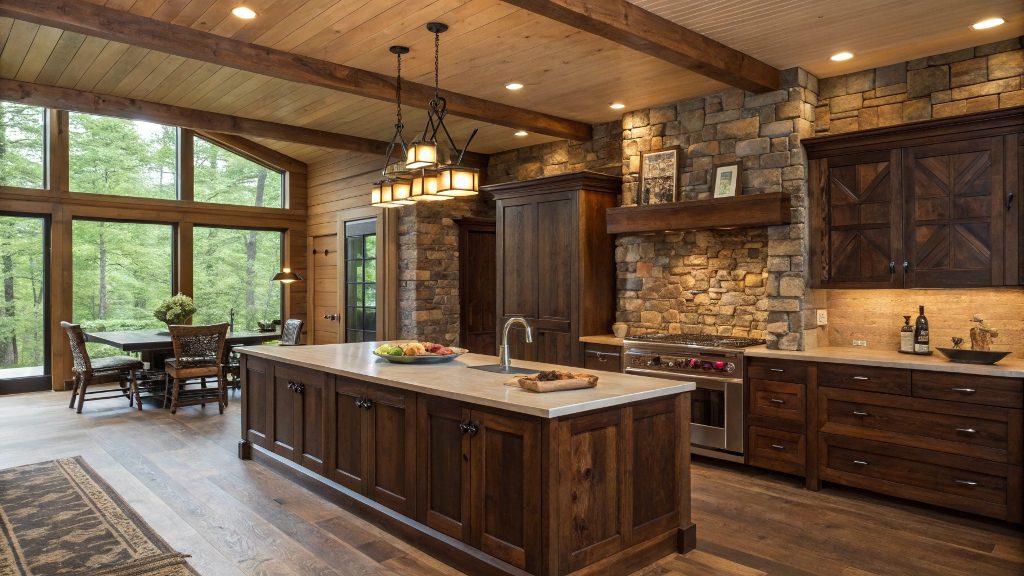
When a client asks me this question, I usually ask them about their project first. The "best" wood really changes based on the application. We can group the main choices into three categories.
Hardwoods for Detail and Beauty
Hardwoods come from deciduous trees, the ones that lose their leaves in the fall. They are dense, durable, and have a tight grain. This makes them amazing for machining fine details. Woods like Walnut, Maple, and Cherry cut cleanly and leave a beautiful finish that can be stained or oiled. In my experience, about 80% of our customers who want a premium look choose Walnut. It has a rich color, machines beautifully, and is priced reasonably compared to more exotic woods. It’s a fantastic all-around choice.
Softwoods for Economy
Softwoods come from coniferous trees, like pine. They are generally less expensive and lighter than hardwoods. While they can be machined, their grain structure is less consistent. This can sometimes lead to "tear-out," where the wood splinters along the cut path. For this reason, they are better for simpler designs without tiny details. They are a good choice for structural parts or prototypes where cost is the main concern.
Engineered Woods for Stability
Engineered woods like Plywood and MDF are made by binding wood fibers or veneers together with adhesive. Their biggest advantage is stability. They don't warp or twist with changes in humidity like solid wood can. This makes them perfect for large, flat parts, jigs, or anything that needs to be dimensionally perfect.
| Wood Type | Best For | Pros | Cons |
|---|---|---|---|
| Hardwood | High-end parts, detailed carvings | Durable, beautiful grain, machines well | More expensive, can warp |
| Softwood | Prototypes, structural parts | Inexpensive, lightweight | Prone to dents, can splinter |
| Engineered Wood | Jigs, painted parts, large panels | Very stable, consistent, affordable | Lacks natural wood grain, can be heavy |
What makes a material good for CNC?
Do you ever wonder why one material machines so well while another one fights the tool? Using a material that isn't right for CNC leads to failed parts and major headaches. Knowing the key properties of a great CNC material helps you choose the right one every time.
The best materials for CNC machining are stable, consistent, and have good workability. For wood, this means it has a consistent density, a grain that doesn't splinter easily, and low internal stress. These properties ensure predictable results and a high-quality surface finish.

At Worthy, we work with over 100 materials, from metals and plastics to wood. No matter what the material is, the same principles apply. A good material cooperates with the machine, it doesn't fight it. Here’s what I look for, specifically in wood.
Stability and Consistency
A material must be stable. For wood, this is all about moisture content. Solid wood can expand, shrink, or warp as the humidity changes. This can ruin a part with tight tolerances. This is a pain point for many buyers like Mark Chen, who need reliable quality. Engineered woods like MDF and Baltic Birch plywood are much more stable because of how they are made. They have no internal stresses, so they stay flat and true after machining, which is critical for quality inspection.
Workability and Grain
Workability is how easily the material can be cut. Some woods, like Cherry, have a very fine, straight grain and cut like butter, leaving a perfect edge. Others, like Red Oak, have a very open and porous grain that can lead to chipping. The goal is a clean cut. MDF is a champion here because it has no grain at all. It’s just uniform fibers, so you can achieve very sharp details. We always break and deburr sharp edges by default, but starting with a good material makes this process much easier.
Cost vs. Performance
Finally, there is always a balance between cost and performance. A beautiful piece of Bubinga wood might look amazing, but it might be too expensive for the project. My job is often to help customers find a material that meets their performance needs without breaking their budget. This is why Walnut is so popular. It offers a high-end look and feel at a mid-range price point. This balance is key for many of my B2B customers who need to manage costs while delivering quality to their own clients.
What is the best material for a CNC-machined frame?
Are you building a frame and need it to be strong and precise? A weak or warped frame can ruin an entire project. It might not support weight or hold its shape over time. Choosing the right material from the start guarantees a sturdy, accurate frame that lasts.
For CNC-machined frames, stability and strength are most important. Hardwoods like Maple or Oak are excellent for their rigidity. However, for a cost-effective and perfectly stable option, Baltic Birch Plywood is a top choice. It resists warping and has great strength.
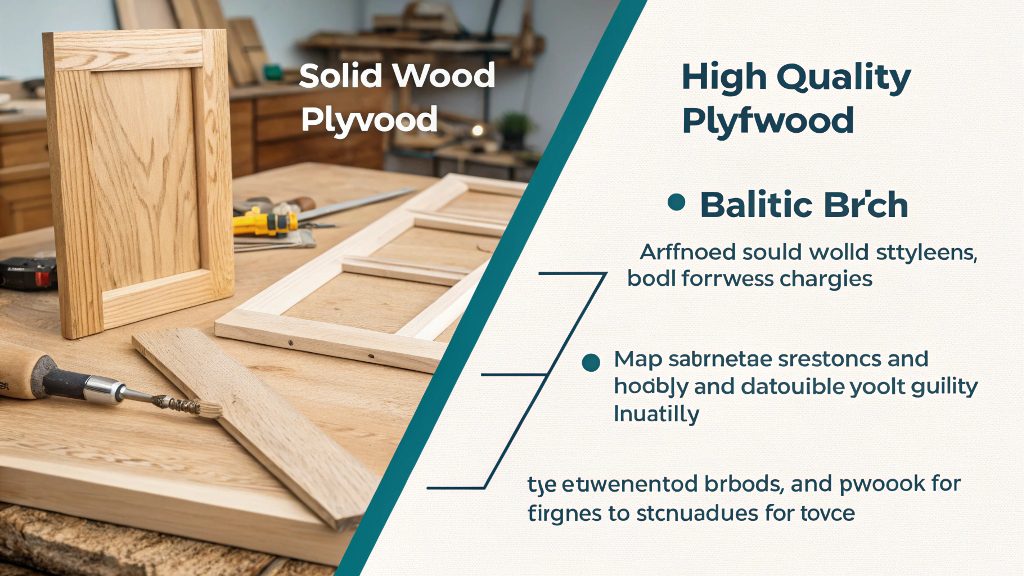
When we make frame-like parts for our customers, the choice between solid wood and high-quality plywood is a common discussion. Both can work, but they have different strengths. The right choice depends on the frame's job.
The Strength of Solid Hardwoods
If the frame needs to be very strong and will be seen as a decorative element, solid hardwoods are a great choice. Maple is incredibly stiff and strong, making it ideal for frames that bear a load. Oak is also very strong and has a prominent, traditional look. The main challenge with solid wood is movement. A long, thin piece of solid wood is more likely to bow or twist if the humidity changes. For a client in a very dry or humid climate, this can be a real problem.
The Stability of Plywood
This is where plywood, especially Baltic Birch, shines. It's made of many thin layers of wood veneer, with the grain of each layer turned 90 degrees to the next. This cross-laminated structure makes it incredibly stable. It simply will not warp like solid wood. It’s also very strong and holds screws well. I once had a client making frames for electronic displays. They were using solid Poplar and had constant issues with frames twisting, causing assembly problems. We switched them to Baltic Birch Plywood, and the problem disappeared completely. The delivery time was faster too because we didn't have to worry about wood acclimation.
When to Choose Which
So, my advice is this: if you need a beautiful, classic wood look and the frame is thick enough to be stable, a hardwood like Maple is a great option. But if absolute dimensional stability is the most important factor, or if the frame is large and thin, Baltic Birch Plywood is almost always the better, safer choice.
Is MDF good for CNC?
Have you heard about MDF but are not sure if it is right for your CNC project? Using it in the wrong way can lead to fuzzy edges and parts that swell up with any moisture. But if you understand its strengths, you can use it for the right applications.
Yes, MDF (Medium-Density Fiberboard) is excellent for CNC machining, especially for projects that will be painted. It has no grain, which allows for a smooth, consistent surface and sharp details. But, it is not as strong as solid wood and gets damaged by water easily.
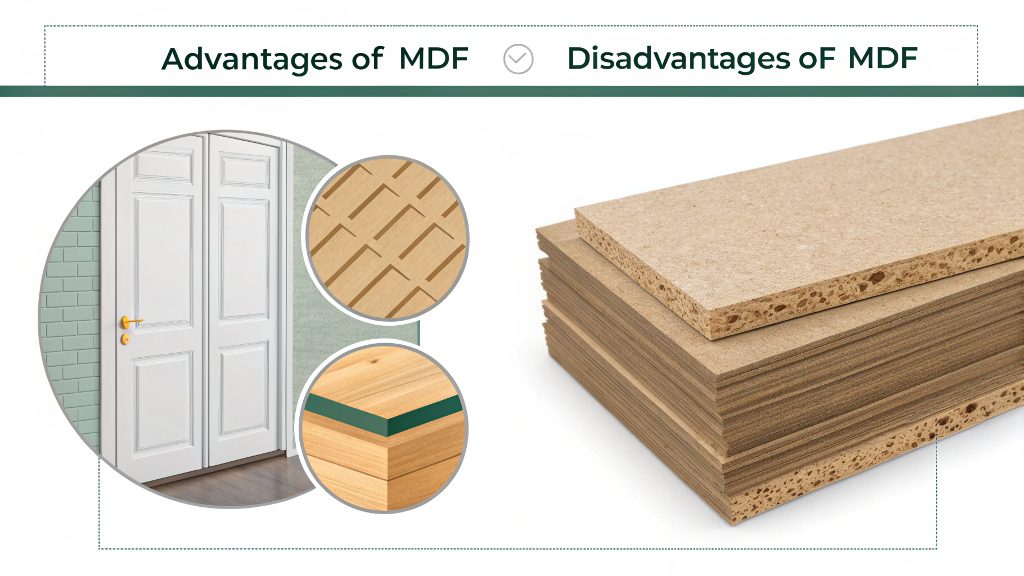
MDF is one of the most common materials we see on our machines, but it has a very specific set of pros and cons. We've helped many customers use it successfully by making sure they understand where it works and where it doesn't.
The Advantages of MDF
MDF's biggest strength is its consistency. It is made from fine wood fibers mixed with wax and resin, then pressed into sheets. The result is a material with no grain, no knots, and no voids. It's perfectly flat and uniform from edge to edge. When you machine it with a sharp tool, it cuts very cleanly, allowing for crisp edges and intricate 3D carvings. Because the surface is so smooth and non-porous, it's the perfect base for paint. You can get a glass-smooth painted finish on MDF that is very difficult to achieve on solid wood with an open grain. It's also affordable, making it a go-to choice for prototypes, paint-grade cabinet doors, and jigs and fixtures for our workshop.
The Disadvantages of MDF
However, MDF has two major weaknesses. First, it is not very strong structurally. It's heavy and dense, but it can sag under its own weight over long spans. It also doesn't hold screws as well as solid wood or plywood. Second, it acts like a sponge around water. An unsealed edge of MDF will soak up any moisture and swell, completely ruining the part. Any part made from MDF must be sealed on all sides with primer or paint to protect it. It also creates a very fine, powdery dust when machined, so good dust collection is a must for safety.
| Feature | MDF Pros | MDF Cons |
|---|---|---|
| Surface | Perfectly smooth, no grain | Scratches easily |
| Machining | Cuts clean details, consistent | Creates very fine dust |
| Finishing | Excellent for painting | Must be sealed from moisture |
| Strength | Very stable and flat | Not strong, sags over time |
| Cost | Very affordable | Can be heavy |
Conclusion
The best wood for your CNC project depends on your needs. Balance beauty, strength, and cost. Walnut is a great all-around choice, while MDF and plywood excel in specific applications.