
What Are The Best Bronze Alloys for CNC Machining Projects?

Struggling to pick the right bronze for your CNC project? Choosing the wrong one leads to wasted money and failed parts. Let's find the best bronze alloy for your application.
The best bronze for your project depends on its use. For excellent machinability and bearings, C932 Bearing Bronze is a great choice. For high strength and corrosion resistance, C954 Aluminum Bronze is superior. Phosphor and tin bronzes are also popular for their balanced properties.
Choosing the right alloy seems complicated, but it's simpler than you think. Each type has unique strengths that make it ideal for certain jobs. In my years of running Worthy Hardware, I've seen how a small change in alloy can make a huge difference. Let's break down the most common options so you can make an informed decision for your next project.
What is the best bronze alloy for machining?
Need a bronze that machines smoothly without causing headaches? Difficult materials increase machining time and costs. Luckily, some bronze alloys are known for their exceptional machinability, saving you both time and money.
C932 Bearing Bronze (SAE 660) is the top choice for machinability. The small amount of lead in its composition acts as a lubricant during cutting. This leads to smoother finishes, longer tool life, and faster speeds, making it a very cost-effective option for many jobs.
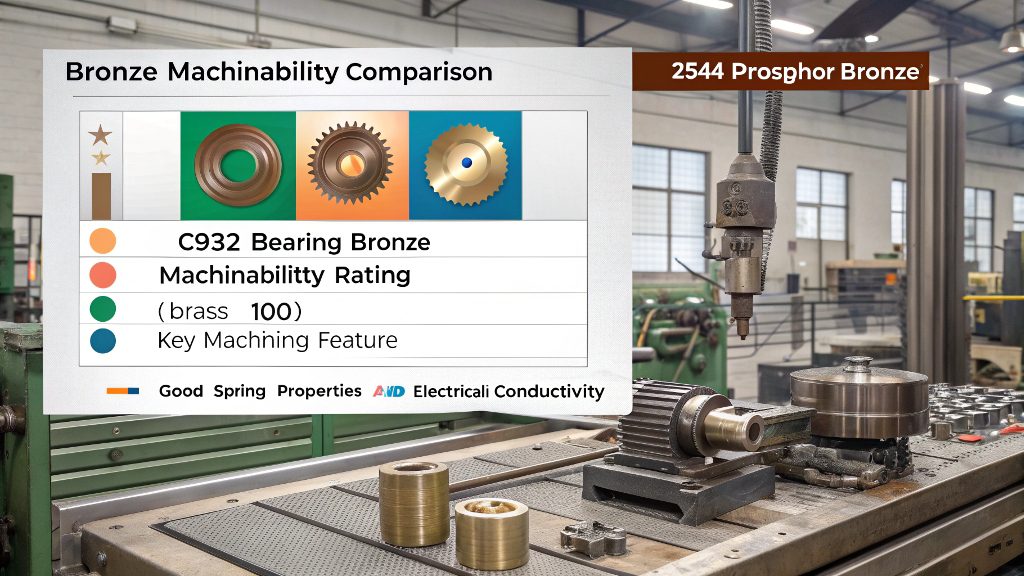
In our shop, when a customer needs a reliable, general-purpose bronze part, C932 is often our first recommendation. The reason it's so easy to work with comes down to its chemical makeup. The lead content helps create small, manageable chips that break away easily from the workpiece. This prevents long, stringy chips from wrapping around the cutting tool, which reduces heat buildup and tool wear. Faster, cleaner cuts mean less time on the machine, which directly translates to lower costs for my customers. While C932 is the champion, other alloys like C544 Phosphor Bronze are also excellent to machine. C544 is often chosen for parts that also require good spring properties and electrical conductivity. Here’s a simple breakdown of how different bronzes stack up in terms of machinability.
| Alloy | Common Name | Machinability Rating (Brass=100) | Key Machining Feature |
|---|---|---|---|
| C932 | Bearing Bronze | 70 | Self-lubricating due to lead |
| C544 | Phosphor Bronze | 80 | Excellent for fine details |
| C954 | Aluminum Bronze | 60 | Good, but tougher material |
| C863 | Manganese Bronze | 30 | Difficult, requires slower speeds |
What is the strongest bronze alloy?
Are you creating parts for high-stress applications? A weak alloy can lead to dangerous failures under load. Fortunately, certain bronze alloys offer incredible strength and durability for the most demanding jobs.
C954 Aluminum Bronze is generally the strongest common bronze alloy. Its high tensile and yield strength come from its aluminum content. This makes it extremely durable, wear-resistant, and perfect for heavy-duty applications like gears, worm wheels, and marine hardware where failure is not an option.
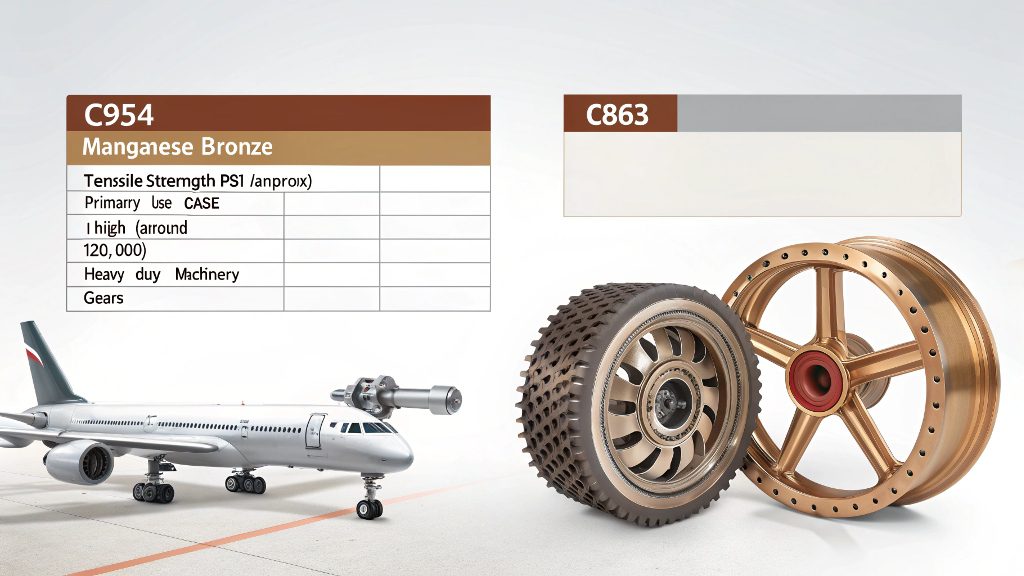
When a project demands toughness above all else, we turn to aluminum bronzes, especially C954. This alloy is a true powerhouse. Unlike tin bronzes, its strength comes from aluminum and iron. It can handle heavy loads and impacts without deforming or breaking. I’ve seen it used for landing gear components on aircraft and heavy machinery gears that operate under constant stress. Another very strong option is C863 Manganese Bronze, which can have even higher tensile strength. However, this strength comes at a price. These materials are much tougher to machine than something like C932. We have to run our CNC machines at slower speeds and use very sturdy tooling to cut them effectively. This increases machining time and cost, but for critical applications, the strength and reliability are worth it. It’s a trade-off between performance and manufacturability.
| Alloy | Common Name | Tensile Strength, psi (approx.) | Primary Use Case |
|---|---|---|---|
| C863 | Manganese Bronze | 110,000 | Extra heavy-duty bushings |
| C954 | Aluminum Bronze | 85,000 | High-load, wear-resistant parts |
| C510 | Phosphor Bronze | 55,000 | Springs, electrical contacts |
| C932 | Bearing Bronze | 35,000 | General purpose, low-friction |
What is the difference between 932 and 936 bronze?
Do similar alloy names like C932 and C936 cause confusion? A small difference in number can mean a big difference in performance. Let's clarify their distinct properties so you choose correctly.
The main difference is their composition. C936 has more tin and less lead than C932. This makes C936 slightly stronger and more wear-resistant, suitable for harder-working bearings. In contrast, C932 offers better machinability and is more widely available for general-purpose applications.
At first glance, C932 and C936 seem almost interchangeable. They are both tin bronzes used for bearings. However, the small tweaks in their formula change their behavior. By increasing the tin and decreasing the lead, C936 becomes a harder material. This makes it a better choice for bearings that will experience higher loads or faster speeds, as it will resist wear more effectively. The downside is that the lower lead content makes it a bit more difficult to machine compared to C932. For most general-purpose bushings and bearings my customers order, C932 is the perfect balance of performance, machinability, and cost. We typically only suggest C936 when a customer's specific design calls for that extra bit of hardness and durability, and they are willing to accept the slightly higher machining cost that comes with it.
| Property | C932 (SAE 660) | C936 (SAE 64) |
|---|---|---|
| Tin (Sn) | ~7% | ~10% |
| Lead (Pb) | ~7% | ~2% |
| Hardness (Brinell) | ~65 | ~72 |
| Primary Advantage | Excellent Machinability | Higher Strength & Hardness |
| Common Use | General Purpose Bearings | High-Load/High-Speed Bearings |
What is the difference between 932 and 954 bronze?
Choosing between C932 and C954 bronze? These two alloys are worlds apart. Using one where the other is needed can lead to rapid failure. Let's compare them to ensure your success.
These alloys are completely different. C932 is a tin bronze (Bearing Bronze) designed for low-friction applications and easy machining. C954 is an aluminum bronze, built for high strength, hardness, and corrosion resistance. Think of C932 for bearings and C954 for structural parts.
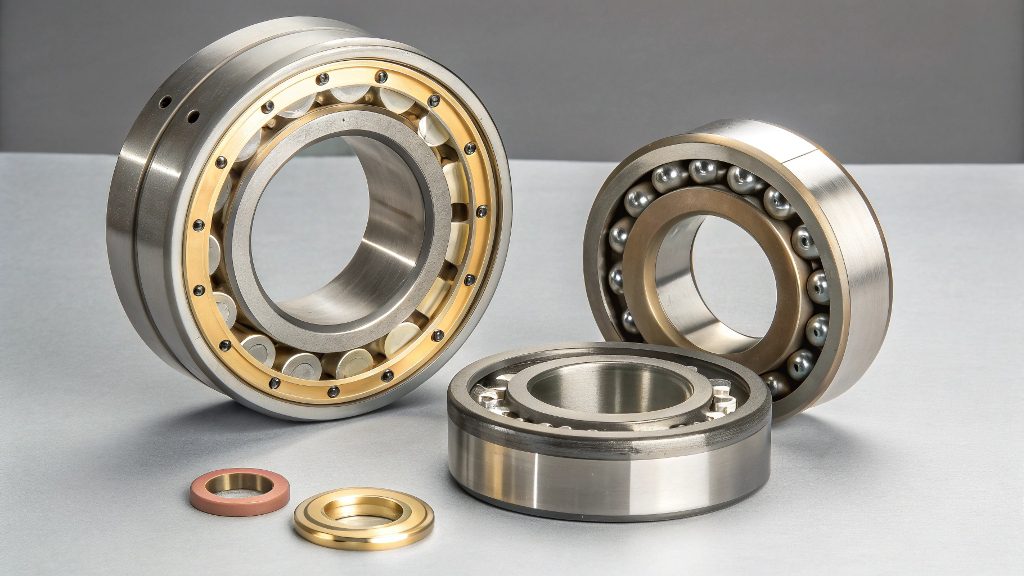
This is one of the most important distinctions to understand. Comparing C932 to C954 is like comparing two completely different tools. C932 Bearing Bronze is designed for one main job: to be slippery. Its leaded tin composition creates a surface that reduces friction, making it perfect for bushings where a steel shaft needs to spin freely. It is relatively soft and is not meant to be a structural material. On the other hand, C954 Aluminum Bronze is designed to be strong and tough. Its job is to bear heavy loads, resist being crushed or bent, and stand up to corrosion. You would use it for a gear, a valve component, or a piece of marine hardware exposed to saltwater. Using C932 for a high-strength application would result in immediate failure. Using C954 for a simple bearing would be overkill and unnecessarily expensive to machine.
| Feature | C932 Bearing Bronze | C954 Aluminum Bronze |
|---|---|---|
| Alloy Family | Tin Bronze | Aluminum Bronze |
| Primary Function | Anti-Friction (Bearings) | Structural (High Strength) |
| Tensile Strength | Low (~35,000 psi) | High (~85,000+ psi) |
| Machinability | Excellent | Good (but tough) |
| Main Advantage | Low Friction & Cost-Effective | High Strength & Corrosion Resistance |
Conclusion
Choosing the right bronze, from machinable C932 to strong C954, is crucial. At Worthy Hardware, we machine them all and can help you select the perfect alloy for your project.