
What Is The Difference Between Thread Milling And Tapping?
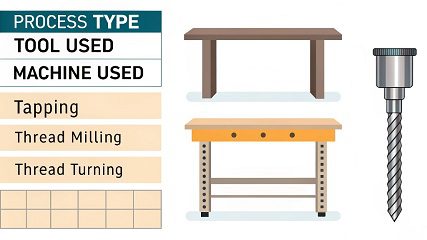
Are you trying to decide between tapping and thread milling for your parts? Making the wrong choice can lead to poor quality, broken tools, and wasted material, which costs you money.
Tapping is a fast process that uses a tap tool to cut threads in a single pass, making it great for smaller, standard-sized holes. Thread milling uses a rotating cutter to form threads with multiple passes. This offers higher precision, more flexibility, and is better for larger or harder materials.
The basic difference seems simple, but knowing exactly when to use each method is key to a successful project. If you choose wrong, you could end up with a broken tap stuck in an expensive part or threads that just don't meet your quality standards. Let's look deeper into the details of each process. This will help you make the best choice for your specific needs, ensuring you get perfect threads every time.
What is the difference between tapping and threading?
Do the words "tapping" and "threading" seem like the same thing? Using them the wrong way can cause a lot of confusion with suppliers and lead to mistakes in your project.
Threading is the overall name for creating helical ridges on a part. Tapping is one specific method of internal threading that uses a tool called a tap. So, all tapping is a form of threading, but not all threading is tapping.
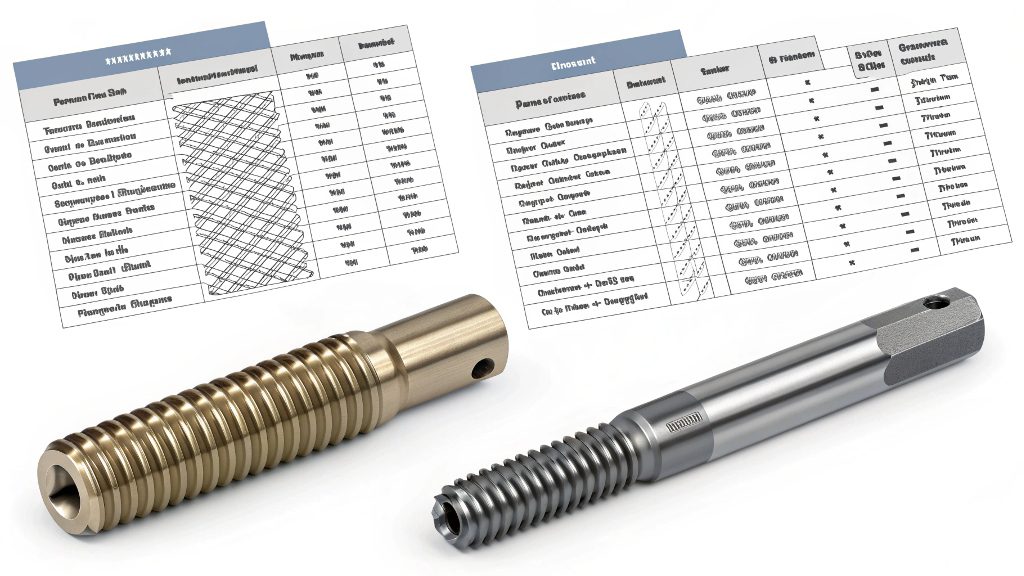
Let me break it down further. When a customer asks me for "threading," it's a general request. I need more information to do the job right. My first question is always, "Is it an internal thread (like in a nut) or an external thread (like on a bolt)?" Tapping is only for internal threads. For external threads, we often use a process called thread turning on a lathe. Thread milling is a more flexible process that can create both internal and external threads. This is why clear communication is so important. A client like Mark in Canada needs to know that when he requests "threading," he must specify the type to avoid getting the wrong part.
Here is a simple table to show the difference:
| Feature | Tapping | Thread Milling | Thread Turning |
|---|---|---|---|
| Process Type | Internal Thread Cutting | Internal & External Cutting | External Thread Cutting |
| Tool Used | Tap | Thread Mill | Single-Point Tool |
| Machine Used | Mill, Drill Press, Lathe | CNC Machining Center | CNC Lathe |
| Category | A specific threading method | A specific threading method | A specific threading method |
What is the difference between thread tapping and thread forming?
You know you need internal threads, but should you cut them or form them? Picking the wrong process can weaken your part or leave behind tiny metal chips in very sensitive applications.
Thread tapping, also called cutting, uses a sharp tool to remove material and create threads, which produces chips. Thread forming uses a special tool to push and displace material to shape the threads without creating any chips. This makes formed threads stronger.
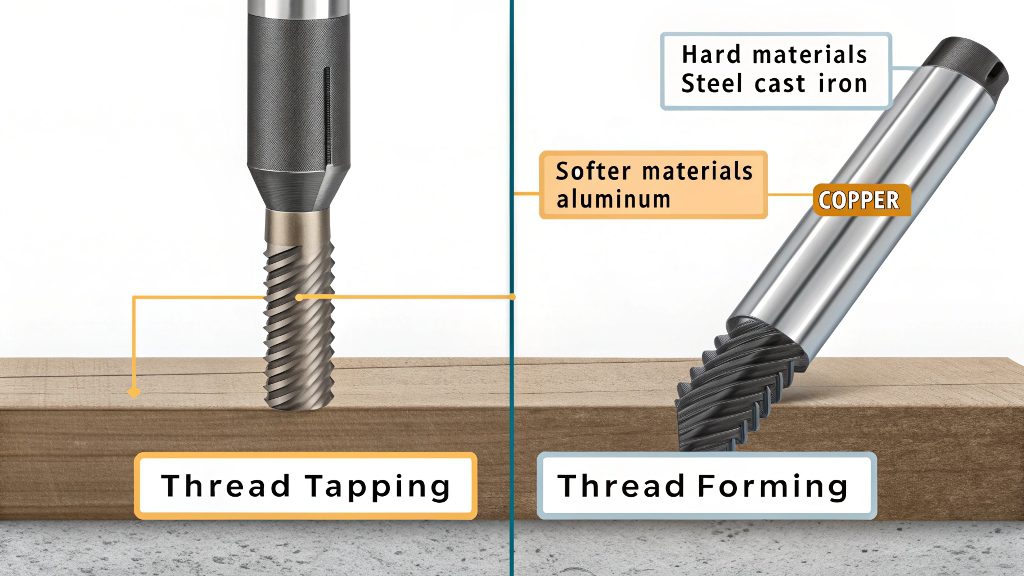
The choice between cutting and forming threads is critical for the part's final performance. Thread tapping, or cutting, is the most common method. The tool has sharp edges that carve out the thread profile, and the waste material comes out as chips. This works for almost any material, including hard steel and cast iron.
Thread forming is different. The tool, often called a roll tap, doesn't have cutting edges. Instead, it has lobes that press into the material and push it into the shape of a thread. Because it displaces the metal instead of cutting it, the material's grain structure is compacted, making the threads up to 20% stronger. A huge benefit is that it creates no chips, which is perfect for blind holes or for parts used in clean environments like electronics or medical devices. However, thread forming only works with soft, ductile materials like aluminum, copper, and some mild steels.
| Feature | Thread Tapping (Cutting) | Thread Forming (Rolling) |
|---|---|---|
| Process | Material Removal | Material Displacement |
| Chips Created | Yes | No |
| Resulting Strength | Standard | Stronger |
| Material Suitability | Most machinable materials | Only ductile/soft materials |
| Best For | General use, brittle materials | High strength, clean environments |
What is thread milling?
Sometimes, tapping isn't the right answer, especially for large, custom, or difficult threads. Relying only on tapping can limit your designs and lead to very costly mistakes.
Thread milling is a CNC machining process that uses a rotating cutter to create threads. The tool moves in a controlled helical path, cutting the thread profile with multiple passes. This gives you amazing control over the final thread.
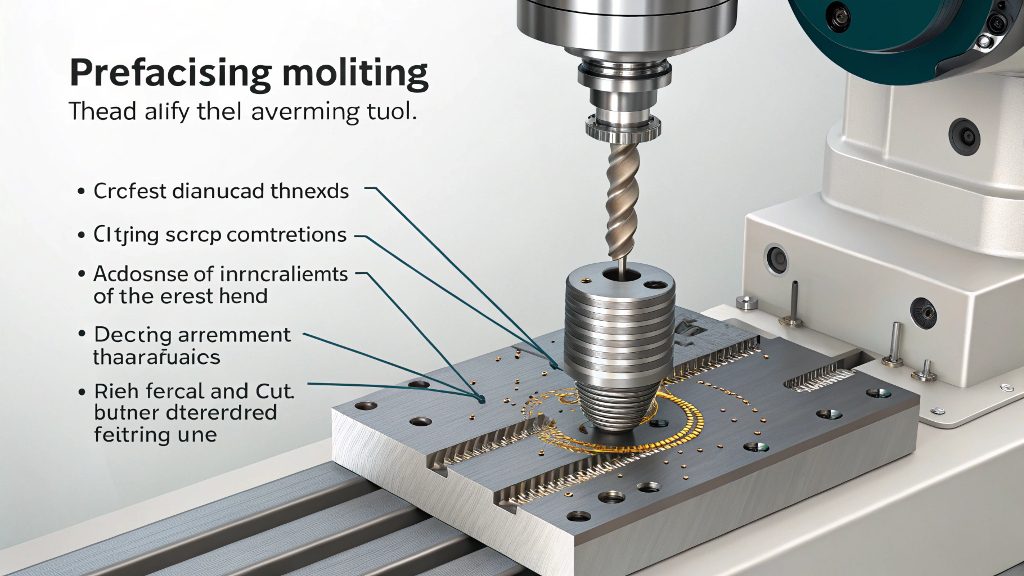
Thread milling is a more advanced technique that offers solutions where tapping falls short. The process requires a CNC machine that can move the cutting tool in a perfect circle while also moving it up or down. We call this "helical interpolation." Based on my experience, this method has several huge advantages. First, it offers incredible precision. I can adjust the thread diameter by tiny amounts in the program to get a perfect fit. Second, it's very flexible. I can use the same tool to cut different thread diameters as long as the pitch is the same. It can also cut both right-hand and left-hand threads.
A key point for me is safety and cost-saving. A thread mill cutter is always smaller than the hole. If it breaks, which is rare, it just falls out. It doesn't get stuck and ruin the part like a broken tap does. This is a huge relief when working on an expensive component. Finally, thread mills are very strong and rigid, making them ideal for cutting threads in very hard materials like titanium or hardened steel, where a tap would likely fail. The trade-off is that it's slower than tapping for simple, small holes.
What is the difference between CNC milling and manual milling?
You need a part milled, but does it matter if it's done by "manual" or "CNC" milling? Not understanding this difference could mean you get inconsistent parts or pay too much.
The biggest difference between them is control. Manual milling depends on a skilled operator turning cranks to guide the tool. CNC (Computer Numerical Control) milling uses a computer program to automate the tool's movements, delivering incredible precision and repeatability.
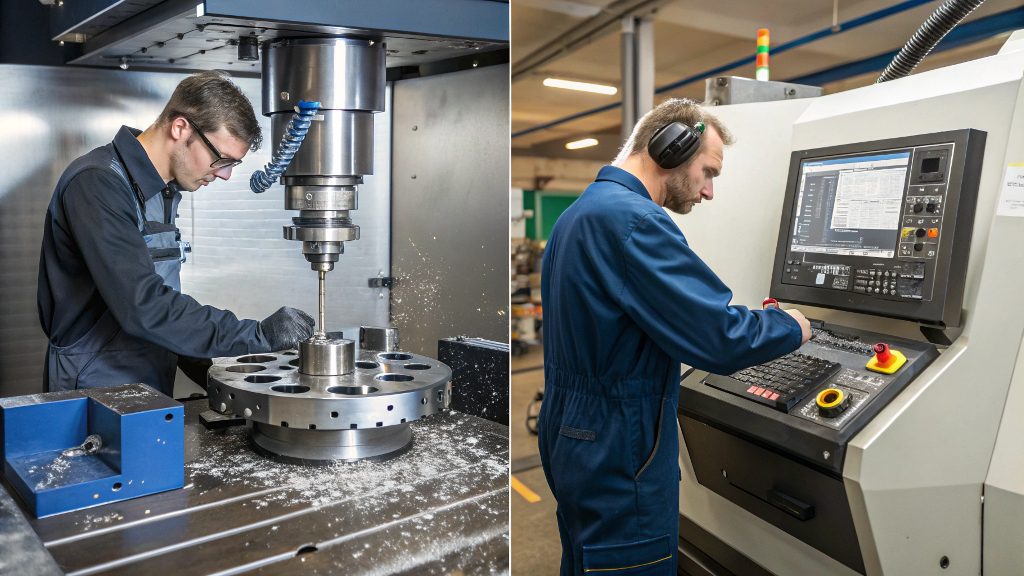
Think of it like this: manual milling is like drawing by hand, while CNC milling is like printing from a computer file. In my workshop, we have both, and they are used for very different jobs. A manual mill is great for simple, one-off jobs or quick repairs. An operator uses their skill and experience to position the part and cut it. It’s fast to set up for a single task.
However, for anything complex, precise, or for producing more than one part, CNC is the only way to go. We write a program that tells the machine exactly where to move, how fast to go, and how deep to cut. Once the program is proven, every single part comes out identical. This is critical for clients like Mark who need consistent quality for their products. Processes like thread millingare only possible on a CNC machine because of the complex helical motion required. At Worthy Hardware, our investment in advanced CNC technology ensures we deliver the highest precision and reliability for every order.
Conclusion
Tapping is fast for standard threads, while thread milling offers precision and flexibility for complex jobs. Choosing the right one ensures top quality, saves money, and gets your project done right.