
What Are The Different Types Of Black Anodizing And How To Choose The Right One?

Choosing the wrong black finish can ruin your expensive custom parts. You worry about appearance, durability, and cost. I will help you understand the options to make the right choice.
To choose the right black anodizing, you must match the type to your part's application. The most common options are Type II for cosmetic looks and general protection, and Type III (hardcoat) for extreme durability and wear resistance. Your choice depends on your budget and performance needs.
This is just a quick overview. The details are very important. Many of my clients, especially new ones, are not sure which black finish to specify on their drawings. They ask me which one is best, and the answer is always, "It depends on what you need the part to do." Let's look closer at the options so you can choose with confidence. This knowledge will save you time and money and ensure your final product is perfect.
What is black anodising?
You hear the term "black anodizing" but may not know what it means. This makes it hard to specify your finish. I will explain the simple process behind it.
Black anodizing is an electrochemical process. We use it to create a strong, black, corrosion-resistant layer on the surface of aluminum parts. This is not paint; the coating is part of the aluminum itself. This integration makes it very tough and long-lasting.
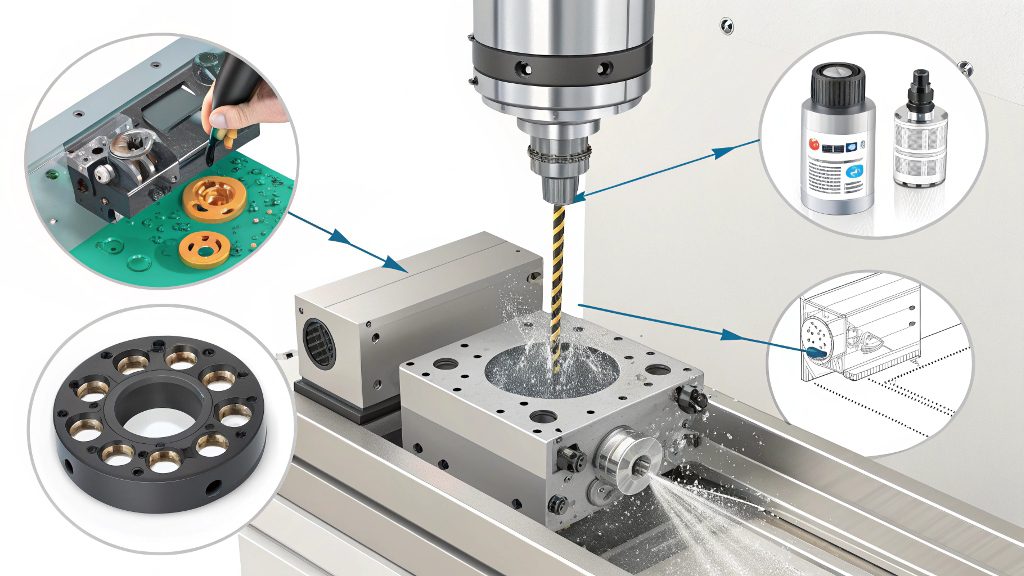
At my company, Worthy Hardware, we handle this process carefully for clients all over the world. The process involves a few key steps. First, we have to perfectly clean the CNC machined part. Any dirt or oil will ruin the finish. Next, the part goes into a special acid bath. We pass an electric current through it. This current opens up millions of tiny, deep pores on the surface of the aluminum. After that, we immerse the part in a high-quality black dye. The dye flows into all the open pores, giving the part its deep black color. The final step is crucial: sealing. We seal the pores, which locks in the dye and creates a final surface that is hard and resistant to corrosion. This process ensures the finish doesn't chip or flake like paint.
What are the three types of anodizing?
You know about anodizing, but the different "Types" are confusing. You worry you might pick one that fails. Let's clarify the three main types so you can choose wisely.
The three main types of anodizing are Type I (Chromic Acid Anodize), Type II (Sulfuric Acid Anodize), and Type III (Hardcoat Anodize). Type II is most common for adding color, like black. Type III is for extreme durability and wear resistance.


Each type serves a different purpose, and choosing the right one is critical for your part's success. As a manufacturer, I always ask my clients about their part's final use case before we begin. A client in Canada making consumer electronics needs a different finish than a client in Australia making automotive racing parts. Here is a simple breakdown:
| Anodizing Type | Common Name | Key Features | Best For |
|---|---|---|---|
| Type I | Chromic Acid Anodize | Creates the thinnest layer. Good corrosion resistance. Ideal for parts with very tight tolerances. | Aerospace, bonded parts, and complex shapes that might trap acid. |
| Type II | Sulfuric Acid Anodize | The most common type. Excellent for dyeing colors like black. Offers good durability and corrosion resistance. | Most custom CNC parts, consumer products, architectural parts, electronics. |
| Type III | Hardcoat Anodize | Creates the thickest, hardest layer. Superior wear and abrasion resistance. | High-wear industrial machinery, military equipment, pistons, robotics parts. |
When people talk about "regular black anodizing" or "matte black anodizing," they are almost always referring to Type II. When they need maximum toughness and specify "black hardcoat," they mean Type III.
What is type 3 anodized?
Your parts need to survive harsh conditions. You are afraid a standard finish will scratch or wear off too easily. Type III hardcoat is the solution for maximum protection.
Type III anodized, also known as hardcoat anodizing, creates an extremely thick, hard, and dense ceramic-like layer on an aluminum part. It is much more wear-resistant than standard Type II anodizing and is used for parts that need maximum durability and protection.
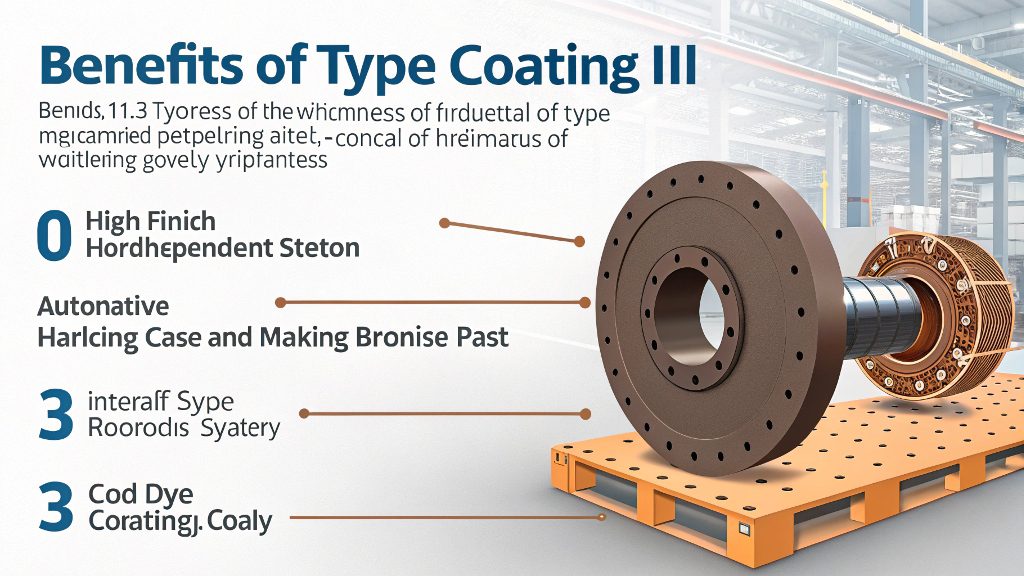
I often recommend Type III to my customers in the industrial, automotive, and robotics sectors. The benefits are clear when performance is more important than anything else. The hardness of a Type III finish is very high, often compared to case-hardened steel. This makes it perfect for moving parts that rub against each other or components exposed to abrasive environments. Another key factor is its thickness. The hardcoat layer is much thicker than a Type II layer, often 0.002" (50 microns) or more. As a precision machine shop, we must plan for this. We machine the part slightly undersized so that after the thick hardcoat is applied, the final dimensions are perfectly within your drawing's tolerances. This is a detail that inexperienced suppliers often miss, causing major problems. The natural color of a Type III coat is dark gray or bronze, so dyeing it black results in a functional, durable black, not a purely decorative one.
What is the difference between black oxide and black anodizing?
You see "black oxide" and "black anodizing" and might think they are the same. This common confusion can lead to costly mistakes. I will explain the key differences.
Black anodizing is an electrochemical process only for aluminum that builds a durable, integrated oxide layer. Black oxide is a chemical conversion coating, mostly for steel parts, that forms a very thin black iron oxide layer on the surface for minimal corrosion protection.
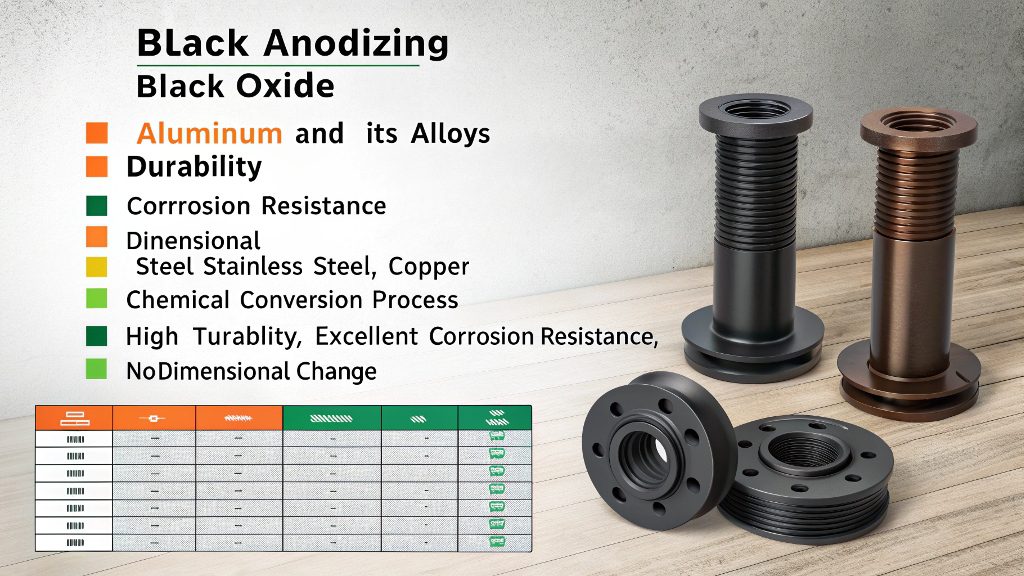
This is one of the most frequent points of clarification I have with new customers. They send a drawing for an aluminum part and ask for a "black oxide finish." I then have to explain that this is not possible and that they mean "black anodizing." Understanding the difference is vital. Black oxide is a simple, low-cost process for steel that offers mild corrosion resistance, but it can be rubbed off and often requires an oil coating to prevent rust. It adds almost no thickness to the part. Black anodizing, on the other hand, is a much more robust process for aluminum. It provides excellent corrosion and wear resistance. Here is a direct comparison:
| Feature | Black Anodizing | Black Oxide |
|---|---|---|
| Material | Aluminum and its alloys | Steel, Stainless Steel, Copper |
| Process | Electrochemical | Chemical Conversion |
| Durability | High (especially Type III) | Low |
| Corrosion Resistance | Excellent | Fair (needs oil) |
| Dimensional Change | Noticeable (must be planned for) | Minimal to none |
Choosing the wrong one means getting a finish that will fail or simply cannot be applied to your material. Clear communication with your supplier is key.
Conclusion
Choosing the right black finish means matching the type to your needs. Use Type II for great looks and general use, and Type III for maximum durability on your aluminum parts.