
What Are The 7 Most Commonly Used Metals In Precision CNC Machining?

Choosing the right material for your project can be confusing. A bad choice leads to part failure and wasted money. Understanding the most common metals is the first step to success.
The seven most commonly used metals in precision CNC machining are aluminum, stainless steel, brass, titanium, alloy steel, cast iron, and magnesium. Each metal offers a unique combination of properties like strength, weight, corrosion resistance, and cost, making them suitable for different applications.
At my company, Worthy Hardware, we handle these metals every single day. I've seen how picking the perfect one can make or break a project. It’s not just about what the part does, but also about how easily it can be made and how much it will cost. Getting this right from the start saves you time and headaches later. Let's look deeper into what makes each metal special, so you can make a better choice for your next part.
Why is Aluminum the go-to metal for many CNC projects?
You need a part that is lightweight but are worried it won't be strong enough. This can lead to heavy, inefficient designs. Aluminum provides an amazing balance of weight and strength.
Aluminum is popular for CNC machining because it is lightweight, strong for its weight, highly machinable, and naturally resists rust. This makes it a great choice for aerospace, automotive, and consumer product parts, giving you excellent performance without a high price tag.
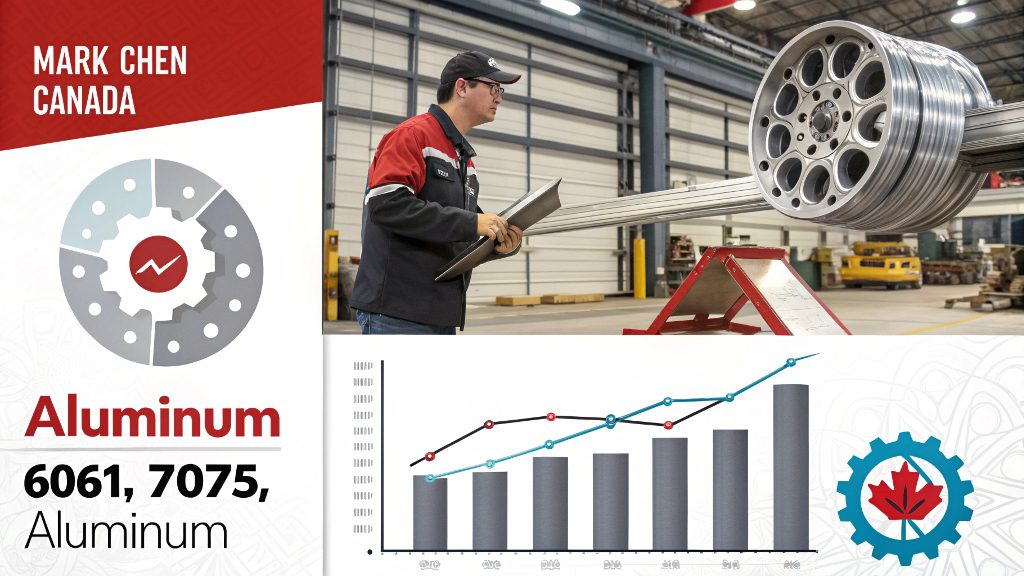
When customers like Mark Chen from Canada come to us, they often start with aluminum. It’s a fantastic all-around performer. The best part about it is its high strength-to-weight ratio. You get a part that is strong without being heavy, which is critical in industries like automotive and aerospace where weight reduction saves fuel. It's also very easy for our CNC machines to cut, which means we can produce parts faster and at a lower cost for our customers. This high machinability translates directly into savings. We work with several types, but two are most common.
Common Aluminum Alloys
| Alloy | Key Properties | Common Uses |
|---|---|---|
| Aluminum 6061 | Good strength, highly corrosion-resistant, easy to weld. Our most popular choice. | Bicycle frames, electronic enclosures, structural components. |
| Aluminum 7075 | Extremely high strength, harder than 6061, good fatigue strength. | High-stress aerospace parts, high-performance sports gear. |
Aluminum also has great thermal and electrical conductivity. This makes it perfect for things like computer heat sinks or electrical connectors. Its natural protective oxide layer means it won't rust easily, which is a big plus for parts exposed to the elements.
When should you choose Stainless Steel for your machined parts?
Your parts need to survive harsh conditions without rusting or wearing out. Using a cheap metal can lead to quick failure and damage your reputation. Stainless steel gives you the durability you need.
You should choose stainless steel when your parts need great strength, excellent rust resistance, and the ability to handle high temperatures. It is perfect for medical tools, food equipment, and boat parts where cleanliness and durability are the top priorities.
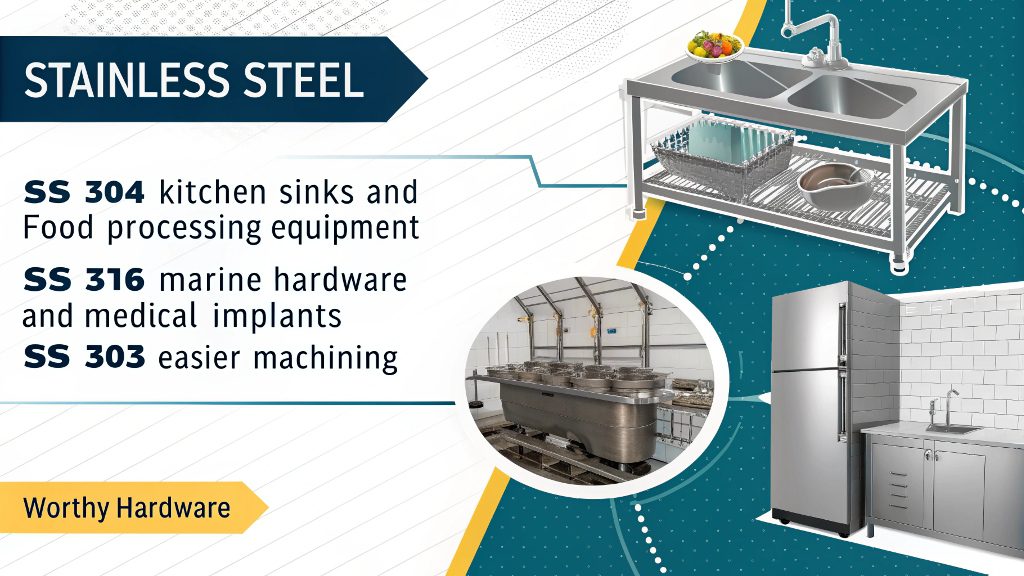
Stainless steel is the hero material for tough environments. Its name comes from its ability to resist corrosion and staining, thanks to the chromium mixed into the alloy. At Worthy Hardware, we often recommend it for medical and food-grade applications because it's easy to sterilize and won't react with food or chemicals. While it is harder to machine than aluminum, which makes it a bit more expensive, its long-term performance is unbeatable in certain situations. The peace of mind you get from knowing your part won't fail from corrosion is often worth the extra cost.
Popular Stainless Steel Grades
| Grade | Key Properties | Best For |
|---|---|---|
| SS 304 | Excellent corrosion resistance, good formability. The workhorse of stainless steels. | Kitchen sinks, food processing equipment, pipes. |
| SS 316 | Superior corrosion resistance, especially against chlorides and salts. | Marine hardware, chemical containers, medical implants. |
| SS 303 | Easier to machine than 304. "Free-machining" grade. | Nuts, bolts, shafts, gears. |
The key is to match the grade to the job. For a customer making parts for a boat, I would always suggest 316 stainless steel. For general-purpose parts that need to stay clean and rust-free, 304 is a fantastic and cost-effective choice.
What makes Brass and Titanium unique choices for precision machining?
Sometimes, you need a material for a very specific and demanding job. Standard metals might not work, causing your high-tech product to fail. Brass and titanium offer special properties for these unique needs.
Brass is valued for being easy to machine, having low friction, and resisting corrosion, making it perfect for plumbing fittings and electrical parts. Titanium is used for its incredible strength, light weight, and safety for the human body, making it essential for aerospace parts and medical implants.
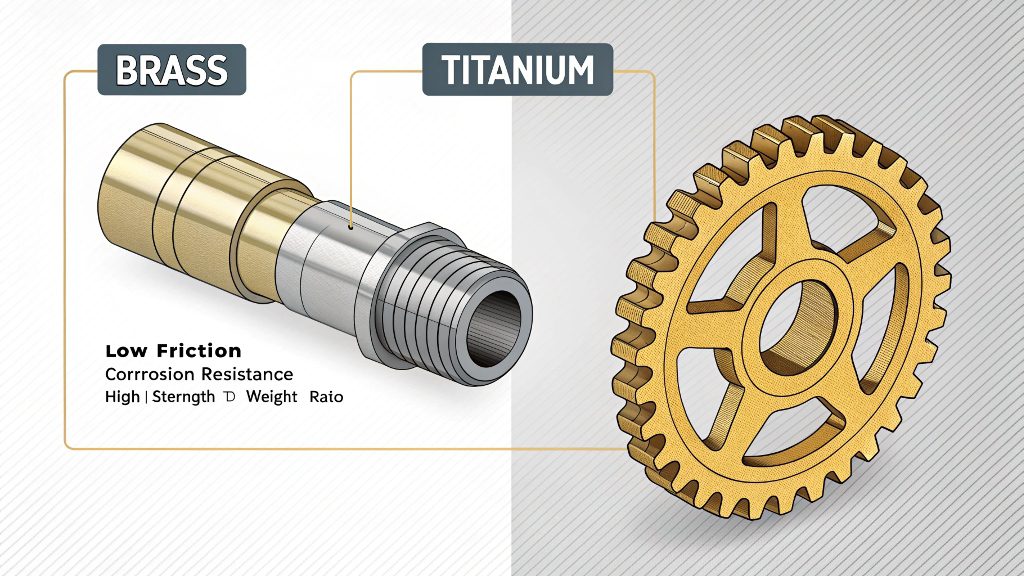
Brass and titanium are what I call "specialist" metals. They aren't used as widely as aluminum or steel, but for certain jobs, nothing else will do. They solve problems that other metals can't.
The Case for Brass
Brass is an alloy of copper and zinc. Its most famous property is its extremely low friction. This is why it's used for bearings, bushings, and gears where parts slide against each other. It won't create sparks when struck against another metal, making it safe for use around explosive gases. We machine a lot of brass for plumbing and electrical applications because it’s corrosion-resistant and a good electrical conductor. Plus, its beautiful gold-like appearance makes it a favorite for decorative hardware. It's one of the easiest metals to machine, which helps keep production costs down.
The Power of Titanium
Titanium is a superstar metal. It has the highest strength-to-weight ratio of any common metal. It's as strong as many steels but nearly half the weight. It's also incredibly corrosion-resistant and biocompatible, meaning it's not harmful to the human body. This is why it's the top choice for medical implants like hip joints and dental fixtures. The aerospace industry also depends on it for parts like jet engine components and aircraft frames. The downside? Titanium is very tough and expensive to machine, but for applications where you need extreme performance and failure is not an option, there is no substitute.
Are Alloy Steel, Cast Iron, and Magnesium also good options?
Are you looking for a material with extreme hardness or one that is incredibly light? The most common metals might not be enough, which limits your design. These other metals can solve very specific engineering challenges.
Yes, they are great options for specific jobs. Alloy steel gives you amazing toughness for tools and gears. Cast iron is great at absorbing vibrations in heavy machine bases. Magnesium is the lightest of all structural metals, perfect when every single gram matters.
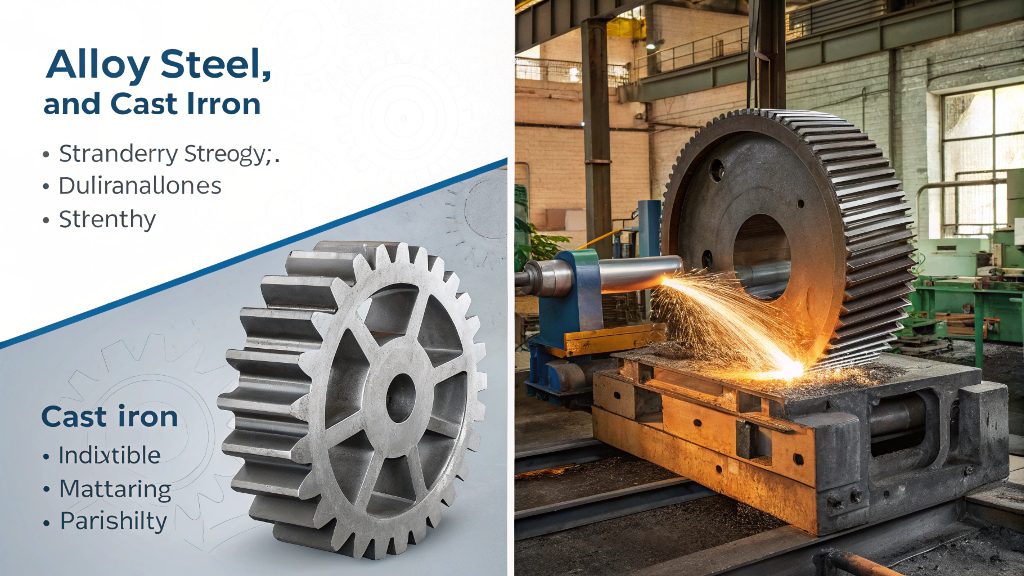
Beyond the more common metals, we also work with other fantastic materials that have very specific uses. As an engineer, I get excited when a project requires one of these because it usually means we are building something truly specialized.
The Strength of Alloy Steel
Plain carbon steel is strong, but when you add other elements like chromium, nickel, or molybdenum, you create alloy steel. These additions can dramatically increase hardness, toughness, and wear resistance. We use alloy steels to make parts that have to endure a lot of stress and wear, such as industrial tools, dies, shafts, and high-performance automotive gears. They are built to be tough and to last a long time under heavy use.
The Stability of Cast Iron
Cast iron is an iron alloy with a high carbon content. It's heavy and brittle, so you wouldn't use it for an airplane. So, what is it good for? It is absolutely fantastic at damping, or absorbing, vibrations. This is why the base of most heavy industrial machines, including our own CNC machines, is made from cast iron. It provides a solid, stable foundation that doesn't shake. It also has great compressive strength, meaning it can handle very heavy loads pushing down on it.
The Lightness of Magnesium
If you thought aluminum was light, meet magnesium. It is the lightest of all structural metals, about 30% lighter than aluminum. For applications where reducing weight is the number one goal, magnesium is the champion. You'll find it in high-end automotive parts, electronics casings like laptops and cameras, and aerospace components. It requires careful handling during machining because it can be flammable, but for the ultimate in weight savings, it's an amazing material.
Conclusion
Choosing the right metal is key to your CNC project's success. From aluminum to alloy steel, each offers unique benefits. Contact us at Worthy Hardware to find the perfect material for your parts.