
How to Select Between Tungsten and Its Alloys for Custom CNC Parts?
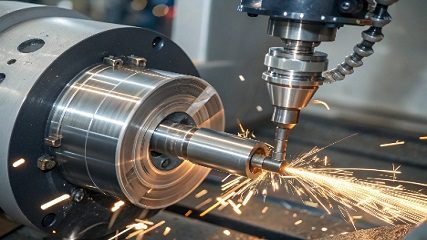
Struggling to choose the right super-hard material for your project? The choice between pure tungsten and its alloys can be confusing, leaving your part's performance and budget at risk.
Pure tungsten is chosen for its extreme heat resistance and density, while its alloys, like tungsten carbide, are selected for enhanced machinability, hardness, and toughness. Your specific application—whether it needs to be heavy, wear-resistant, or withstand high temperatures—will determine the best choice for your custom part.
Choosing the right material is one of the most critical decisions you'll make. I've seen projects succeed or fail based on this single choice. It's not just about the raw material cost; it's about the cost of machining, the tool life, and whether the final part will even work as intended. A bad choice here can cause a ripple effect of problems. Let's break down the key factors so you can make an informed decision for your next CNC project and avoid these costly mistakes.
Can Tungsten Be CNC Machined?
Think tungsten is too hard to machine? You might worry about breaking expensive tools or shattering a costly piece of material, bringing your entire project to a halt.
Yes, pure tungsten can be CNC machined, but it is extremely difficult. Its hardness and brittleness require specialized diamond tooling (PCD), very slow speeds, shallow cuts, and a rigid machine setup. It's a challenging process reserved for parts where pure tungsten's unique properties are absolutely essential.
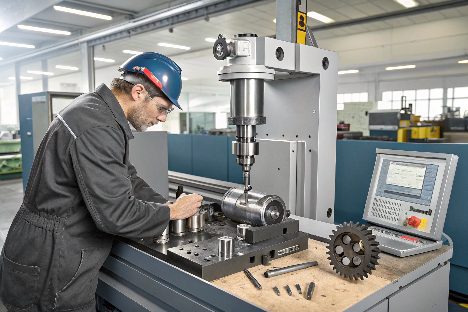
In my years of running a machine shop, I've learned that "difficult" doesn't mean "impossible." Machining pure tungsten is a perfect example. The main problem is its combination of extreme hardness and brittleness at room temperature. If you try to machine it like steel, the tool will wear out almost instantly, or worse, the tungsten itself will fracture.
To succeed, you need to change your approach completely.
The Right Setup for Machining Tungsten
First, the machine must be incredibly rigid to prevent any vibration, which can be fatal to the part or the tool. Second, the tooling is non-negotiable. You can't use standard carbide; you need Polycrystalline Diamond (PCD) tools. They are one of the few materials hard enough to cut tungsten effectively. Finally, the cutting parameters are key. Everything has to be slow and steady.
Here’s a quick look at the conditions:
| Parameter | Guideline for Pure Tungsten | Reason |
|---|---|---|
| Cutting Speed | Very Low | To minimize heat generation and tool pressure. |
| Depth of Cut | Very Shallow | To avoid chipping the brittle material. |
| Feed Rate | Very Slow | Ensures a controlled cut and prevents tool breakage. |
| Coolant | Flood/High-Pressure | Essential to manage heat and clear tiny chips away. |
Because of these challenges, we usually machine tungsten alloys instead of pure tungsten. The alloys are engineered to be tougher and less brittle, making them far more practical for most applications.
How Do Machining Parameters for Tungsten Alloys Differ From Softer Metals?
Using the same machine settings for every metal is a recipe for disaster. This can lead to broken tools, ruined parts, and wasted money, especially when dealing with hard materials.
Machining tungsten alloys requires much slower speeds and smaller cuts compared to soft metals like aluminum. To manage the extreme heat and pressure, you must use low cutting speeds and shallow depths of cut. This is the opposite of machining aluminum, where you can run fast and deep.
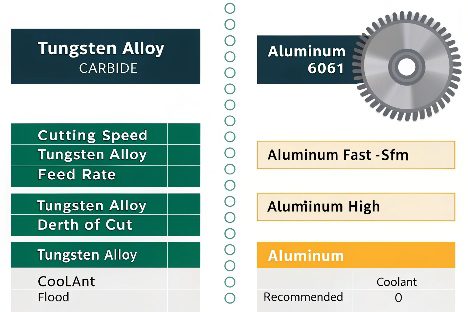
The difference in machining parameters comes down to the material's basic properties. When a tool cuts a soft metal like aluminum, it shears away material easily. With a hard tungsten alloy, the tool is under immense pressure and generates a lot of friction and heat in a very small area. If you run it too fast, the cutting edge of your tool will fail almost instantly.
In my shop, when we switch from an aluminum job to a tungsten carbide job, it's like going from a speedboat to a cargo ship. Everything slows down and becomes more deliberate. The goal isn't speed; it's control and precision.
A Tale of Two Metals
Let’s compare the general approach for these two very different materials.
| Parameter | Tungsten Alloy (e.g., Carbide) | Aluminum (e.g., 6061) |
|---|---|---|
| Cutting Speed | Slow (e.g., 50-150 SFM) | Fast (e.g., 800-2000+ SFM) |
| Feed Rate | Low | High |
| Depth of Cut | Shallow | Deep |
| Coolant | Flood coolant is critical | Recommended, mist is often enough |
The reason for this huge difference is simple. For tungsten alloys, your main enemy is heat and pressure. Slow speeds and light cuts keep these forces manageable. For aluminum, the material is so soft that heat is less of a concern. The main challenge is actually chip evacuation—getting the cut material out of the way so it doesn't melt and stick to the tool. That’s why you can run so much faster. Understanding this fundamental difference is key to successfully machining either material.
What Is the Best Tungsten Alloy for Machined Parts?
With so many tungsten alloys available, how do you pick the right one? Making the wrong choice can mean your part fails in the field or you overpaid for properties you didn't need.
The "best" alloy depends entirely on your application. For extreme wear resistance, choose tungsten carbide (WC-Co). For high density with better machinability, choose a tungsten heavy alloy (W-Ni-Fe). For heat sinks or electrical contacts, a tungsten-copper (W-Cu) alloy is ideal.
I often get drawings from clients who specify "tungsten," but we need to dig deeper. What does the part do? The answer tells us which alloy to use. Pure tungsten is rarely the answer for a machined part. Instead, we turn to its alloys, which are designed for performance in specific areas.
The most common family of alloys we work with is tungsten carbide, which is sometimes called "tungsten steel" in our industry in China. These are not actually steel but a composite material made of hard tungsten carbide particles held together in a softer cobalt binder. The amount of cobalt is what changes the alloy's properties.
Choosing a Tungsten Carbide Grade
Based on my experience, the choice comes down to a trade-off between hardness and toughness.
- More Cobalt (Co) = More Toughness: The alloy is less likely to chip or crack under impact.
- Less Cobalt (Co) = More Hardness: The alloy is more resistant to wear and abrasion.
Here are some common grades we use at Worthy Hardware and what they're good for:
| Grade Family | Key Property | Typical Applications |
|---|---|---|
| YG8, YG10 | High Hardness, Good Wear Resistance | Used to make cutting tools, wear-resistant nozzles, and guide rails. |
| YG15, YG20 | High Toughness, Good Impact Resistance | Used for stamping dies and molds, where the part must withstand repeated impacts without fracturing. |
When a client needs a part for a high-impact stamping operation, I'll recommend a grade like YG20. If they need a part that has to resist abrasive wear, like a cutting tool, a harder grade like YG8 is the clear choice.
What Is the Most Commonly Used Tool Material for CNC Machining?
Choosing the right cutting tool feels complicated. If you pick the wrong one, it will wear out quickly or break, costing you both time and money on your CNC project.
The two most common tool materials are High-Speed Steel (HSS) and Tungsten Carbide. HSS is affordable and tough, making it great for general-purpose drilling and milling. Carbide is much harder, keeps its edge at high temperatures, and is the standard for modern high-performance machining.
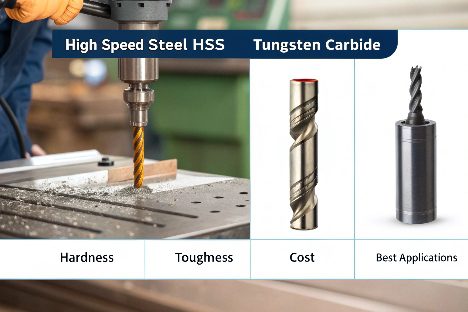
Think of tool materials as a spectrum. On one end, you have affordability and toughness. On the other, you have hardness and heat resistance. For decades, HSS was the king of the machine shop. It's strong and less likely to shatter if the machine chatters or if the setup isn't perfect, which makes it forgiving for manual machining or simple jobs.
However, as CNC machines got faster and more powerful, HSS couldn't keep up. The heat generated by high cutting speeds would soften its cutting edge. This is where tungsten carbide took over. It stays hard even when red-hot, allowing machines to run much faster and longer. This dramatically increases productivity, making carbide the workhorse of most modern CNC shops, including mine.
Comparing the Workhorses
Here is a simple breakdown to help you understand where each material shines.
| Tool Material | Hardness | Toughness | Cost | Best For |
|---|---|---|---|---|
| High-Speed Steel (HSS) | Good | Excellent | Low | Drilling, tapping, jobs on manual machines or less rigid setups. |
| Tungsten Carbide | Excellent | Good | Medium | High-speed milling, production runs, machining hard materials. |
| PCD / CBN | Extreme | Fair | Very High | Machining very hard or abrasive materials like tungsten or ceramics. |
Today, most of the work we do at Worthy Hardware relies on solid carbide tooling. It offers the best balance of performance and tool life for machining everything from aluminum to stainless steel. But we still keep HSS tools around for specific tasks like drilling, where their toughness is a real advantage.
Conclusion
Selecting the right tungsten material is crucial. Choose pure tungsten for heat resistance, but use its alloys like carbide for hardness and toughness, which are much easier to machine.
If you have a project that requires the unique properties of tungsten or its alloys, my team and I can help. At Worthy Hardware, we have the experience to machine these challenging materials to tight tolerances. Contact me at [email protected] or visit www.worthyhardware.com to get a quote.