
What Types of Tungsten Alloys and Their Applications Are There?
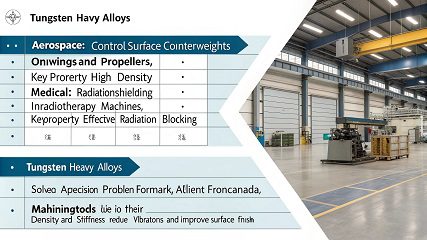
Struggling to find a material with extreme density and strength? Choosing the wrong one leads to project failure. Tungsten alloys offer a powerful and versatile solution for demanding industrial needs.
The main types of tungsten alloys include tungsten-nickel-iron, tungsten-nickel-copper, and tungsten carbide. These are used for their high density, strength, and heat resistance in industries like aerospace, medical, automotive, and tool manufacturing, from counterweights and radiation shielding to cutting tools and military hardware.
In my years of running a CNC machining business, I've seen how choosing the right material can make or break a project. Tungsten, in particular, is a fascinating metal with properties that are perfect for very specific, high-performance jobs. But pure tungsten isn't always the answer. That's why we have tungsten alloys, which enhance its natural abilities and make it easier to work with. Let’s look into what these alloys are and how they are used across different industries.
What type of alloy is tungsten?
Confused about what makes tungsten an alloy? This misunderstanding can lead to selecting the wrong material for your critical parts, causing costly errors and performance issues down the line.
A tungsten alloy is a metal mixture where tungsten is the main component. It's combined with other elements like nickel, iron, copper, or cobalt. This process enhances properties like ductility and machinability, which are poor in pure tungsten, making it suitable for a wider range of applications.

Pure tungsten is incredibly strong and has a very high melting point, but it's also very brittle and difficult to machine. At Worthy, we often get requests for tungsten parts, and the first thing my engineers and I clarify is whether they need pure tungsten or a tungsten alloy. Alloying is the process of mixing metals to create a new material with improved characteristics. For tungsten, we add other metals to make it less brittle and easier to shape. The most common types are tungsten heavy alloys (WHAs), where tungsten powder is mixed with elements like nickel, iron, or copper and then sintered. This creates a material that keeps tungsten’s high density but is much more machinable and tough.
| Alloying Element(s) | Primary Purpose | Common Name |
|---|---|---|
| Nickel (Ni) & Iron (Fe) | Improves ductility and strength | Tungsten-Nickel-Iron Alloy |
| Nickel (Ni) & Copper (Cu) | Non-magnetic, good conductivity | Tungsten-Nickel-Copper Alloy |
| Carbon (C) | Creates extreme hardness | Tungsten Carbide |
What are the different forms of tungsten?
You know about tungsten alloys, but do you know their physical forms? Ordering the wrong stock form can halt your production line before it even starts, wasting time and money.
Tungsten and its alloys come in several standard forms. These include powders, rods, bars, plates, sheets, and wires. These forms serve as the raw material for manufacturing components through processes like sintering, forging, and CNC machining, allowing for the creation of complex parts.
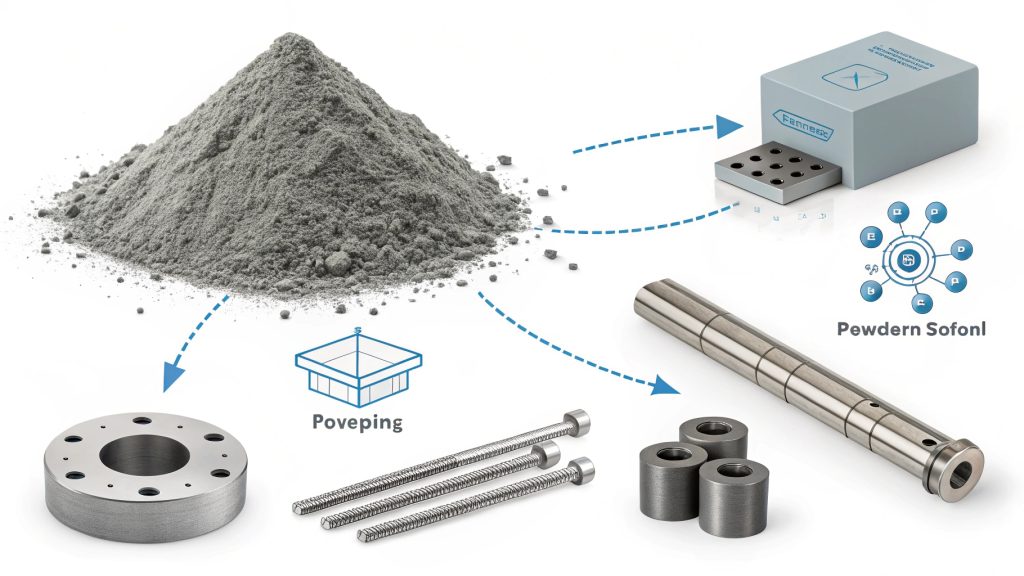
The journey of a custom part begins with the right raw material form. At my facility, we handle tungsten in various shapes to meet customer design requirements. For example, tungsten powder is the base for creating sintered tungsten heavy alloy blocks. From these blocks, we machine precise components. Rods and bars are very common and are what we typically use for CNC turning and milling projects, like creating shafts, electrodes, or counterweights.
I remember a project for a client in the aerospace sector where we machined a complex balancing component from a solid tungsten alloy bar with a diameter of 10 inches. Plates and sheets are used for applications like radiation shielding in medical equipment or high-temperature furnace parts. Wires, famously, were used for light bulb filaments, but today they are still critical for heating elements and specialized welding electrodes.
| Form | Common Use Case | Machining Process |
|---|---|---|
| Powder | Creating sintered alloy blocks | Sintering, Pressing |
| Rods / Bars | Counterweights, tool holders, darts | CNC Turning, Milling |
| Plates / Sheets | Radiation shielding, heat shields | CNC Routing, Waterjet Cutting |
| Wire | Heating elements, welding electrodes | Drawing, Spooling |
What are the applications of tungsten metal?
Wondering where pure or nearly pure tungsten is actually used? Its unique properties are powerful but are often applied in very specific niches that take full advantage of its characteristics.
Pure tungsten is valued for its extremely high melting point (3422°C or 6192°F). Its main applications are in high-temperature environments, such as filaments in lighting, electrodes for TIG welding, electrical contacts, and heating elements in industrial furnaces where other metals would melt.
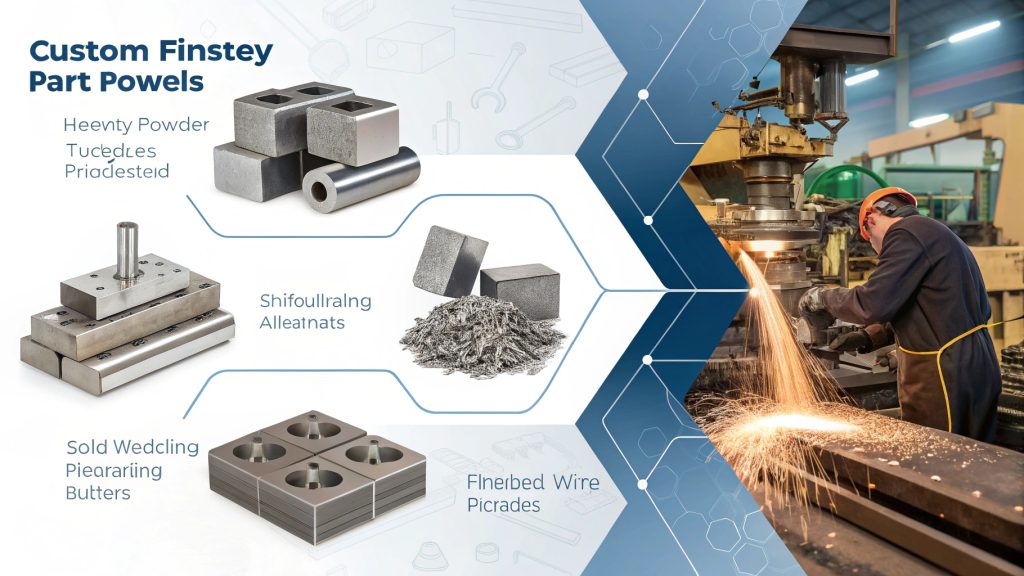
When a customer needs a part to survive extreme heat, pure tungsten is often the first material we consider. Its resistance to high temperatures is unmatched by almost any other metal. The most famous use is the filament in old-style incandescent light bulbs, which had to glow white-hot without vaporizing. While these bulbs are less common now, tungsten’s role in high-temperature applications continues.
In my business, we see a lot of demand for tungsten electrodes used in Tungsten Inert Gas (TIG) welding. The electrode creates the electrical arc to melt the workpiece but does not get consumed in the process. We also machine tungsten parts for high-temperature vacuum furnaces, where they serve as heating elements and heat shields. Its ability to resist electrical arcing also makes it a great material for high-voltage electrical contacts and emitters in electronic devices.
What are the applications of tungsten heavy alloy?
Do you need extreme density but find pure tungsten too brittle and difficult to machine? Using the wrong material will lead to poor performance, part failure, and unnecessary expenses for your project.
Tungsten heavy alloys (WHAs) combine high density with good strength and machinability. Key applications include counterweights in aerospace, crankshaft balancing in performance automotive, radiation shielding in medical devices, vibration-damping tool holders, and kinetic energy penetrators for the military.

Tungsten heavy alloysare the perfect solution when you need a lot of weight in a very small space. We recently worked with a client, Mark from Canada, who needed precise counterweights for a new robotics system. The design had very limited space, and lead was not an option. We machined WHA parts that met his tight +/- 0.001" tolerance and density needs perfectly. This is a common story. In aerospace, these alloys balance control surfaces on wings and propellers. In medicine, their ability to block radiation more effectively than lead makes them ideal for collimators in radiotherapy machines, focusing radiation beams with pinpoint accuracy. In the machining world itself, we use boring bars made of tungsten alloy. Their density and stiffness absorb vibration, which allows us to create parts with a much smoother surface finish.
| Industry | Application | Key Property |
|---|---|---|
| Aerospace | Control surface counterweights | High Density |
| Medical | Radiation shielding, collimators | High Density, Non-toxic |
| Automotive | Crankshaft and wheel balancing | High Density |
| Manufacturing | Vibration-damping boring bars | High Density, Stiffness |
| Military | Kinetic energy penetrators | High Density, Hardness |
Conclusion
Tungsten and its alloys provide unique solutions for high-performance needs, offering unmatched density, heat resistance, and strength that are essential in many modern industries from aerospace to medicine.
At Worthy, we specialize in bringing these advanced material designs to life. If you need custom CNC machined parts from tungsten or any of over 100 other materials, my team and I are here to help. We provide 100% inspection and can achieve tolerances as tight as +/- 0.001". Contact me, Sandra Gao, at [email protected] or visit www.worthyhardware.com to get a quote for your project.