
Is Titanium Worth The Higher Cost For Your Manufacturing Project?
Struggling to choose the right material? You know titanium is superior, but its high price makes you hesitate. Is it a smart investment or just an expensive mistake?
Yes, titanium is often worth the higher cost for the right project. Its exceptional strength-to-weight ratio, incredible corrosion resistance, and biocompatibility provide long-term value that frequently outweighs the initial expense, especially in high-performance applications where failure is not an option.
So, you see the potential benefits, but that upfront cost is still a major hurdle to get over. It's easy to look at the price tag and immediately think a cheaper metal is the better business decision. But the true cost of a material isn't just what you pay for it today. To really understand its value, we need to look at the bigger picture, from manufacturing challenges to the total lifespan of your product. Let's dive deeper into what makes up that cost and where titanium truly pays for itself.
Is titanium expensive to manufacture?
You’ve heard that machining titanium is a real headache. This difficulty can inflate your costs and cause serious production delays. Let's look at why it's so challenging to work with.
Yes, titanium is expensive to manufacture. It is a tough material to machine because of its high strength, low thermal conductivity, and its tendency to react with cutting tools at high temperatures. This means we need specialized tools, slower speeds, and more coolant, which increases production time and cost.
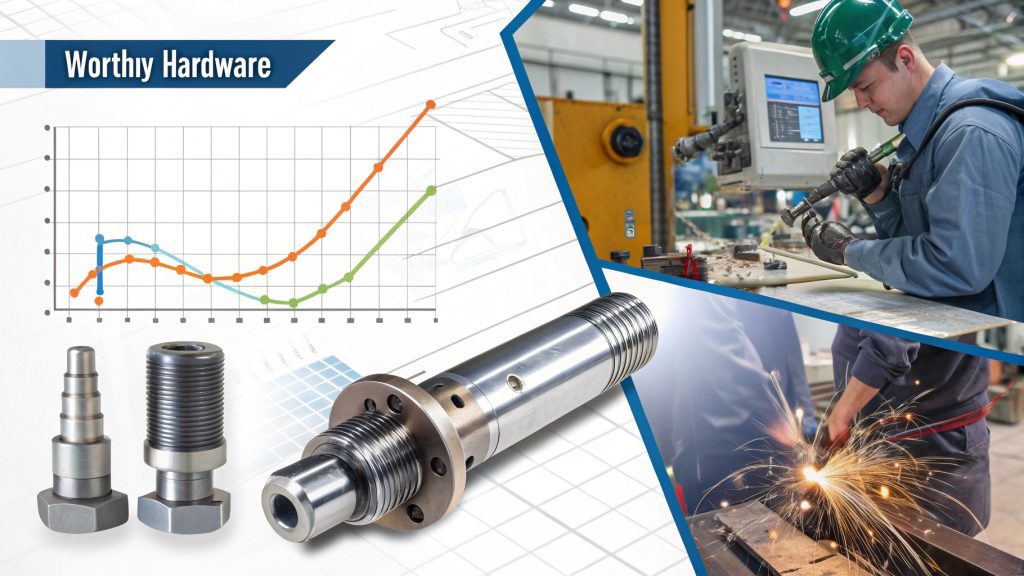
When we machine a part at Worthy Hardware, the difficulty of the material is a huge factor in the final cost. Titanium presents a few unique challenges that don't exist with aluminum or steel. Its low thermal conductivity is a primary issue. When we cut metal, it generates a lot of heat. With aluminum, that heat quickly spreads through the part and dissipates.
With titanium, the heat stays right at the cutting point. This intense heat wears down our cutting tools very quickly, meaning we have to replace them more often. To manage this, we must run our machines at slower speeds and use a lot of high-pressure coolant. This all adds time and complexity to the job, which in turn increases the cost.
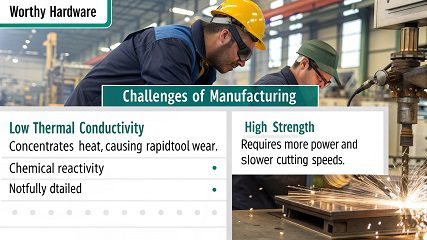
Here's a simple breakdown of the manufacturing challenges:
| Challenge | Impact on Manufacturing |
|---|---|
| Low Thermal Conductivity | Concentrates heat, causing rapid tool wear. |
| High Strength | Requires more power and slower cutting speeds. |
| Chemical Reactivity | Can weld itself to the tool edge (galling). |
| Work Hardening | The material gets harder as you cut it. |
An experienced shop like ours knows how to manage these issues. We use specific tool geometries and coatings designed for titanium, and we have proven processes to machine it efficiently, minimizing waste and keeping costs as low as possible for our customers.
Is titanium cost effective?
You see the high upfront cost and think it's not a good deal. It feels safer to just choose a cheaper metal like steel or aluminum to save money now. But let's explore how titanium's performance over time can make it the most cost-effective choice.
Titanium can be extremely cost-effective over a product's full lifecycle. While the initial investment is higher, its amazing durability, resistance to corrosion, and long lifespan mean fewer replacements, less maintenance, and better performance. This often saves a lot of money in the long run.
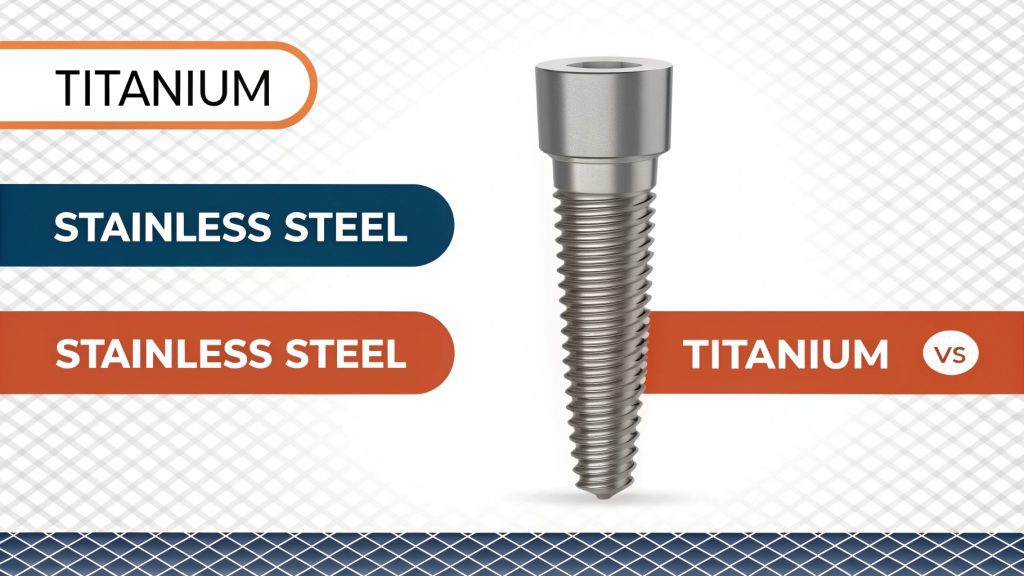
The key is to stop thinking about the initial purchase price and start thinking about the total cost of ownership. I’ve seen this play out with my clients many times. For example, a customer in the medical industry needed a new implant device. The initial cost for the titanium version was significantly higher than the stainless steel alternative. But the titanium implant's biocompatibility is nearly perfect. This means the risk of the patient's body rejecting it is almost zero, avoiding dangerous and expensive follow-up surgeries. Plus, that titanium implant can last for 30 years or more, while the traditional material might need to be replaced. Over the long term, the patient saves a huge amount of money and avoids the pain of more procedures. The initial high cost becomes a brilliant investment.
We see this in other industries, too. Think about the frame for a new high-end smartphone. A titanium frame might cost 20 times more than an aluminum one. But if it increases the phone's drop resistance by 5 times, it extends the useful life of that phone to 5 years or more. For the consumer, this is a huge saving because they don't have to buy a new phone after a minor accident. In these cases, the higher upfront cost delivers real, tangible value that makes it the more economical choice.
Is titanium worth money?
You're trying to justify the big expense to your team or your boss. They only see the price tag on the quote and don't understand the hidden benefits. Here's how to explain the true value of titanium in terms of performance and total reliability.
Yes, titanium is absolutely worth the money for any application where its unique properties are essential. For aerospace, medical, or high-performance parts, its strength-to-weight ratio and corrosion resistance are benefits you simply can't get from other metals, fully justifying the price.
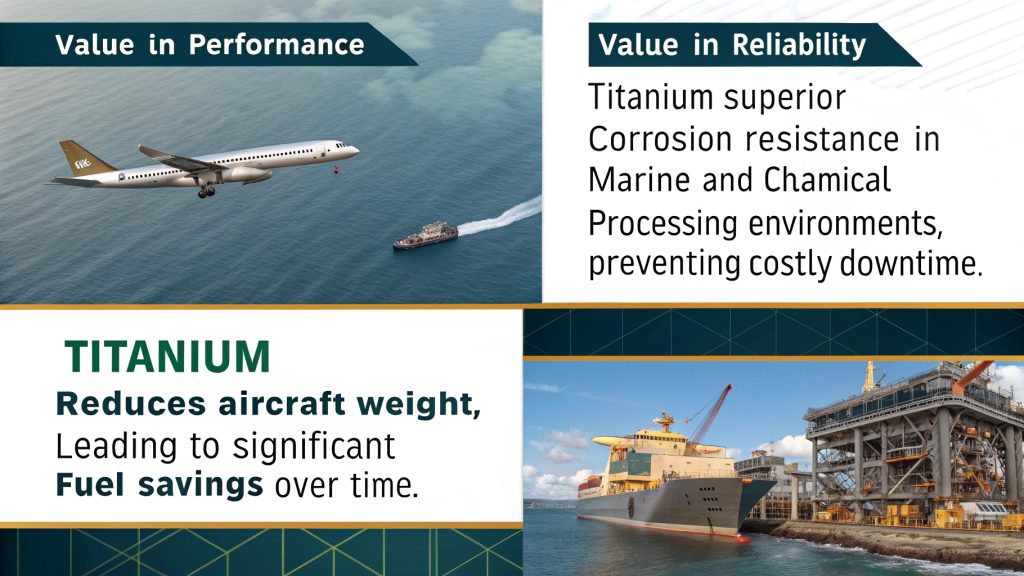
The value of titanium goes far beyond its raw cost. You're paying for performance that other materials can't deliver. I work with clients in the aerospace and defense sectors where every gram matters. Choosing titanium over steel can drastically reduce the weight of an aircraft component.
Value in Performance
Less weight means the aircraft uses less fuel. Over the 20- or 30-year life of that aircraft, the fuel savings can add up to millions of dollars. In that context, the higher initial cost of the titanium part is tiny. The same is true in motorsports. A lighter car is a faster car, and a win is priceless.
Value in Reliability
Then there’s its incredible resistance to corrosion. For parts used in marine environments or chemical processing plants, steel would rust and fail in a short amount of time. A failure could mean shutting down an entire production line, costing thousands of dollars per hour in downtime. A titanium part in the same environment can last almost forever with no maintenance. It's an investment in reliability. It provides peace of mind that your equipment will not fail when you need it most. In these critical applications, titanium isn't just "worth the money," it's the only logical choice.
Is titanium a costly metal?
You know titanium is expensive, but you aren't sure why. Without understanding the reasons behind the price, it can feel too high and difficult to accept. Let's break down the specific factors that make titanium a costly metal.
Yes, titanium is one of the more costly metals used in manufacturing. Its high price comes from the very difficult and energy-intensive Kroll process used to refine it from ore, plus the specialized challenges of melting and machining it compared to common metals like steel.
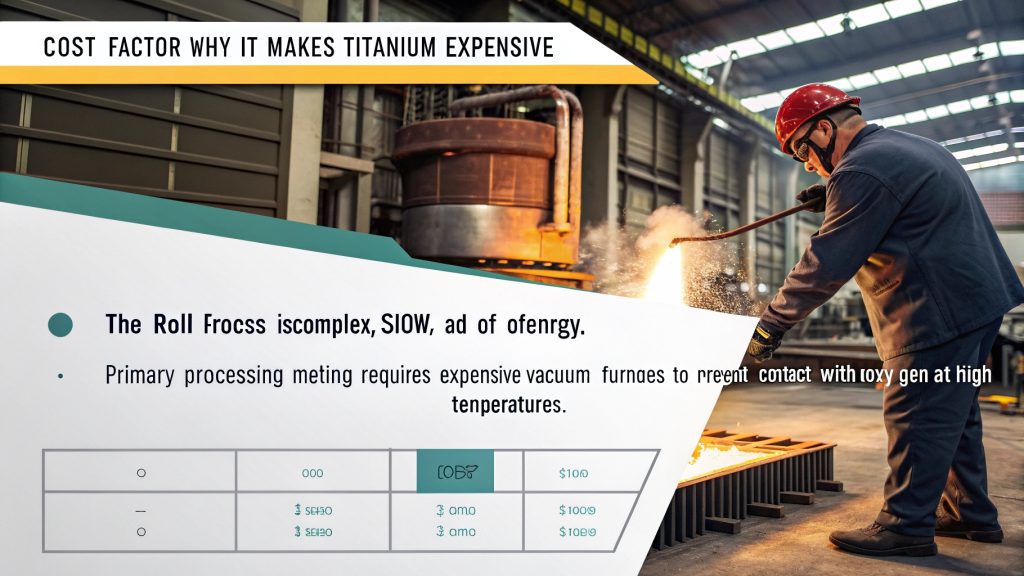
The high cost of titanium starts at the very beginning, long before it ever reaches my workshop. Unlike iron, which can be easily smelted in a furnace, titanium ore has to go through a complex and expensive batch process called the Kroll Process. This process is slow, requires a huge amount of energy, and produces small batches, which makes the raw material itself much more expensive than aluminum or steel. After we have the raw titanium sponge, turning it into usable bars or sheets for machining is also a challenge. Titanium reacts with oxygen at high temperatures, so it has to be melted in a vacuum or an inert argon gas environment. This requires specialized, expensive equipment.
Here is a quick summary of the main cost drivers for titanium:
| Cost Factor | Why it Makes Titanium Expensive |
|---|---|
| Raw Material Extraction | The Kroll Process is complex, slow, and uses a lot of energy. |
| Primary Processing | Melting requires expensive vacuum furnaces to prevent contamination. |
| Machining Difficulty | It's hard on tools and requires slower, more careful work. |
| Lower Global Demand | It's not produced on the same massive scale as steel or aluminum. |
So, when you get a quote for a titanium part, you're not just paying for the machining. You are also paying for the difficult journey that metal took from the ground to a usable block of material. Every step is more complex and energy-intensive, and that is reflected in the final price.
Conclusion
Titanium's high initial cost is a fact, but its long-term performance, durability, and unique properties often make it the most valuable and cost-effective choice for your most demanding projects.