
What Industries Benefit Most From Titanium CNC Machining And Why?

Choosing the right material is tough. A wrong choice means costly failures. See which industries rely on titanium to understand if it's the right choice for your project.
The aerospace industry benefits most from titanium CNC machining, using over 50% of all titanium produced. Its high strength-to-weight ratio is perfect for critical parts like airframes and engine components. Other key industries include medical, military, chemical, and high-performance automotive.
I've worked with many clients, like Mark from Canada, who are always looking for the best performance without overspending. Titanium often comes up in our talks. It's a fantastic material, but it's not for everyone. The key is knowing when and why to use it. We need to look closer at how different industries use CNC machining with titanium to really get it. Let's break down some common questions I hear all the time.
Which Industries Mostly Use CNC Machines?
Do you think CNC machining is just for big industries like automotive? This misconception might cause you to miss out. Let's look at the diverse sectors that depend on it.
Aerospace, automotive, medical, and electronics are the biggest users of CNC machining. They all need high precision, complex parts, and consistent quality. The defense, energy, and consumer product industries also rely heavily on CNC technology for their manufacturing needs.
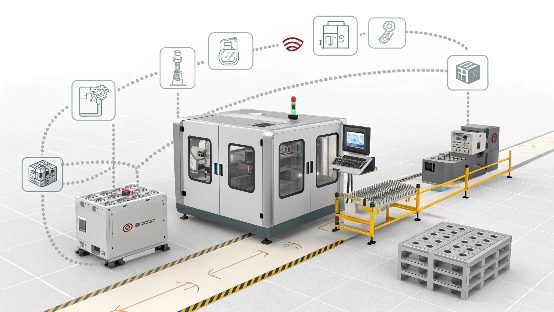
At Worthy Hardware, we see parts from so many different fields. It's not just about one or two big players. CNC machiningis everywhere because it offers control and repeatability that other methods can't match. For example, a client in the medical field needs a tiny, complex part with a flawless surface finish. Another client in the automotive industry needs thousands of identical brackets that are strong and lightweight. CNC machining delivers for both. It's this versatility that makes it so essential. It can handle a huge range of materials, from aluminum to tough tool steels and plastics, meeting the specific demands of each application. Here’s a quick look at some key industries and their needs:
| Industry | Key CNC Machining Requirement | Example Parts We Make |
|---|---|---|
| Aerospace & Defense | Extreme precision, complex geometries, advanced materials | Engine components, landing gear parts, missile housings |
| Medical & Dental | Biocompatible materials, tight tolerances, smooth finishes | Surgical instruments, dental implants, prosthetic components |
| Automotive | High volume production, consistency, durability | Engine blocks, transmission parts, custom brackets |
| Electronics | Miniaturization, intricate features, heat dissipation | Heatsinks, enclosures, connectors, semiconductor equipment |
What Is the Best Titanium for Machining?
Feeling overwhelmed by all the different titanium grades? Picking the wrong one leads to difficult machining and high costs. Let's focus on the most popular and easiest grade to work with.
Grade 5 titanium (Ti-6Al-4V) is generally the best for machining. It offers an excellent combination of high strength, corrosion resistance, and good machinability compared to other high-strength titanium alloys. For pure machinability, Grade 2 (Commercially Pure) is easier but offers lower strength.
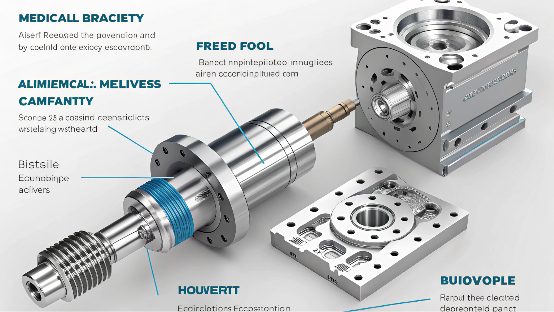
When a customer asks for a "titanium part," they usually mean Grade 5. It's the workhorse of the titanium world for a reason. The small amounts of aluminum (6%) and vanadium (4%) added to the titanium give it incredible strength, much more than pure titanium. But it's still possible to machine it effectively with the right tools and techniques. At my company, we have a lot of experience with it. Of course, "best" depends on the application. If you don't need extreme strength but want maximum corrosion resistance and easier forming, Grade 2 is a great choice. It's commercially pure titanium and much softer, making it kinder on our cutting tools. However, for most high-performance applications in aerospace, medical, and automotive, Grade 5 hits the sweet spot. Here's how they compare:
| Feature | Grade 5 (Ti-6Al-4V) | Grade 2 (Commercially Pure) |
|---|---|---|
| Strength | Very High | Medium |
| Machinability | Good (for a high-strength alloy) | Excellent |
| Corrosion Resistance | Excellent | Excellent |
| Common Uses | Aerospace parts, medical implants, engine parts | Chemical processing equipment, marine parts |
Why Are CNC Machines Used in the Industry?
Still wondering what makes CNC machining so essential for modern production? Older methods often mean inconsistent quality and slower turnarounds. Let's explore why CNC has become the go-to manufacturing technology.
CNC machines are used because they offer unmatched precision, consistency, and complexity. A computer controls the entire process, removing human error and ensuring every part is identical. This automation allows for efficient, high-volume production of intricate designs that are impossible to make by hand.
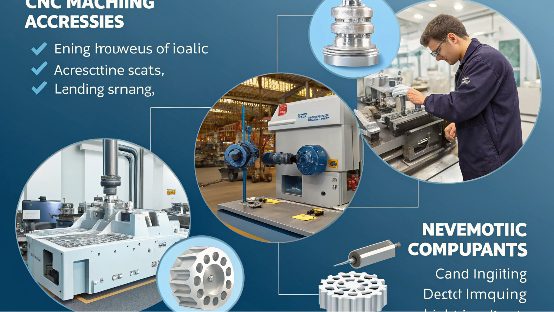
The main reason is control. With CNC, a computer program dictates every single move the cutting tool makes. This removes almost all human error. If I need to make 10,000 parts for a client like Mark in Canada, he needs to know that the 10,000th part is exactly the same as the first. CNC guarantees that. We can hold very tight tolerances, often down to +/- 0.005 inches (0.127 mm), and even tighter if the design needs it.
This precision is critical for parts that need to fit together perfectly in a larger assembly. Also, modern CNC machines, especially our 5-axis machines, can create incredibly complex shapes in a single setup. This saves time and money, and it allows designers to create stronger, more efficient parts that couldn't be made any other way. It's this combination of precision, repeatability, and capability that makes CNC a cornerstone of modern industry.
What Is the Main Advantage of CNC Machining?
Deciding on a manufacturing process is a big choice. Picking the wrong one means wasting time and money on your project. Let's identify the single greatest benefit of using CNC.
The main advantage of CNC machining is its incredible versatility. It can produce one-off prototypes or millions of identical parts with equal precision. It works with hundreds of materials, from soft plastics to hardened steel and titanium, making it suitable for nearly any industry or application.
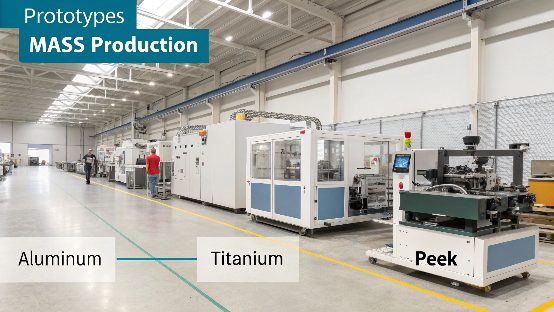
If I had to pick just one thing, it would be versatility. Think about it. A new hardware startup can send us a design, and we can make a single prototype for them to test. We have no minimum order quantity, so this is perfect for them. Then, once their design is proven, we can use the exact same program to produce 10,000 units. This seamless path from prototype to mass production is a huge advantage.
From Prototypes to Production
This process saves so much time and reduces risk. The prototype is made with the same precision as the final parts, so you know it will work. Then, there's the material versatility. At Worthy, we work with over 100 materials. One day we are machining aluminum for an electronic enclosure, the next we are cutting titanium for an aerospace bracket, and the day after we are milling PEEK for a medical device. CNC handles it all. This adaptability is why it’s the solution for so many different problems.
Conclusion
In short, titanium's unique strengths make it vital for demanding industries, especially aerospace. CNC machining is the key technology that unlocks its potential, delivering the required precision and complexity.