
How to Select Metal Stamping Methods for Electronics Enclosures?

Choosing the wrong manufacturing process for your electronics enclosure is a costly mistake. This leads to project delays and poor quality, putting your product's success at risk.
The best way to select a metal stamping method is to match it to your enclosure's specific needs. Consider production volume, part complexity, material choice, and budget. Common methods like progressive die, fourslide, and deep draw stamping each offer unique advantages for your project.
You can make electronics enclosures in many ways, including CNC machining or even forging. However, for many projects, especially when you need a lot of parts, metal stamping is often the most efficient and cost-effective choice. It’s a process that turns flat metal sheets into specific shapes. But getting it right means you have to understand the different stamping methods and materials available. I want to walk you through the key decisions you need to make. This will help you get the best possible result for your enclosure, ensuring it protects your electronics perfectly while fitting your budget and timeline. Let’s dive into the details.
What are the four types of metal stamping?
You hear many terms like progressive, fourslide, and deep draw. This can be confusing and might lead you to choose a slow or expensive process for your parts.
The four main types of metal stamping are progressive die, fourslide, deep draw, and compound die stamping. Each technique is designed for different part shapes and production speeds. Understanding them helps you choose the most cost-effective method for your electronic enclosure's design.
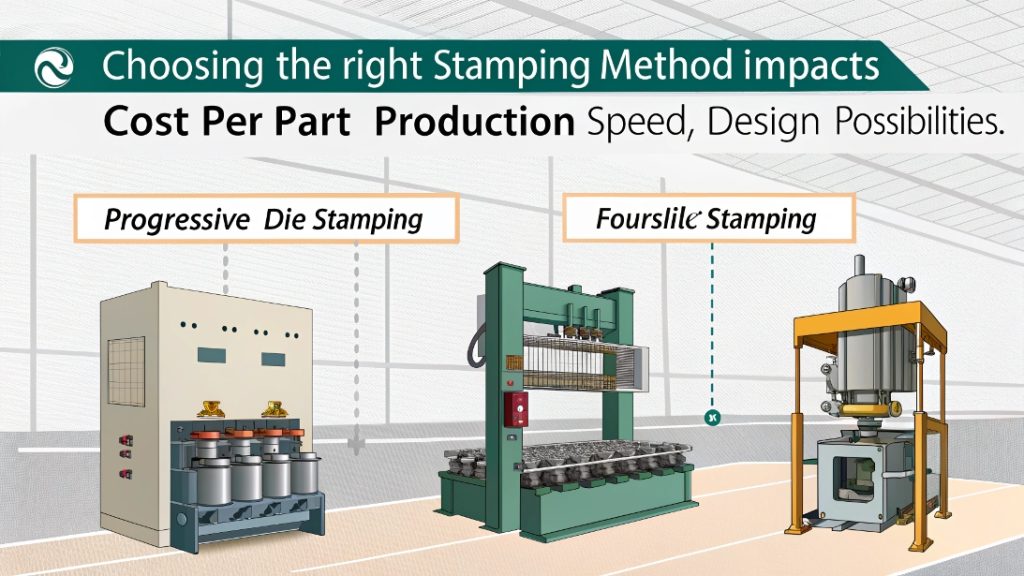
Choosing the right stamping method is the first major step. It directly impacts your cost per part, the speed of production, and what kind of designs are possible. I've seen clients save thousands just by switching from a less suitable method to a more efficient one. The choice depends entirely on your part's geometry and how many you need. Here’s a breakdown of the most common types we use at Worthy Hardware.
Progressive Die Stamping
This is the workhorse for high-volume production. A coil of metal is fed through a press that contains a single die with multiple stations. At each station, the die performs a different operation—like cutting, bending, or punching—as the metal strip "progresses" through. It's very fast and creates very little waste, making it perfect for complex enclosures needed in large quantities.
Fourslide Stamping
This method is one of our specialties. Instead of one vertical ram, it uses four sliding tools that shape the part from four different directions. This is fantastic for creating parts with multiple, complex bends, like clips, terminals, or unique bracket-style enclosures. It’s great for parts that would be difficult or impossible to form with a standard progressive die.
Deep Draw Stamping
If your enclosure is shaped like a can, cup, or seamless box, deep drawing is the answer. It involves punching a flat metal blank into a die cavity to create a deep, three-dimensional shape. The key here is that the part's depth is greater than its diameter. This method is excellent for creating strong, seamless enclosures that offer great protection.
Comparing the Stamping Methods
To make it easier, here is a simple table comparing these methods.
| Stamping Method | Best For | Speed | Tooling Cost |
|---|---|---|---|
| Progressive Die | High volumes, complex flat parts with bends | Very Fast | High |
| Fourslide | Parts with multiple/complex bends (clips) | Fast | Medium |
| Deep Draw | Seamless, cup-shaped or box parts | Medium | Medium-High |
| Compound Die | Simple, flat parts (washers, blanks) | Slow | Low-Medium |
What is the best metal for metal stamping?
Picking the wrong metal for your enclosure can cause major problems. It might corrode, be too heavy, or fail to block electronic interference, leading to product failure and wasted money.
There is no single "best" metal for every project. The ideal choice depends on your specific needs. Steel offers strength at a low cost, aluminum provides a lightweight and corrosion-resistant option, and copper or brass are perfect for parts that require high electrical conductivity.
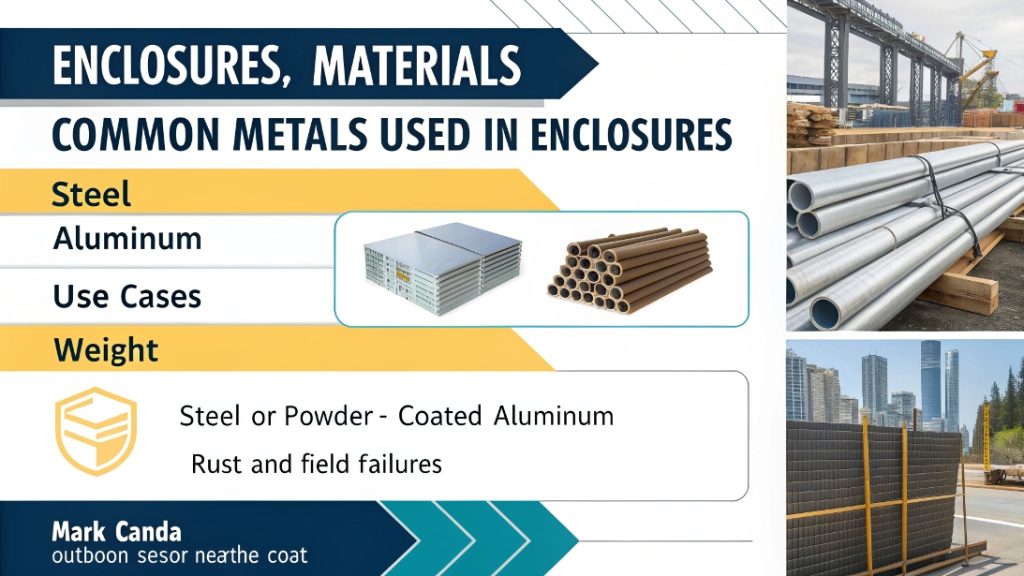
The material you choose for your enclosure is just as important as the stamping method. It determines the part's final weight, strength, durability, and even its appearance. For electronics, you also have to think about properties like thermal and electrical conductivity. I had a client, Mark from Canada, who initially wanted a simple cold-rolled steel enclosure for an outdoor sensor. I asked him about the environment, and he mentioned it would be near the coast. We suggested switching to stainless steel or powder-coated aluminum. That simple change prevented a future of rust and field failures. Always think about the final use case when selecting your material.
Common Metals for Enclosures
- Steel: This is a popular choice because it's strong and very cost-effective. We often use cold-rolled steel for general-purpose enclosures. For applications where rust is a concern, we recommend stainless steel, which offers excellent corrosion resistance.
- Aluminum: It is fantastic when weight is a concern. It's much lighter than steel and has great thermal conductivity, which helps dissipate heat from the electronics inside. It's also naturally corrosion-resistant.
- Copper and Brass: When you need your enclosure to have excellent electrical conductivity or EMI/RFI shielding, copper and its alloys, like brass, are the top choices. They are more expensive but are sometimes necessary for high-performance electronics.
Material Selection Guide
Here’s a quick comparison to help you decide.
| Material | Cost | Weight | Strength | Corrosion Resistance | Conductivity |
|---|---|---|---|---|---|
| Cold Rolled Steel | Low | Heavy | High | Poor | Poor |
| Stainless Steel | Medium | Heavy | High | Excellent | Poor |
| Aluminum | Medium | Light | Medium | Good | Good |
| Copper / Brass | High | Heavy | Medium | Good | Excellent |
What are the 7 steps in the stamping method?
If you don't understand the production process, you can face unexpected delays. Not knowing the steps from design to delivery makes it hard to plan your project schedule effectively.
The metal stamping process has seven main steps: 1. Design review and engineering. 2. Tool and die creation. 3. Material preparation. 4. Press setup. 5. The stamping operation. 6. Secondary finishing processes. 7. Final quality inspection and packaging for shipment.
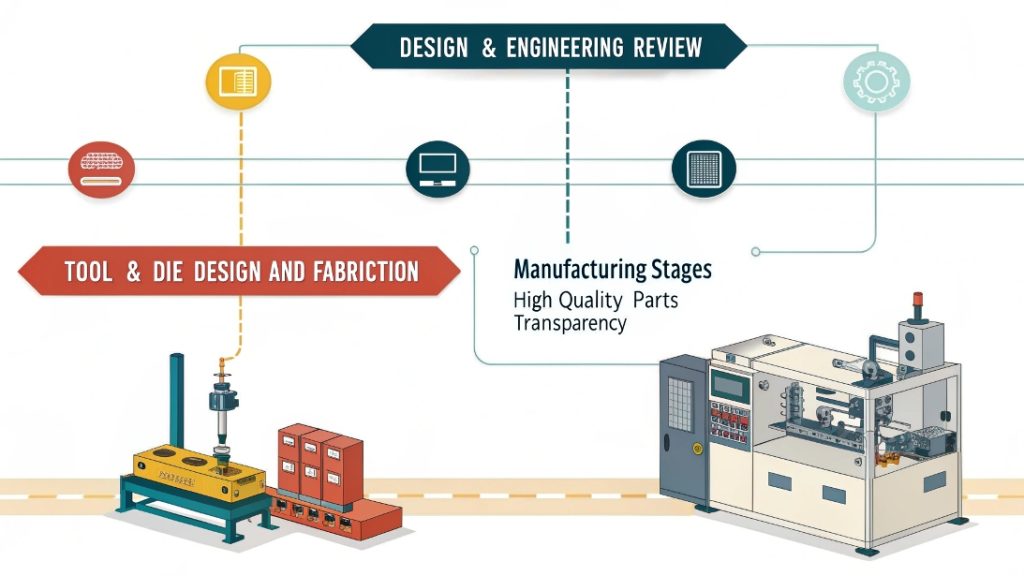
From the moment we receive your design to the day we ship your parts, there is a clear and structured process we follow. Understanding these steps helps you know what to expect and where your project is at any given time. We believe in transparency, so our customers always know what's happening. The process ensures we create high-quality parts efficiently and catch any potential issues early. This is how we guarantee that the final product meets your exact specifications. Here is a closer look at each step in our production flow.
The Stamping Production Flow
- Design & Engineering Review: Before we cut any metal, our engineers review your 3D CAD files. We check for manufacturability and often suggest small design tweaks that can save you a lot of money or improve the part's function.
- Tool & Die Design and Fabrication: This is the most important upfront step. We design and build the custom tool—the die—that will form your part. This tooling is a one-time investment, but its quality determines the quality of every part we produce.
- Material Selection & Preparation: Based on your requirements, we select the right material, whether it's steel, aluminum, or brass. We then prepare it, usually by loading a large coil onto the press feeder.
- Stamping Press Setup: The finished die is carefully installed into one of our stamping presses. Our technicians calibrate the press settings, such as stroke speed and pressure, to match the material and part complexity.
- Stamping Production Run: This is where the magic happens. The press runs automatically, stamping out parts at a high speed. For a progressive die, this can be hundreds of parts per minute.
- Secondary Operations: After stamping, parts may need additional work. This can include cleaning, deburring to remove sharp edges, tapping threads for screws, or finishing processes like plating or powder coating.
- Quality Inspection & Packaging: This is our final, critical step. We perform a 100% inspection on all products to ensure they meet your tolerances and quality standards. Once approved, the parts are carefully packaged and prepared for shipment.
What is a suitable material form for metal stamping?
Using the wrong material form, like a sheet for a high-volume job, will stop production. This mistake wastes time and increases costs, directly impacting your project's budget and timeline.
The most common and suitable material forms for metal stamping are sheet metal coils and pre-cut blanks. Coils are ideal for automated, high-volume production, while blanks are used for lower volumes, prototyping, or very large parts that are manually fed into the press.
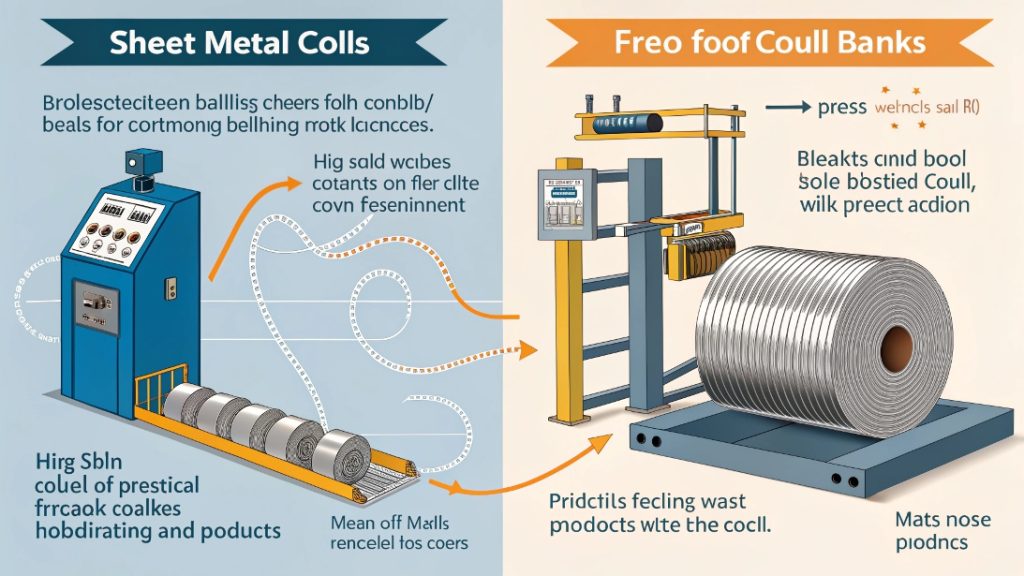
The physical form of the raw material we feed into the press is a practical but important decision. Choosing the right one is essential for an efficient production run. The choice almost always comes down to your required production volume. For a prototype or a small batch of a few hundred pieces, using individual blanks makes sense. But when a customer needs tens of thousands of enclosures, feeding the press with a continuous coil is the only way to achieve the speed and low cost they need. We help our customers make this decision based on their project goals.
Coils vs. Blanks
-
Sheet Metal Coils: A coil is a long, continuous strip of metal that is rolled up. This is the standard material form for high-volume automated stamping processes like progressive die and fourslide stamping. The coil is placed on a decoiler, which feeds the material directly into the press. This allows for continuous, uninterrupted production, which is extremely fast and cost-effective. Material waste is also minimized because parts can be nested closely together on the long strip.
-
Blanks (or Sheets): Blanks are individual pieces of metal that have been pre-cut from a larger sheet. They are used in situations where a coil is not practical. This includes manual or semi-automated stamping operations, prototyping, low-volume production runs, or for parts that are too large to be made from standard coil widths. While this process is slower because each blank must be loaded individually, it offers flexibility for smaller jobs.
When to Use Which Form
This table simplifies the decision between using coils or blanks.
| Factor | Sheet Metal Coils | Blanks / Sheets |
|---|---|---|
| Production Volume | High (5,000+ parts) | Low (prototypes to 5,000 parts) |
| Production Speed | Very Fast (Automated) | Slower (Manual/Semi-Auto) |
| Setup Time | Longer | Shorter |
| Material Handling | Automated feeding | Manual or robotic loading |
| Cost per Part | Lower for high volumes | Higher due to more labor |
Conclusion
Choosing the right metal stamping method, material, and process is crucial. With careful planning, you ensure high-quality, cost-effective electronics enclosures that protect your product and meet your budget.