
Laser Cutting vs Stamping: Which is Better for Brackets?
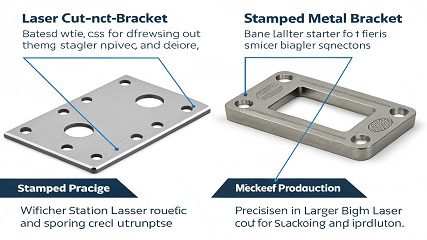
Struggling to choose the right process for your metal brackets? Picking the wrong one can waste time and money, creating a real headache for your project's budget and timeline.
For small batches or prototypes needing high precision, laser cuttingis better. For large production runs where per-unit cost is critical, stamping is the superior choice, even with the initial cost of a tool and die. Your decision depends on quantity, complexity, and budget.
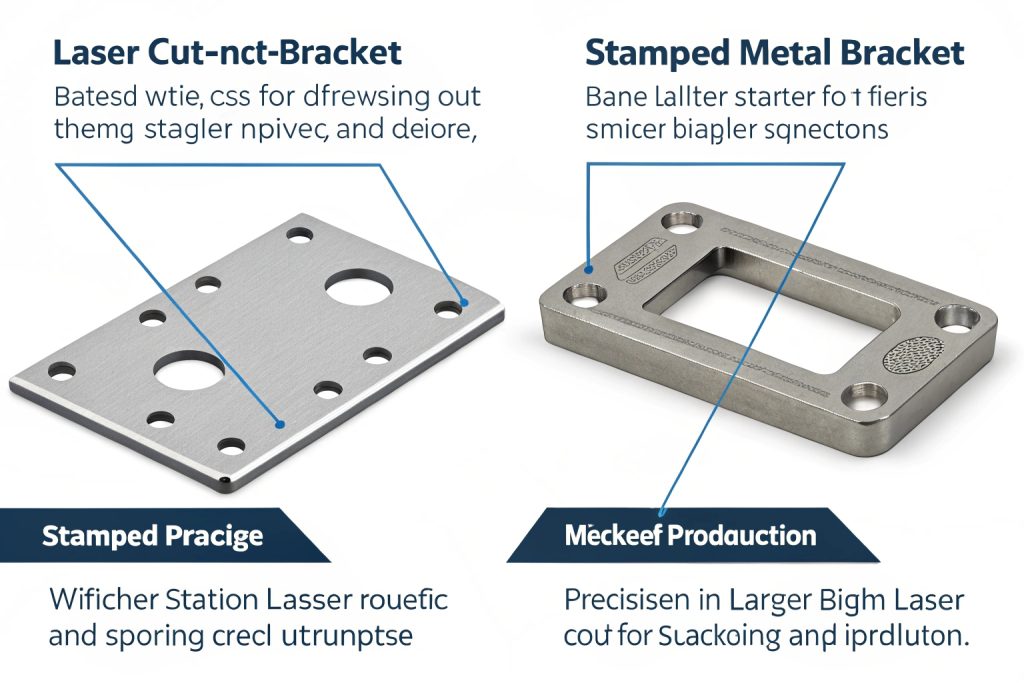
I’ve seen many clients, like Mark from Canada, face this exact problem. He needs top quality but is also watching his bottom line closely. Understanding the core strengths of each method is the key to making the right call. Let's dive deeper to see which process fits your specific needs, so you can avoid costly mistakes and get your brackets made efficiently.
What is the main disadvantage of laser cutting?
Laser cutting seems like a perfect, high-tech solution, right? But overlooking its main drawback can lead to unexpected costs and slow down your production when you decide to scale up.
The biggest disadvantage of laser cutting is its higher cost per part on large production runs. Because it cuts each bracket one by one, the process is slower and less economical for mass production compared to the high-speed output of a stamping press.
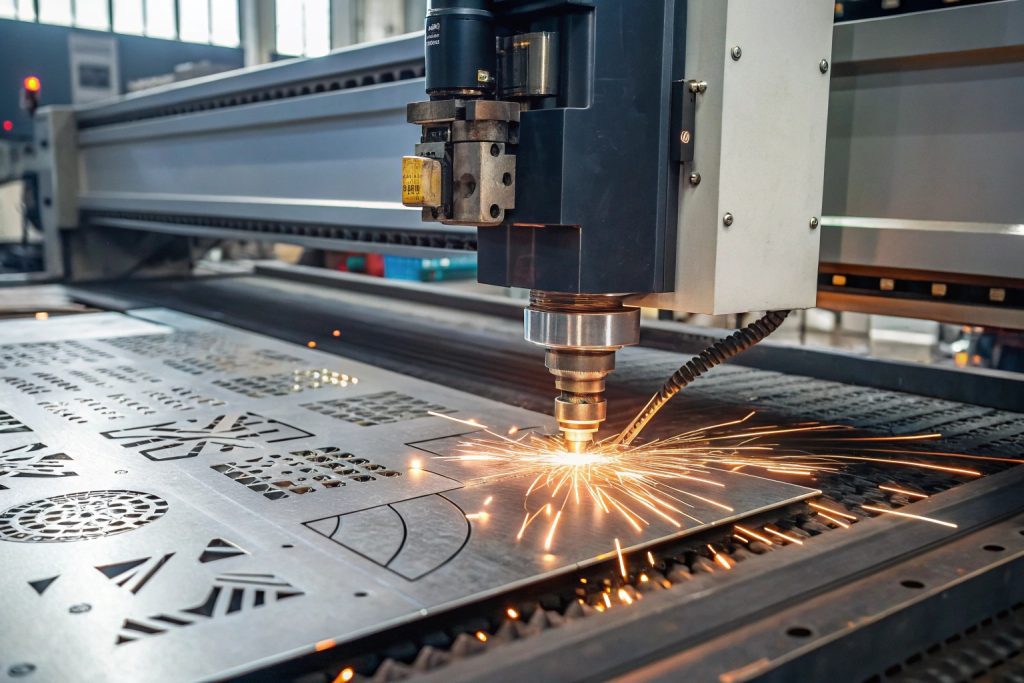
The cost issue is the most important factor for many of my customers. With laser cutting, the price for the 10,000th part is pretty much the same as the price for the first part. There are very few economies of scale. Stamping is the opposite. Once you invest in the tool, you can produce parts incredibly fast, and the cost per piece drops dramatically as the quantity goes up. Another issue is the Heat Affected Zone (HAZ). The intense heat from the laser can change the metal's properties right next to the cut line, which might affect the bracket's strength. We also have to consider material thickness. While lasers are great for thin sheets, they struggle with thicker materials, which can lead to a rougher edge finish and much slower cutting speeds.
What is the difference between laser cutting and stamping?
You might think they are just two different ways to cut metal. But confusing them can lead you to pick a method that doesn't fit your design, your timeline, or your budget at all.
The key difference is the tooling. Laser cutting is a thermal process using a focused laser to cut shapes without a custom tool. Stamping is a mechanical process that uses a custom-made steel die inside a press to physically shear or form the bracket at high speed.
Think of it this way: laser cutting is like using a very precise, computer-guided pair of scissors. We load a digital CAD file, and the machine follows the instructions to burn the shape out of a metal sheet. This makes it very flexible. If you want to change the design, you just change the file. Stamping, on the other hand, is like using a very strong, custom cookie cutter. We build a dedicated tool, or die, specifically for your bracket. A coil of metal feeds into a press, and with each hit, a perfect bracket is stamped out. Once that tool is made, we can make thousands of parts very quickly.
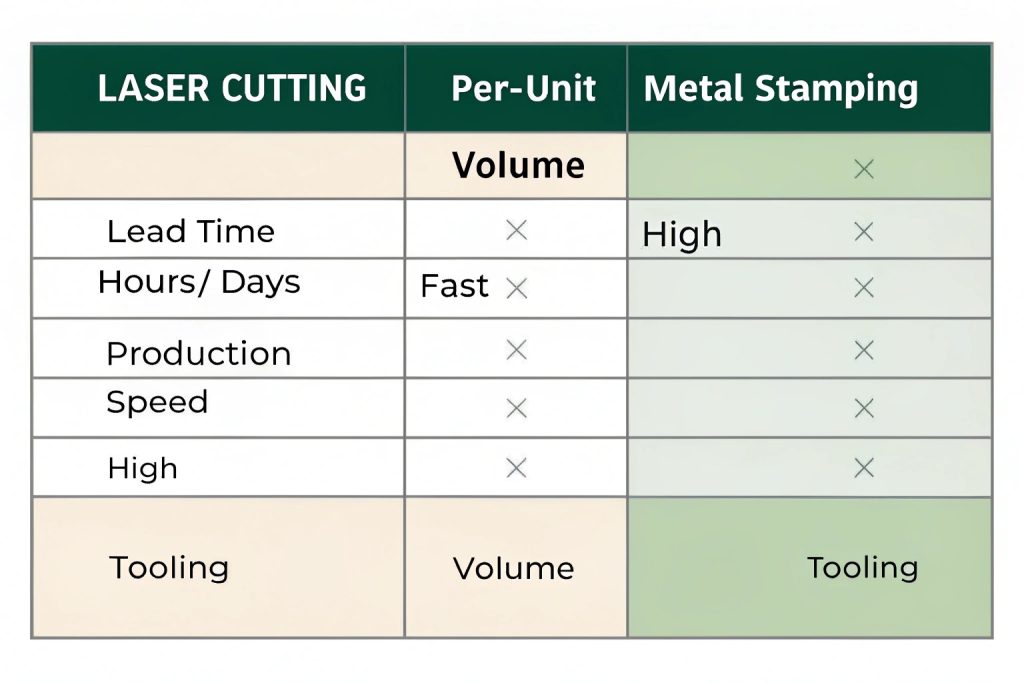
Here’s a simple table to show the main differences:
| Feature | Laser Cutting | Metal Stamping |
|---|---|---|
| Tooling Cost | None | High upfront cost |
| Per-Unit Cost | Higher (especially at volume) | Very low at high volume |
| Lead Time | Fast (Hours/Days) | Slower (Weeks, for tooling) |
| Production Speed | Slow | Extremely Fast |
| Design Flexibility | Very High | Low (after tool is made) |
| Best For | Prototypes, Low Volume | Mass Production |
I often tell clients to use both. We can use laser cutting to make the first prototypes quickly. Once the design is perfect, we build the stamping tool for mass production to get them the best price.
Which material is not recommended to be cut by laser?
Think you can use a laser to cut any metal you need for your bracket? Making that assumption can lead to poor quality, wasted material, or even damage to the equipment, costing you time and money.
Highly reflective materials like copper and brass are not recommended for laser cutting. These metals reflect the laser's energy instead of absorbing it, which can damage the machine and result in a very poor and inefficient cut. This is especially true for older CO2 lasers.
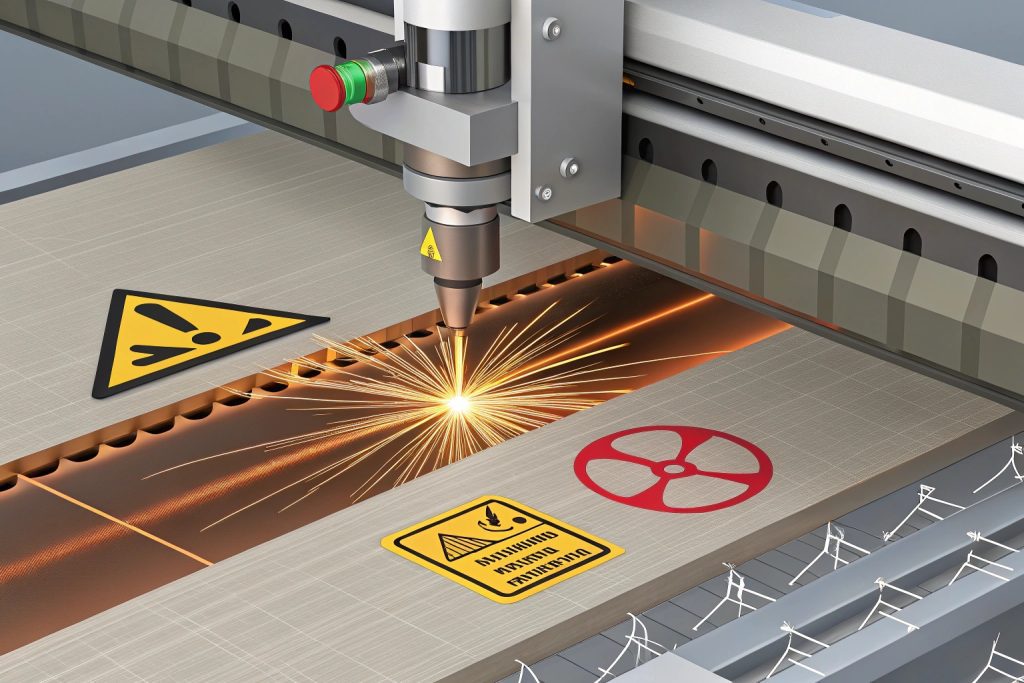
The problem with reflective metals is simple physics. The laser needs the material to absorb its heat energy to melt and vaporize. But metals like copper, brass, and even some aluminum alloys act like a mirror, bouncing the powerful laser beam back. This reflection can damage the laser's expensive optics. While our modern fiber lasers at Worthy handle these materials better than older machines, it’s still a challenge. Besides reflective metals, some materials are just not a good fit. Very thick steel can be too much for the laser, resulting in a slow, messy cut with a large heat-affected zone. Also, some plastics like PVC are dangerous to laser cut because they release toxic fumes. For these projects, we always recommend an alternative process like stamping to ensure both quality and safety.
What are the advantages of using laser cutting?
So, if stamping is so great for high volumes, when is laser cutting the clear winner? Not using laser cutting for the right job means you could be missing out on speed, precision, and flexibility.
The primary advantages of laser cutting are its incredible precision, the ability to create highly complex shapes, and the complete lack of tooling costs. This makes it the perfect choice for prototypes, low-volume production, and parts with intricate designs.
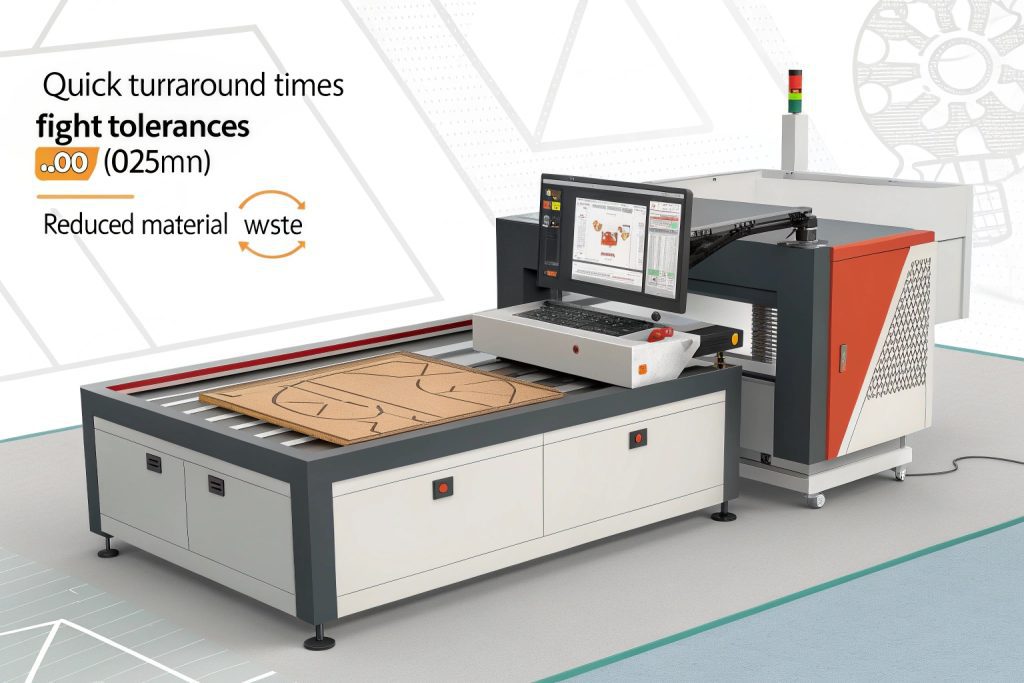
Laser cutting truly shines when you need speed and complexity without a big upfront investment. We can take a customer's CAD file and have a physical part in their hands within days. This is perfect for testing a new bracket design. If a change is needed, we just update the digital file, with no need to modify or remake an expensive tool that could cost thousands of dollars. The precision is another major benefit. Our machines can hold very tight tolerances, down to .001" (.025mm), creating clean edges and fine details that would be difficult to achieve with stamping. This accuracy is critical for parts in the electronics, medical, or aerospace industries. Finally, without the need for a physical tool, we can use software to tightly nest parts on a sheet of metal, reducing waste and saving you money on materials.
Conclusion
In short, laser cutting is your best bet for precision, prototypes, and small runs. For cost-effective mass production of brackets, stamping is the undisputed champion. Your choice depends entirely on your project's volume.