
How to achieve the best surface finish when machining 1018 steel?
Struggling with rough surfaces on your 1018 steel parts? This common issue can ruin your project. You need a reliable method to get that smooth, professional finish every time.
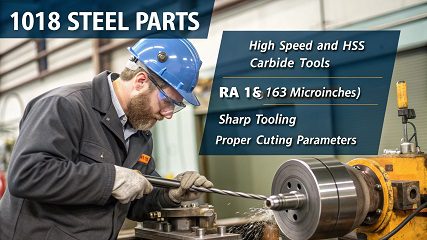
To get the best surface finish on 1018 steel, use high-speed steel (HSS) or carbide tools with the correct speeds and feeds. This steel is highly machinable, and a surface finish of Ra 1.6 (63 microinches)[^1] is easily achievable with the right cutting parameters and sharp tooling.
Achieving that perfect finish is a common goal for every machinist I've worked with, from Canada to Australia. It's the difference between a good part and a great part. But it's not just about flipping a switch; it's about understanding the material and the process. Let's break down how you can consistently get excellent results.
How to get a better surface finish in machining?
Are rough, unacceptable finishes causing part rejections? This wastes time and material. You need a clear strategy to improve your surface quality and meet specifications on every single job.
To improve surface finish, focus on three key areas: using sharp, high-quality cutting tools, optimizing your cutting speeds and feed rates, and ensuring your machine setup is rigid to minimize vibration. Coolant or lubrication also plays a crucial role in reducing friction and heat.
Getting a better surface finish is a universal challenge in machining, not just for 1018 steel. In my experience helping customers like Mark from Canada, a systematic approach works best. You can't just change one thing and hope for the best. You need to look at the entire process. The right tool is your starting point. A dull or chipped tool will never give you a good finish, no matter how perfect your settings are. Then, you must balance cutting speed and feed rate. Going too fast or too slow can tear the material instead of cutting it cleanly. Finally, vibration is the enemy of a smooth surface. A rigid machine, a securely clamped workpiece, and a short, sturdy tool holder are all essential. These factors work together to produce the mirror-like finish we all want.
| Factor | Impact on Surface Finish | Recommendation |
|---|---|---|
| Tool Condition | A dull tool tears material, causing a rough surface. | Always use sharp, high-quality tools. Inspect them regularly. |
| Cutting Speed | Too slow can cause built-up edge; too fast can cause tool wear. | Find the optimal speed for your material and tool combination. |
| Feed Rate | A high feed rate leaves visible tool marks (scallops). | Use a lower feed rate for the final finishing pass. |
| Vibration | Causes chatter marks and an inconsistent, wavy finish. | Ensure a rigid setup: secure workpiece, short tool stick-out. |
| Coolant | Reduces heat and friction, flushes chips away. | Use a steady flow of the correct coolant for the material. |
How to get a good finish turning mild steel?
Are you getting inconsistent finishes when turning mild steel like 1018? The material seems to tear instead of cutting cleanly. This can be frustrating when you're aiming for precision.
For a good finish when turning mild steel, use a sharp insert with a positive rake angle and a small nose radius. Combine this with a high cutting speed, a low feed rate for the finishing pass, and a shallow depth of cut.
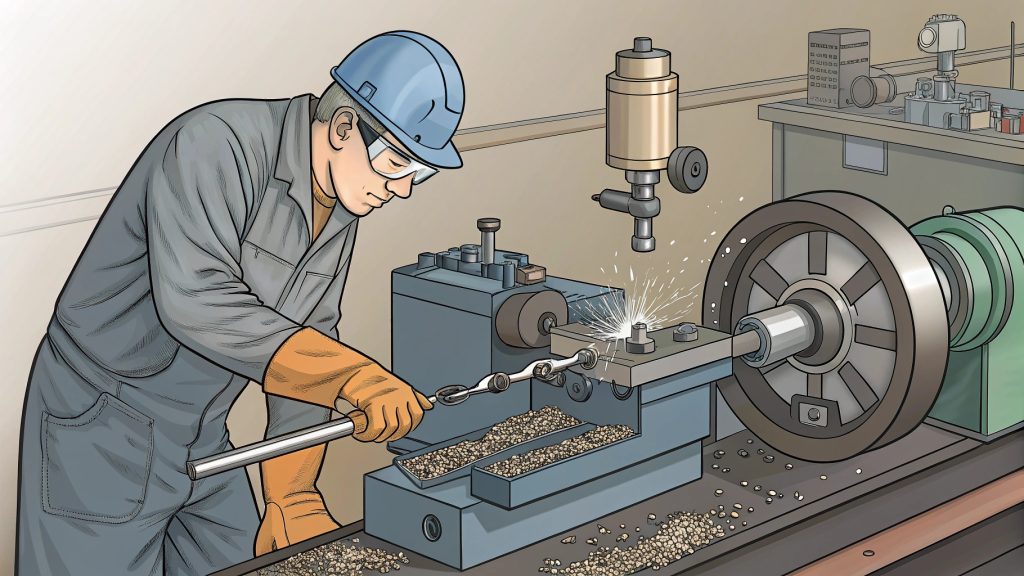
Turning is one of the most common operations we perform at Worthy Hardware, and mild steel is a frequent material choice for our customers. The key is in the details. When turning mild steel, the goal is to create a clean shearing action. A tool with a positive rake angle helps lift the chip and directs it away from the finished surface, which is crucial for preventing a built-up edge where material welds itself to the tool tip. The tool's nose radius also matters a lot.
A smaller radius reduces cutting forces and tool pressure, leading to a smoother finish, but it might require a slower feed rate to avoid visible tool marks. For the final "money pass," I always tell my team to reduce the depth of cut to just remove the last bit of material and lower the feed rate. This combination, along with a good flow of coolant, shaves the material off cleanly, leaving a beautiful, smooth surface that meets our clients' high standards.
What is the best surface finish for milling?
Is achieving a smooth, chatter-free surface in your milling operations a constant battle? Poor finishes can lead to rejected parts and wasted effort, especially on critical components.
The best surface finish in milling is achieved by using climb milling, maintaining a high spindle speed with an appropriate feed rate, and using a tool with a high helix angle. A rigid setup and proper chip evacuation are also critical for preventing recutting chips.
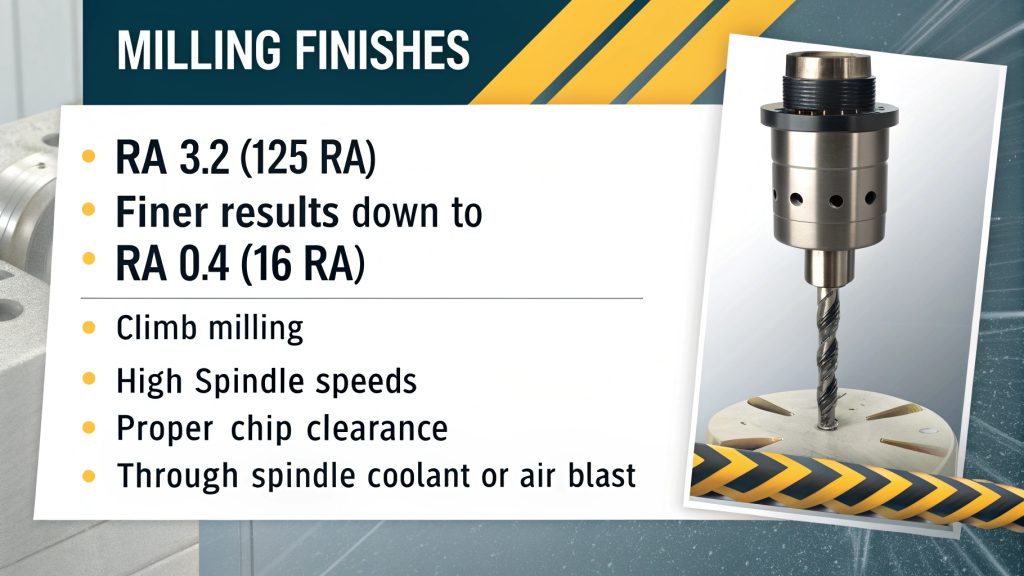
I often get questions from clients about milling finishes. While a standard as-machined finish at my shop is Ra 3.2 (125 Ra), we can achieve much finer results down to Ra 0.4 (16 Ra) or better. One of the first things I check is whether the machinist is using climb milling. In climb milling, the tool cuts "down" into the material, which typically produces a better finish and less tool wear than conventional milling. High spindle speeds are generally good, but they must be paired with the right feed rate to avoid chatter.
A tool with more flutes and a high helix angle can also improve the finish by taking smaller bites and shearing the material more effectively. Most importantly, you have to get the chips out of the way. If chips are not cleared, the tool can recut them, which instantly ruins the surface finish. Using through-spindle coolant or a strong air blast is essential for a clean cutting zone and a pristine final surface.
| Milling Technique | Description | Impact on Finish |
|---|---|---|
| Climb Milling | The tool rotates in the same direction as the feed. | Generally produces a better surface finish, less tool pressure. |
| Conventional Milling | The tool rotates against the direction of the feed. | Can cause rubbing and a poorer finish, but useful on older machines. |
| High Spindle Speed | Increases the cutting speed. | Helps achieve a finer finish, but must be balanced with feed rate. |
| Chip Evacuation | Removing chips from the cutting area. | Critical. Recutting chips will destroy the surface finish. Use air or coolant. |
Is 1018 steel good for machining?
Wondering if 1018 steel is the right choice for your project? Selecting the wrong material can lead to difficult machining, high tool wear, and poor results, costing you time and money.
Yes, 1018 steel is excellent for machining. It has a high machinability rating of around 78-80% compared to other steels. Its low carbon content makes it soft and ductile, producing predictable chips and allowing for great surface finishes with relative ease.
At my company, we work with over 100 different materials, and 1018 steel is one of the most popular choices for a reason. It's a fantastic general-purpose steel that our engineers and machinists love to work with. Its machinability is a major selling point. This is a rating that compares how easy it is to machine a material relative to a standard steel. With a rating around 80%, 1018 is far easier to cut than tougher alloys or stainless steels. The low carbon content means it isn't very hard, so it doesn't wear out cutting tools quickly.
This saves money and time. It also forms chips that break away cleanly instead of getting stringy and wrapping around the tool. This predictability makes it easy to dial in the right parameters to achieve a great surface finish, like Ra 1.6, often just using standard high-speed steel tools. For prototypes or high-volume production, 1018 is a reliable, cost-effective, and easy-to-machine option.
Conclusion
In short, achieving a great finish on 1018 steel is easy. Use sharp tools, correct speeds and feeds, and a rigid setup for consistently smooth and accurate machined parts.