
What industries benefit most from carbon steel machined parts?

Struggling with material costs for strong parts? The wrong choice can break your budget and your components. Carbon steel might be the simple, powerful answer you need.
Many industries benefit from carbon steel's strength and low cost. The most common are manufacturing, construction, and automotive. These sectors rely on it for everything from structural beams and machinery components to car frames and tools, making it a foundational material in modern industry.
You can see that carbon steel is everywhere. But it's not just one material. There are different types, like low, medium, and high carbon steel. Each type has very different uses, and understanding these differences is key to choosing the right one for your project. This choice directly impacts the performance of your part and the final cost. Let's break down where each type of carbon steel shines and why it really matters for your business.
Which industry extensively uses high carbon steel?
Need extreme hardness and wear resistance for your tools? Softer steels just won't cut it, leading to frequent replacements and downtime. High carbon steel is the durable solution.
The tool and die industry uses high carbon steel the most. Its ability to hold a sharp edge and resist wear makes it perfect for cutting tools, dies, punches, and springs. These applications demand a level of hardness and strength that other steel grades simply cannot provide.
High carbon steel is defined by its carbon content, which is typically between 0.60% and 1.70%. This extra carbon makes the steel much harder but also more brittle after heat treatment. For the tool and die industry, this hardness is not just a feature; it's a necessity. Think about the immense forces involved in stamping a metal car door or cutting through a solid block of steel. A tool made from a softer material would deform or dull almost instantly.
At my company, Worthy Hardware, we often get orders for high carbon steel parts from clients in industrial manufacturing, especially in Europe and North America. They need components like metal stamping dies, industrial blades, and heavy-duty springs. These parts must withstand incredible stress and wear for thousands of cycles. The key is not just the material, but the precision machining and heat treatment that unlocks its properties. This is where our expertise becomes critical for our customers.
What are the industrial applications of carbon steel?
Your project needs a reliable, workhorse material. But with so many options, you might be unsure which one is best. Using a specialized alloy when it is not needed just wastes money.
Carbon steel's versatility makes it a star in many major industries. It's used for structural beams in construction, gears and shafts in machinery, car bodies in automotive, and pipelines for the energy sector. Its low cost and good mechanical properties make it the default choice.
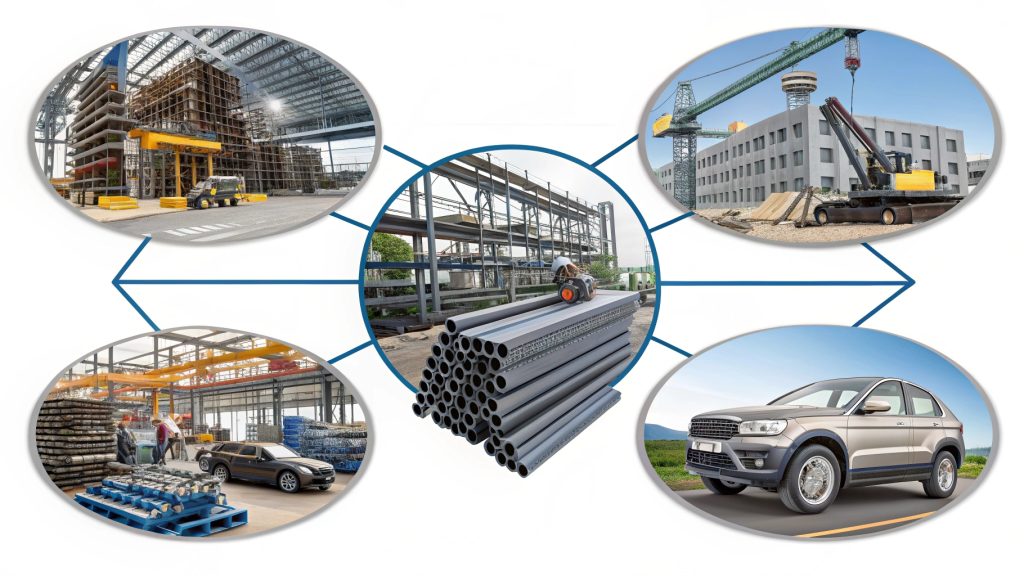
Let's look at how different industries use carbon steel. Its use is so widespread because it offers a fantastic balance of properties. It’s strong enough for demanding jobs but affordable enough for mass production.
Here’s a simple breakdown of its main industrial uses:
-
Construction: This is one of the biggest users. Low carbon steel is used for I-beams, steel plates, and reinforcing bars (rebar). It has the strength to support massive structures but is also easy to weld and assemble on-site.
-
Automotive: From the chassis and frame to the body panels and exhaust pipes, carbon steel is everywhere in a car. Low carbon steel is used for body panels because it is easy to form into complex shapes. Medium carbon steel is used for axles and crankshafts that need more strength.
-
Machinery and Equipment: This is a big area for my business. We machine a lot of medium carbon steel to create gears, shafts, bolts, and machine frames. It provides a great combination of strength, wear resistance, and toughness without the high cost of alloy steels.
What is high carbon steel tool steel commonly used for?
Your cutting tools are dulling too quickly, halting production. This costs you valuable time and money on constant replacements. You need a material that stays sharp and lasts longer.
High carbon tool steel is mainly used for making things that need to cut, press, or form other materials. This includes drill bits, saw blades, milling cutters, knives, and industrial punches and dies. Its extreme hardness allows it to hold a sharp cutting edge.
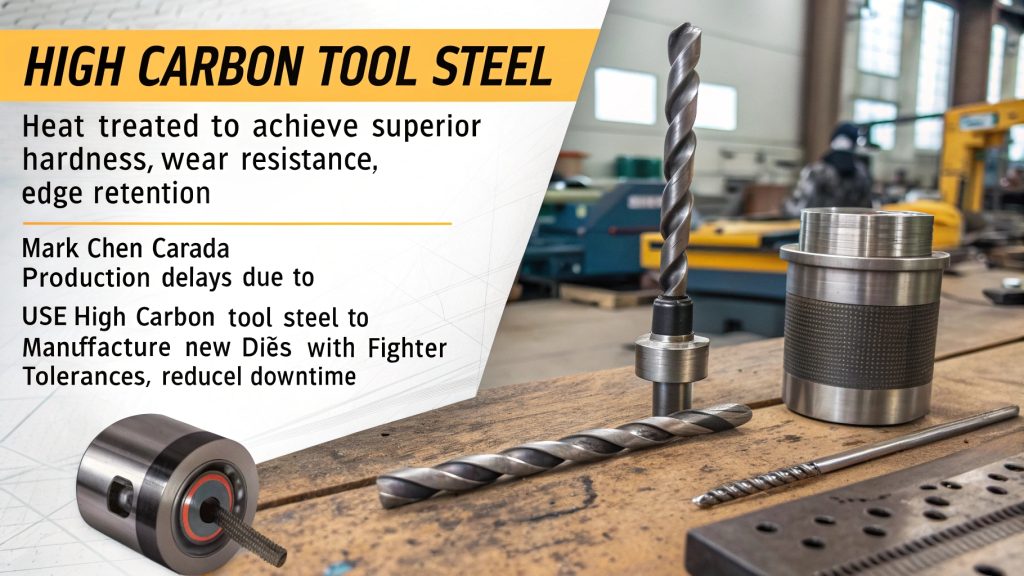
When we talk about "tool steel," we're often talking about a specific grade of high carbon steel. The ability to be heat-treated to a very high hardness is its most important characteristic. This hardness gives it superior wear resistance and the ability to hold a sharp edge, which is essential for anything that cuts.
I remember a client from Canada, a company owner like Mark Chen, who was having problems with his stamping dies. The dies, used to form small electronic components, were wearing out too fast. This caused production delays and quality issues. He sent us the designs, and we suggested using a specific grade of high carbon tool steel. We machined the new dies with very tight tolerances, ensuring a perfect fit. The result was a tool that lasted much longer, saving him from costly downtime.
Here is a simple table showing why it's chosen for specific tools:
| Tool Example | Why High Carbon Steel is Used |
|---|---|
| Drill Bits & Saw Blades | Must stay sharp while cutting through other hard materials. Hardness prevents the edge from dulling quickly. |
| Stamping Dies & Punches | Must withstand repeated high pressure without deforming. Wear resistance ensures a long operational life. |
| Knives & Chisels | Can be honed to a very fine, sharp edge. The hardness ensures the edge is not easily rolled or damaged. |
| Springs | Has high yield strength, allowing it to return to its original shape after being bent or compressed. |
What is carbon steel mainly used for?
You need a versatile and affordable metal for general fabrication. Choosing an overly strong or expensive material is a common mistake. You need a simple choice that is easy to work with.
Carbon steel, especially low-carbon "mild steel," is mainly used for general-purpose applications. Think of structural steel for buildings, car body panels, pipes, and everyday metal objects. Its low cost, good weldability, and ease of forming make it the most common steel produced.
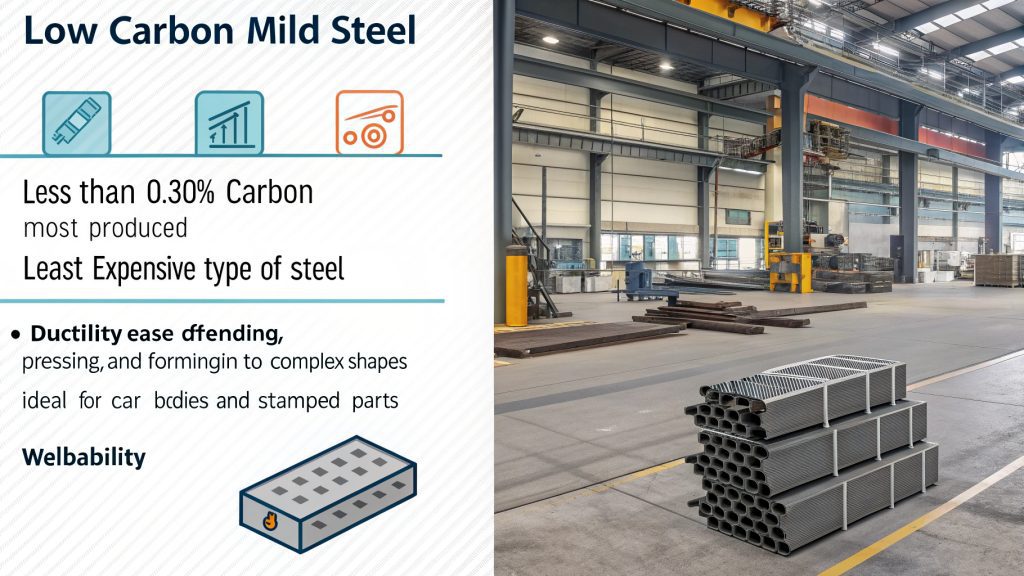
When people just say "carbon steel," they are often thinking of low carbon steel, also known as mild steel. It contains very little carbon, usually less than 0.30%. This makes it the most produced and least expensive type of steel, and it's the foundation of modern infrastructure. It's not as strong as its high-carbon cousins, but its other properties make it incredibly useful.
Its main advantages are its ductility and weldability. Ductility means it can be easily bent, pressed, and formed into complex shapes without breaking. This is why it's perfect for car bodies and other stamped parts. At my company, Worthy Hardware, we find mild steel is very easy to machine. This translates to faster production times and lower costs for our clients, which is a key focus for purchasing managers. It also welds cleanly, which is essential for fabricating large structures or complex assemblies. From furniture frames to electronic enclosures, the applications are almost endless because it is so forgiving and economical.
Conclusion
In short, carbon steel is a top choice for many industries. Its mix of strength, low cost, and versatility makes it invaluable. We can help you choose the right grade.