
Which Industries Benefit Most From CNC Machined Polyamide Components?

Struggling to find a material that is both strong and machinable? The search for the perfect component can be frustrating, delaying your entire production timeline.
CNC machined polyamide components are invaluable in the aerospace, automotive, and electronics industries. This is because polyamide, also known as nylon, offers excellent mechanical strength, thermal stability, and chemical resistance, making it ideal for high-performance applications where durability and precision are critical.
You need parts that can stand up to tough conditions. But finding a material that has the right properties and can also be precisely machined is a real challenge. I've seen many clients, like Mark from Canada, get stuck in this exact situation. They need components that won't fail under stress, heat, or exposure to chemicals. The good news is that there's a solution that works across many demanding fields. It's all about choosing the right material and the right manufacturing process. This combination is key to moving from a design concept to a reliable final product without costly delays or performance issues.
What are some industries that heavily rely on CNC machining?
Finding a manufacturing process that delivers both precision and speed is tough. You have complex designs, but traditional methods are slow and can't meet your quality standards.
Industries like aerospace, automotive, medical, and electronics heavily rely on CNC machining. It's the only way to produce the highly complex and precise parts they need, often with very tight tolerances, to ensure safety and performance in their final products.
When I first started in this business, I was amazed by the range of clients we served. From a startup building robots to a large automotive company, they all had one thing in common: they needed parts made perfectly to their designs. CNC machining is the bridge that connects a digital design to a physical, functional part.
Polyamide is a perfect example of a material that shines with CNC machining. It's a high-strength plastic that can be machined into very intricate shapes. This is why it is so popular in industries where failure is not an option. For example, in the aerospace industry, polyamide parts can reduce weight without sacrificing strength. In the automotive sector, they are used for engine components that must endure high temperatures and constant friction. It’s all about matching the material's strengths with the industry's needs.
| Industry | Key CNC Machining Application | Why Polyamide is a Good Fit |
|---|---|---|
| Aerospace | Lightweight structural components, interior fittings | High strength-to-weight ratio, flame retardant properties. |
| Automotive | Engine covers, gears, bearings, fuel system parts | Excellent heat resistance, chemical resistance, low friction. |
| Electronics | Insulators, connectors, casings, circuit board mounts | Great electrical insulation properties, dimensional stability. |
What industries need machined parts?
Your project requires custom parts with specific dimensions and material properties. Off-the-shelf components just won't work, and finding a reliable supplier for custom work can feel impossible.
Virtually every manufacturing industry needs machined parts at some stage. This includes the automotive, aerospace, medical, consumer electronics, and industrial machinery sectors. They all require custom components for prototyping, production, and repair to function correctly.
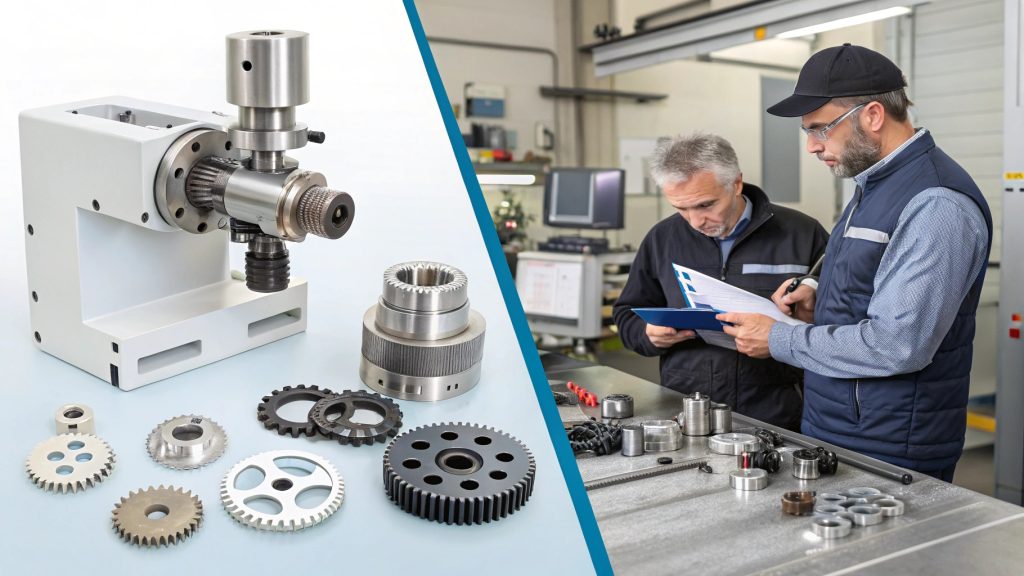
I often talk to company owners who are frustrated because they can't find a component that fits their new product. This is a very common problem. The solution is almost always custom machined parts. CNC machining allows us to take a material like polyamide and shape it into exactly what the customer needs. Polyamide is incredibly versatile.
Because it's so strong and resistant to heat and chemicals, it can be used to make parts for a huge variety of applications. Think about the automotive industry. They need custom gears, bushings, and housings that can handle the harsh environment inside a car. Or consider the electronics industry, which needs tiny, precise insulators and connectors. Polyamide can be machined to meet the tight tolerances these applications demand. That’s why so many industries turn to CNC machining for their custom part needs.
Here’s a breakdown of why these industries depend on custom machined parts:
-
Prototyping: Before mass production, companies need to test their designs. CNC machining is perfect for creating one-off prototypes quickly.
-
Customization: Many products need parts that are unique to their design. You can't buy these off the shelf.
-
Material Specificity: Sometimes, a product requires a part made from a specific material, like polyamide, for its unique properties.
-
Precision: Applications in aerospace and medical require parts with extremely high accuracy that only CNC machining can provide.
Where do CNC machinists make the most money?
You want to apply your CNC machining skills to high-value projects. But it's hard to know which industries offer the best opportunities and are willing to pay for top-tier quality.
CNC machinists typically earn the most in industries where precision and reliability are absolutely non-negotiable. This includes the aerospace and defense, medical device manufacturing, and high-performance automotive sectors, where component failure can have catastrophic consequences.
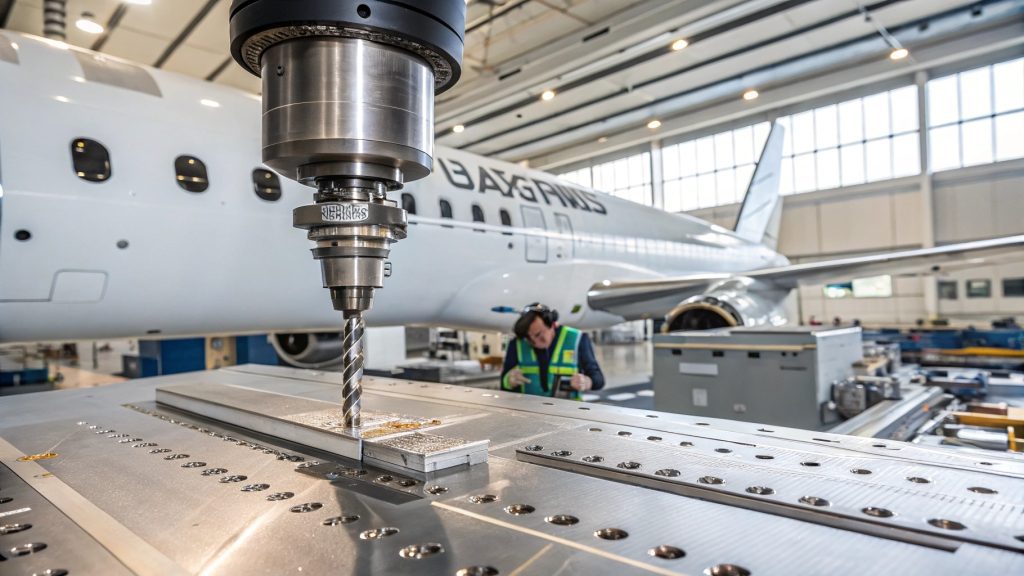
When we work on parts for the aerospace or medical industry, the standards are incredibly high. The tolerances are tighter, the material requirements are stricter, and the inspection process is much more intense. This is because the stakes are so high. A single faulty part in an airplane or a surgical tool can lead to disaster. Because of this, companies in these fields are willing to invest more to ensure perfection.
They need suppliers like us who have the right equipment, like 5-axis CNC machines, and the experience to handle complex jobs. Using advanced materials like PEEK or high-grade polyamide is also common. These materials are expensive, but their performance justifies the cost. So, if you're looking for the most lucrative work, it's in these demanding, high-stakes industries where quality is valued above all else.
| Industry | Why It Pays More | Example of High-Value Part |
|---|---|---|
| Aerospace & Defense | Extreme safety standards, complex geometries, exotic materials. | Turbine blades, landing gear components. |
| Medical Devices | Strict regulatory approval (FDA), biocompatible materials, micro-tolerances. | Surgical instruments, custom implants, diagnostic machine parts. |
| Automotive (High-Performance) | Extreme performance requirements, custom designs for racing. | Custom engine blocks, transmission components. |
| Electronics (Semiconductors) | Ultra-clean environments, machining of very hard materials. | Wafer handling equipment, vacuum chamber components. |
In which industries is CNC machining used for cutting, milling, and drilling materials?
You understand CNC machining involves cutting, milling, and drilling. But you're not sure how these specific processes apply to real-world industries and the parts they create.
CNC cutting, milling, and drilling are fundamental processes used across all manufacturing sectors. Industries like automotive, aerospace, industrial machinery, and electronics use them to shape raw materials like polyamide, aluminum, and steel into finished functional components.
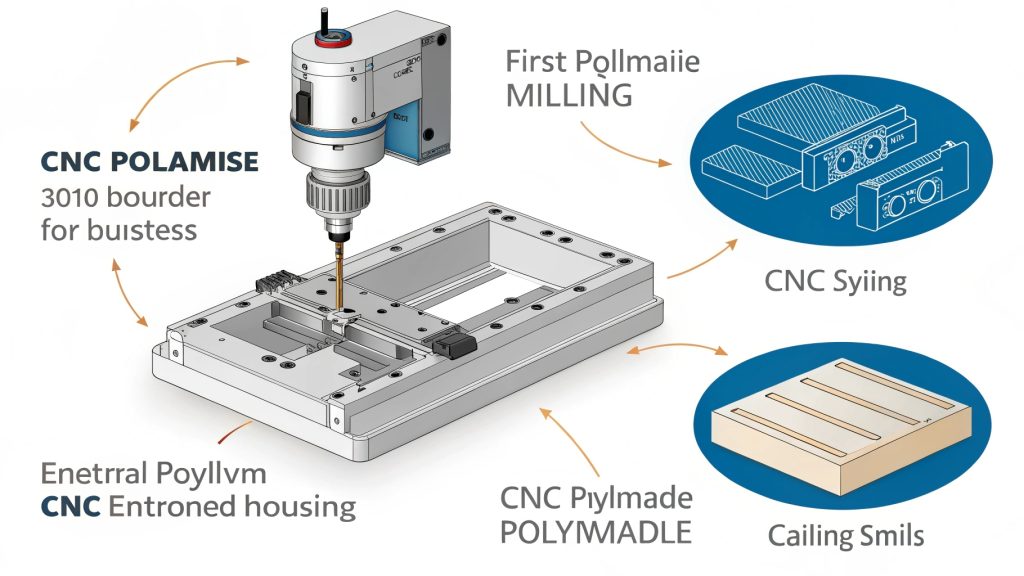
These three actions—cutting, milling, and drilling—are the building blocks of CNC machining. It's how we turn a solid block of material into a useful part. Let's take polyamide, for instance. A customer might send us a design for a complex housing for an electronic device. First, we might use a CNC cutter to slice a large sheet of polyamide into a manageable block.
Then, a CNC mill, with its rotating tool, carves away material to create the housing's external shape, internal pockets, and intricate features. Finally, a CNC drill creates precise holes for screws, cables, or mounting points. Each process is computer-controlled, which guarantees that every part is identical and matches the digital design perfectly. This level of precision is essential in the automotive industry for engine parts and in electronics for small, detailed components where everything has to fit together perfectly.
Here's how these processes are used:
-
Cutting: This is often the first step. It involves separating a piece of raw material from a larger stock. Think of it as the rough outline.
-
Milling: This is the primary shaping process. A multi-axis tool moves along different paths to remove material and create complex surfaces, pockets, and contours.
-
Drilling: This process is used to create holes. With CNC, we can control the exact position, diameter, and depth of each hole, which is critical for assembly.
Conclusion
In short, CNC machined polyamide is vital for aerospace, automotive, and electronics. Its strength and versatility make it the top choice for creating precise, durable, and high-performance custom parts.