
What Materials Should You Choose for Robotics and Automation Components?

Choosing the wrong material for your robot can cause serious failures. This leads to costly downtime and redesigns. But selecting the right one ensures performance and reliability from the start.
The best materials for robotics are typically high-strength, low-density options like aluminum and carbon fiber. Other common choices include stainless steel, titanium, magnesium alloys, and engineering plastics like PEEK and Delrin. The final choice depends on the specific application's requirements for weight, strength, and cost.
Choosing the right material is a big decision. It affects everything from how fast your robot moves to how long it lasts. In my years of running Worthy Hardware, I've worked with many clients in the robotics and automation industry. I have seen firsthand how picking the right material makes all the difference in a project's success. It's not just about the part's function, but also about manufacturing costs and long-term reliability. Let's break down the common options and what you need to consider to make the best choice for your project.
What materials are used in robotics?
Are you unsure what materials are standard in robotics? This uncertainty can slow down your design process and add risk. Knowing the common options gives you a great starting point.
Robotics commonly use metals like aluminum, stainless steel, and titanium for structural strength. Plastics such as ABS, PEEK, and Delrin are used for their light weight and electrical insulation. Composites like carbon fiber offer the best strength-to-weight ratio for high-performance applications.
When we look at materials for robotics, we can group them into three main families. Each family has its own set of benefits.
Metals
Metals are the backbone of many industrial robots. They provide the strength and stiffness needed for heavy lifting and precise movements. Aluminum is very popular because it is strong but also lightweight. Steel and stainless steel are used when maximum strength and durability are more important than weight.
I once helped a client who was building a large robotic arm for a factory. They initially considered only steel, but we found that using aluminum for some non-critical parts saved weight and reduced their motor costs significantly.
Plastics
Engineering plastics are essential in modern robotics. They are lightweight, resistant to corrosion, and can be electrical insulators, which is very important. Materials like Delrin are great for gears and bearings because they have low friction. PEEK is amazing for high-performance applications that need to resist high temperatures and harsh chemicals.
Composites
Composites, especially carbon fiber, are premium materials. They offer incredible strength and stiffness for a very low weight. This makes them perfect for applications where every gram counts, like in high-speed robot arms or drones. While they can be more expensive to machine, the performance benefits are often worth it.
Here is a simple table to compare these materials:
| Material Type | Key Properties | Common Robotic Use |
|---|---|---|
| Aluminum | Good strength-to-weight, easy to machine, corrosion resistant | Robot frames, arms, structural components |
| Stainless Steel | High strength, very durable, corrosion resistant | End-effectors (grippers), food-grade robots |
| Engineering Plastics | Lightweight, low friction, chemical resistant, insulating | Housings, gears, bearings, insulators |
| Carbon Fiber | Highest strength-to-weight, very stiff, expensive | High-speed arms, drone frames, performance parts |
What is the best material to make a robot?
Are you searching for the single "best" material for your robot? This search can be frustrating because a single best option doesn't exist. The "best" choice is always relative to your needs.
There is no single "best" material. For small, fast robots, aluminum or carbon fiber are excellent choices. For industrial robots needing high strength and durability, steel is often preferred. The best material is the one that best balances your project's performance, weight, and budget requirements.
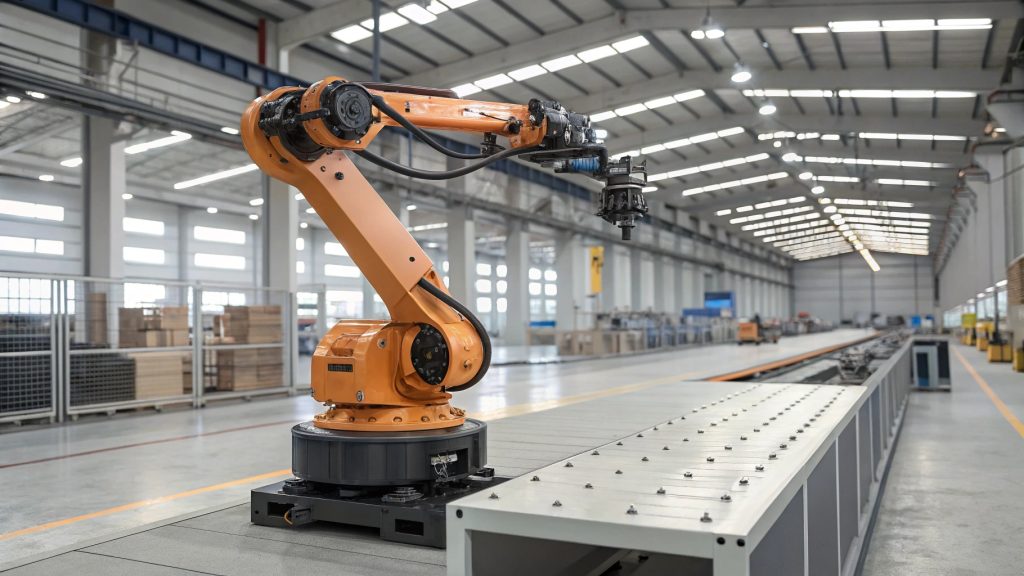
The idea of a single "best" material is a myth. The right question to ask is, "What is the best material for my specific application?" The answer depends entirely on what your robot needs to do. A material that is perfect for a small desktop robot would fail completely in a large industrial setting.
I remember a client from Canada, a business owner like Mark Chen, who came to us for a project. He wanted to build a series of lightweight robotic arms for a packaging line. He was focused on speed and efficiency. He initially thought about using stainless steel for durability. But after we talked about the robot's tasks, we realized 6061 aluminum was a much better fit. It was strong enough, much lighter, and cheaper to machine. This change allowed his robots to move faster and use less energy, which saved him money in the long run.
To find your "best" material, you need to think about the robot's primary function.
-
For high-speed or aerial robots: You need the best strength-to-weight ratio. Lighter parts mean faster acceleration and better energy efficiency.
-
For industrial manipulators: Strength and durability are often the most important factors. These robots lift heavy loads and must survive for millions of cycles in tough environments.
-
For consumer or hobbyist robots: Cost is usually a major factor. The materials must be affordable and easy to work with.
Here is a quick guide:
| Robot Application | Primary Need | Best Material Choices |
|---|---|---|
| High-Speed Automation | Low weight, high stiffness | Carbon Fiber, Aluminum |
| Heavy-Duty Industrial | High strength, durability | Steel, Stainless Steel |
| Medical or Food Grade | Corrosion resistance, cleanability | Stainless Steel, PEEK, PTFE |
| Consumer Electronics | Low cost, aesthetics | ABS Plastic, Polycarbonate |
What factors should be considered when choosing materials for building a robot?
Are you overwhelmed by the factors to consider for your robot's materials? Ignoring key factors can lead to poor performance or failure. A simple checklist can guide you to the perfect choice.
Key factors include mechanical properties like strength, stiffness, and fatigue resistance. Also, consider physical properties such as weight (density) and thermal expansion. Finally, you must evaluate cost, manufacturability, and the robot's operating environment, like temperature or chemical exposure.
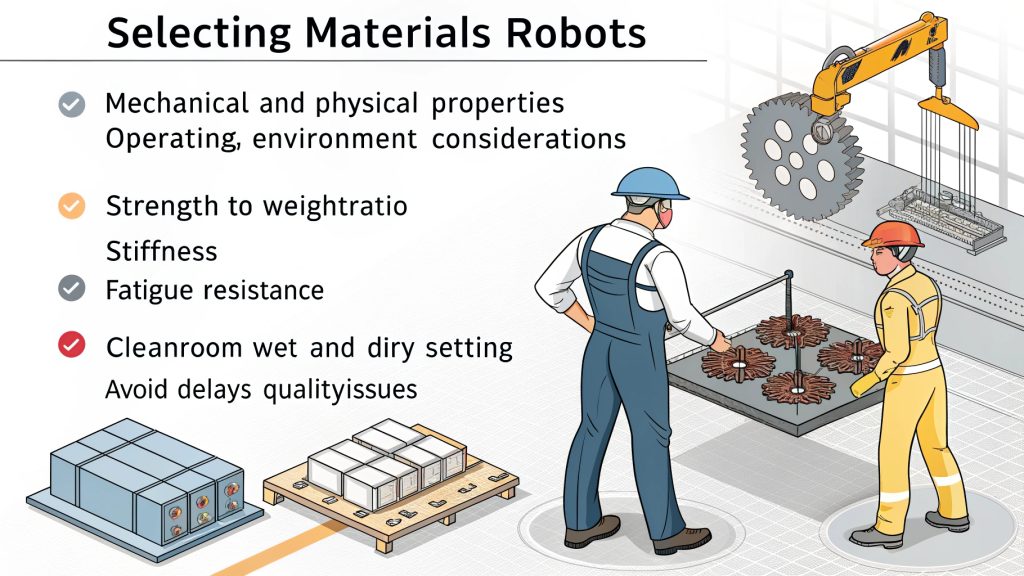
Choosing a material isn't just about picking the strongest one. It's a balancing act. You have to consider several factors together to find the optimal solution. At my company, we always walk our clients through these points to avoid costly mistakes. Delays and quality issues often happen because these factors were not considered early in the design stage.
Mechanical and Physical Properties
The most important factor is the strength-to-weight ratio. You want a material that is strong enough for the job but as light as possible. This makes the robot more efficient. Stiffness is also critical. A stiff material will not bend or flex under load, which is essential for precision. You also need to think about fatigue resistance. A robot arm might perform the same motion millions of times, so the material must not crack or fail over time.
Operating Environment
Where will your robot be used? A robot in a cleanroom for electronics has very different needs than one in a wet and dirty manufacturing plant. You must consider temperature, humidity, and exposure to chemicals or radiation. Stainless steel or special plastics like PVC might be necessary if corrosion is a risk.
Cost and Manufacturability
Some high-performance materials like titanium or carbon fiber are very expensive. They can also be difficult and slow to machine, which adds to the final cost of the part. Sometimes, a slightly heavier but much cheaper and easier-to-machine material like aluminum is the better business decision. We have over 100 materials available and the experience to help you find that sweet spot between performance and cost.
Here is a table summarizing these factors:
| Factor | Why it Matters for Robotics |
|---|---|
| Strength-to-Weight Ratio | Determines the robot's speed, efficiency, and how much it can carry. |
| Stiffness | Prevents unwanted bending and flexing, which leads to higher precision. |
| Operating Environment | Dictates the need for resistance to corrosion, heat, or chemicals. |
| Manufacturability & Cost | Affects the final price and production time of your components. |
What are the requirements for robotics and automation?
Robotics and automation have very demanding requirements. If you fail to meet them, your system simply will not work as intended. Understanding these core needs is the first step to success.
The primary requirements are precision, repeatability, and reliability. Components must be made to tight tolerances to ensure accurate movements. They must also be durable to withstand millions of cycles without failure. Lightweight materials are often needed for speed and energy efficiency.
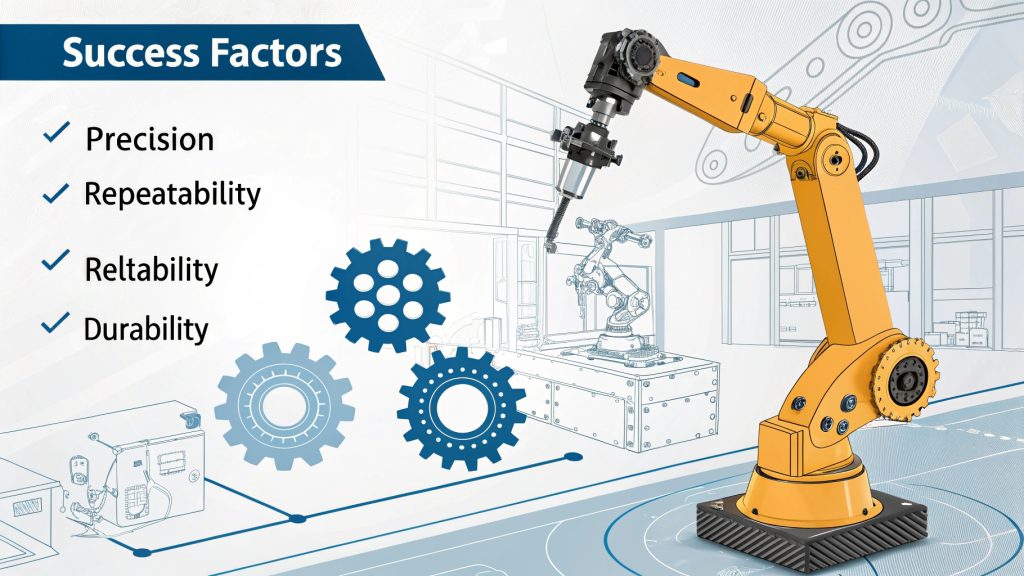
The success of any robotic system comes down to three things: doing the right thing, in the right place, every single time. This translates to specific engineering requirements that your material choices and manufacturing partner must meet.
Precision and Repeatability
Precision means the robot can move to an exact point. Repeatability means it can return to that same point over and over again. Both rely on components being manufactured to very tight tolerances. Even a tiny error in a part can become a large error at the end of a robotic arm. The material you choose affects this.
A stable material like aluminum or steel will hold its shape and dimensions better during and after machining than some plastics. At Worthy, we can machine parts to tolerances below +/- 0.001 inch, which is critical for high-precision robotics.
Reliability and Durability
An automation system is an investment. It needs to run for years with minimal downtime. This means every component must be reliable. The material must have excellent fatigue life to withstand the stress of millions of cycles. This is why material selection is so important. We also ensure reliability through our process.
We do a 100% inspection on all parts before they ship. This prevents a customer from finding a bad quality part after waiting, which I know is a major pain point for many procurement managers.
Speed and Efficiency
In many automation tasks, speed is money. The faster a robot can complete its cycle, the more productive it is. The weight of the robot's components is the biggest factor here. Lighter parts require smaller, less expensive motors and consume less energy to move quickly.
This is why the strength-to-weight ratio is a constant focus. Choosing a lighter material like aluminum over steel can lead to significant improvements in speed and long-term operating costs.
Conclusion
Choosing the right material is vital for your robot's success. By balancing strength, weight, and cost, you create reliable and efficient automation. We can help you manufacture it.