
What Are The Best Materials for CNC Machining in Aerospace Applications?

Aerospace parts need the right material. The wrong choice risks catastrophic failure and high costs. We'll show you the best CNC-machined materials for safety and performance.
The best materials for aerospace CNC machining are high-strength, lightweight alloys. These include titanium alloys (like Ti-6Al-4V), high-grade aluminum (like 7075 and 2024), and superalloys like Inconel. These materials offer excellent performance under extreme temperatures and stress, making them ideal for critical components.
Selecting the right material is just the beginning. You also need to understand how these materials are shaped and why specific machines are used for the job. In my years of experience, I've seen how the right combination of material and machine can make all the difference. It's not just about what you make, but how you make it. Let's break down the role of CNC machining in the aerospace world. This will give you a clearer picture of the entire process.
What is a CNC machine used for in the aerospace industry?
Making complex aerospace parts with old methods is slow and inaccurate. This leads to wasted material, inconsistent quality, and parts that don't meet strict safety standards.
In the aerospace industry, CNC machines are essential for manufacturing high-precision components. They create parts like turbine blades, landing gear components, structural brackets, and complex housings. The technology ensures every part meets extremely tight tolerances and is perfectly repeatable, which is critical for safety.
CNC machining is the backbone of modern aerospace manufacturing. It's not just about one type of part; it's used across the entire aircraft. Let's look at some key areas.
Prototyping and Custom Parts
Before a new aircraft design is finalized, engineers need to test prototypes. CNC machining allows for the rapid creation of single, highly accurate parts. Here at Worthy, we often help clients create these initial prototypes. We can quickly turn a design file into a physical part, which helps them test form, fit, and function without committing to expensive tooling. This speed is crucial in a fast-moving industry.
Mass Production of Critical Components
Once a design is approved, CNC machines handle the mass production. The process is repeatable, meaning the thousandth part is identical to the first. This consistency is non-negotiable for safety.
| Application Area | Example CNC-Machined Parts | Why CNC is Critical |
|---|---|---|
| Engines | Turbine blades, compressor wheels, housings | Handles tough materials, complex curves, extreme tolerances |
| Airframe | Ribs, spars, brackets, landing gear | Creates strong, lightweight structural components |
| Interior | Seat frames, cabin fittings, instrument panels | High-quality finish and precise fit for assembly |
The ability to work with difficult materials like titanium and Inconel is another reason CNC machining is so vital. These materials are too tough for many traditional methods.
Which CNC machine is best suited for high-precision aerospace components?
Not all CNC machines can handle the complexity of aerospace parts. Using the wrong machine results in parts that fail inspection, wasting time and expensive materials.
For high-precision aerospace components, 5-axis CNC machining is the best choice. It allows the cutting tool to approach the workpiece from five different directions in a single setup. This reduces setup time, increases accuracy, and makes it possible to create highly complex geometries efficiently.
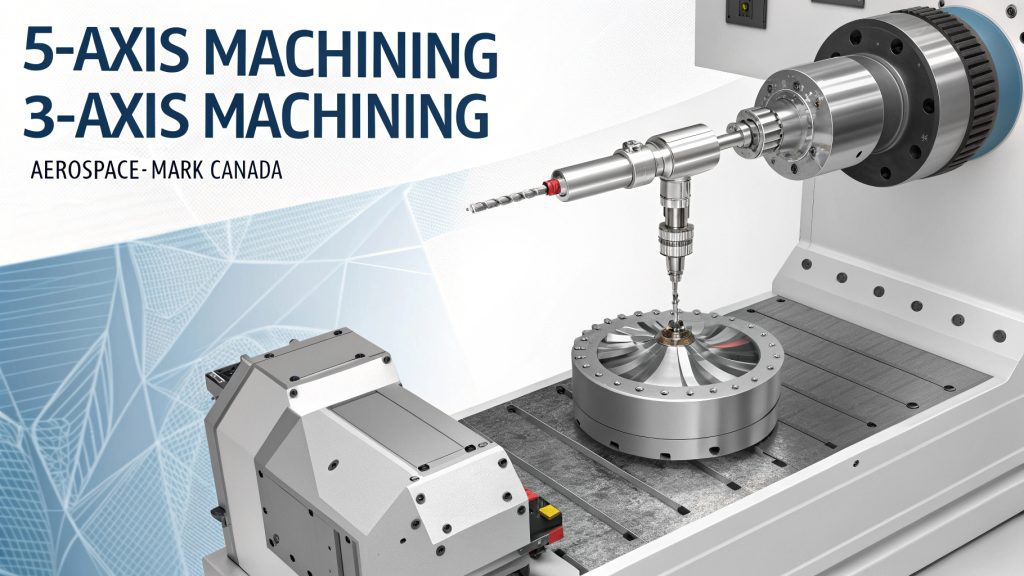
While 3-axis machines are great for simpler parts, the aerospace industry depends on 5-axis technology. The difference is huge. A 3-axis machine moves in three directions (X, Y, Z), but a 5-axis machine adds two rotational axes. This opens up a world of possibilities.
The Advantage of Fewer Setups
With a 3-axis machine, you often have to stop the process and manually reposition the part to machine different sides. Every time you do this, you risk introducing small errors. A 5-axis machine can tilt the tool or the part itself, reaching almost any surface in one go.
This is called a "single setup" or "done-in-one" machining. I remember a client, Mark from Canada, who came to us with a complex housing part. His previous supplier used a 3-axis machine and the part had tolerance issues because of multiple setups. We machined it on our 5-axis center, and the part was perfect. It saved him time and money on rejected parts.
Creating Complex Geometries
Aerospace parts are rarely simple blocks. They have curved surfaces, angled holes, and deep pockets to reduce weight. Think of a turbine blade. It's a very complex shape. Only a 5-axis machine can create these features smoothly and accurately. This capability is not just a nice-to-have; it's a requirement for modern aerospace design.
Does NASA use CNC machines?
People wonder if top agencies like NASA use the same technology available to others. It seems like they must have some secret, unobtainable manufacturing method for space exploration.
Yes, NASA absolutely uses CNC machines. They are fundamental to manufacturing parts for rockets, satellites, rovers, and space telescopes. From the Mars rovers to the James Webb Space Telescope, CNC machining provides the extreme precision and reliability needed for components that must perform flawlessly in space.
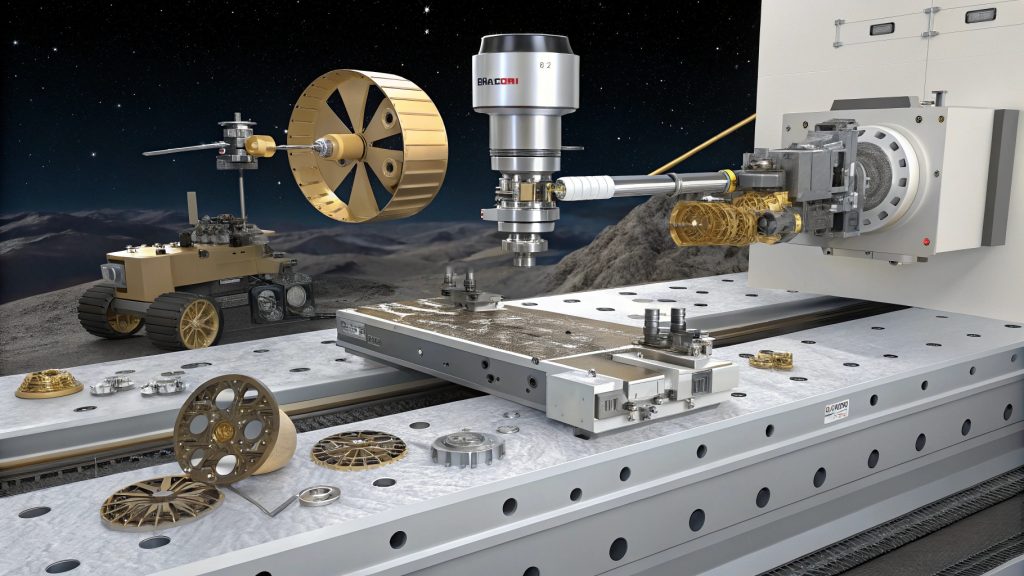
NASA is at the forefront of engineering, and CNC machining is a key tool in their toolbox. They don't just use it; they push its limits. The components for space missions have zero margin for error. A single failed part could jeopardize a multi-billion dollar mission and years of work.
Examples of CNC in Space Exploration
Think about the Mars rovers, like Perseverance. Many of its structural components, wheels, and scientific instrument housings were created using CNC machining. These parts need to be incredibly lightweight to save on launch costs, but also strong enough to survive a rough landing and extreme temperatures on Mars.
The James Webb Space Telescope is another great example. Its mirrors are coated with a thin layer of gold, but the underlying structure needed to be machined with incredible precision. CNC technology made it possible to create these complex, lightweight support structures that hold the mirrors perfectly in place.
The Same Principles Apply to All
While we may not be making parts for NASA every day, the principles of precision and reliability are the same. We apply the same quality control and tight tolerance standards to our customers' parts. The need for 100% inspection and flawless execution is something we understand well. The technology that puts a rover on Mars is the same technology we use to make reliable parts for our clients.
What materials can be used in CNC machining?
Limiting your material choices can stop you from creating the best possible product. You might be stuck with a part that's too heavy, not strong enough, or too expensive.
CNC machining is very versatile and works with a vast range of materials. This includes all kinds of metals like aluminum, steel, titanium, and brass. It also works with plastics like ABS, PEEK, and Nylon, as well as composites like carbon fiber and even wood.
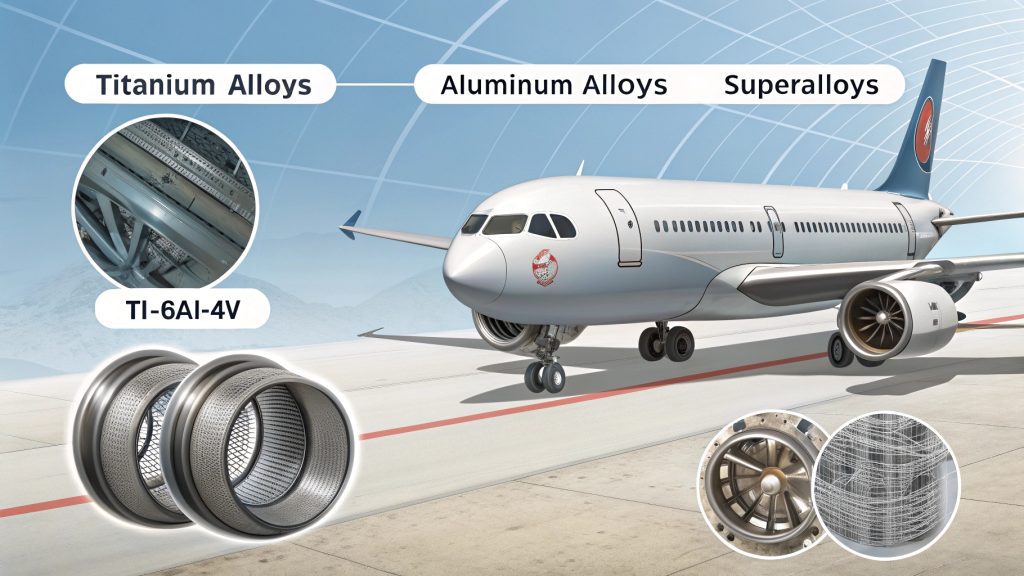
While CNC machines can handle over 100 materials, the choice becomes more focused when we talk about aerospace. The main concerns are strength-to-weight ratio, temperature resistance, and corrosion resistance. In my experience working with aerospace clients, a few key materials come up again and again.
Top Materials for Aerospace
Titanium Alloys: This is the star player. Alloys like Ti-6Al-4V are strong as steel but about 45% lighter. They are also incredibly resistant to corrosion and high temperatures. We often machine titanium for engine components, landing gear, and critical airframe structures.
Aluminum Alloys: Not just any aluminum will do. Aerospace-grade aluminum like 7075 and 2024 are used. They offer an excellent strength-to-weight ratio and are easier to machine than titanium, making them more cost-effective for things like fuselage skins and structural parts.
Superalloys: Materials like Inconel are used in the hottest parts of an engine because they maintain their strength at extreme temperatures where other metals would fail.
Here is a simple breakdown:
| Material Group | Common Examples | Key Aerospace Use Case |
|---|---|---|
| Titanium Alloys | Ti-6Al-4V | Engine parts, landing gear, fasteners |
| Aluminum Alloys | 7075, 2024, 6061 | Airframe, wings, fuselage |
| Superalloys | Inconel, Waspaloy | Turbine blades, combustion chambers |
| Hard Ceramics | Silicon Carbide | Armor, high-wear components |
Choosing the right one depends entirely on the part's specific function and environment. We often help our clients make this decision based on their design and budget.
Conclusion
Choosing the right material, like titanium or aerospace aluminum, and using 5-axis CNC machining is key to creating safe, reliable, and high-performance aerospace parts. Our expertise can guide you.