
How to Reduce Costs in CNC Machining Without Compromising Quality?

High CNC machining costs eating your budget? Worried that cutting costs means lower quality? There is a much better way.
You can reduce CNC machining costs without sacrificing quality. The key is smart design, material choices, efficient processes, and strong quality control. This ensures value for your money.
So, you want to save money but still get top-notch parts. I completely understand. It is a common goal for many of my clients, like Mark Chen from Canada, who looks for quality and competitive pricing. Let's look at how we can make this happen for you. Read on for practical tips that we use at Worthy.
How Can You Actually Reduce CNC Machining Costs?
CNC projects often run over budget? You need savings but cannot risk part failure? It feels like a really tough choice.
Reduce costs by optimizing your part design for manufacturability (DFM). Also, choose appropriate materials and specify only necessary tolerances. Smart planning makes a very big difference here.
At Worthy, we firmly believe that good management is, at its core, quality management. When we have tight control over quality, costs naturally decrease. This, in turn, improves our overall production efficiency. My insight is that the management of a CNC machining factory is really about managing quality. Only when quality is under control can we reduce costs and improve efficiency.
Design for Manufacturability (DFM)
This is a huge factor. Before any metal is cut, we carefully review your design. We ask: "Can we simplify this design? Are there features that are very difficult, and therefore expensive, to machine?" Sometimes, a very small change in the design can save a lot of machining time. For example, avoiding extremely deep pockets or very small internal radii can help a lot. We often work with clients who need both high quality and competitive prices. They know that if we can identify these potential issues early, it saves them money in the long run. We always ask if every feature is absolutely necessary for the part's function.
Material Selection
Choosing the right material is also key. Some materials are much more expensive than others. Some materials are harder to machine, which means more machining time and more wear on our tools. We always discuss if you truly need an exotic alloy, or if a more standard, easier-to-machine material could work just as well for your application. We stock over 100 materials at Worthy, from various metals like aluminum, steel, and titanium, to plastics like ABS and PEEK. We can help you find the best balance.
Tolerance Specifications
This is about how precise the part needs to be. Tighter tolerances usually mean more careful machining, more inspection time, and potentially more scrapped parts if they don't meet the spec. All of this adds to the cost.
At Worthy, we can hold very tight tolerances, even sub +/- 0.001 inch. But it is important to only specify these tight tolerances where they are truly needed for the part to function correctly. For other features, standard tolerances, like +/- 0.005 inch (as per ISO 2768), are often perfectly fine and much cheaper to achieve. Clearly defining these on your drawings helps us give you the best possible price.
How Can You Make Machined Parts Cheaper Without Sacrificing Standards?
Want lower prices for your machined parts? Scared of poor quality or unreliable delivery? It is a very common fear.
Make parts cheaper by discussing your needs clearly with your supplier. Consider order volume. Consolidating orders or planning for larger batches can unlock significant cost savings for you.

Making parts "cheaper" should never mean making them "lower quality." At Worthy, our entire management philosophy revolves around quality. We believe that controlling quality effectively is precisely how we reduce overall costs and boost efficiency. We invest in strictly training our employees on all quality standards because skilled, well-trained people are fundamental to this process.
Clear Communication with Your Supplier
Good communication is absolutely essential. Here at Worthy, we have four experienced engineers who are always ready to help. They can review your designs thoroughly and suggest practical, cost-saving modifications. For instance, I remember a customer came to us with a very complex part design. After a quick discussion, our engineering team found a way to achieve the exact same function with a much simpler geometry.
This change alone cut the machining time by about 20%. This is the kind of collaborative partnership we always aim for. It is about working together to find the best and most cost-effective solution. This clear communication also helps avoid misunderstandings that can lead to delays – a significant pain point for many procurement officers like Mark.
Order Volume and Batch Size
Setting up a CNC machine for a new job takes a certain amount of time. This setup cost is essentially the same whether we are making just one part or one hundred parts. So, if you can order more parts at once, that initial setup cost gets spread out over a larger number of units. This naturally brings the price per part down.
At Worthy, we handle everything from single prototypes (we have no minimum order quantity, or MOQ) right up to high-volume CNC machining runs. If you can plan your orders effectively and consolidate them when possible, you will definitely see savings.
Simplify Complex Features
Take a moment to think about features like very thin walls, deep and narrow slots, or intricate 3D surfacing. These types of features usually take much more time to machine. They might also require special, more expensive tooling. If these complex features are not absolutely critical to the function of your part, simplifying them can lead to noticeable cost reductions.
We always aim for 100% inspection of all parts we produce, so even with simpler designs, you can be assured that quality is always maintained. Our capability to machine large parts, up to 80 inches for milled parts or 62 inches in length for turned parts, means we can handle a wide variety of complexities. However, simpler is very often more cost-effective.
How Can You Make CNC Machining More Efficient to Lower Expenses?
Wasted time in CNC machining means higher costs? You want faster turnarounds and better prices? Efficiency is the real answer.
Boost CNC efficiency with optimized toolpaths and well-maintained machines. Skilled operators and minimizing setup times are also crucial. This means faster production and lower costs for everyone.
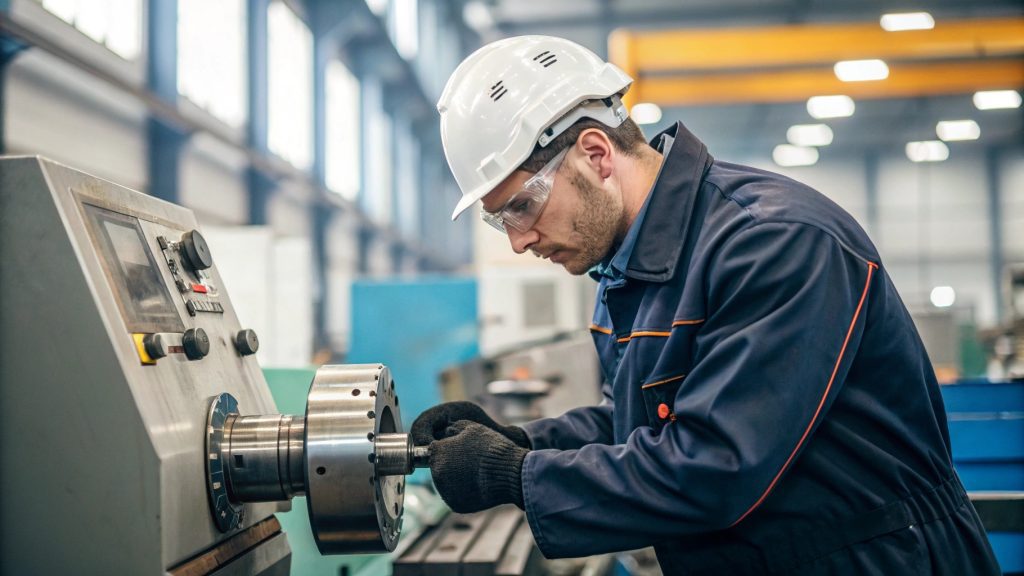
Efficiency is a direct path to cost reduction, and this is a principle we live by at Worthy. Our core belief is that managing quality effectively inherently enhances efficiency. This is why we rigorously train our team. We understand that skilled people are efficient people, and this focus on quality extends to every part of our operation, from initial consultation to final delivery.
Optimized Toolpaths
The path a cutting tool takes as it moves across the material greatly impacts the total machining time. We use modern CAM (Computer-Aided Manufacturing) software to help us create the most efficient toolpaths possible. This means we can remove material faster. It also helps reduce wear on the cutting tools and often results in a better surface finish on the final part. Our engineers are experts in this area. They carefully consider the specific material being machined, the types of tools available, and the capabilities of each CNC machine.
Regular Machine Maintenance
A well-maintained CNC machine runs reliably and accurately. At Worthy, we make sure our CNC machines are always in top condition. This proactive approach helps prevent unexpected breakdowns, which can cause significant delays and increase costs. Regular maintenance also ensures that our machines can consistently hold the tight tolerances we promise to our customers. This reliability is key, especially for clients like Mark who depend on timely deliveries.
Skilled Operators and Minimized Setup Times
Even with the very best machines and software, you absolutely need skilled people to operate them. Our CNC operators know how to set up jobs quickly and efficiently. They are also trained to monitor the machining process effectively and can spot potential problems early on. This dedication to quality, which includes our standard 100% inspection protocol, is a vital part of our commitment to overall efficiency.
As I mentioned before, setup time is a cost. We use techniques like quick-change tooling and standardized work-holding fixtures whenever possible to reduce this non-productive time. Every minute saved in setup is a cost saving that we can pass on to you. Our flexible delivery times are also supported by these efficient practices.
How Can You Effectively Reduce CNC Tooling Costs?
The cost of cutting tools adding up quickly? Need to manage this expense without affecting machining quality or speed at all?
Reduce tooling costs by using standard tools whenever possible. Proper tool selection for the material and managing tool life also help. Good tools last longer and perform much better.
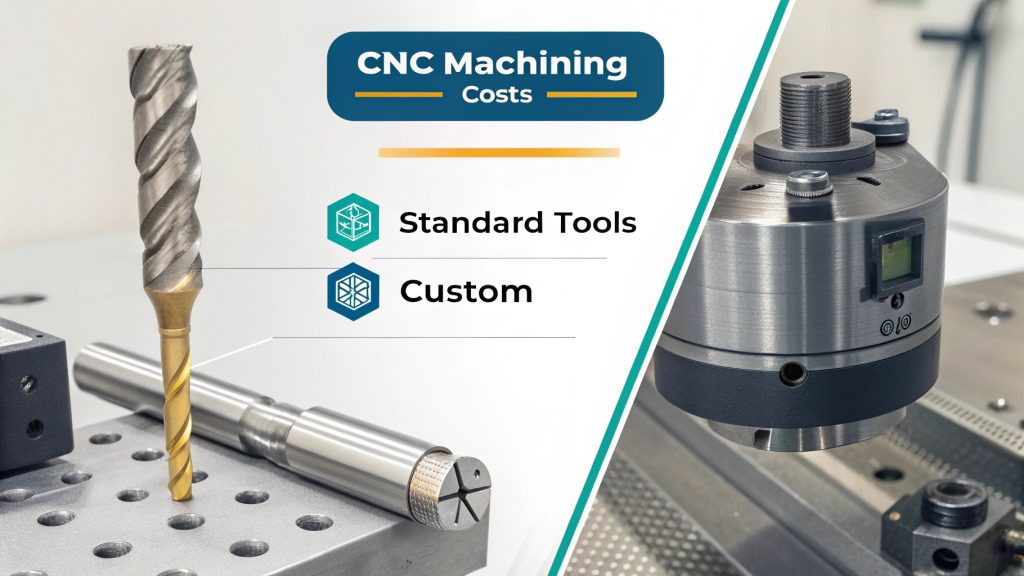 "Managing CNC Tooling Expenses")
Tooling is a very significant factor in the overall cost of CNC machining. At Worthy, managing our tooling effectively is an integral part of our overall quality management system. We know that using better tools, and using them wisely, contributes directly to both higher quality parts and lower costs for our customers. Our quality control includes making sure we use the right tools for every job.
Standard vs. Custom Tools
Standard cutting tools are generally mass-produced and are therefore much cheaper than tools that have to be custom-made for a specific job. When we review a design as part of our DFM process, one of the first things we check is whether standard tools can do the job effectively. For example, designing pockets or slots with standard corner radii allows us to use common, off-the-shelf end mills. We can accommodate any standard thread size with our existing tooling. We only need to prepare a manual quote if custom threads are absolutely required. This simple choice of using standard tools whenever feasible can save a lot of money.
Tool Material and Coatings
Choosing the right tool material, such as high-speed steel or carbide, and selecting appropriate coatings for the specific workpiece material can significantly extend the life of a tool. A tool that lasts longer means fewer tool changes during a production run. This reduces machine downtime and lowers overall tooling costs per part. We carefully consider this for every job. For instance, machining abrasive materials like some composites or hardened steels requires tougher tools, often with specialized coatings, to prevent rapid wear.
Optimized Cutting Parameters and Tool Management
Running cutting tools at the correct speeds and feeds is crucial. If you run them too slow, you are wasting valuable machine time. If you run them too fast, the tool can wear out very quickly or even break. Our experienced engineers and skilled machinists work to find the optimal cutting parameters for each material and operation. This maximizes tool life while maintaining cutting efficiency. This also directly affects the surface finish of the part; our standard as-machined finish is 125 Ra or better.
We also keep careful track of tool wear and replace tools proactively, before they fail. This prevents damage to the workpiece and ensures consistent quality. As a default, all sharp edges on parts are broken and deburred, which is also part of a good tooling strategy that considers the entire lifecycle of the part. Good tooling directly impacts the quality, reducing rework or scrap, which are significant hidden costs.
Conclusion
Reducing CNC costs without losing quality is truly achievable. Focus on smart design, material choice, operational efficiency, and strong supplier communication. Quality management is key.