
Which Surface Treatment Is Best For Aluminum Alloys: Anodizing, Plating, Or Coating?

Choosing a finish for aluminum parts can be tricky. Make the wrong choice, and you risk poor performance. This guide will help you select the best treatment.
For aluminum alloys, anodizing is often the best surface treatment due to its durability, corrosion resistance, and aesthetic options. In my experience, about 80% of our customers at Worthy choose anodizing for their aluminum parts, and for very good reasons.
You want your aluminum parts to look great and last long, right? But with so many surface treatment options, it's easy to feel overwhelmed. Let's break down the common choices so you can make an informed decision. Read on to find out more.
What is the best surface treatment for aluminium?
Struggling to pick the right surface treatment for your aluminum project? You want durability and a good look. I'll show you what usually works best.
Anodizing is frequently considered the best overall surface treatment for aluminum. It enhances natural corrosion resistance, improves wear resistance, and allows for dyeing in various colors. My company, Worthy, has seen this choice prove effective for countless applications.
When we talk about the "best" surface treatment, it really depends on what you need the part to do. However, based on nearly 30 years of experience in CNC machining here at Worthy, anodizing consistently comes out on top for many of our clients, like Mark Chen from Canada, who values both quality and appearance for his components.
Why Anodizing Often Wins
Anodizing isn't just a coating; it's an electrochemical process that converts the metal surface into a durable, corrosion-resistant, anodic oxide finish. This layer is integrated with the underlying aluminum, so it won't chip or peel easily.
It also provides a great base for paint or adhesives if needed. We can achieve various thicknesses and hardness levels, which is great for diverse applications, from consumer electronics to aerospace parts. Plus, the ability to dye the aluminum in a wide range of colors is a huge bonus for aesthetics. We often help customers select the right type of anodizing to meet their specific wear or environmental exposure needs.
Which is better, electroplating or anodizing?
Confused between electroplating and anodizing for your aluminum parts? Both offer protection, but they work differently. Let’s see which one might suit your needs better.
Anodizing is generally better for aluminum if you need enhanced corrosion resistance and a durable, integrated finish. Electroplating adds a layer of different metal, which can be good for specific properties like conductivity or solderability, but might not be as durable.
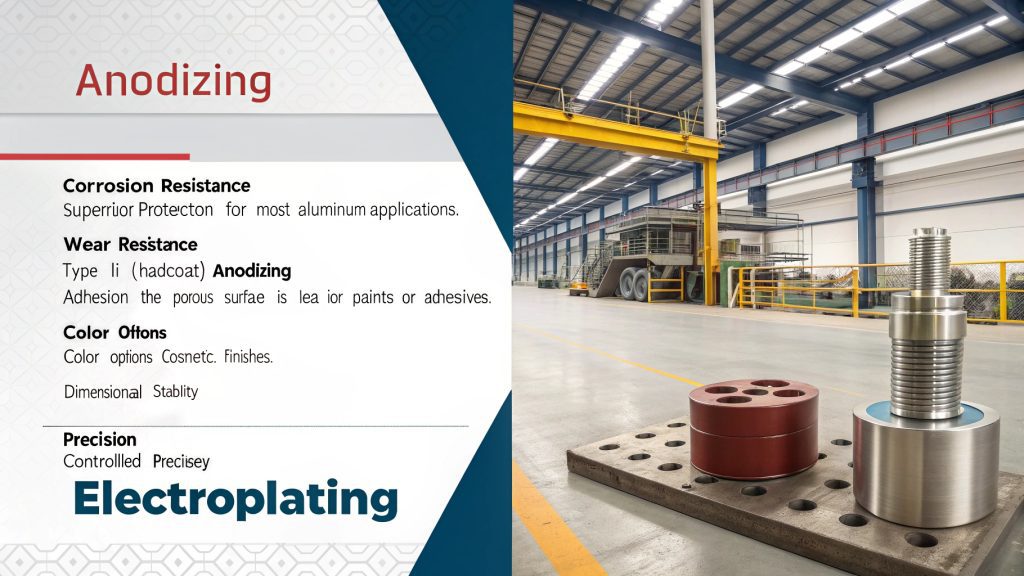
Deciding between electroplating and anodizing for aluminum really comes down to the specific requirements of your part. I've worked with many customers at Worthy who have faced this choice.
Anodizing: The Aluminum Specialist
Anodizing, as I mentioned, converts the aluminum surface itself into a hard, protective oxide layer. It's excellent for:
-
Corrosion Resistance: Superior for most aluminum applications.
-
Wear Resistance: Type III (hardcoat) anodizing is exceptionally durable.
-
Adhesion: The porous surface can be ideal for paints or adhesives.
-
Color Options: Offers a wide range of cosmetic finishes.
-
Dimensional Stability: Adds minimal thickness, which we can control precisely with our processes.
Electroplating: Adding a New Metal Layer
Electroplating[^1] involves depositing a layer of another metal (like nickel, chrome, tin, or silver) onto the aluminum. This is chosen for:
-
Specific Functional Properties: For example, silver plating for electrical conductivity, or tin for solderability.
-
Different Aesthetic: Chrome plating gives a very different look than anodizing.
-
Limitations: The bond between the plated layer and aluminum can be a point of failure if not done perfectly. It can also be more complex and costly for aluminum due to the need for special pre-treatment steps.
For general protection and aesthetics on aluminum, anodizing is usually my go-to recommendation. We offer various anodizing types at Worthy, ensuring we meet the +/- 0.005" general tolerances, or even tighter if needed.
What is the best surface finish for aluminum?
Want the perfect look and feel for your aluminum parts? The surface finish is key. I’ll explain what options achieve the best results for different needs.
The "best" surface finish for aluminum depends on the application. Anodizing provides a durable, colored finish. A brushed or polished finish offers a specific aesthetic, while powder coating gives a thick, protective layer. We help customers choose based on their needs.

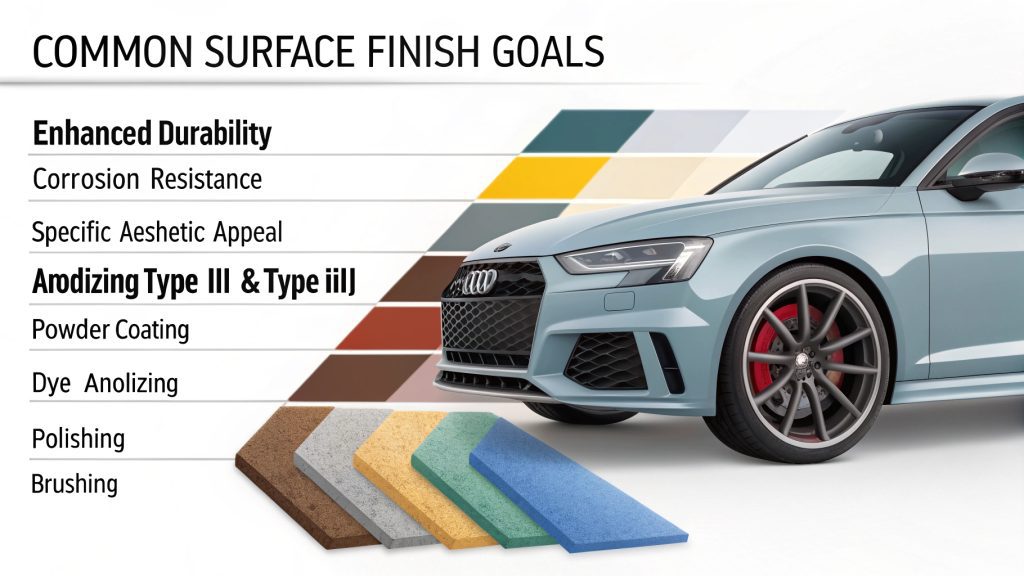
The term "surface finish" can mean a few things: the texture of the surface (like 'as-machined' or polished) or the type of protective/cosmetic layer applied. At Worthy, we provide a standard 'as-machined' finish of 125 Ra or better, but we can achieve much more.
Common Surface Finish Goals and How to Achieve Them:
-
Enhanced Durability and Corrosion Resistance:
-
Anodizing (Type II & Type III): This is a top choice. It creates a hard, corrosion-resistant layer that can also be colored. It doesn't significantly change part dimensions, which is critical for precision parts.
-
Powder Coating: Applies a thick, durable plastic layer. Great for harsh environments.
-
-
Specific Aesthetic Appeal:
-
Anodizing with Dyes: Offers a wide spectrum of colors, from clear to black, and vibrant shades.
-
Polishing: Creates a bright, reflective surface. This is often done before clear anodizing or plating.
-
Brushing: Gives a directional textured look, often sealed with clear anodizing.
-
Bead Blasting: Provides a uniform matte finish, which can then be anodized.
-
-
Functional Finishes:
-
Chromate Conversion Coating (Alodine/Iridite): Good for corrosion resistance and as a primer for paint. It also maintains electrical conductivity.
-
Plating (e.g., Nickel, Tin): For specific properties like solderability or enhanced wear on certain areas.
-
My team and I often advise clients like Mark, who need parts for resale, on the best combination of machining finish and subsequent surface treatment to balance cost, appearance, and performance. For instance, a smoother 'as-machined' surface before anodizing can result in a more appealing final product. We handle all these processes, ensuring quality every step of the way.
What is the best coating for aluminum?
Need to protect your aluminum parts with a coating? There are many options, from paint to powder. I'll help you figure out which coating is best.
Powder coating is often considered one of the best coatings for aluminum, offering excellent durability, corrosion resistance, and a wide range of colors. Anodizing is technically a conversion process, not a coating, but is also a top choice for aluminum protection.
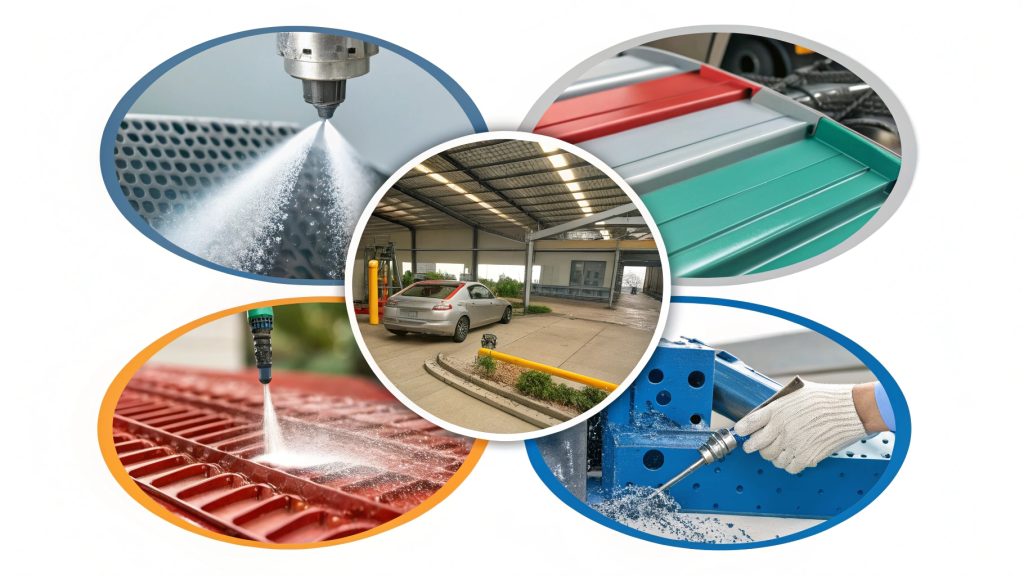
When we talk about "coatings" for aluminum, we're usually referring to applied layers, distinct from conversion processes like anodizing. The best coating really hinges on the end-use environment and desired properties.
Popular Coating Options for Aluminum:
-
Powder Coating:
-
Pros: This is a very popular choice. It involves applying a dry powder electrostatically, then curing it with heat to form a tough, resilient skin. It's thicker than paint, very resistant to chipping, scratching, and fading. It offers great corrosion protection and a huge variety of colors and textures.
-
Cons: Can be thicker than other options, which might be an issue for parts with very tight tolerances if not accounted for in the design phase.
-
Best For: Outdoor furniture, architectural components, automotive parts, industrial equipment. At Worthy, we ensure the underlying part is properly prepared for optimal powder coat adhesion.
-
-
Wet Paint (Liquid Coating):
-
Pros: Can achieve very specific colors and finishes, including metallics or clear coats. Can be applied in thinner layers than powder coating. Easier for touch-ups.
-
Cons: Generally not as durable or chip-resistant as powder coating. Solvents can be an environmental concern.
-
Best For: Applications where specific aesthetics are paramount or where powder coating isn't feasible.
-
-
Chromate Conversion Coatings (e.g., Alodine, Iridite):
-
Pros: While sometimes considered a pre-treatment, it’s also a standalone protective coating. It offers good corrosion resistance and is an excellent primer for paint. It also maintains electrical conductivity.
-
Cons: Offers minimal abrasion resistance. Some formulations contain hexavalent chromium, though RoHS-compliant alternatives are available.
-
Best For: Electronics, aerospace components where conductivity is needed, or as a base for further painting.
-
In my experience, if a customer wants a robust, colorful, and protective layer, powder coating is a fantastic option for aluminum. We've helped many clients choose the right coating to ensure their parts, even those with complex geometries from our 5-axis CNC machining, are perfectly finished and protected for their intended application.
Conclusion
Choosing the right aluminum surface treatment involves balancing durability, aesthetics, and cost. Anodizing is often the top choice, but plating and coatings have their specific advantages.