
What Are Common Defects in Knurling And How To Avoid Them?
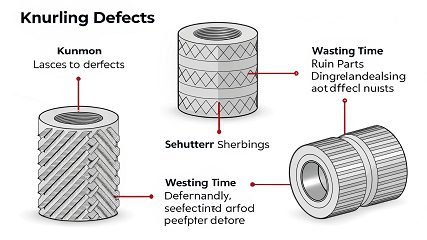
Knurling defects ruin parts. This wastes your time and money. Understanding common defects helps you prevent them and achieve perfect knurls.
Common knurling defects include messy or uneven patterns, chatter marks (vibrations lines), and insufficient smoothness or a poor surface finish. These issues can make your parts unusable. Knowing the causes is key to avoiding them.
You want your knurled parts to be perfect every time. But sometimes, things go wrong. It's frustrating when you see defects. I've been there. Let’s look at these problems closely. This will help you make better parts. You can avoid these issues with the right knowledge. Keep reading to learn more.
What are the problems with knurling?
Bad knurls cause big headaches. They lead to rejected parts and delays. I'll show you the usual suspects so you can spot them.
The main problems are messy patterns, often called double tracking. Chatter marks, which are vibration lines, are another issue. Also, poor surface finish or flaking can occur. These make the knurl look bad and feel wrong.
When we talk about knurling problems, a few specific issues often come up. I've seen my share of these in the workshop.
One common problem is a messy or uneven knurl. Sometimes it's called "double tracking." This happens when the knurling tool doesn't follow a clean path. The pattern looks jumbled. This can be due to the blank diameter not being quite right for the knurl pitch. Or, the tool might not be set up perfectly square to the workpiece. I remember one batch for a client like Mark Chen; the knurls were all over the place. We found out the tool holder was slightly loose.
Another big one is chatter marks. These look like wavy lines or ripples on the knurled surface. They are usually caused by vibration. The machine itself might vibrate, or the workpiece might not be held rigidly enough. Sometimes, the knurling tool itself can cause chatter if it's not sharp or if the speed and feed are wrong. Using plenty of coolant can sometimes help dampen these vibrations.
Then there's insufficient smoothness or a poor finish. The knurl might feel rougher than it should, or bits of material might flake off. This often happens if the knurling wheels are dull. The material you're knurling also matters. Some materials tear easily instead of forming a clean knurl. Too much pressure or the wrong speed can also lead to a bad finish. Getting this right ensures the part not only functions well but also meets the quality expectations of discerning customers.
What are the risks of knurling?
Knurling seems simple, but mistakes are costly. Bad knurls mean wasted effort. Let's explore the risks so you can protect your projects.
The biggest risk is part rejection. This wastes material, time, and money. Worn or damaged tools are another risk. This increases tooling costs. Inconsistent quality can also hurt your reputation with customers.
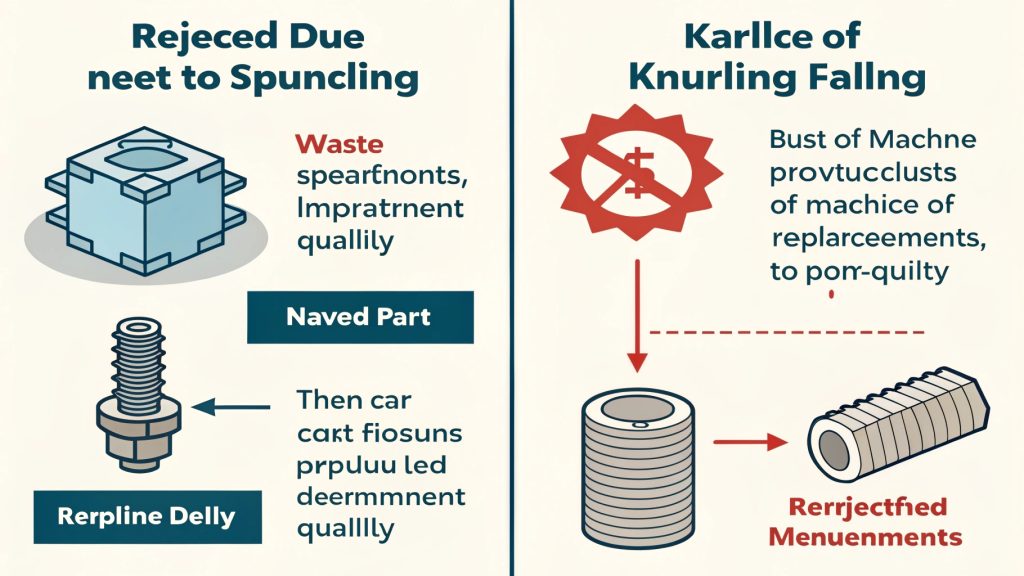
Knurling, while a useful process, does come with certain risks if not done correctly. These risks can impact your bottom line and production schedule.
First, and most obvious, is part rejection[. If the knurl doesn't meet the required specifications for grip, appearance, or dimensional change, the part is scrap. This means all the material and machine time up to that point is wasted. I've had to explain to customers why a shipment was delayed because we had to remake parts due to knurling issues. It's a conversation no one enjoys.
Second, there's the risk of tool damage or excessive wear. Knurling tools, especially the wheels, can wear out. If you use incorrect parameters, like too much pressure or the wrong speed, you can wear them out much faster. Sometimes, if things go really wrong, you can even chip or break a knurling wheel. This adds to your tooling costs and can cause unexpected downtime while you wait for replacements.
Third, poor knurling can lead to increased production costs overall. This isn't just about the rejected parts. It's also about the time spent troubleshooting, adjusting setups, and potentially reworking parts if possible. All these activities add labor costs and reduce efficiency. For businesses like ours that offer CNC machining services, maintaining efficiency is key to competitive pricing.
Finally, there's the risk of inconsistent product quality. If you have recurring knurling problems, it means your customers, like Mark who values quality, might receive parts that vary from one batch to the next. This can damage your reputation and lead to lost business.
What are the tips for knurling?
Want perfect knurls every time? It's not magic, it's method. I'll share some key tips that have helped me master this process.
Use a rigid setup. Ensure your knurling wheels are sharp and clean. Select the correct blank diameter for your knurl pitch. Apply firm, even pressure and use plenty of coolant. Always do a test piece first.
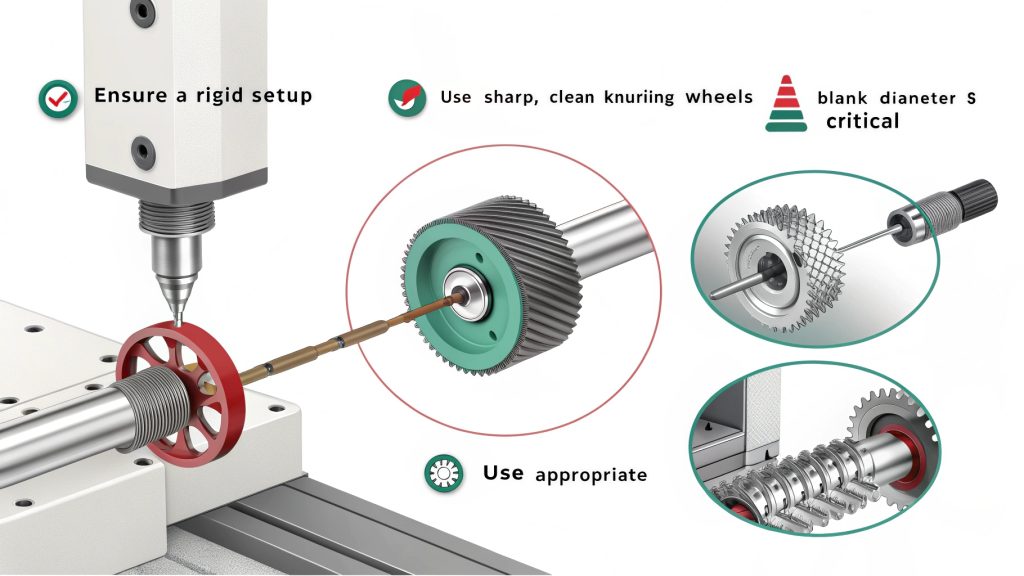
Achieving good knurls consistently comes down to a few key practices. Over the years, I've learned these tips make a huge difference.
First, ensure a rigid setup. The lathe must be in good condition, and the workpiece needs to be held very securely. Any movement or vibration will ruin the knurl. The knurling tool itself must be mounted squarely and firmly in the tool post.
Second, use sharp, clean knurling wheels. Dull wheels will crush the material instead of forming it cleanly. They can also cause material to flake. Keep your wheels clean; a wire brush works well to remove any built-up material between the teeth.
Third, blank diameter is critical, especially for form knurling. The starting diameter of your part needs to be correct for the pitch of the knurl you're using. If it's off, the teeth won't track properly, leading to that messy, uneven pattern I mentioned earlier. Most knurl manufacturers provide charts or formulas to calculate this.
Fourth, use appropriate speeds and feeds. Knurling is generally done at slower spindle speeds than regular turning. The feed rate should be positive and consistent. Don't be afraid to experiment a little on a scrap piece to find what works best for your material and setup. I always start with the manufacturer's recommendations.
Fifth, use lubrication. A good cutting fluid helps to cool the tool and workpiece. It also helps to flush away any small particles and results in a smoother finish. This is especially important for cut knurling.
Finally, and this is a big one for me: always do a test run. Before you knurl a batch of expensive parts, try it on a piece of scrap material of the same type. This allows you to check your setup, the pattern, and the final diameter. It's a simple step that can save a lot of trouble.
What are the three types of knurling?
Not all knurling is the same. Different methods create different results. Knowing the types helps you choose the best one for your job.
The main types refer to how the pattern is made. Form knurling displaces material. Cut knurling removes material like a cutting tool. Hand knurling is a manual method for smaller, specific tasks.
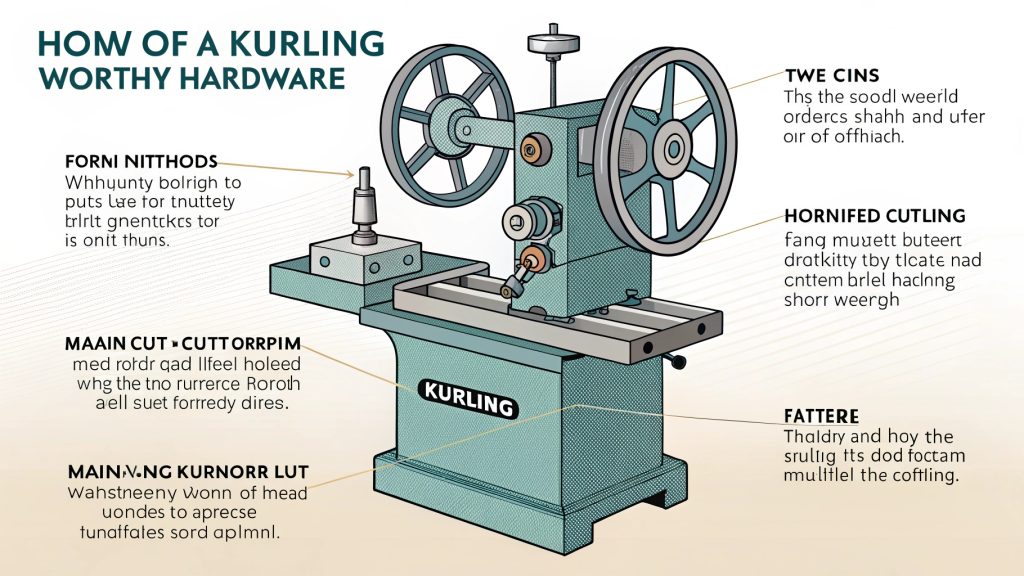
When people talk about types of knurling, they often mean the pattern, like straight or diamond. But it's also important to understand the different processes used to create those patterns. At Worthy Hardware, we primarily use machine-based methods for precision.
The most common process is Form Knurling.
-
How it works: With form knurling, the knurling tool has wheels with the desired pattern. These wheels are pressed hard against the workpiece. The material is displaced, or moved, to create the raised pattern. No material is actually cut away as chips. The diameter of the part usually increases slightly.
-
Use cases: It's good for softer materials and when high production speed is needed. The tools are generally simpler.
A second important process is Cut Knurling.
-
How it works: Cut knurling tools have wheels with sharp cutting edges. As these wheels engage the workpiece, they actually cut and remove material to form the knurl pattern. This is more like a traditional cutting operation.
-
Use cases: This method produces a cleaner, more precise knurl. It puts less stress on the workpiece and the machine. It's better for harder materials or when a very sharp, well-defined knurl is critical. The part diameter doesn't change much. We often use this for high-precision machining jobs.
A third, less common type in mass production, is Hand Knurling.
-
How it works: This uses a special hand tool that holds one or more knurling wheels. The operator presses it against a rotating workpiece (usually in a lathe) or sometimes even a stationary part.
-
Use cases: It’s mostly for one-off jobs, repairs, or in situations where setting up a machine knurling operation isn't practical. It requires a lot of skill to get a good result.
Understanding these process types helps in selecting the right approach for the material, desired finish, and production volume.
Conclusion
Avoiding knurling defects means better parts and saved costs. Master these tips for consistent, quality knurls every time you machine.