
What Should You Look for When Buying 18/10 Stainless Steel Products?

Confused by stainless steel grades? Choosing the wrong one means poor quality. I'll guide you to select the best 18/10 products for your needs.
Look for products clearly labeled 18/10 or Type 316 stainless steel. Check for a smooth, flawless finish and ask for material certification, especially for food-grade items, to ensure authenticity and safety. This ensures good corrosion resistance.
Shopping for stainless steel, especially 18/10, can feel a bit technical. But knowing a few key things makes it much easier. I want to help you understand what to look for so you get great value and quality. Let's dive into the details.
How to tell if stainless steel is good quality?
Worried you'll get low-quality steel? Bad steel corrodes or breaks easily. I'll show you simple ways to identify good stainless steel before you buy.
Good quality stainless steel, like 18/10, has a uniform, smooth surface without blemishes. Always ask for material certificates to confirm its grade and composition for peace of mind.
When I'm checking stainless steel quality, especially something claimed to be premium like 18/10, I have a few things I always do. It’s not just about the label; it's about tangible proof and visual cues. You don't want to invest in something that will rust or degrade quickly.
Visual Inspection: The First Clue
The first thing I look at is the surface. True 18/10 stainless steel, which is a form of 316 stainless steel, should have a consistent, smooth appearance. My experience has taught me that visual checks are very important.
-
Luster and Finish: It should have a clean luster, whether it's a polished, brushed, or matte finish. The finish needs to be even across the entire surface. I always run my hand over it if possible.
-
Absence of Defects: Look very closely for any imperfections. I specifically check for things that tell me the manufacturing wasn't top-notch:
-
Pitting: These are tiny holes or indentations on the surface. They can be starting points for corrosion.
-
Porosity (Sand Holes/Gas Pores): These look like small voids or bubbles trapped in the metal. As I learned from my quality control processes, these are definite weak spots.
-
Scratches or Gouges: Beyond normal handling, deep scratches can indicate softer, lower-quality material or poor manufacturing. Some minor surface marks might be acceptable, but deep ones are a concern.
-
Discoloration or Uneven Tone: This could suggest impurities in the steel or inconsistent alloy mixing during production. The color should be uniform.
-
If the surface looks rough, blemished, or has these defects, it's a red flag for me. It suggests the material might not be genuine 18/10 or was poorly processed.
Material Certification: Your Proof
This is very important, and I always stress this to my clients too. If a supplier claims a product is 18/10 (or Type 316) stainless steel, they should be able to provide a material test report (MTR) or a certificate of conformity. This is a document that proves the material's makeup.
What I look for in these documents:
| Information Category | Details to Check |
|---|---|
| Grade Confirmation | It must clearly state "Type 316" or an equivalent standard for 18/10. |
| Chemical Composition | Lists percentages of Chromium (Cr) and Nickel (Ni). For 18/10, Cr should be around 18%, and Ni around 10%. Molybdenum (Mo) is also a key element for 316's superior corrosion resistance, typically 2-3%. |
| Standard Compliance | Mentions relevant industry standards it meets (e.g., ASTM, ISO, EN). |
| Traceability | Includes a heat number or lot number. This links the product back to the specific batch of steel it was made from. |
If a seller hesitates to provide this, I become very cautious. It's a standard practice in the industry, especially for B2B transactions or high-value items. At Worthy Hardware, providing these certificates for our CNC machining parts is a normal part of our quality assurance.
Food-Grade Specifics
My insights also highlight that if you're buying for food applications, you need to ensure it's food-grade. 18/10 stainless steel is generally considered food-grade due to its excellent corrosion resistance and stability.
However, it's still good practice to see if the product or its packaging specifically mentions "food-grade" or compliance with food safety standards (like FDA in the US, or LFGB in Europe). This adds an extra layer of assurance, especially for items that will be in prolonged contact with food.
What should I look for when buying stainless steel cutlery?
Tired of cutlery that rusts or bends? Poor quality cutlery ruins dining. I'll explain what to look for to get durable, beautiful stainless steel cutlery.
For cutlery, prioritize 18/10 or 18/8 stainless steel for rust resistance and durability. Check the weight, balance, and finish. Ensure it feels comfortable and sturdy in your hand.
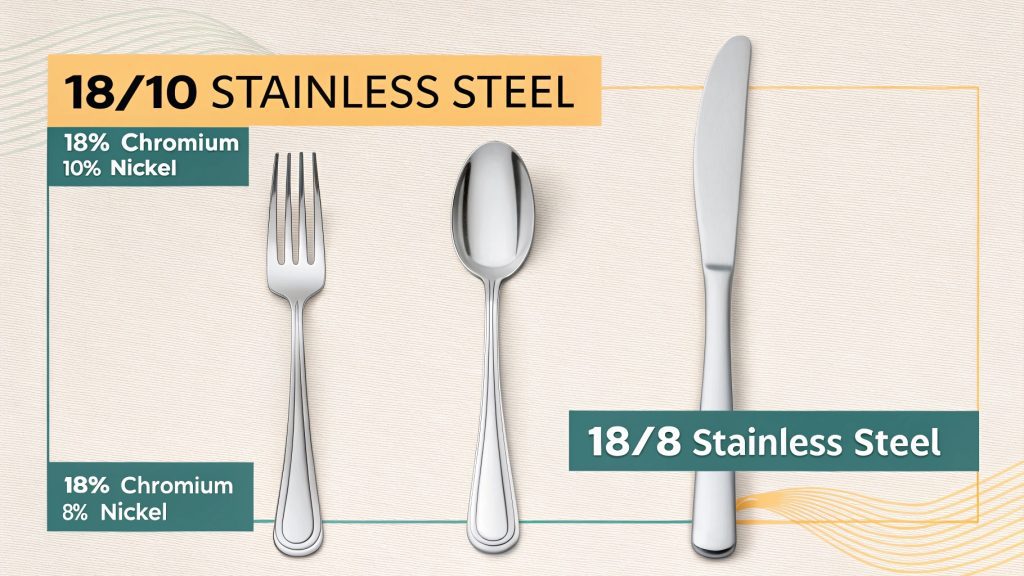
Choosing cutlery might seem simple, but the type of stainless steel makes a huge difference in how long it lasts and how enjoyable it is to use. I've bought various sets over the years, both for my home and for evaluating quality, and I've learned what really matters.
Understanding the Numbers: 18/10 vs. 18/8 vs. 18/0
The numbers you see, like 18/10, refer to the percentages of chromium and nickel in the steel alloy. These are the most common you'll encounter when shopping for cutlery:
-
18/10 Stainless Steel: This means it contains approximately 18% chromium and 10% nickel. The nickel content is key here. It significantly enhances corrosion resistance, especially against acids and salts found in food. Nickel also gives the cutlery a brighter, more silver-like shine. This is generally considered the highest quality for cutlery and is what I personally recommend if your budget allows. It's very durable and maintains its luster well over time.
-
18/8 Stainless Steel: This type contains 18% chromium and 8% nickel. It's still very good quality, highly rust-resistant, and durable. For most everyday uses, the difference in shine and corrosion resistance compared to 18/10 is minimal, making it a popular and excellent choice for many households.
-
18/0 Stainless Steel (sometimes called Type 430 Stainless Steel): This grade contains 18% chromium but has very little or no nickel (less than 0.75%). Because of the low nickel, it is magnetic, unlike 18/10 and 18/8. While it's still stainless, it's more prone to staining and rusting over time, especially if it's not dried properly after washing. You'll usually find this in more budget-friendly cutlery options.
Key Features to Examine
When I'm holding a piece of cutlery, here's what I assess to judge its quality and usability:
| Feature | What I Look For | Why It's Important for Cutlery |
|---|---|---|
| Weight | A good, substantial feel. It shouldn't feel too light (which can seem cheap) or be overly heavy (making it clumsy). | Indicates solid construction and contributes to durability. |
| Balance | It should feel balanced in your hand, not with all the weight in the handle or at the top. | This affects comfort and how easy it is to use during meals. |
| Finish | Common finishes include polished (shiny), matte/satin (brushed), or sometimes PVD coated (e.g., gold, black). | This is largely about aesthetics and your personal preference. A good finish should be even and flawless. |
| Fork Tines | Tines should be well-spaced, smooth, and perhaps slightly rounded at the tips for comfort. | Sharp or rough tines are unpleasant to use and can be a sign of poor finishing. |
| Knife Blade | For dinner knives, it needs to be sharp enough to cut food easily. Check if it has a serrated or plain edge. | Functionality is key. The blade should also be securely attached to the handle. |
| Spoon Bowl | Edges should be smooth, and the depth of the bowl should be comfortable for use. | User comfort and practicality. |
| Overall Craftsmanship | Look for no rough edges, no visible or messy welding marks (unless it's a specific design feature), and no other imperfections. | This indicates the level of quality control in the manufacturing process. |
Food-Grade and Dishwasher Safety
As I mentioned before, if it's cutlery, it absolutely must be food-grade. Both 18/10 and 18/8 stainless steel are inherently good for this because of their composition. Also, it's wise to check if the cutlery is explicitly labeled "dishwasher safe." Most quality stainless steel cutlery is designed to withstand dishwashing, but it's good to confirm. Proper care, like rinsing food off soon after use to prevent pitting from acidic or salty residues, will extend its life even further.
What is the best number for stainless steel?
Confused by all the stainless steel numbers? Choosing the wrong one costs money. I'll explain which "number" or grade is best for different common uses.
The "best" number depends on the application. For food contact and high corrosion resistance, 18/10 (Type 316) is excellent. For general use, 18/8 (Type 304) is also very good.
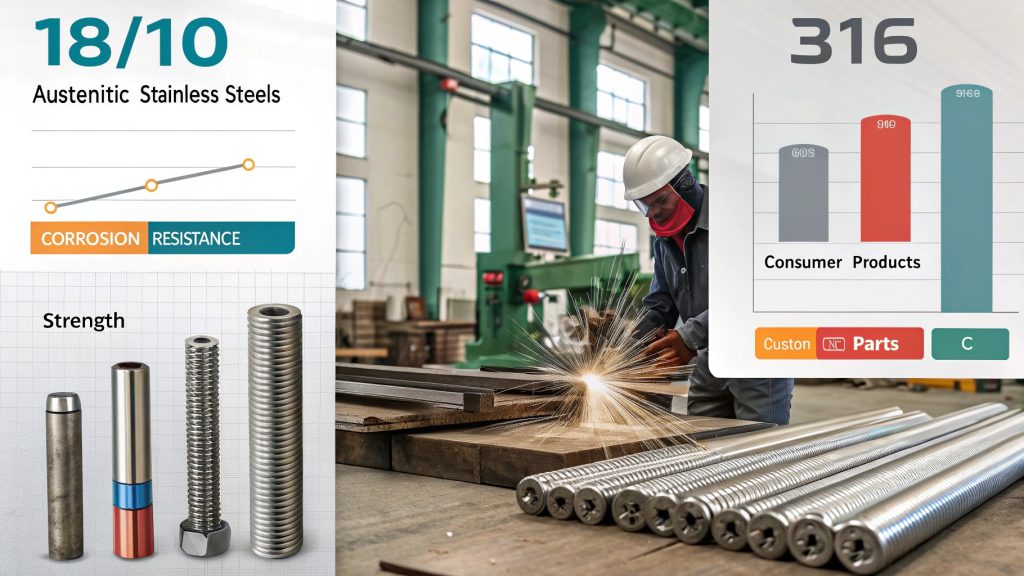
When people ask me for the "best" number for stainless steel, I usually say it depends on what you're using it for. There isn't one single "best" for everything, but for many consumer products, especially those involving food or needing good corrosion resistance, some grades definitely stand out. At Worthy Hardware, we work with many different grades of stainless steel for custom CNC parts, so I have a good understanding of their specific strengths and applications.
Understanding Stainless Steel Designations
The numbers like "18/10" or "316" are grades that tell us about the alloy's chemical composition and, consequently, its properties like strength and corrosion resistance.
-
Austenitic Stainless Steels (e.g., 300 series like 304, 316): These are the most common types you'll encounter for products needing good corrosion resistance. They contain chromium and nickel. Generally, they are non-magnetic and have excellent corrosion resistance and can be easily formed into various shapes.
-
18/10 Stainless Steel: This is a common way to describe Type 316 stainless steel, especially in consumer goods like cookware and cutlery. It typically contains around 16-18% chromium, 10-14% nickel, and very importantly, about 2-3% molybdenum. It's the molybdenum that gives 316 its superior corrosion resistance, especially against chlorides (like salt found in seawater or de-icing salts) and various acids. This makes it ideal for marine applications, medical implants, chemical processing equipment, and high-quality food-grade items.
-
18/8 Stainless Steel: This usually refers to Type 304 stainless steel. It contains about 18% chromium and 8% nickel. Type 304 is the most widely used stainless steel globally. It offers great corrosion resistance for most everyday environments, is easy to clean, and is used in a vast array of products, from kitchen sinks and appliances to architectural paneling and industrial equipment.
-
So, Which is "Best"? A Comparison for Common Needs
To help you choose, here’s a simple comparison based on what I often advise:
| Grade Designation | Typical Composition | Key Characteristics | Common Applications | Generally "Best" For... |
|---|---|---|---|---|
| 18/10 (Type 316) | ~18% Cr, ~10% Ni, ~2% Mo | Superior corrosion resistance (especially to chlorides/salts and acids), high durability, very hygienic, maintains appearance well. | Food processing equipment, high-end cutlery & cookware, marine hardware, medical devices, chemical tanks. | Harsh environments, maximum corrosion resistance needed, long-term food safety and contact. |
| 18/8 (Type 304) | ~18% Cr, ~8% Ni | Excellent general corrosion resistance, good formability, hygienic, good strength. | Kitchen appliances, sinks, general cutlery & cookware, architectural uses, food and beverage industry. | General purpose applications, good balance of performance and cost for many everyday items. |
| 18/0 (Type 430) | ~18% Cr, <0.75% Ni | Moderate corrosion resistance, magnetic, lower cost. | Budget cutlery, automotive trim, some appliance panels (not in direct food contact usually). | Low-cost applications where high corrosion resistance isn't the primary critical factor. |
For many of my customers at Worthy Hardware looking for high-quality machined parts that need to last, especially in potentially corrosive environments or for food-related applications, I often recommend materials like Type 316 (18/10). It provides that extra margin of safety and longevity. However, Type 304 (18/8) is also a fantastic and very capable material for a huge range of products. The most important thing is to match the steel's properties to the demands of its intended use. If you tell a supplier like us your application, we can guide you to the most suitable and cost-effective grade.
Conclusion
To buy good 18/10 stainless steel, verify the grade (18/10 or 316), check for a flawless surface, and ask for material proof. This ensures quality.