
How to Choose Between 304, 316, and 430 Stainless Steel for Your Project?

Struggling with stainless steel grades? Choosing incorrectly can lead to rust or failure. This guide clarifies 304, 316, and 430, helping you pick the perfect match for your project's success.
The best stainless steel (304, 316, or 430) depends on your project's specific needs. 316 offers superior corrosion resistance for harsh environments but costs more. 304 is a versatile all-rounder, while 430 is a lower-cost option for less demanding applications.
Choosing the right stainless steel can feel overwhelming with so many grades available. I've seen many clients puzzle over these numbers. But understanding the key differences between popular grades like 304, 316, and 430 can save you time, money, and future headaches. Let's break them down so you can make an informed decision. This will help you get the best performance and value.
Which is better, 304 or 430 stainless steel?
Confused if 304 or 430 stainless is right for your part? Pick the wrong one and you might face early corrosion. I'll help you see the key differences easily.
Generally, 304 stainless steel is better than 430 due to its superior corrosion resistance and formability. However, 430 is more cost-effective and suitable for applications where high corrosion resistance isn't critical and magnetism is acceptable or desired.
When I talk with customers like Mark Chen, who look for a balance of quality and price, the 304 versus 430 question often comes up. Both are common, but they serve different purposes.
Corrosion Resistance
304 stainless steel contains about 18% chromium and 8% nickel. This nickel content significantly boosts its corrosion resistance compared to 430, which has about 17% chromium but negligible nickel. So, 304 handles general atmospheric corrosion, food acids, and many chemicals much better. 430, being a ferritic stainless steel, is more prone to rusting in corrosive or moist environments. I've seen 430 parts show rust spots fairly quickly if used outdoors without protection, while 304 holds up much better.
Mechanical Properties and Formability
304 is an austenitic stainless steel, known for its excellent ductility and formability. You can bend it, stretch it, and draw it more easily than 430. This makes it great for complex shapes. 430 has decent formability but is more brittle. In terms of strength, they are somewhat comparable, but 304 typically has slightly better tensile strength.
Cost
Here’s where 430 shines. The absence of nickel makes 430 stainless steel significantly cheaper than 304. If your application is in a dry, indoor environment and cost is a major driver, 430 can be a good choice.
Common Applications
-
304 Stainless Steel: Widely used in kitchen equipment, food processing machinery, architectural trim, chemical tanks, and automotive components. Its versatility is a big plus.
-
430 Stainless Steel: Often found in automotive trim, appliance panels (like refrigerator doors), decorative applications, and low-cost sinks or cookware where conditions aren't too harsh. It's also magnetic, which can be a factor.
So, if you need good all-around performance and corrosion resistance, 304 is usually the way to go. If cost is paramount and the environment is mild, 430 might work.
Which is better 316 or 430 stainless steel?
Wondering if 316 or 430 stainless steel suits your demanding project? A wrong choice here could mean rapid part failure. I'll clarify which one stands up to tougher conditions.
316 stainless steel is significantly better than 430 in terms of corrosion resistance, especially against chlorides and acids, due to its molybdenum content. 430 is a much lower-cost option suitable only for mild environments where corrosion is not a major concern.
This comparison is quite straightforward because these two grades are very different. When a project demands high performance in corrosive settings, like marine applications or chemical processing, 316 is often the go-to.
Corrosion Resistance
This is the biggest differentiator. 316 stainless steel contains molybdenum (usually 2-3%), which dramatically enhances its resistance to pitting and crevice corrosion, especially in chloride-rich environments like coastal areas or when exposed to de-icing salts. It also handles acids better than 304 and, by a huge margin, 430. 430 stainless steel, as we discussed, has only moderate corrosion resistance and will perform poorly in such aggressive conditions. I always tell my clients, if saltwater or harsh chemicals are involved, don't even consider 430; 316 is what you need.
Mechanical Properties
Both 316 (austenitic) and 430 (ferritic) have decent strength. 316 generally offers slightly better tensile and yield strength, and importantly, it maintains its strength and toughness better at both elevated and cryogenic temperatures. 430 can become brittle at very low temperatures.
Cost
There's a significant cost difference. 316, with its higher nickel and added molybdenum content, is one of the more expensive common stainless steel grades. 430 is substantially cheaper. This cost factor is often the only reason someone might try to use 430 where 316 is technically needed, but it's usually a false economy in the long run due to replacement costs.
Common Applications
-
316 Stainless Steel: Marine hardware, chemical processing equipment, pharmaceutical equipment, medical implants, food processing in high-chloride environments, and outdoor electrical enclosures.
-
430 Stainless Steel: As mentioned before, automotive trim, interior decorative applications, budget cookware, and appliance components where conditions are mild.
For any application facing harsh corrosive elements, 316 is the clear winner, despite its higher price. 430 is simply not designed for those challenges.
What is the difference between 304 and 403 stainless steel?
Is 304 or 403 stainless the right pick? These sound similar but have very different uses. Choosing wrong could compromise strength or corrosion resistance where you need it most.
304 stainless steel offers excellent corrosion resistance and formability (austenitic). 403 stainless steel provides moderate corrosion resistance but can be hardened by heat treatment for higher strength and wear resistance (martensitic). They serve very different application needs.
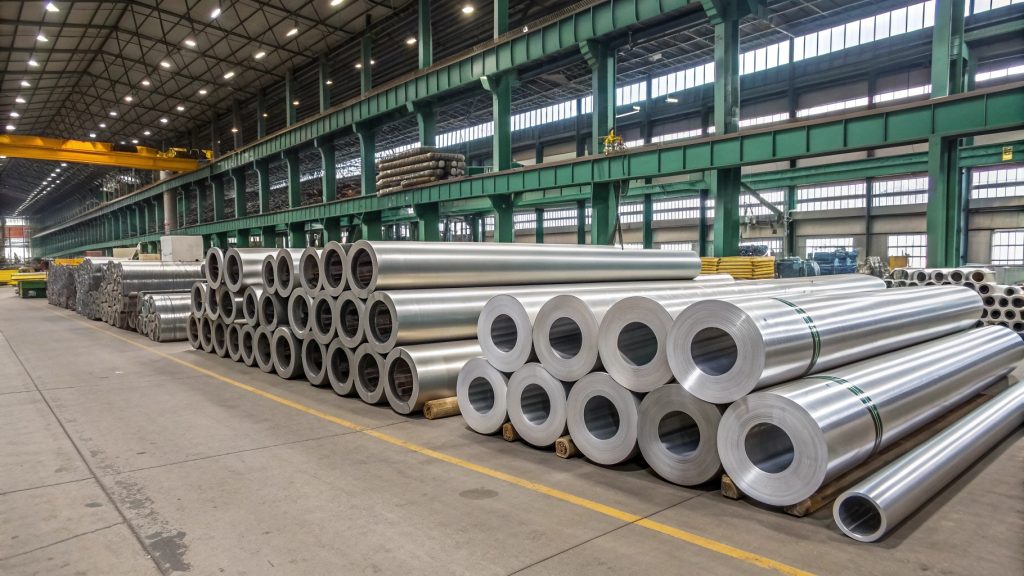
Now, 403 stainless steel is a bit different from 430, though both are in the 400 series. It's important to distinguish them. I've worked on projects where hardness was key, and that's where a grade like 403 comes into play.
Material Class and Composition
-
304 Stainless Steel: This is an austenitic stainless steel, part of the 300 series. Its primary alloying elements are chromium (around 18%) and nickel (around 8%). It's generally non-magnetic.
-
403 Stainless Steel: This is a martensitic stainless steel, part of the 400 series. It's a basic chromium steel (around 12% chromium) with no significant nickel. It is magnetic.
Key Differences
| Feature | 304 Stainless Steel | 403 Stainless Steel |
|---|---|---|
| Corrosion Resistance | Excellent in many environments | Moderate; good in mild atmospheres, less than 304 |
| Hardenability | Not hardenable by heat treatment | Hardenable by heat treatment for high strength |
| Strength | Good | Can achieve high strength after heat treatment |
| Ductility/Formability | Excellent | Lower than 304 |
| Weldability | Good | Fair; preheating and post-weld treatment may be needed |
| Cost | Higher than 403 | Lower than 304 |
| Typical Uses | Food equipment, chemical tanks, architectural | Turbine blades, valve components, fasteners |
As you can see, 304 is chosen for its superior corrosion resistance and ease of fabrication. 403, on the other hand, is selected when you need a stainless steel that can be made very hard and strong, for applications like cutlery, surgical instruments (though other martensitic grades are more common), or industrial parts subject to wear.
Its corrosion resistance is okay for mild conditions but not for aggressive chemical or marine environments where 304 or 316 would be preferred. I recall a client needing specific valve components that required good strength and some corrosion resistance – 403 was a viable option there.
How do I choose stainless steel grade?
Overwhelmed by stainless steel options beyond just 304, 316, and 430? Selecting the ideal grade can be complex. A systematic approach ensures you don't overpay or risk early failure.
To choose a stainless steel grade, consider the corrosive environment, required mechanical strength, fabrication needs, temperature exposure, and budget. Prioritize these factors to narrow down options from general-purpose grades like 304 to specialized ones like 316 for severe conditions.
Choosing the right stainless steel grade from the hundreds available involves a careful evaluation of your project's specific requirements. I always walk my clients through a few key questions.
Key Factors to Consider:
-
Corrosion Environment:
-
What substances will the part be exposed to (e.g., water, saltwater, acids, chemicals, food products)?
-
What is the concentration and temperature of these corrosives?
-
My Insight: For general atmospheric exposure or food contact, 304 is often sufficient. For marine or chemical environments, 316 or even more specialized alloys might be necessary. 430 is for very mild, dry conditions.
-
-
Mechanical Properties:
-
What strength (tensile, yield), hardness, or toughness does the part require?
-
Will it experience impact or fatigue?
-
My Insight: Austenitic grades like 304 and 316 offer good toughness and ductility. Martensitic grades (like 403 or 410) can be heat-treated for high strength and hardness. Ferritic grades like 430 offer moderate strength.
-
-
Fabrication Requirements:
-
Does the part need to be welded, machined, formed, or deep drawn?
-
My Insight: 304 is excellent for forming and welding. 316 is also good but can be a bit tougher to machine. 430 is formable but less so than 304, and welding requires more care. At Worthy, we have extensive experience machining all these grades, adapting our processes for optimal results.
-
-
Operating Temperature:
-
Will the part be used at very high or very low (cryogenic) temperatures?
-
My Insight: Austenitic steels (304, 316) maintain their properties well over a wide temperature range. Ferritic steels like 430 can become brittle at low temperatures.
-
-
Cost:
-
What is your budget for the material?
-
My Insight: Material cost often goes: 430 (lowest) < 304 < 316 (higher). While upfront cost is a factor, consider the total lifecycle cost, including potential replacement if an unsuitable, cheaper grade fails.
-
-
Magnetic Properties:
-
Is magnetism a concern or a requirement?
-
My Insight: 304 and 316 are generally non-magnetic in their annealed state (though cold working can induce some magnetism). 430 and other ferritic/martensitic grades are magnetic.
-
By systematically considering these factors, you can narrow down the choices effectively. For instance, if Mark Chen needs parts for general industrial equipment with good corrosion resistance at a reasonable price, 304 is a strong contender. If it's for a decorative indoor piece where cost is key, 430 might do. If it’s for a pump handling seawater, 316 is the starting point.
Here's a quick reference for the three main grades discussed:
| Feature | 304 Stainless Steel | 316 Stainless Steel | 430 Stainless Steel |
|---|---|---|---|
| Corrosion Resist. | Good | Excellent (esp. chlorides) | Fair |
| Strength | Good | Good | Moderate |
| Cost | Medium | High | Low |
| Key Alloying | Chromium, Nickel | Chromium, Nickel, Molybdenum | Chromium |
| Primary Use Case | General purpose, food, arch. | Marine, chemical, medical | Decorative, mild env. |
At Worthy Hardware, we machine parts from all these grades and many more. We can achieve tight tolerances like +/- 0.005" (or even sub +/- 0.001" for precision needs) and provide various surface finishes. If you send us your design, we can help advise on material selection based on our experience.
Conclusion
Choosing between 304, 316, and 430 stainless steel depends on corrosion needs, strength, and budget. Understanding these key differences ensures your project's success and longevity.