

Need custom waveguide choke flanges? Worthy Hardware delivers superior custom waveguide choke flanges manufactured precisely to your drawings. Our advanced CNC machining capabilities ensure exceptionally tight tolerances (down to +/- 0.001"), vital for optimal performance and minimizing signal leakage in critical applications.Whether for radar systems, satellite communications, or RF testing, we offer diverse material options like aluminum, copper, and brass. With rigorous 100% inspection on every part, you can trust Worthy for reliable, high-quality flanges that meet your exact specifications, delivered efficiently from prototype to high-volume production. Partner with us for precision you can depend on.
What is Custom Waveguide Choke Flange?
A Custom Waveguide Choke Flange is a specialized connecting component used in high-frequency waveguide systems, such as those for radar or satellite communications. Unlike standard flat (cover) flanges, a choke flange incorporates a precisely engineered groove or slot – the "choke" – cut into its face around the waveguide aperture.
Function of Custom Waveguide Choke Flange

The primary function of a Custom Waveguide Choke Flange is to ensure a highly efficient, low-loss connection between two sections of a waveguide system, while significantly minimizing radio frequency (RF) signal leakage at the joint.
Minimizing RF Leakage: The "choke" – a precisely machined groove or slot in the flange face – creates an electrical short circuit a quarter wavelength away from the waveguide wall. This presents a very high impedance (effectively an open circuit) at the junction of the waveguide walls, preventing RF currents from escaping the waveguide through any microscopic gaps in the physical connection.
Ensuring Efficient Signal Transmission: By preventing leakage, the choke flange helps maintain the integrity and power of the signal travelling through the waveguide, ensuring it reaches its destination with minimal loss.
Providing a More Forgiving Connection: Unlike standard flat flanges that rely on perfect, continuous metal-to-metal contact, the choke flange's design allows for a reliable electrical connection even if there are minor imperfections or slight misalignments at the mating surface. The choke effectively "completes" the electrical path.
Customized Performance: Being "custom," these flanges are designed to perform these functions optimally for the specific frequency range, power levels, and mechanical constraints of a particular waveguide application.
Advantages of the Custom Waveguide Choke Flange?
Superior RF Performance: The primary benefit is significantly reduced RF signal leakage compared to standard flanges. The choke groove design creates a high-impedance barrier, ensuring maximum signal transmission efficiency and minimal power loss within the waveguide system.
Enhanced Connection Reliability: Choke flanges are less sensitive to minor surface imperfections or slight misalignments between mating parts. This "forgiving" connection ensures a reliable electrical joint without requiring perfect, continuous metal-to-metal contact, simplifying assembly and boosting long-term dependability.
Optimized for Your Application: Being "custom," these flanges are manufactured precisely to your drawings. This guarantees a perfect fit and optimal electrical performance tailored to your specific frequency range, power handling, material requirements (like aluminum, copper, or specific alloys), and mechanical integration needs. This eliminates compromises associated with standard parts.
Improved System Integrity: By minimizing leakage and ensuring a robust connection, custom choke flanges contribute to the overall performance and reliability of the entire waveguide assembly.
Material for Custom Waveguide Choke Flange?
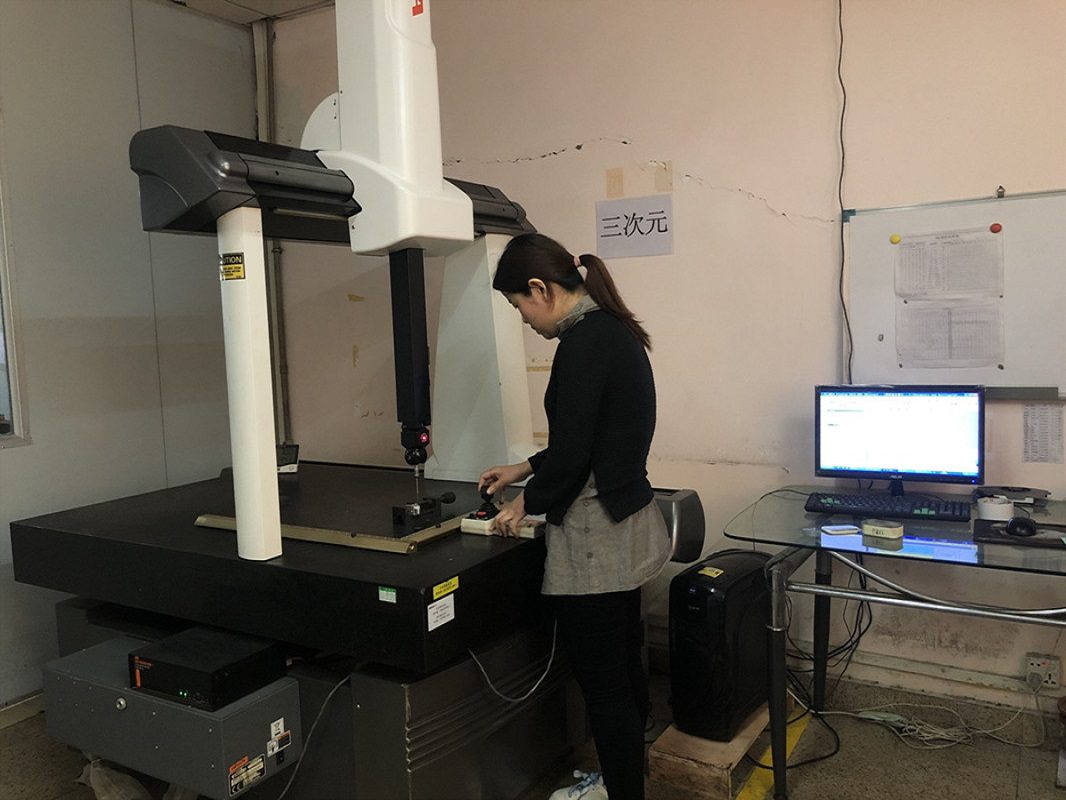
At Worthy Hardware, we machine choke flanges from a variety of high-performance metals specified in your designs. Common materials include:
Aluminum Alloys (e.g., 6061, 6063): Widely used due to their excellent balance of good electrical conductivity, light weight, good machinability, and cost-effectiveness. Often preferred for general-purpose and aerospace applications.
Copper (e.g., OFHC - Oxygen-Free High Conductivity): Offers the highest electrical conductivity, minimizing signal loss (insertion loss). Ideal for high-power or very low-loss applications, though heavier and typically more expensive than aluminum.
Brass: Provides good electrical conductivity (better than aluminum but less than copper), excellent machinability, and good corrosion resistance. A solid, often cost-effective alternative.
Stainless Steel (e.g., 304, 316): Chosen when superior corrosion resistance or structural robustness in harsh environments is paramount, although its conductivity is lower than aluminum or copper.
As a custom CNC machining provider, Worthy Hardware can manufacture your choke flanges from virtually any machinable metal according to your precise drawings and specifications. Simply provide your design, and we'll utilize our expertise and extensive material inventory (over 100+ metals and alloys available) to produce your parts accurately.
Applications of Custom Waveguide Choke Flange
Telecommunications: Used in microwave links, base station infrastructure, and satellite communication ground stations to ensure efficient signal transmission.
Radar Systems: Critical for aerospace, defense, and weather radar applications where high power handling and low loss are paramount for system performance and reliability.
Satellite Communications: Employed in both ground terminals and spacecraft payloads where reliable, low-leakage connections are vital in harsh environments.
Test and Measurement: Essential in laboratory setups and RF test equipment for accurate signal routing and measurement without interference or signal degradation.
Scientific Research: Utilized in particle accelerators, radio astronomy, and other research applications requiring precise control and transmission of high-frequency signals.
Medical Equipment: Found in specialized diagnostic or therapeutic devices utilizing microwave energy.
Custom Waveguide Choke Flange Finish
• As-Machined: Our standard finish provides a surface roughness of 125 Ra µin (3.2 Ra µm) or better, suitable for many applications.
• Plating (e.g., Silver, Gold, Nickel): Often applied to enhance surface conductivity (minimizing RF loss), improve solderability, or provide corrosion resistance. Silver and Gold are common for optimal electrical performance.
• Conversion Coatings (e.g., Chromate, Anodizing for Aluminum): Primarily used to improve corrosion resistance and provide a good surface for subsequent painting or priming. Anodizing is specific to aluminum parts.
• Passivation (for Stainless Steel): Enhances the natural corrosion resistance of stainless steel components by removing free iron from the surface.
• Other Finishes: With over 50+ finishing processes available, including polishing and powder coating, we can accommodate nearly any requirement specified on your drawings for protection or specific functional properties.
Traditional flange vs. Choke flange
| Feature | Traditional Flange (Cover/Plain Flange) | Choke Flange |
| Primary Function | Basic mechanical connection | Mechanical connection with minimized RF leakage |
| Design | Typically a flat mating surface | Features a λ/4 deep (quarter-wavelength) slot or "choke" groove around the aperture |
| RF Leakage | More prone to leakage, especially at higher frequencies/power | Significantly reduces RF leakage by creating a short circuit for leaking currents at the groove |
| Frequency Performance | Better suited for lower frequencies | Optimized for higher frequencies where leakage is more critical |
| Power Handling | Suitable for lower to moderate power levels | Can handle higher power levels due to reduced leakage and arcing potential |
| Mating Compatibility | Mates with another identical cover flange or a choke flange | Designed to mate with a cover (plain) flange |
| Complexity & Cost | Simpler design, generally lower manufacturing cost | More complex to machine, typically higher cost |
| Typical Use Cases | General purpose, less critical applications, test setups | High-frequency systems, high-power applications, satellite comms, radar, where signal integrity is paramount |
| Alignment Sensitivity | Requires precise alignment to minimize gaps and leakage | The choke design offers some compensation for minor misalignments, maintaining low leakage |
Why Choose Worthy?
In-house Tooling
Well equipped with EDM, bending machines, laser cutting machines,welding machines, all the tools and die are made by ourself. Meanwhile the tools and dies are saved well.
Rich Experience
25 years in the tool and die design, perfect dies could make pefect stamping parts. Well trained and stable employess can reduce the mistake, and improve the production speed. Save cost for our customers.
Strict Quality
As the ISO 9001:2015, certified quality management system, all the team, material and machines are in regular status of quality assurance, we make it correct at the first time not only to ourselves, but also to our customers.
Customer Testimonials
In the past 25 years, our clients are all over the world, including the world's top 500 companies such as Jabil, ABB, Medtronic and so on.
Do you want to know what our customers say about us? Let's take a look.

Justin, CEO of a lighting company
With most factories, I have a moment of fear before I open their boxes. Will the components be made correctly? Do they care about quality? It is often a war. And Dennis has to fight the war, treating most factories like small children!
But, not your company. You’re company is world-class. You make beautiful components! Thank you very much for your hard work. We will work together for many lifetimes!

David, General manager for a family owned business