
What’s The Difference Between Brass And Bronze In Manufacturing?

Are you confused about brass and bronze for your parts? Choosing the wrong one costs money. I'll help you understand their key differences clearly.
Brass and bronze are both copper alloys, but brass mainly contains zinc, while bronze primarily contains tin. This difference makes bronze generally more corrosion-resistant, wear-resistant, and reddish, while brass is more yellowish and often easier to machine.
Understanding these basic differences is a good start. But there's more to know if you want to make the best choice for your specific manufacturing project. As someone who deals with these materials daily at Worthy Hardware, I've seen how picking the right alloy impacts the final product. Let's explore these materials in more detail so you can feel confident in your decisions.
What is the main difference between brass and bronze?
Picking between brass and bronze can be tricky. You need the right material properties. I'll explain the core distinctions so you can choose wisely.
The main difference lies in their alloying elements: brass is copper alloyed with zinc, giving it a yellowish color. Bronze is copper alloyed mainly with tin, resulting in a reddish hue, better corrosion resistance, and higher wear resistance.
When we talk about brass and bronze, we're talking about families of copper alloys. The key is what else is mixed with the copper. For brass, the primary partner is zinc. The amount of zinc can change, and this affects the brass's properties, like its strength and how easily it can be shaped. Brass generally has a bright, gold-like yellow color. I've noticed it's often chosen for decorative parts because of this.
Bronze, on the other hand, traditionally uses tin as its main alloying element. This is what gives bronze its distinct character. It often has a more reddish-brown, muted tone compared to brass. My experience shows that bronze typically offers superior resistance to corrosion, especially saltwater corrosion, and it's also very resistant to wear and metal fatigue. This is because tin strengthens the copper significantly. Of course, this improved performance usually means bronze is a bit more expensive than brass, something my customers like Mark Chen always consider.
| Feature | Brass | Bronze |
|---|---|---|
| Main Alloy | Zinc | Tin (primarily) |
| Color | Yellowish, gold-like | Reddish-brown |
| Corrosion Resist. | Good | Very Good to Excellent (especially saltwater) |
| Wear Resistance | Moderate | Good to Excellent |
| Cost | Generally Lower | Generally Higher |
| Common Uses | Fittings, musical instruments, hardware | Bearings, marine hardware, sculptures |
What is the difference between brass and copper material?
Are copper and brass the same for your project? They have distinct properties. I will clarify how these two popular materials differ for you.
Copper is a pure elemental metal, known for its excellent electrical and thermal conductivity and reddish-brown color. Brass is an alloy of copper and zinc, which modifies copper's properties, often making it harder, more machinable, and yellowish.
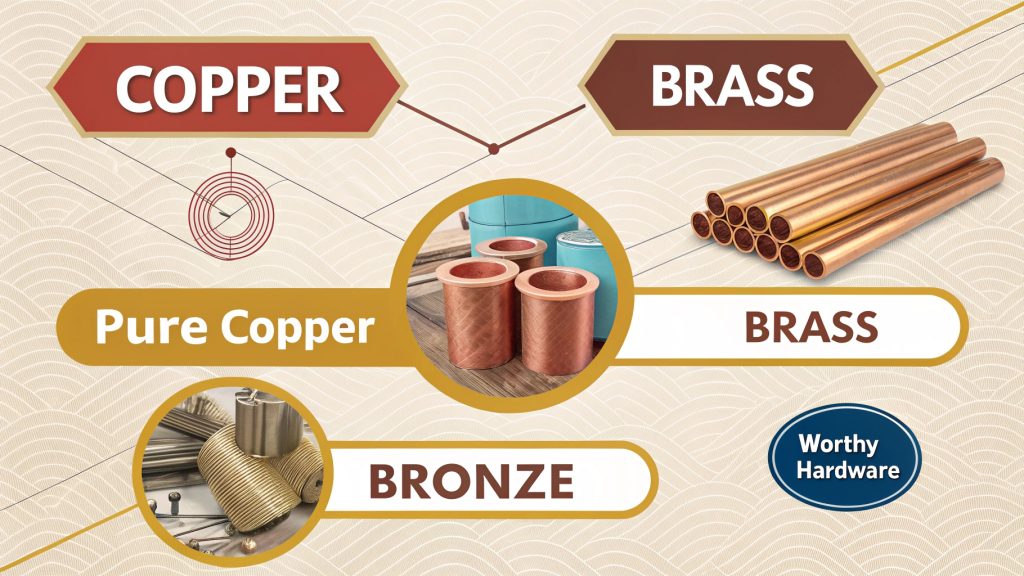
It's important to understand that copper is the base for both brass and bronze. Copper itself is a pure chemical element, a soft, malleable, and ductile metal with very high thermal and electrical conductivity. You'll see pure copper in electrical wiring or plumbing pipes. It has a characteristic reddish-brown color when freshly exposed.
Brass is not a pure element; it's an alloy. We make brass by mixing copper with zinc. Adding zinc changes copper’s properties quite a bit. For example, brass is generally harder and stronger than pure copper. The color also changes from reddish-brown to various shades of yellow, depending on the zinc content.
One of the big advantages I see in our CNC machining shop, Worthy Hardware, is that many types of brass are much easier to machine than pure copper. Copper can be a bit "gummy" during machining, while brass often cuts more cleanly. So, if you need copper's conductivity but also better strength or machinability, an alloy like brass might be the answer.
What is the difference between brass and tin bronze?
Is "bronze" always the same, or does "tin bronze" mean something special? It can be confusing. I will explain the specific role of tin.
Brass is a copper-zinc alloy. Tin bronze is a specific type of bronze where tin is the principal alloying element with copper. This makes tin bronze particularly strong, wear-resistant, and corrosion-resistant, often more so than typical brasses.
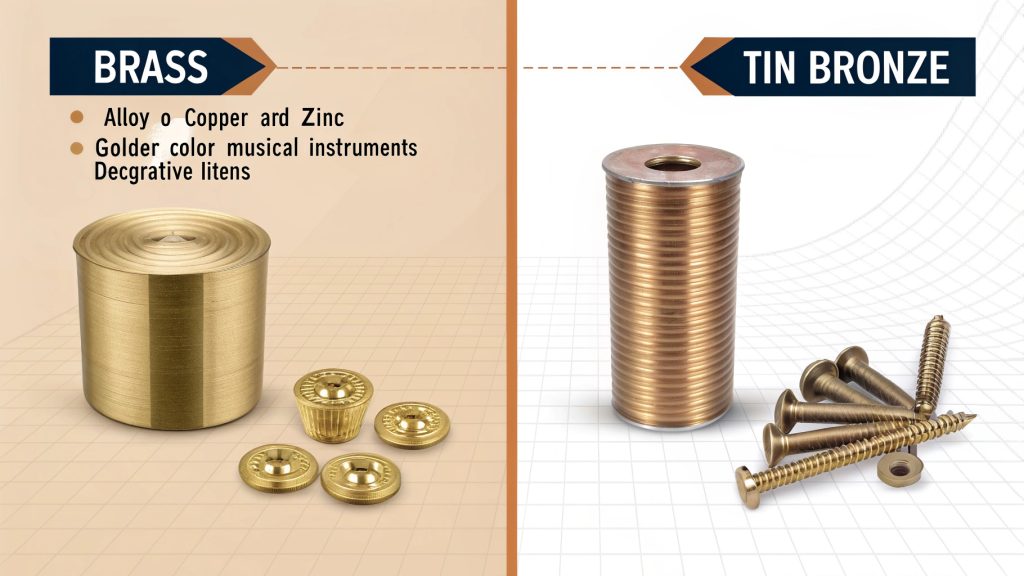
We've established brass is copper plus zinc. Now, let's focus on "tin bronze." While bronze is a broad term for copper alloys (often with tin, but sometimes aluminum or other elements), "tin bronze" specifically refers to alloys where tin is the main addition to copper. This is the classic type of bronze. The amount of tin can vary, and this changes the bronze's properties.
For instance, higher tin content generally increases hardness and strength, but can reduce ductility.
The key difference between brass and tin bronze comes down to that primary alloying element: zinc for brass, tin for bronze. This leads to distinct characteristics. Tin bronzes are well-known for their excellent wear resistance, good corrosion resistance (especially against seawater), and good fatigue strength.
I've often recommended tin bronze for parts like bearings, bushings, and marine hardware because of these qualities. Brass, while also corrosion-resistant, might not hold up as well in very harsh environments compared to a good tin bronze. Also, as I mentioned, tin bronze tends to have that reddish hue, while brass is more yellow.
Which is more expensive, brass or bronze?
Worried about material costs for your CNC parts? Brass and bronze prices differ. I'll help you understand which one might stretch your budget more.
Generally, bronze is more expensive than brass. This is primarily because tin, the main alloying element in most common bronzes, typically costs more than zinc, the main alloying element in brass.
When my customers, like Mark Chen from Canada, are looking at material options, cost is always a big factor. And yes, generally speaking, bronze tends to be more expensive than brass. The main reason for this price difference is the cost of the alloying elements.
Tin, which is the primary metal added to copper to make most types of bronze, is usually more expensive on the global market than zinc, which is the primary metal added to copper to make brass.
So, if you're comparing a standard tin bronze to a standard yellow brass, the bronze will likely have a higher raw material cost. This impacts the price of the final machined part. However, it's not always a simple "bronze is always X% more than brass" situation. There are many different alloys within both the brass and bronze families.
Some specialized brasses might be more expensive than some very basic bronzes, though this is less common. Also, market prices for copper, zinc, and tin can fluctuate, which affects the overall cost. At Worthy Hardware, we always try to provide the most current pricing when quoting, because these metal markets can change.
Is bronze better than brass for machining?
Need parts machined quickly and precisely? Material choice matters. I will explain how brass and bronze compare when it comes to machining.
Generally, many common brass alloys, especially free-machining brass (like C360), offer superior machinability compared to most bronzes. Bronzes can be tougher and more abrasive, leading to increased tool wear and slower machining speeds.
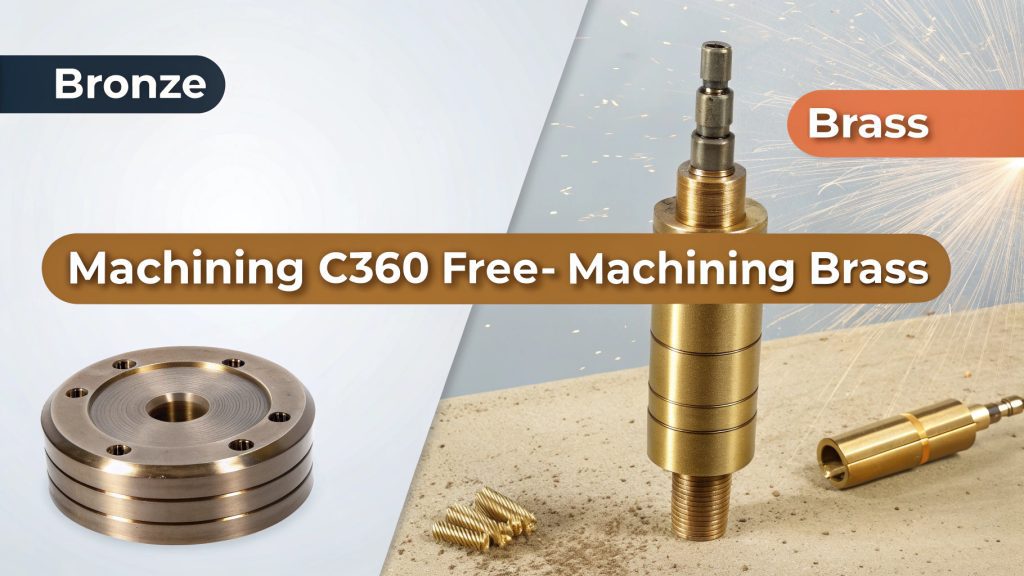
When it comes to machining, the answer to whether bronze is "better" than brass isn't a simple yes or no. It really depends on what you mean by "better." If "better" means easier and faster to machine with less tool wear, then many common brass alloys, particularly C360 Free-Machining Brass, are often the winner. C360 brass is well-known in the industry for its excellent machinability. The small amount of lead in it (though lead-free versions are increasingly common) helps create small, brittle chips that break away easily, leading to smoother finishes and faster production.
Bronzes, especially tin bronzes, tend to be tougher and can be more abrasive on cutting tools due to their superior wear resistance. This means machining bronze might require slower speeds, different tooling, or result in faster tool wear compared to brass.
However, if "better" refers to the performance of the final part in a demanding application (like needing high wear resistance or corrosion resistance), then bronze might be the superior material choice, even if it's a bit more challenging or costly to machine. At Worthy Hardware, we have experience machining both materials to tight tolerances, like the +/- 0.001" we can achieve. We advise customers on the trade-offs between machinability and final part performance.
Conclusion
In short, brass (copper-zinc) is often yellowish and more machinable. Bronze (copper-tin) is reddish, tougher, and offers better corrosion and wear resistance, but usually costs more.