
How Can I Reduce Machining Costs While Maintaining Material Properties?

High machining costs eating into your budget? This makes projects less profitable. We can explore ways to cut costs without sacrificing material quality.
You can reduce machining costs by optimizing product design, choosing cost-effective materials, streamlining manufacturing processes, and minimizing scrap. These steps help maintain material properties while saving money.
Keeping material performance high while lowering costs is a big goal for many of us. It's something I, Sandra Gao, think about a lot for my clients at Worthy Hardware. Let's look deeper into how we can achieve this balance effectively.
How to reduce CNC machining cost?
CNC machining seems expensive? This can limit your project scope. But, smart choices can bring these costs down significantly for your custom CNC parts.
To reduce CNC machining cost, simplify your part design, use standard features and tolerances, select machinable materials, and consider larger batch sizes. These are key strategies.
Reducing CNC machining costs is a common goal for many of my customers. At Worthy Hardware, we often help clients like Mark Chen from Canada find these savings. He needs top quality for his CNC milling parts but also good prices, as he resells them. One big area we always look at is product design.
Optimizing Product Design for Cost
Simpler designs are almost always cheaper to machine. I always advise looking for ways to avoid very complex curves or tiny, intricate features if they are not absolutely essential for the part's function. For example, if a part can function perfectly well with slightly looser tolerances, don't over-specify them.
Extremely tight tolerances, like the +/- 0.001" (sub 0.025mm) we can achieve and inspect at Worthy Hardware, naturally add cost. This is because they require more precise machine setups, slower machining speeds, and more intensive quality checks. We always aim for 100% inspection, but simpler designs mean fewer critical dimensions to manage tightly.
Strategic Material Selection
The material you choose for your aluminum machining parts or other components matters a lot for the final cost. Some materials, like common grades of aluminum (e.g., 6061), are much easier and faster to machine than tougher alloys like titanium or certain stainless steels.
We work with over 100 materials here in China, including all kinds of metals, plastics like ABS, PEEK, and even carbon fiber. So, we can often advise on alternative materials that might machine faster, and therefore be cheaper, but still meet all your performance requirements.
The Impact of Batch Size
Producing parts in larger batches often reduces the per-unit cost. This is a straightforward economy of scale. The setup time for the CNC machine—loading programs, tools, fixtures, and material—is a fixed cost for each job. When this setup cost is spread across more parts, the cost per part comes down.
While Worthy Hardware has no MOQ limitation, meaning we happily produce everything from a single prototype to mass production runs, planning for larger runs can be a smart financial move if your project allows. Our flexible delivery times and robust quality system ensure that even with cost-saving measures, product quality is always maintained.
How to reduce tooling cost?
Worried about tooling expenses adding up quickly? Custom tools can be very pricey. Let's see how to keep these essential tooling costs in check.
Reduce tooling costs by designing parts that use standard cutting tools, minimizing the need for specialized custom tools, choosing appropriate tool materials, and implementing good tool life management practices.
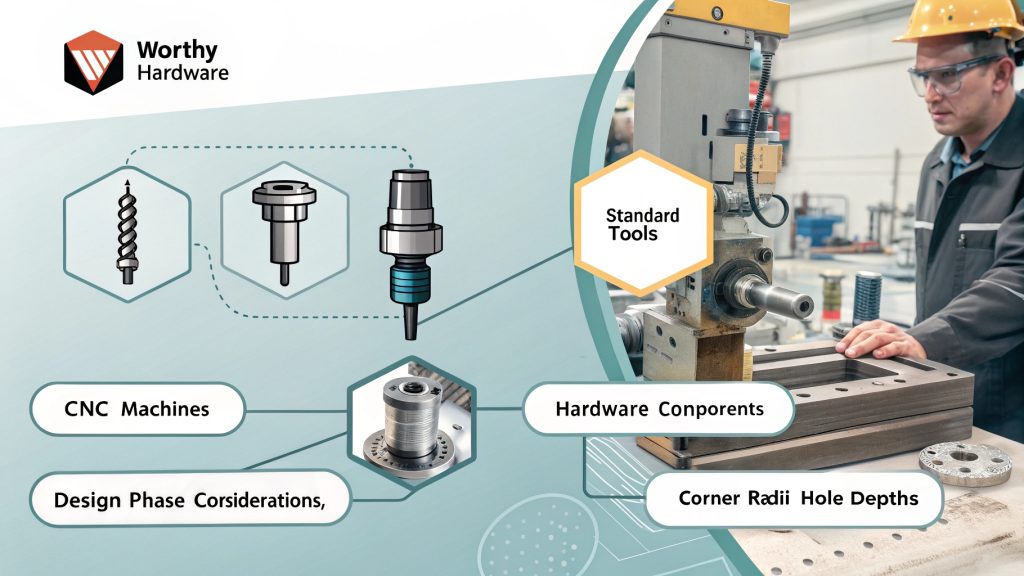
Tooling is a significant part of the overall machining cost, and it's something we manage very carefully at Worthy Hardware. Custom tools are not only expensive to design and manufacture but also add to the lead time. So, how can we work together to manage this effectively for your CNC turning parts or milled components?
Designing for Standard Tools
The most effective way to save on tooling is to design parts that can be made using standard, off-the-shelf cutting tools. This means your design team should think about details like corner radii, hole depths, and the accessibility of different features during the design phase.
For instance, specifying very small internal corner radii might necessitate a tiny, fragile, and therefore expensive, end mill. If a slightly larger radius is functionally acceptable, it can save money, reduce tool breakage risk, and even sometimes make the part stronger.
We offer comprehensive CNC routing services and advanced 5-axis CNC machining, giving us a wide array of standard tooling options. But, smart design choices that leverage these standard tools are always key.
Minimizing or Eliminating Custom Tooling
Sometimes, a feature might seem to require a custom tool. However, it's always worth asking if there's an alternative approach. Could the design be slightly modified to achieve the same functional result with standard tools? Our team of 4 experienced engineers at Worthy Hardware often collaborates with customers to review and refine designs.
We've helped many clients, including those like Mark who are very sensitive to overall costs, to tweak their designs to avoid custom tooling, saving them significant money and reducing production lead times. This proactive, collaborative approach is something we pride ourselves on.
Tool Material Selection and Tool Life Management
The material of the cutting tool itself also impacts cost. Cheaper tools might seem like a saving, but if they wear out quickly, they can lead to more frequent tool changes, machine downtime, and potentially inconsistent part quality.
We select high-quality tools appropriate for the specific material being machined—be it steel, brass, or PEEK—and implement practices to manage their wear effectively. This maximizes tool life without ever compromising the quality of the parts. This careful management is essential for efficient high-volume CNC machining services and ensures we can maintain our typical 3-business-day standard lead time for many projects.
Why is CNC machining so expensive?
Ever wonder why CNC machining often has a high price tag? This can be frustrating. Understanding the reasons helps in finding effective ways to save.
CNC machining is expensive due to the high initial cost of the machinery, the need for skilled labor, sophisticated CAM software, detailed setup time, raw material costs, specialized tooling, and rigorous quality control processes.
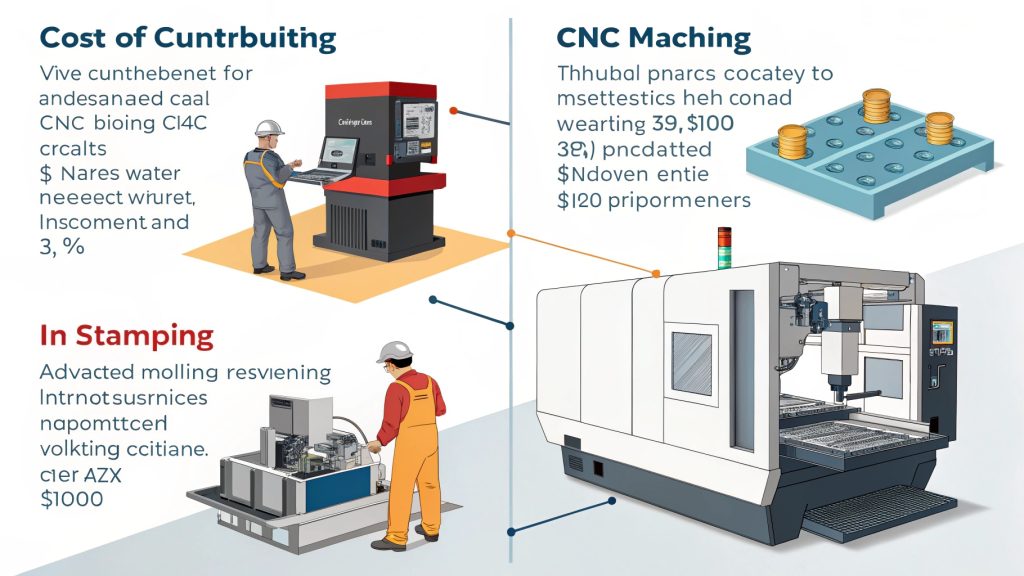
Many clients, especially those new to sourcing custom CNC parts, ask me why CNC machining seems expensive compared to, say, casting or stamping for very high volumes. It's a fair question, and several key factors contribute to the cost structure of precision machining.
The Machinery Investment
CNC machines, particularly the advanced multi-axis machines like the ones we use at Worthy Hardware for 5-axis CNC machining, represent a very significant capital investment. These machines are marvels of engineering, built to incredibly high precision standards to produce parts consistently. For example, our capability to mill parts up to 80” x 48” x 24” (2,032 x 1,219 x 610 mm) means we have large, robust, and therefore expensive, machinery.
Skilled Labor and Expertise
Operating these sophisticated machines effectively requires highly skilled programmers, setup technicians, and machine operators. These professionals command good salaries due to their specialized knowledge and experience.
Their expertise is absolutely crucial for programming the machine paths, setting up the jobs correctly, and ensuring the production of accurate custom CNC parts. At Worthy Hardware, our team includes 4 engineers with rich experiences in helping customers optimize designs and processes.
Software, Setup, and Programming Time
Before any metal is cut, a lot of work happens. Engineers use Computer-Aided Manufacturing (CAM) softwareto translate the 3D model into machine instructions. This programming takes time and skill. Then, setting up the CNC machine for each new job – which involves loading and calibrating tools, securing fixtures, loading the raw material, and often running test parts – also adds to the cost. This setup cost is more prominent for small batches or one-off prototypes but is a factor in all production.
Materials and Tooling Costs
The cost of raw materials can vary widely. Specialized alloys, engineering plastics like PEEK or ULTEM, or materials like titanium are inherently more expensive than common aluminum or steel.
As we machine over 100 different materials, we see this variation daily. Cutting tools also wear out with use and need to be replaced. Different materials require different types of tools, and harder materials wear tools out faster.
Rigorous Quality Control
Ensuring that every part meets the specified dimensions and tolerances, like our standard tolerance of +/- 0.005" (+/- 0.127 mm) or even tighter precision tolerances when required, necessitates comprehensive quality control. This involves using precise measuring equipment (CMMs, micrometers, calipers), skilled inspectors, and dedicated time for inspection.
At Worthy Hardware, we perform 100% inspection on all products, because delivering quality parts that meet customer design specifications is our top priority. This focus on quality is vital for customers who, like Mark, need reliable parts for their own products and cannot afford delays or defects from their suppliers in China.
How much does it cost to operate a CNC machine?
Curious about the actual running costs of a CNC machine? These ongoing operational costs significantly impact the final price of your machined parts.
Operating a CNC machine involves recurring costs like electricity, regular preventative maintenance, consumables (such as coolant and lubricants), skilled labor for operation and programming, and the wear and replacement of cutting tools.
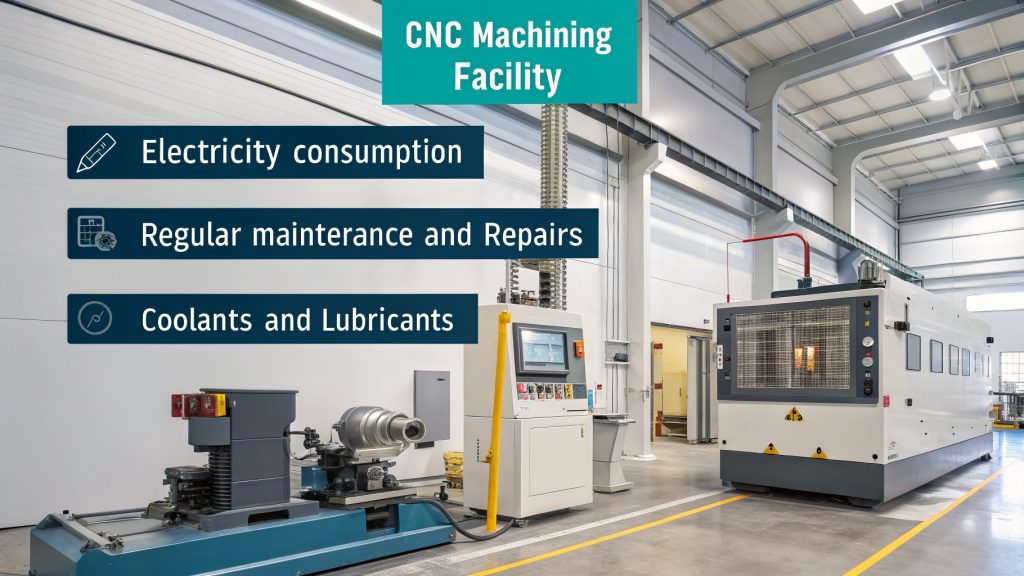
The price you pay for a machined part isn't just about the raw material cost and a bit of profit for the shop. There are substantial ongoing operational costs that a CNC machining facility like ours at Worthy Hardware in China has to cover to stay in business and produce high-quality parts. Understanding these helps explain the pricing structure.
Direct Operating Costs Breakdown
-
Electricity Consumption: CNC machines, especially the larger ones with powerful spindles and multiple servo motors, consume a significant amount of electricity. The main spindle, axis drives, coolant pumps, and control systems all draw power throughout the machining cycle.
-
Regular Maintenance and Repairs: To keep these precision machines running accurately and reliably, regular preventative maintenance is absolutely crucial. This includes scheduled servicing, lubrication, replacement of worn mechanical parts, and electronic calibrations. Unexpected repairs can also add to costs.
-
Consumables Usage: A variety of consumables are used continuously. Cutting fluids (coolant) are essential for lubricating and cooling the cutting zone, extending tool life, and achieving good surface finishes. Lubricants for the machine's moving parts and cleaning supplies are also regular expenses. Our standard as-machined surface finish is 125 Ra or better, and good coolant management is part of achieving that.
Labor Costs Beyond Initial Setup
While programming and initial setup are significant, ongoing labor is also a factor. An operator might be needed to oversee the machine during long runs, load and unload parts (especially for non-automated setups), perform in-process quality checks, and make minor adjustments. Even with increasing automation, skilled human oversight is often indispensable for precision machining.
Tooling Wear, Replacement, and Management
Cutting tools are not a one-time purchase; they wear down with use and need to be sharpened or replaced regularly. The rate of wear depends heavily on the material being machined (e.g., machining abrasive composites or hardened steel wears tools much faster than machining brass), the cutting speeds and feeds, and the quality of the tool itself.
We carefully manage our tooling inventory and usage to balance tool cost against machining efficiency and part quality. This includes selecting the right tool for each specific material and application from the 100+ materials we can machine.
Efficiently managing these operational aspects at Worthy Hardware helps us provide competitive pricing and flexible delivery times, often as quick as 3 business days for standard lead time, to our B2B customers worldwide, from Singapore to North America and Europe.
Conclusion
To cut machining costs while keeping material quality, focus on smart design, material choice, and efficient processes. We at Worthy Hardware can help you achieve this balance.