
Which is More Suitable for Precision Parts: Titanium or Aluminum?

Choosing materials is hard. The wrong one means wasted money. Understand titanium vs. aluminum to pick perfectly for your precision parts.
For precision parts, aluminum is often better for cost and ease of machining. But titanium offers superior strength and corrosion resistance if your budget and application demand it.
Deciding between these two metals can feel overwhelming. I often see clients, much like Mark Chen from Canada, wrestling with this exact question. Mark needs top quality for his CNC machining parts but is also very keen on competitive pricing. So, this balance is something we discuss a lot. Let's break down the details further. This way, you can make an informed choice for your projects with Worthy Hardware.
Which is better aluminum or titanium?
Unsure which metal truly wins for your project? Picking incorrectly leads to subpar results or overspending. Let's compare them head-to-head clearly to help you decide.
Neither is universally "better." Aluminum is lighter, cheaper, and easier to machine. Titanium is stronger, more corrosion-resistant, and more biocompatible. The "better" choice depends entirely on your specific application needs and budget.
When my clients ask me this, I always say it really depends on what you need the part to do. There's no single "best" metal for every situation. At Worthy Hardware, we machine both aluminum and titanium precision parts regularly, and each has its place.
Key Differences at a Glance
To make it simple, let's look at a quick comparison:
| Feature | Aluminum (e.g., 6061-T6) | Titanium (e.g., Grade 5/Ti-6Al-4V) |
|---|---|---|
| Density | Lower (~2.7 g/cm³) | Higher (~4.5 g/cm³) |
| Strength-to-Weight | Good | Excellent |
| Cost (Raw Material) | Lower | Higher |
| Machinability | Easier | More Difficult |
| Corrosion Resistance | Good (forms oxide layer) | Excellent (very stable oxide layer) |
| Thermal Conductivity | High | Low |
| Biocompatibility | Generally not | Excellent |
When Aluminum Shines
Aluminum is a fantastic choice for many applications. Its lower density means lighter parts, which is great for aerospace (some non-structural components), automotive parts, and many consumer products. I find that for projects where weight saving is a big goal, but the absolute highest strength isn't the top priority, aluminum is perfect.
For instance, enclosures for electronics or decorative pieces. Plus, it's much easier to machine. This means we can often produce aluminum parts faster and at a lower cost. This is a big factor for clients like Mark, who are looking for competitive pricing for their custom CNC parts. Its good thermal conductivity also makes it ideal for heat sinks.
When Titanium is the Champion
Titanium, on the other hand, is the hero when conditions get tough. Its exceptional strength-to-weight ratio means you get very strong parts that are still relatively light compared to steel. It's highly resistant to corrosion, even in harsh environments like saltwater. This makes it perfect for marine applications, chemical processing equipment, and medical implants. The biocompatibility of titanium is a huge advantage in the medical field for things like bone screws or joint replacements.
For aerospace, many critical structural components are made from titanium because they need to withstand high stress and extreme temperatures. While it costs more, for these demanding applications, the performance of titanium justifies the investment. We have extensive experience with 5-axis CNC machining for complex titanium parts right here at Worthy Hardware.
Which is more scratch resistant aluminum or titanium?
Worried about parts scratching easily during use? Scratches ruin aesthetics and can even affect a part's function. Understand which metal offers better surface durability.
Titanium is significantly more scratch-resistant than aluminum. Its natural hardness and the strong, self-healing oxide layer it forms provide superior protection against daily wear and tear and abrasion.
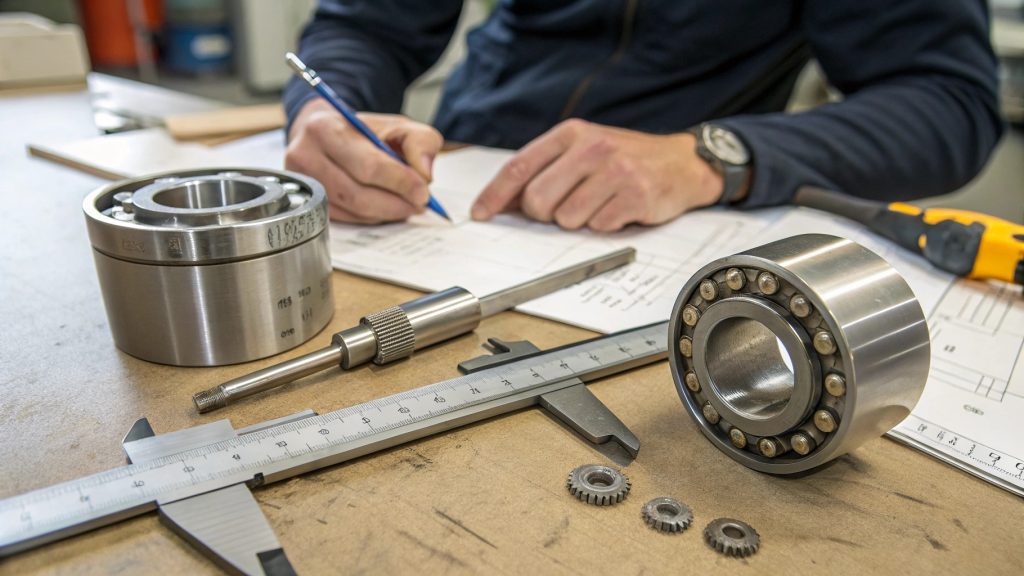
Surface finish and durability are often key concerns for precision parts, especially if they are visible or handle- R_VISIBLE or handled often. I've had many conversations about this, especially for consumer products where aesthetics are paramount.
Understanding Hardness and Scratch Resistance
Scratch resistance is directly related to a material's hardness. Generally, harder materials are more difficult to scratch. We can measure hardness using scales like Rockwell, Brinell, or Vickers. Titanium alloys, particularly common ones like Ti-6Al-4V (Grade 5), are considerably harder than most aluminum alloys.
For example, 6061-T6 aluminum has a Brinell hardness of around 95 HB, while Ti-6Al-4V can be around 334 HB. This big difference in hardness means titanium can withstand everyday bumps and scrapes much better than aluminum. If a part is going to be exposed to potential abrasion, titanium will hold up better over time, maintaining its look and integrity.
The Role of Oxide Layers
Both aluminum and titanium form protective oxide layers when exposed to air. This is what gives them their good corrosion resistance. However, these oxide layers are different. Aluminum forms aluminum oxide, which is relatively hard but can be scratched off. If it's scratched, a new layer will form, but the underlying metal is softer.
Titanium forms titanium dioxide (TiO2). This layer is extremely hard, very stable, and adheres strongly to the base metal. It's also self-healing. So, even if you could scratch it, it repairs itself effectively. This robust oxide layer is a major reason why titanium is so scratch-resistant. It acts like a natural, tough coating.
Practical Implications for Precision Parts
So, what does this mean for your parts? If you're designing a part that will be seen, handled frequently, or might come into contact with other objects, titanium's scratch resistance is a significant benefit. Think about high-end electronics casings, premium watch bodies, or even tools.
For internal components where a scratch won't affect function or be seen, aluminum might be perfectly fine and more cost-effective. I remember Mark Chen once considered titanium for a consumer product casing specifically because he wanted that premium, durable feel.
The scratch resistance was a key selling point for his customers, justifying the added cost of titanium machining. We at Worthy Hardware can also apply various surface finishing techniques to both materials, but titanium's inherent scratch resistance gives it a head start.
Is titanium more rigid than aluminum?
Need your part to resist bending and flexing under load? A non-rigid part can fail or cause serious misalignment in an assembly. Let's see which metal offers greater stiffness.
Yes, titanium is generally more rigid, or stiffer, than aluminum. It has a higher Young's modulus, meaning it deforms less elastically under a given load compared to aluminum.
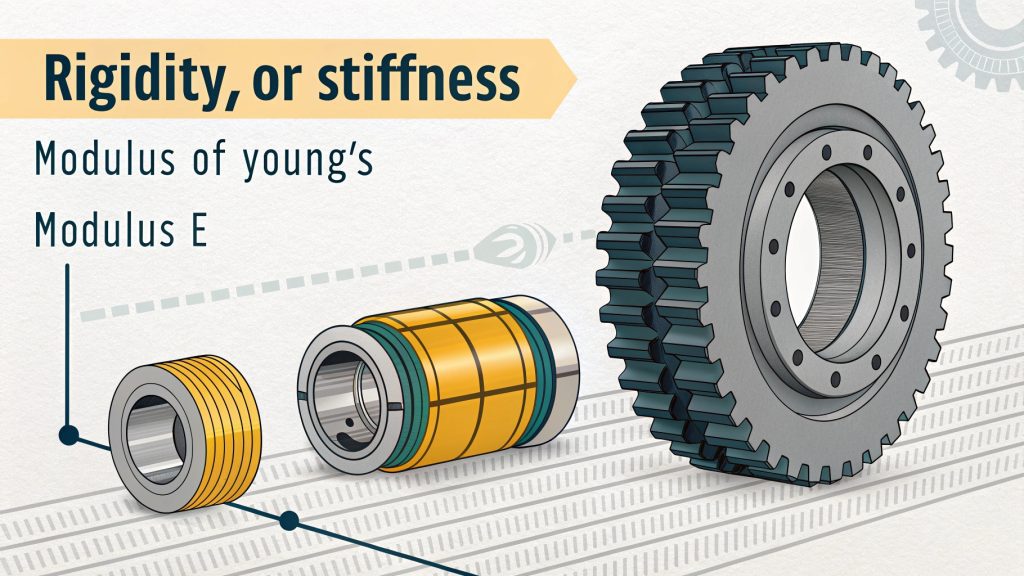
Rigidity, or stiffness, is a crucial mechanical property for many precision parts. It's all about how much a material bends or deforms when a force is applied, and then returns to its original shape when the force is removed.
Defining Rigidity (Stiffness)
The technical term for stiffness is the Modulus of Elasticity, or Young's Modulus (often denoted by 'E'). A higher Young's Modulus means the material is stiffer. It will stretch or bend less under a specific load. Let's look at some typical values. Many common aluminum alloys, like 6061-T6, have a Young's Modulus of around 69 GigaPascals (GPa).
In contrast, titanium alloys, such as Ti-6Al-4V (Grade 5), typically have a Young's Modulus of around 110-120 GPa. This is significantly higher. So, for a part of the same shape and size, the titanium part will be noticeably stiffer than the aluminum one. It will resist deflection much better. This is very important in precision machining where maintaining dimensional stability under operational stress is key.
Strength vs. Stiffness – An Important Distinction
It's easy to confuse strength with stiffness, but they are different properties. Strength refers to how much stress a material can take before it permanently deforms (yield strength) or breaks (tensile strength). Stiffness, as we've said, is about resistance to elastic deformation – bending but springing back.
While titanium is also very strong (often stronger than aluminum), its higher stiffness is a separate advantage. A material can be very strong but not very stiff (like some plastics), or very stiff but brittle (like ceramic). Titanium alloys often give you a good combination of both high strength and high stiffness, which is why they are used in demanding applications.
Applications Where Rigidity Matters
Where does this extra rigidity from titanium become important? In many places. Think about aerospace structural components that must maintain their shape under aerodynamic loads. Or high-performance bicycle frames that need to transfer pedal power efficiently without flexing too much. In medical implants, like spinal fixation devices, rigidity is critical for stability.
For the custom CNC parts we make at Worthy Hardware, if a component is a mounting bracket for a sensitive sensor, or a part of a precision alignment system, it must be very rigid to ensure accuracy. Even if a part is not carrying a huge load, if it cannot flex at all, titanium might be the better choice over aluminum, despite the cost. We always discuss these trade-offs with our clients to ensure they get the best material for their specific needs and budget.
What are the disadvantages of titanium?
Titanium sounds great with all its benefits, but are there downsides? Overlooking potential drawbacks can lead to budget blowouts or unexpected production issues. Let's honestly look at titanium's disadvantages.
The main disadvantages of titanium are its significantly higher material cost compared to aluminum and its more challenging machinability. This difficult machining often leads to increased manufacturing expenses and longer lead times.
While titanium offers amazing properties like high strength, low density, and excellent corrosion resistance, it's not always the right choice. As a CNC machining parts supplier, I always want my clients to be aware of the full picture.
The Cost Factor
The most significant hurdle for many is the cost.
First, the raw material itself is much more expensive. Extracting titanium from its ore and processing it into usable forms (like bars or sheets) is a complex and energy-intensive process. This makes it several times more expensive per kilogram than aluminum.
Second, the machining cost is higher. As I'll explain next, titanium is tougher to machine. This means we need specialized cutting tools, slower cutting speeds, and more robust machinery. Tool wear is also faster when machining titanium. All these factors add to the labor and tooling costs.
For clients like Mark Chen, who are very price-sensitive while still demanding quality, this cost difference is a major consideration. We often have detailed discussions to see if the performance benefits of titanium truly outweigh the higher price for their specific application. Sometimes, a high-performance aluminum alloy or a specific surface treatment on aluminum can be a more cost-effective solution.
Machinability Challenges
Machining titanium presents several technical challenges. It has low thermal conductivity, meaning heat generated during cutting doesn't dissipate quickly from the cutting zone. This can lead to very high temperatures at the cutting tool tip, reducing tool life.
Titanium also has a tendency to react chemically with cutting tool materials at high temperatures, causing tool wear through adhesion or diffusion. Some titanium alloys can also work-harden during machining, meaning the surface layer becomes harder as it's cut, making subsequent passes more difficult. Its lower modulus of elasticity (compared to steel, though higher than aluminum) can sometimes lead to chatter or vibration if not properly fixtured or if machining parameters are not optimized.
At Worthy Hardware, our engineers have rich experience, and we've invested in advanced CNC machines, including 5-axis capabilities, and tooling specifically for materials like titanium. We can handle it, but it definitely requires more expertise and careful process control than machining aluminum. This inevitably impacts lead times and costs.
Other Considerations
Beyond cost and machinability, there are a few other points. Titanium can be more difficult to weld than aluminum, often requiring inert gas shielding to prevent contamination. While there are many titanium alloys, the variety might not be as extensive or as readily available as the vast range of aluminum alloys tailored for specific needs.
Also, its electrical conductivity is much lower than aluminum, so if your part needs to conduct electricity well, titanium is not a good choice. These are all factors we discuss with our clients during the design and material selection phase to ensure the final product meets all their requirements effectively.
Conclusion
Choose aluminum for cost-effectiveness and ease of machining. Opt for titanium when superior strength, scratch resistance, and rigidity are essential, and your budget allows for it.