
# How To Choose Between CNC Machining And 3D Printing For Your Custom Parts?
Need custom parts? Choosing the wrong process wastes money and delays projects. Let's compare CNC machining and 3D printing to find your best fit for your needs.
For complex, low-volume parts without tight deadlines, 3D printing often works well. For simpler designs, high quantities, precision, and speed, CNC machining is usually the better choice for manufacturing.
Making the right choice isn't always simple. Different factors matter for different projects. Let’s break down the key questions you should ask before committing to a manufacturing method. Read on to learn more about these processes.
Is CNC machining better than 3D printing?
Heard CNC is superior? Or maybe 3D printing is the future? This confusion causes bad choices. Let's see when each method truly shines for part making and production.
Neither is universally "better." CNC often excels in strength, precision, and material variety for metals. 3D printing leads in complex geometry creation and rapid prototyping with certain plastics and resins.
CNC machining and 3D printing work very differently. CNC is subtractive. It starts with a solid block of material, like aluminum or steel, and cuts away material using rotating tools to create the part. Think of a sculptor carving stone.
At Worthy Hardware, we handle many materials this way – over 100 types, including various metals, plastics, and even wood. 3D printing is additive. It builds the part layer by layer from powder, liquid resin, or filament. This method is fantastic for really complex shapes, things with internal channels or intricate details that are difficult or impossible to machine.
Here's a quick comparison based on what we see with our customers:
| Feature | CNC Machining (Worthy Hardware) | 3D Printing |
|---|---|---|
| Process | Subtractive (Cutting away material) | Additive (Building up material layer by layer) |
| Materials | Wide range (100+ Metals, Plastics, Wood, Composites) | More limited, mainly plastics, resins, some metals |
| Complexity | Good, but limitations on deep internal features | Excellent for complex internal/external geometry |
| Precision | Very high (We achieve +/- 0.001" or better) | Good, but often less precise than CNC |
| Strength | Generally higher (Starts from solid block) | Can be lower, depends on process/material/orientation |
| Surface Finish | Good 'as machined' (125 Ra), many finishes possible | Often requires post-processing for smoothness |
| Volume | Excellent for prototype to high volume production | Best for prototypes and low volume |
| Speed | Faster for simpler parts, especially in batches | Can be faster for single, very complex prototypes |
Choosing depends completely on your project needs. If you require strong, durable metal parts with very tight tolerances, like the +/- 0.005" standard we offer or even tighter custom tolerances down to +/- 0.001", CNC machining is usually the best path. If you need a quick plastic prototype with complex internal features to test a design, 3D printing might be the faster option initially.
What is the biggest disadvantage of 3D printing?
Thinking 3D printing solves everything for manufacturing? Ignoring its downsides leads to disappointment and wasted resources. Let's look at the main challenges you might face with this technology.
Key disadvantages include limitations in material choice and part strength compared to machined parts, often slower speeds for mass production, potentially rougher surface finishes requiring extra work, and sometimes higher costs for large volumes.
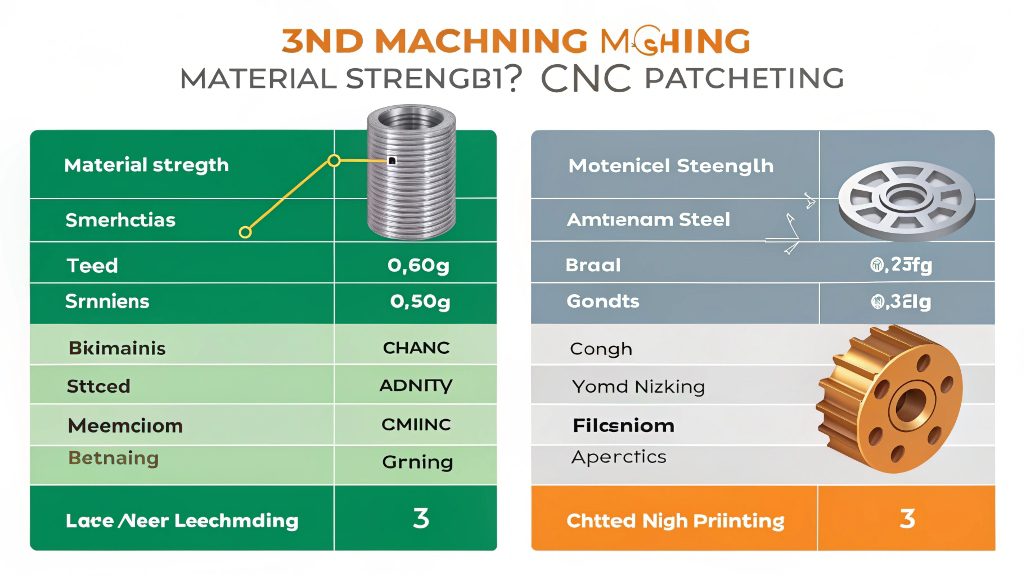
While 3D printing offers amazing design freedom, it does have significant limitations you need to be aware of. One of the biggest is often the material selection and properties. Although the range of 3D printing materials is growing, it still doesn't match the vast selection of metals, alloys, and engineering plastics readily available for CNC machining.
We routinely machine materials like various grades of stainless steel, aluminum alloys (like 6061 or 7075), titanium, brass, copper, and tough plastics like PEEK, Ultem, or Delrin, which might not have equivalent options or performance in 3D printing.
The mechanical strength of 3D printed parts can also be a concern. Because parts are built layer by layer, the bonds between these layers can sometimes be weaker than the material itself. This means the part might be stronger in one direction than another (anisotropy) and potentially not suitable for high-stress applications where a solid machined part would perform better. Production speed for larger quantities is another area where CNC often wins.
Printing one part might be relatively quick, but printing hundreds or thousands can take significantly longer than setting up a CNC machine for efficient batch production. Surface finish is also frequently rougher on 3D printed parts, often showing visible layer lines.
Achieving a smooth finish usually requires additional post-processing steps like sanding, polishing, or vapor smoothing, which adds time and cost.
Lastly, while 3D printing can be cost-effective for single prototypes, the cost per part may not decrease as much with volume compared to CNC machining, making it less economical for mass production.
Is there a future in CNC machining?
With all the talk about 3D printing, is CNC machining fading away? Thinking CNC is old tech means you might overlook its power for precision manufacturing. Let's see why CNC is here to stay.
Absolutely. CNC machining has a strong future. It's essential for high-precision, high-strength parts, especially metals. Advancements in automation, multi-axis machining (like our 5-axis capabilities), and software continue to make it faster and more capable.
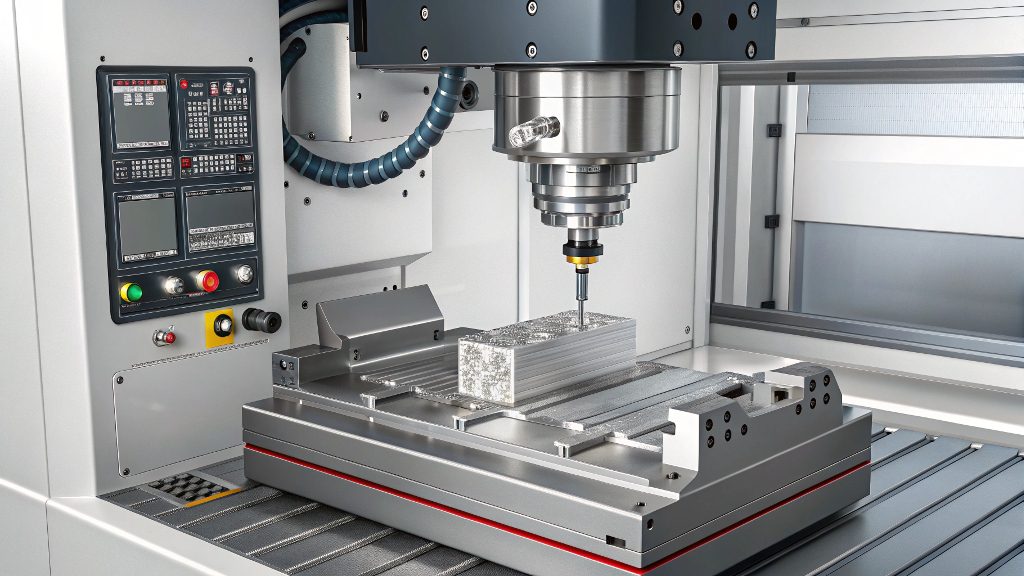
CNC machining is far from obsolete; in fact, it's constantly evolving and remains a cornerstone of modern manufacturing. The fundamental need for parts with high precision, excellent surface finish, and superior mechanical strength – particularly from metals – ensures its continued relevance. Industries like aerospace, automotive, medical, and industrial equipment rely heavily on the accuracy and reliability that CNC machining provides. At Worthy Hardware, we see this demand every day.
Several trends are driving the future of CNC. Automation is increasingly common, with robotic arms loading and unloading parts, enabling machines to run unattended for extended periods ("lights-out manufacturing"), boosting efficiency. Multi-axis machining, such as the 5-axis CNC capabilities we offer, allows for the creation of highly complex geometries with fewer setups. This reduces lead times, improves accuracy, and opens up new design possibilities. Software advancements in CAD (Computer-Aided Design) and CAM (Computer-Aided Manufacturing) are making programming faster, more intuitive, and enabling sophisticated simulation to optimize toolpaths and prevent collisions.
We're also seeing the rise of hybrid manufacturing, where machines combine additive (3D printing) and subtractive (CNC machining) processes in one platform. For high-volume production, CNC machining often remains the most cost-effective method due to its speed and efficiency once set up. Its ability to work with virtually any machinable material and hold extremely tight tolerances ensures CNC machining will remain a vital manufacturing technology for the foreseeable future.
Where will 3D printing be in 5 years?
Wondering what's next for 3D printing technology? Staying unaware of trends can lead to missed chances in product development and manufacturing strategies. Let's explore where 3D printing is likely headed.
In 5 years, expect faster 3D printing speeds, a wider range of usable materials (especially metals and composites), more applications in end-use parts (not just prototypes), and increased use in industries like healthcare and aerospace.
The field of 3D printing, or additive manufacturing, is advancing rapidly. Looking ahead five years, we can anticipate several key developments that will make it even more impactful. Printing speeds are expected to increase significantly across various technologies, making it more viable for larger production runs than it is today.
The palette of materials will continue to expand dramatically. We'll see more reliable and cost-effective metal printing options, advanced polymer composites with enhanced strength and thermal properties, ceramics, and potentially more biocompatible materials suitable for medical applications.
A major shift will be the increased use of 3D printing for functional, end-use parts, moving beyond its traditional role in rapid prototyping. This will be driven by improvements in material properties, process reliability, and quality control. Industries like aerospace will use it more for lightweight structural components, while the medical field will expand its use for patient-specific implants, surgical guides, and anatomical models.
Automotive companies will likely use it more for tooling, jigs, fixtures, and even some production parts. We can also expect greater integration with digital workflows and AI for process optimization and automated quality assurance. While CNC machining will still dominate for many applications requiring ultimate precision and strength in traditional metals, 3D printing will become an increasingly powerful complementary technology, especially for complex designs and customized production.
Conclusion
Choose CNC for precision, strength, and volume, especially with metals. Use 3D printing for complex prototypes or low-volume intricate parts. Understand both to pick the best process for success.