
How Does Material Selection Affect The Cost Of CNC Machined Components?

Designing CNC parts? Material costs seem confusing and can inflate your budget quickly. Understanding this link is crucial for cost control.
Material choice is a major cost driver in CNC machining. Factors include the raw material price, how easily the material can be cut (machinability), and potential waste during processing. Choosing wisely based on the part's application needs significantly impacts the final price.
The link between materials and cost is clear, but many factors play a role. Let's look closer at how decisions get made and how you can manage expenses effectively when getting your parts machined. Understanding these elements helps you make informed choices for your projects.
What are the factors influencing the selection of CNC machines?
Need CNC parts? Unsure which machine is right for your job and budget? Knowing key factors helps choose the best machine type for efficient production.
Machine selection depends on part complexity, material type, required tolerances, production volume, and budget. Matching these needs ensures efficient production and controls cost for your specific component requirements.
Choosing the right CNC machine is essential for getting your parts made correctly and cost-effectively. Several key factors guide this decision. First, the material itself matters. Harder materials like stainless steel or titanium require machines with more power, rigidity, and specific tooling compared to softer materials like aluminum or plastics.
Using the wrong machine can lead to slow production or tool damage. Second, part complexity is critical. Simple parts with basic shapes might only need a 3-axis milling machine or a standard lathe. However, parts with complex curves, undercuts, or features on multiple faces often require 4-axis or 5-axis machining centers. At Worthy Hardware, we have capabilities up to 5-axis machining for these complex jobs.
Third, the required tolerances play a big role. Achieving very tight tolerances (like the +/- 0.001" or tighter we handle) demands high-precision machines and careful setup, which impacts the choice.
Finally, production volume influences the decision. Prototypes might be made on versatile machines, while high-volume production might benefit from specialized machines or automated cells for speed and consistency. We handle everything from single prototypes to mass production runs.
| Factor | Consideration | Impact on Machine Choice |
|---|---|---|
| Material | Hardness, Machinability | Power, Rigidity, Spindle Speed, Tooling |
| Part Complexity | Geometry, Number of Features, Undercuts | 3-axis, 4-axis, 5-axis, Lathe, Mill-Turn |
| Tolerances | Precision Requirements (e.g., +/- 0.005" vs +/- 0.001") | Machine Accuracy, Stability, Calibration |
| Volume | Quantity Needed (Prototype vs. Mass Production) | Speed, Automation, Setup Time |
| Budget | Available Funds for Manufacturing | Machine Hour Rate, Setup Costs |
How to make CNC parts cheaper?
CNC costs too high? Are tight budgets limiting your projects? Smart choices in design and material can significantly cut expenses without sacrificing quality.
Reduce CNC costs by choosing cost-effective materials, simplifying designs for manufacturability (DFM), specifying looser tolerances where possible, and ordering in larger quantities to benefit from economies of scale.
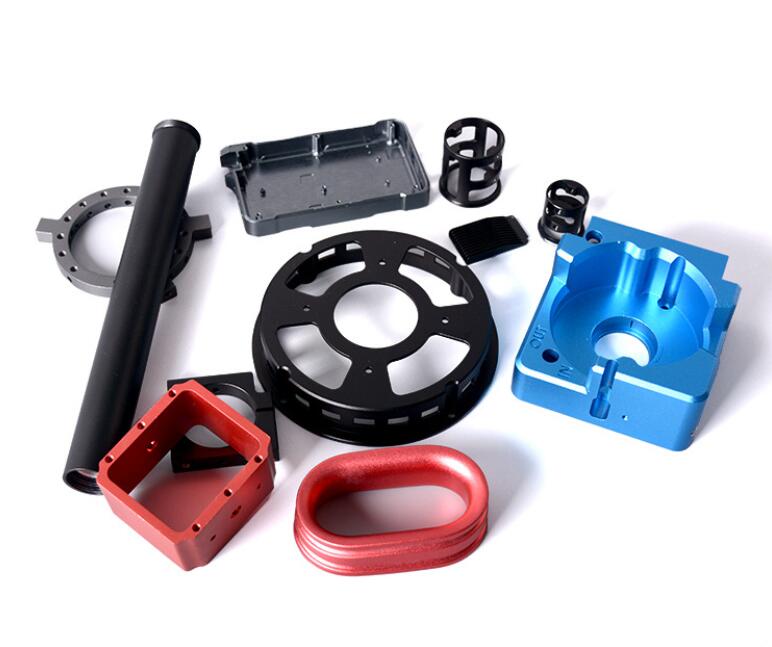
Everyone wants to save money on manufacturing, and CNC machining is no exception. Luckily, there are several practical ways to lower costs.
One major area is material selection. While some applications demand expensive materials, often a more common and affordable option like Aluminum 6061 or certain plastics can work just as well. Discussing your needs with us can reveal cost-effective alternatives from our wide range of 100+ materials.
Another huge factor is Design for Manufacturability (DFM). Simplifying your part's design makes it easier and faster to machine. This means avoiding things like very deep pockets, extremely thin walls, or unnecessarily sharp internal corners (adding a small radius helps a lot).
Our engineers at Worthy Hardware often help clients refine designs for better manufacturability and cost savings – it's a key part of our service. Tolerances also directly impact cost. Only specify tight tolerances where absolutely necessary. Looser tolerances (+/- 0.005" is our standard) are much cheaper and faster to achieve than very tight ones (like +/- 0.001").
Lastly, consider order quantity. Setup costs are similar whether making one part or one hundred. Ordering larger batches spreads that setup cost over more units, lowering the price per part. We have no MOQ, but larger volumes naturally lead to better pricing.
| Strategy | Action | Potential Cost Saving |
|---|---|---|
| Material Optimization | Choose less expensive, suitable material | High |
| Design for Manufacturability | Simplify geometry, add radii, avoid deep cuts | High |
| Tolerance Review | Specify tight tolerances only where needed | Medium to High |
| Increase Order Quantity | Order larger batches | Medium |
| Surface Finish | Use standard 'as-machined' finish if possible | Low to Medium |
What factors should be taken into consideration when selecting stock for CNC machining?
Choosing raw material? Worried the wrong stock choice will cause problems or raise costs? Consider key factors beyond just the material type itself for success.
Select stock based on required mechanical properties (strength, hardness), machinability, cost, availability, and the component's end-use environment (temperature, corrosion). These factors ensure functionality and manufacturability.
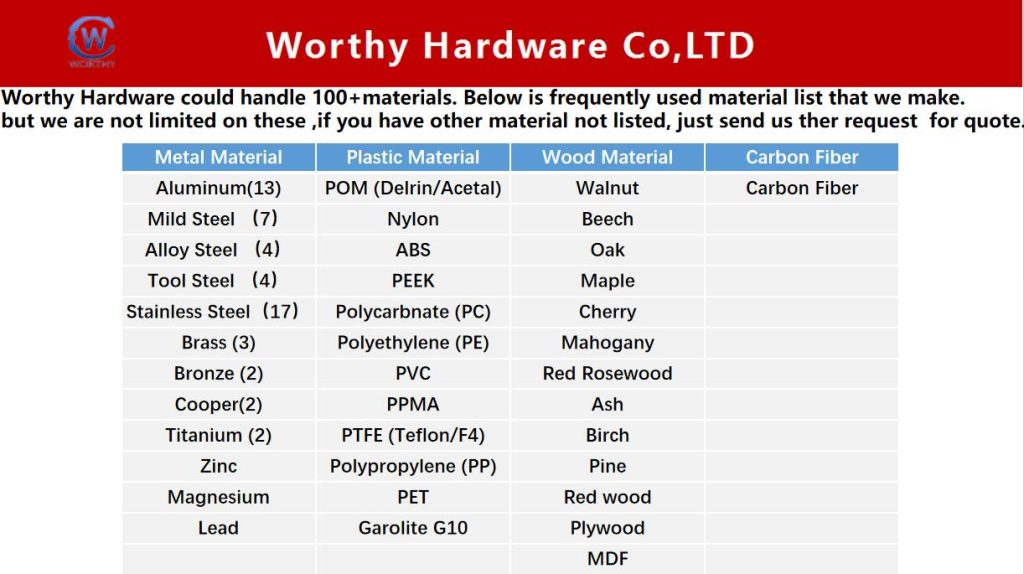
Selecting the right raw material, or stock, involves more than just picking a metal or plastic type. Several factors need careful thought to ensure the final part works correctly and is economical to produce. First, consider the mechanical properties needed. Does the part need to be very strong, hard, lightweight, or flexible? This links directly to the end-use application.
For instance, as I mentioned earlier, a disposable spoon needs minimal strength (plastic is fine), but a reusable restaurant spoon needs durability and resistance to bending (stainless steel is better). Second is machinability. Some materials cut easily and quickly (like Aluminum 6061 or Delrin), while others are tougher and slower to machine (like Stainless Steel 316 or Titanium), increasing machining time and tool wear, thus cost.
Third, cost and availability are always important. Standard stock sizes and common material grades are generally less expensive and quicker to source than exotic materials or custom sizes. Fourth, think about the end-use environment. Will the part be exposed to high temperatures, corrosive chemicals, or moisture? This dictates needs like heat resistance (PEEK, Ultem) or corrosion resistance (Stainless Steel, certain plastics). Balancing these factors – function, manufacturability, cost, and environment – leads to the best stock selection.
| Factor | Key Questions | Examples |
|---|---|---|
| Mechanical Properties | Strength, hardness, stiffness, weight required? | High strength (Steel), Lightweight (Aluminum) |
| Machinability | How easily does it cut? Impact on time and cost? | Easy (Aluminum, Brass), Hard (Titanium) |
| Cost | What is the budget? Are there cheaper alternatives? | Low (ABS, Aluminum), High (PEEK, Titanium) |
| Availability | Is it readily available in standard forms (bar, sheet)? | Common (Steel, Aluminum), Less Common (PEEK) |
| End-Use Environment | Temperature range? Chemical exposure? Wear resistance? | Corrosion (Stainless Steel), Temp (Ultem) |
| Required Finish | Can the material achieve the desired surface finish easily? | Polishing (Aluminum), Anodizing (Aluminum) |
How much does CNC material cost?
Budgeting for materials? Unsure about the actual price variations between different CNC materials? Understand the main factors driving material costs to plan effectively.
Material cost varies widely based on type (e.g., aluminum vs. titanium), specific grade, form (bar, plate), quantity purchased, and market conditions. Common metals are generally cheaper than high-performance plastics or exotic alloys.
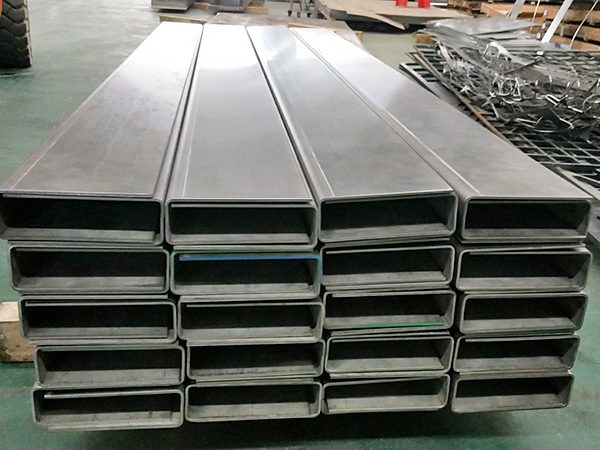
The cost of raw materials for CNC machining can range dramatically. There isn't one simple answer to "how much does it cost?" because it depends heavily on several things.
The most obvious factor is the material type. Common engineering plastics like ABS or Delrin are often the least expensive. Metals like Aluminum 6061 are relatively low-cost and very popular. Steels and Stainless Steels (like 304 or 316) are generally more expensive than aluminum.
High-performance plastics (like PEEK or Ultem) and exotic metals (like Titanium alloys) sit at the higher end of the cost spectrum due to their advanced properties and more complex production. Within a material type, the specific grade also matters; for example, Aluminum 7075 is typically more expensive than Aluminum 6061.
The form of the material (round bar, flat plate, sheet, tube) and its size also affect price. Furthermore, quantity plays a role – buying material in bulk usually yields a lower price per pound or kilogram. Finally, market conditions can cause prices for metals and plastics to fluctuate.
Because we source a lot of material for various clients, we work hard to get competitive pricing. The best way to know the exact material cost contribution for your specific part is always to get a quote.
| Material Category | Relative Cost | Common Examples | Notes |
|---|---|---|---|
| Standard Plastics | $ | ABS, HDPE, PVC, Acrylic | Generally lowest cost, easy to machine |
| Engineering Plastics | $$ | Delrin (Acetal), Nylon, PC | Good balance of properties and cost |
| Common Metals | $$ | Aluminum (6061), Brass, Mild Steel | Widely used, good machinability (Al, Brass) |
| Stainless Steels | $$$ | SS 304, SS 316 | Corrosion resistant, harder to machine |
| High-Performance Plastics | $$$$ | PEEK, Ultem, PTFE (Teflon) | Excellent thermal/chemical resistance |
| Advanced/Exotic Metals | $$$$ - $$$$$ | Titanium alloys, Tool Steels | High strength/weight, difficult to machine |
Conclusion
Material selection is fundamental to controlling CNC machining costs. Choosing the right material based on function, budget, and manufacturability ensures successful and affordable part production for your needs.